
Italian tennis legends Adriano Panatta and Paolo Bertolucci joined the recent episode of the Italian podcast Radio Deejay, where they spoke – among other things – about Sinner's impact on Italian tennis and how he has become a recurring subject they are consulted about.
Panatta confessed the public constantly asks about Sinner: "Now I am obliged because, in any case, they stop us on the street every time and the classic question is: 'How is Sinner?' But we don't know how Sinner is! Why should we know how he is? Do we hang out with him? No, absolutely not. He [Paolo] a bit more, but I've seen him twice in my life. 'Hello, hello, how are you? Good.' And that's it."
Bertolucci highlighted that Italian tennis success is part of cyclical developments rather than a single player’s influence. "I think these are moments, they are cycles. Sometimes it's on the men's side, sometimes the women's. We had a very strong team on the women's side a few years ago. There are nations, like Sweden used to be, that have completely disappeared from the world stage. Then there is Spain, which has always produced players. Now France is in crisis. And now it's our turn to be on top of the world, so let's enjoy these years."
Both legends noted how equipment, training, and the evolution of technique have transformed modern tennis. Bertolucci described the difference with contemporary rackets: "And instead now, with the new rackets, you can play in a different way. So they play with other grips to give rotation, top spin, let's call it that. It's completely different now. Plus with these rackets... and also the strings. The strings have had a crazy evolution. We played with gut. Certainly. And now they manage to hit shots that couldn't be done with our rackets."
Panatta stressed how the style of the game has standardized at the elite level, contrasting it with previous eras. "Both things. They are very, very strong. And then you know what? The type of game has become very standardized. So... it happened even when Borg or Vilas played, for example. As long as they played against those who played like them, they always won. They were Borg and Vilas! Then they met McEnroe, or once in a while me... and they lost because we played completely differently. Now everyone plays the same."
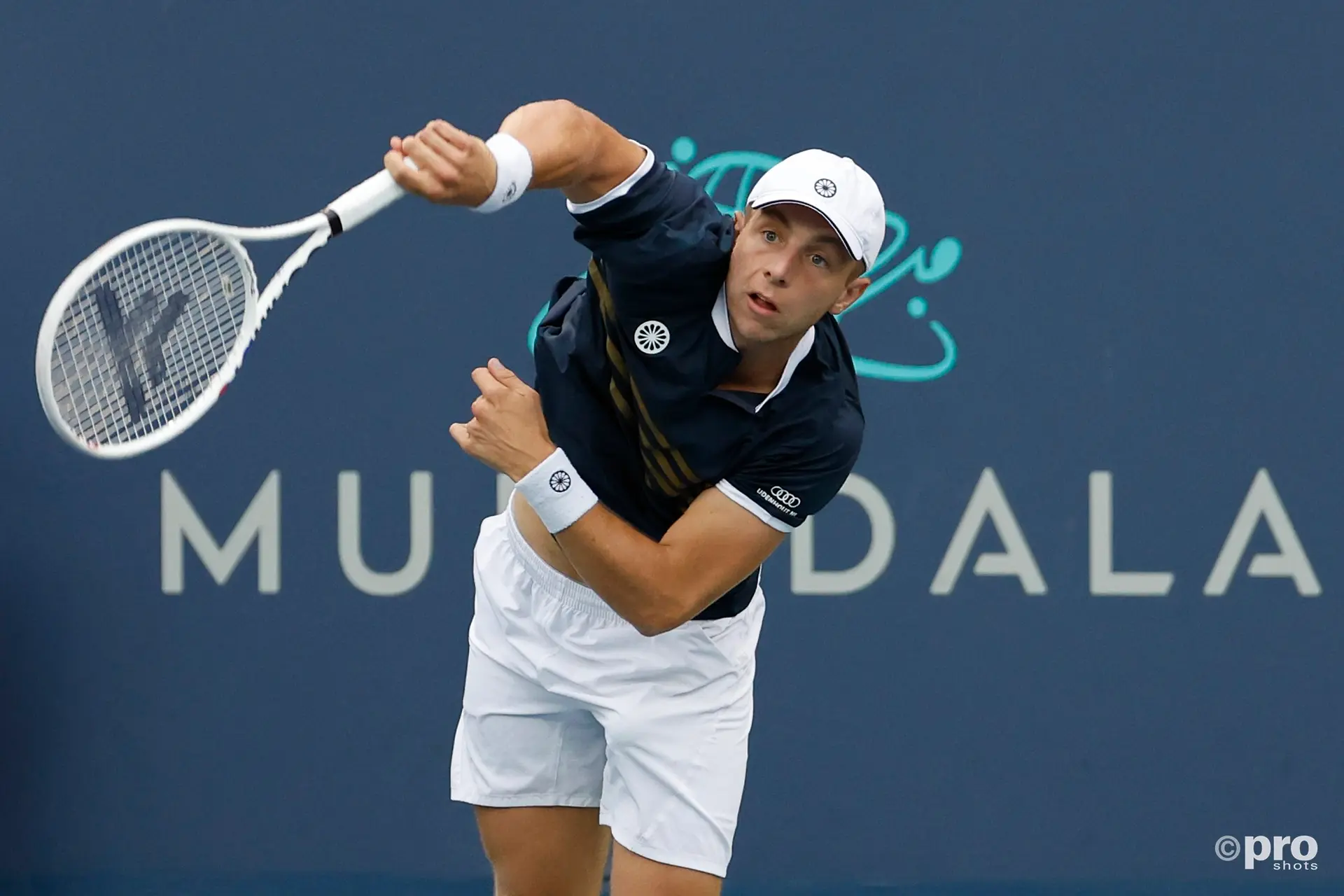
Modern tennis and the rise of exceptional players
Panatta and Bertolucci compared today’s stars to past generations, emphasizing physical prowess and limited net play. Panatta argued: "The equipment, the way of training, and so on. There are no attackers anymore. Yes, no one comes to the net anymore." Bertolucci added that the speed and physicality of modern tennis reduce opportunities for technical creativity. "But on the other hand, it's just like all sports have become much more physical and less technical. Now the ball goes at such speed that there is no time to think."
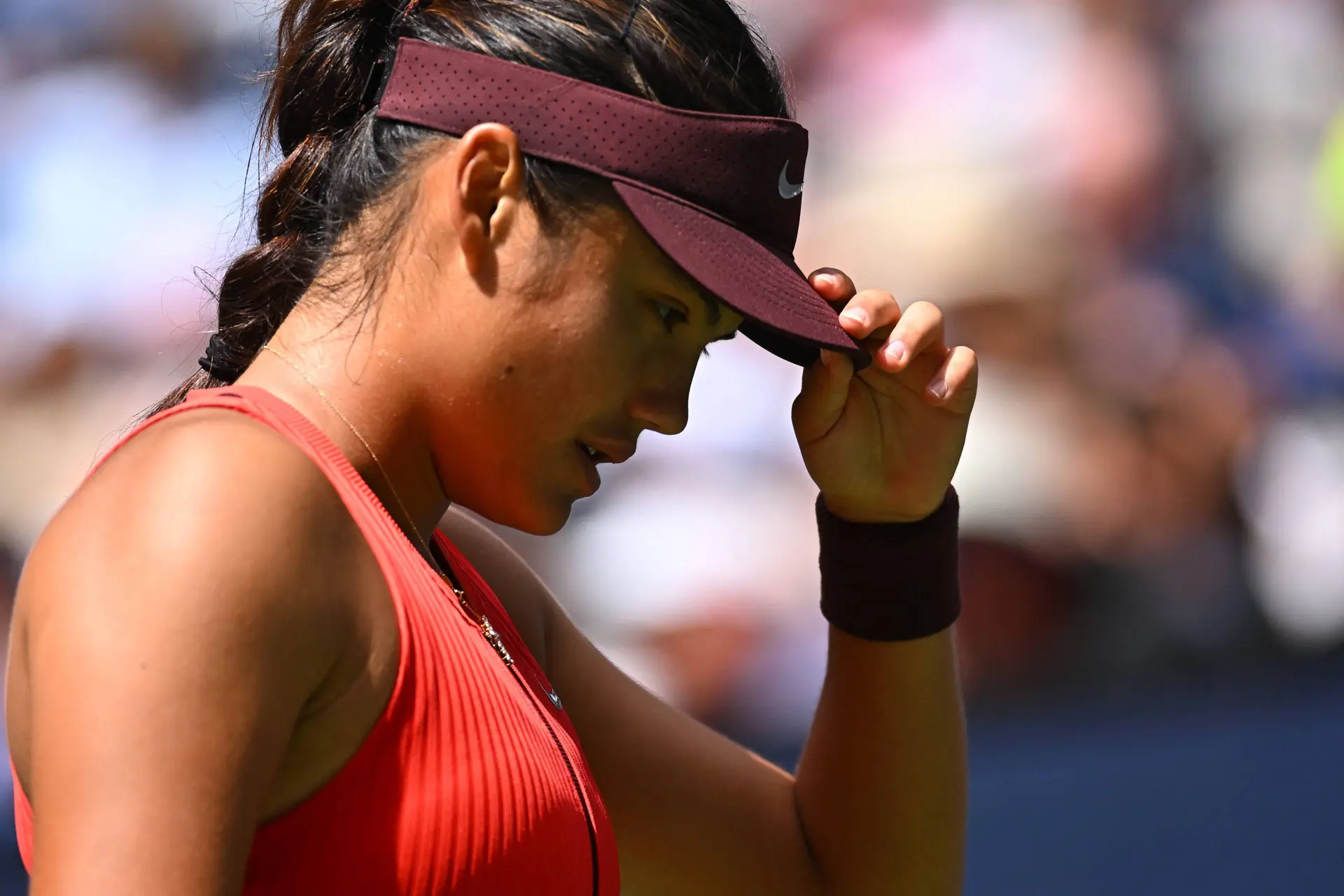
They also speculated about future extremes in tennis. Panatta envisioned athletes reaching unprecedented size and power: "We are at the beginning. I made a prediction that in about ten years, maximum 15 years, they will all be players like those in the NBA. That is, 2.10m, 2.15m tall, serving at 350 km/h. Yes, a ball arriving from 5 meters [high]... tennis ends and we don't talk about it anymore because we can't take it anymore." Bertolucci commented on the adaptation of taller players: "However, we are already at 1.90m and up. But they move like players who were once 1.80m. But it's not possible... for example, even in basketball it's the same thing."
Despite the evolution of tennis, both Panatta and Bertolucci lamented the absence of variety in competitive styles. Panatta emphasized the dominance of the two leading men: "Now they [Sinner/Alcaraz] don't lose even if someone shoots them from the stands? Is it that they are exaggeratedly strong or that the others are...? Both things. They are very, very strong." Bertolucci framed this within broader sports trends: "All sports have become much more physical and less technical."
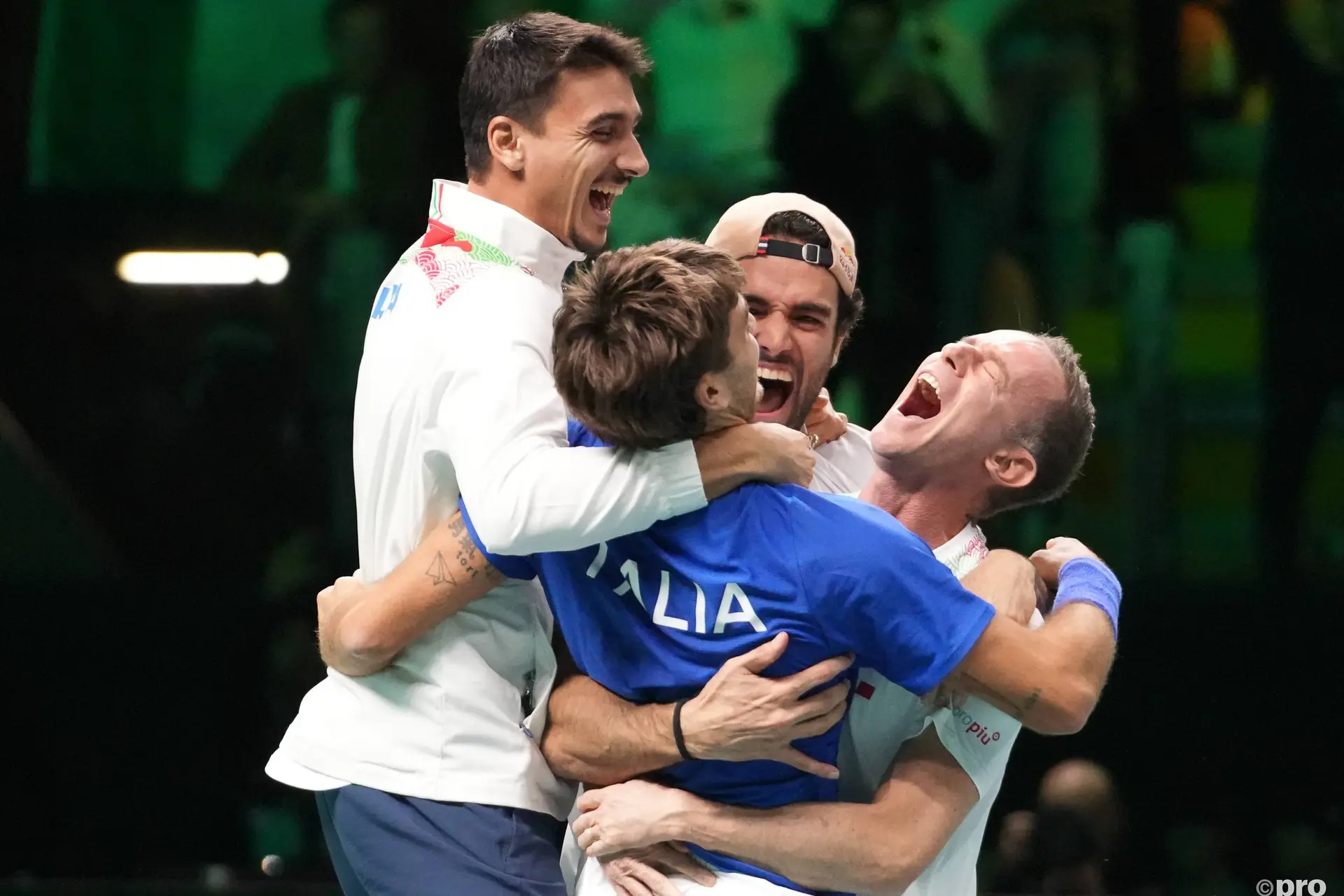
The Italian legends also touched on the importance of history and tradition in tennis, especially concerning equipment and court surfaces. Bertolucci recalled modifications to grass courts: "They put a different type of grass, they did a different cut treatment, and now it plays like on clay. The ball also has 8% more diameter. Ours were much smaller and much harder." Their reflections underline the intricate balance between evolution and heritage in the sport, especially in nurturing talents like Sinner.

Cristhián AvilaTennis Journalist
Cristhián Ávila is a tennis journalist based in Santiago, Chile, and has been part of the TennisUpToDate team since early 2023. He covers the ATP and WTA Tours as well as all four Grand Slams, producing breaking news, match reports, analysis, and regular liveblogs from major tournaments.
His reporting combines statistical analysis with clear explanation, helping readers understand tactical developments, player form, and broader storylines across the tour. Working fluently in both Spanish and English, Cristhián collaborates with an international editorial team and contributes to comprehensive global coverage. As part of his work, he has conducted interviews and media interactions with leading figures in the sport, including Caroline Wozniacki and John McEnroe.
In his journalism, Cristhián places strong emphasis on careful sourcing, editorial accuracy, and updating articles promptly when new, verified information becomes available. His coverage is grounded in research, context, and direct engagement with professional tennis.
claps 0visitors 0
Just In

Popular News
Latest Comments
- Fight the Good Fight... Tennis (sports in general) need more Humans such as yourself.
 mandoist18-10-2026
 - When is WTA going to mandate Genetic Testing (DNA) ???mandoist18-10-2026
- Hey, Dan... you just wake up from a coma? Regardless -- Thanks for the comedy this morning!mandoist18-10-2026
- Two Things: 1. Stop allowing these Spoiled Trust-Fund Elitists to behave badly. Your little hand-slaps do not deter them. 2. STOP the incessantly annoying "towel wiping" nonsense!!!!mandoist15-10-2026
- A healthy Qinwen may be hard to stop next season. She was already scaring her opponents before her medical leave(s). Unfortunately, Zheng insisted on singing again. On the positive side -- Mirra did not sing!! ;~}mandoist11-10-2026
- Where is it written that athletes, entertainers... People in general... are mandated to keep looking at -- or even using [anti]Social Media? Public & private figures consistently complain and reveal their concerns about negativity and violence thrown at them -- yet they insist on participating. Avoid it, don't use it, don't read it. It's okay to occasionally look up at the World instead beating your eyes & thumbs to death on The Inventions out there.mandoist11-10-2026
- great articlestennisseserver07-10-2026
- Medvedev was leading Djokovic 7-5, 3-5 when an attempted return..' NO you ignorants, Djokovic was leading .weiss05-10-2026
- No more bullshit "Wildcards" to these two. Qualify like everyone else -- there will be cameras there, too. Time to scream... WTF ????!!!!mandoist29-09-2026
- Let's not BS the general public -- Sabalenka started showing cracks in her game last season. Her losses and near-losses started at about the same time she began being distracted by Fame (constant Selfies, making TV commercials, magazine shoots, endless Social Media nonsense, etc., etc.) One would think even Saba could recognize the parallels with others who failed before her -- Raducanu, Giorgi, Bouchard to name a few.mandoist25-09-2026

Loading