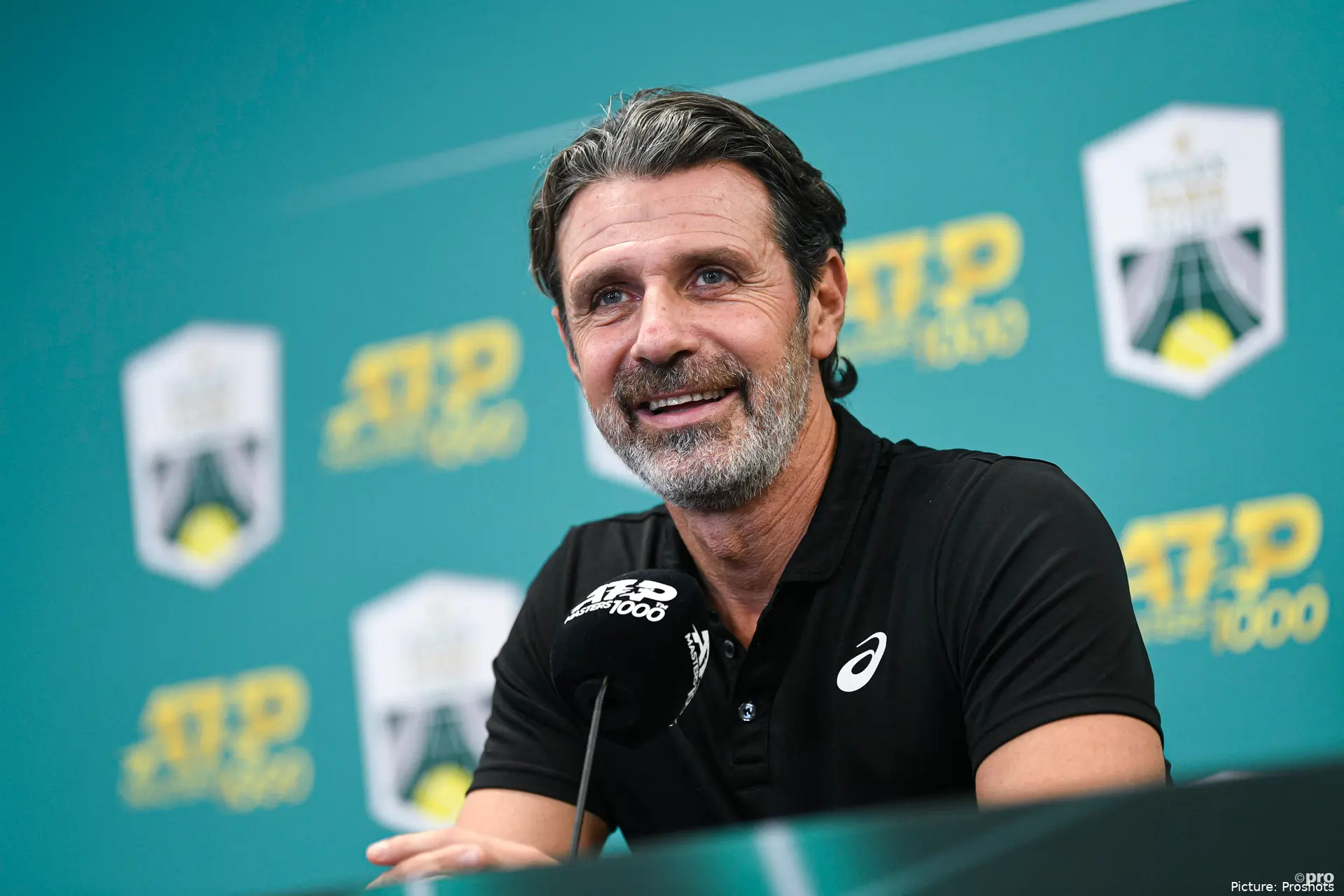
Patrick Mouratoglou has again placed the long-term direction of tennis at the centre of his Ultimate Tennis Showdown (UTS) project, framing it not as an alternative tour but as a response to a structural issue within the sport.
Speaking ahead of the latest UTS event in Nîmes, the French coach pointed to a disconnect between tennis’ current commercial strength and its future audience.
UTS, launched in 2020, has been staged across multiple regions, including Europe, the United States and Asia. The upcoming stop in Nîmes will take place in a historic venue, with Mouratoglou highlighting both the setting and the atmosphere as key elements of the concept. The format is designed to create closer interaction between players and fans, with fewer restrictions on crowd behaviour compared to traditional tournaments.
While the project has drawn criticism from more traditional parts of the tennis community, Mouratoglou maintains that it is not intended to compete directly with the ATP Tour or Grand Slams. Instead, he positions UTS as a parallel product aimed at audiences that current formats are not reaching.
“The fanbase is ageing”: a structural issue
Mouratoglou was clear that his concern is not immediate decline, but long-term sustainability. He acknowledged that tennis remains financially strong, with high attendance and significant broadcast revenues, but argued that this stability masks a deeper issue.
“The tennis is doing extraordinarily well," the Frenchman said to Eurosport. "There are crowds in the stadiums, TV rights are huge, the business is booming. Simply, the fanbase is ageing and not renewing. That is the problem. If we project ourselves 20, 30 or 40 years into the future, the fanbase will no longer exist. So there will be no more tennis.”
He linked that concern to changes in how younger audiences consume content, suggesting that the traditional format is increasingly misaligned with those habits.
“The patterns of consumption have completely changed. Social media, streaming platforms, video games… people under 30 don’t consume content like before. Even the players. When I ask them, 100% tell me they don’t watch matches. They are too long. They watch highlights. The product is not adapted. It is adapted for us. Not for people under 30.”
“UTS is both sport and show”: positioning the format
A key point in Mouratoglou’s argument is the distinction between UTS and exhibition events. While the format incorporates entertainment elements, he insisted that it remains a competitive structure built around performance.
“UTS is the combination of real sport and show. It’s both. It’s not one or the other. An exhibition is 100% show. Players perform at 20 or 30%. Here, they give 100%. Why? Because they are paid only from prize money, depending on their results. There is a ranking, several editions during the year. It’s a tournament.”
He also stressed that the initiative is not designed to replace existing structures in the short term, pointing instead to coexistence between formats. Players continue to prioritise Grand Slams and ATP rankings, which define their careers, while engaging with UTS as a complementary competition.
At the same time, Mouratoglou acknowledged the resistance to change within tennis, particularly from established audiences, suggesting that even minor adjustments have historically been difficult to implement.
“The public will decide”: future direction of the sport
Looking ahead, Mouratoglou framed the evolution of tennis as ultimately dependent on audience demand rather than institutional decisions. While he maintains that UTS and traditional formats can coexist, he did not exclude the possibility of broader change over time.
“The public will decide. Not me, not the ATP, not anyone. If people don’t want to watch traditional tennis anymore, the ATP and the WTA will have to change the format completely overnight, or associate with us and keep both formats in parallel until something shifts.”
“My goal is to develop something strong and powerful that helps rebuild a younger fanbase for tennis. Nothing more. If it bothers some people, I’m ready to accept it. But it won’t stop me.”

Cristhián AvilaTennis Journalist
Cristhián Ávila is a tennis journalist based in Santiago, Chile, and has been part of the TennisUpToDate team since early 2023. He covers the ATP and WTA Tours as well as all four Grand Slams, producing breaking news, match reports, analysis, and regular liveblogs from major tournaments.
His reporting combines statistical analysis with clear explanation, helping readers understand tactical developments, player form, and broader storylines across the tour. Working fluently in both Spanish and English, Cristhián collaborates with an international editorial team and contributes to comprehensive global coverage. As part of his work, he has conducted interviews and media interactions with leading figures in the sport, including Caroline Wozniacki and John McEnroe.
In his journalism, Cristhián places strong emphasis on careful sourcing, editorial accuracy, and updating articles promptly when new, verified information becomes available. His coverage is grounded in research, context, and direct engagement with professional tennis.
claps 0visitors 0
Just In


Popular News

Latest Comments
- Lena... Takin' care of business
 mandoist25-10-2026
 - Can you please stop publishing this nonsense? Stick to Tennis.mandoist25-10-2026
- Does Sinner need that 4.5 mil? I doubt it. He can make that with three modelling gigs!😅🤣Rapunzel21-10-2026
- Did "People Magazine" purchase this website? This nonstop storyline is bullshit.mandoist21-10-2026
- Listen... this is of no concern to anyone but these two. Deal with your own issues -- most of us have our own. Thanks, media, for these insignificant follow-ups which are meaningless.mandoist21-10-2026
- This is so very very sad, for all three of them. I truly thought they had an unbreakable bond, but life throws up so many differing challenges. Having your homeland suffering in such a terrible way, makes happiness lose out to guilt as well. Our thoughts are with them. X💔bjsexton20-10-2026
- I have lost all respect for Svitolina! Could she not have waited until he had played at the Paris Masters!!! She is selfish and don't give a damn about Gael. That is NOT how love is demonstrated Elina!!Rapunzel19-10-2026
- Perhaps convenient tennis tour sex is not a strong enough experience in which to base a marriage?mandoist19-10-2026
- Fight the Good Fight... Tennis (sports in general) need more Humans such as yourself.mandoist18-10-2026
- When is WTA going to mandate Genetic Testing (DNA) ???mandoist18-10-2026

Loading