
China has taken ambitious steps in the world of sports before, but its latest initiative has the potential to transform the global tennis landscape. The government has announced an ambitious project to develop a competitive tennis ecosystem that would help produce world-class players and help the country move up the rankings in a sport that Europe, North America, and Australia have dominated. This is not only an exercise to produce champions, but also to build a self-sustaining system that generates grassroots participation, talent pipelines, and a robust tournament infrastructure.
What makes this initiative especially interesting is the cultural and economic backdrop within which it is unfolding. China is developing a middle-income population that is being attracted to international sporting and recreation, such as basketball and Formula 1.
Tennis is the perfect fit for this appetite for competition. Similar to the emergence of the live casino online, the allure lies in the fact that one can access it anywhere in the world, with a sense of prestige and modernity. Tennis is a sport that is not only about achieving sports success, but also about providing access to a global environment for young Chinese athletes.
The Grassroots to Elite Development
The centerpiece of the Chinese vision of tennis is a tiered system that starts at the roots. The strategy will involve developing the so-called strong tennis provinces, where the concentration of resources will allow the creation of local tennis facilities, coach training, and youth tournaments. These provinces serve as incubators, ensuring that players with potential do not get lost in the cracks due to a lack of infrastructure.
Moreover, the best of these are then fed into regional academies, many of which are to be heavily invested in. These academies serve not only as training facilities but also as centers of education, allowing young players to strike a balance between their educational and sporting pursuits. The ultimate goal is to produce players who can compete at the international level and remain undaunted by logistical and cultural challenges.
The Li Na Effect
China is not exactly new to its ambitions in tennis. The emergence of Li Na, who claimed the French Open in 2011 and the Australian Open in 2014, generated a wave of interest in the sport in the country. Her accomplishments showed that Chinese tennis players were capable of reaching the pinnacle of the tennis world. Its maintenance of that momentum was difficult, however, because the system lacked the depth to generate several successors.
The new ecosystem attempts to learn through that experience by institutionalizing success. Rather than relying on the talents of the century, the plan is to ensure a constant influx of players into the top 100. In expanding the base of participation and the support structure, China hopes to shift the pattern of sporadic breakthroughs to sustained competitiveness.
Tournament Tourism and International Promotion
The other important aspect of the vision is the expansion of the tournament calendar in China. Hosting international events serves a two-fold purpose. To begin with, it opens local players up to high-stakes competition without necessarily requiring them to travel to compete in other countries. Second, it makes China a destination of world tennis tourism that would attract fans, sponsors and media interest.
Cities such as Beijing and Shanghai have already demonstrated their ability to host world-class tournaments successfully, but the new strategy will involve a more geographically distributed approach. Mid-sized cities are being promoted to host Challenger and ITF-level events, which will provide local players with competitive opportunities and incorporate tennis into the everyday lives of fans.
Problems in the Future
China has taken a significant step, but its tennis ecosystem is not without its challenges. One problem is finding the right balance between governmental regulation and the autonomy that is frequently necessary to allow creativity in athletics. Too strict systems will kill the individuality and flair that make great players stand out.
The other threat is that of global integration. To achieve success on a regular basis, Chinese players must participate more frequently on the international circuit. This not only requires funding but also the capacity to adapt to different playing surfaces, cultures, and competitive environments. Without such exposure, even the most talented athletes are at risk of staling.
There is also time. The process of creating a pipeline to produce top-100 players is not a quick one. It involves patience, long-term investment and the ability to withstand failures along the way.
The Changing World Order
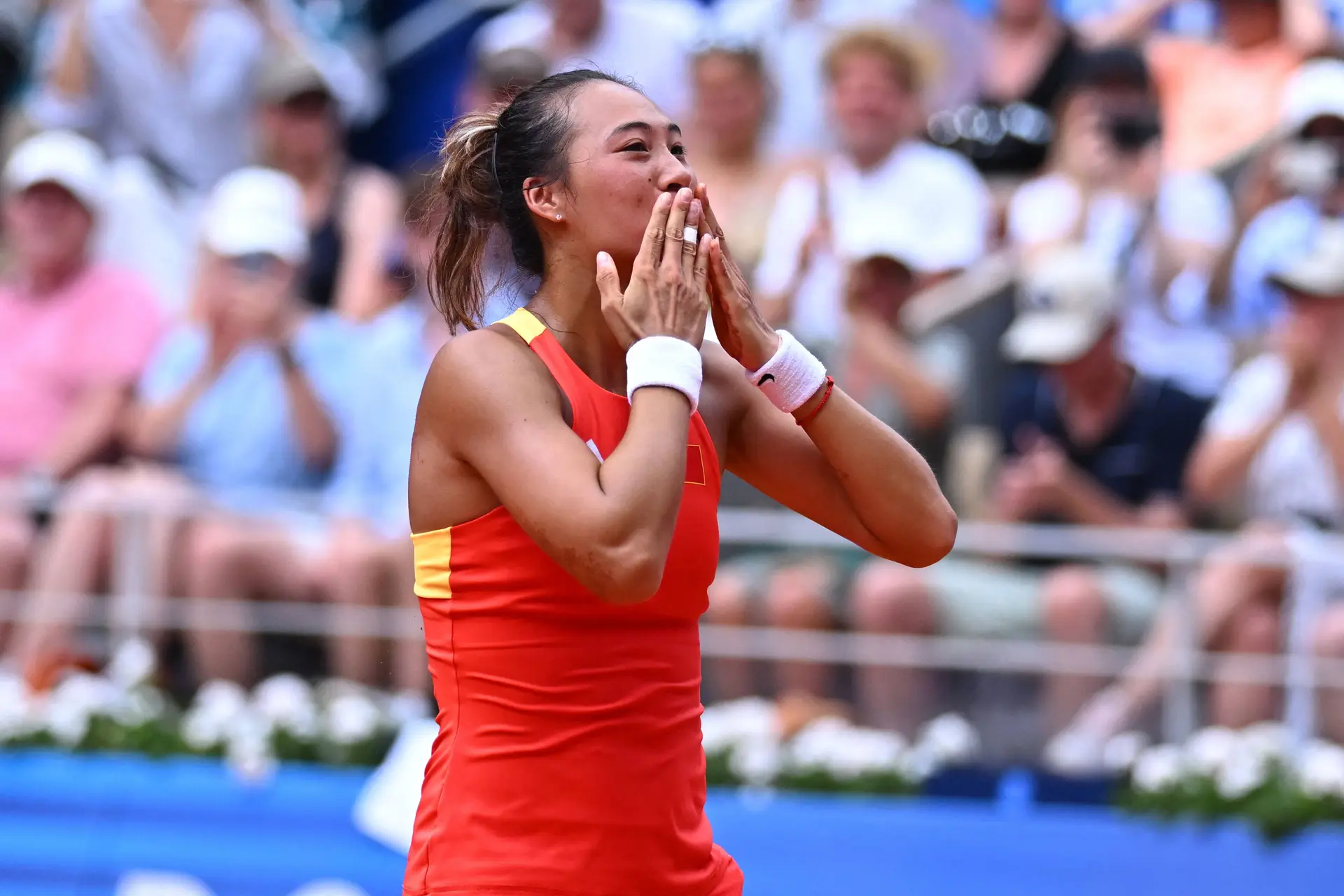
The timing of China's entry is when the balance of power in tennis is already shifting. Europe remains predominant, but a growing number of players from South America, Africa, and Asia are making a name for themselves. Japanese Naomi Osaka and Chinese Zheng Qinwen have demonstrated that Asia can produce stars who can compete at the top.
Additionally, the broader globalization of tennis presents a challenge and an opportunity for China's program. In the event of success, it would transform the country into a stable performer in the upper echelons of the ratings. Failure to do so will leave China behind the more nimble systems of smaller nations.
The Path Toward 2030
The ultimate challenge of the Chinese tennis dream will probably be felt further down the line in the decade. By 2030, the first generation of the new system is expected to reach professional maturity. In case some of them manage to find their place in the top 100, the government will be proved correct in its long-term approach and Asian tennis will enter a new dawn.
Until then, the world will be watching closely. All the tournaments held in China, all the tennis academies established and all the young talents coming on the international scene will be judged against the high ambition of being a tennis superpower. The road is not easy, but in such an ambitious endeavor, China has sent a clear message: it will be a key participant in the global tennis discourse in the coming decades.

Samuel GillEditor-in-Chief
Samuel Gill is the Chief Content Officer (CCO) of TennisUpToDate.com, a role he has held since 2020. He is responsible for editorial governance across the platform, including setting content standards, overseeing accuracy and consistency, and guiding long-term editorial strategy. Since joining, he has contributed more than 10,000 articles and editorial pieces across the TennisUpToDate network, playing a central role in the daily operation and development of the site.
Based in Leicester, Samuel has a broad background in tennis media. In his current role, he works closely with editors and writers to ensure coverage meets clear journalistic standards, with particular attention to verification, consistency, and timely updates when new information becomes available.
claps 0visitors 0
Just In

Popular News
Latest Comments
- A healthy Qinwen may be hard to stop next season. She was already scaring her opponents before her medical leave(s). Unfortunately, Zheng insisted on singing again. On the positive side -- Mirra did not sing!! ;~}
 mandoist11-10-2026
 - Where is it written that athletes, entertainers... People in general... are mandated to keep looking at -- or even using [anti]Social Media? Public & private figures consistently complain and reveal their concerns about negativity and violence thrown at them -- yet they insist on participating. Avoid it, don't use it, don't read it. It's okay to occasionally look up at the World instead beating your eyes & thumbs to death on The Inventions out there.mandoist11-10-2026
- great articlestennisseserver07-10-2026
- Medvedev was leading Djokovic 7-5, 3-5 when an attempted return..' NO you ignorants, Djokovic was leading .weiss05-10-2026
- No more bullshit "Wildcards" to these two. Qualify like everyone else -- there will be cameras there, too. Time to scream... WTF ????!!!!mandoist29-09-2026
- Let's not BS the general public -- Sabalenka started showing cracks in her game last season. Her losses and near-losses started at about the same time she began being distracted by Fame (constant Selfies, making TV commercials, magazine shoots, endless Social Media nonsense, etc., etc.) One would think even Saba could recognize the parallels with others who failed before her -- Raducanu, Giorgi, Bouchard to name a few.mandoist25-09-2026
- Gross!! Hey Raducanu, Giorgi, and Bouchard -- reserve a seat at your Social Media Selfie table for Saba + Naomi. They're heading in your direction soon enough.mandoist24-09-2026
- And then these same players will complain about how lengthy their season’s were and need more time-off. I’m all for more tennis but the amount of tennis we get now is actually kind of crazy! We all need a break, especially the players.DaveyWavey23-09-2026
- You should do a comparison article for "different kinds of justice" the courts decide for tennis players. I can think of at least three players who received very small bans of a few months, however Tara Moore has been fighting for her literal survival the past few years. It seems odd considering she is not a "name" player, unlike the other cases.DaveyWavey22-09-2026
- PRIZE MONEY & POINTS Winner - $185,500 Finalist - $114,500 Semi-Finalist - $66,003 Quarter-Finalist - $35,000 Round of 16 - $18,045 Round of 32 - $13,005 Winner - 500 Finalist - 325 Semi-Finalist - 195 Quarter-Finalist - 108 Round of 16 - 60 Round of 32 - 1DaveyWavey20-09-2026

Loading