US Open Hits Refresh with New Mixed Doubles Format and Star Power
OtherSaturday, 16 August 2025 at 17:16
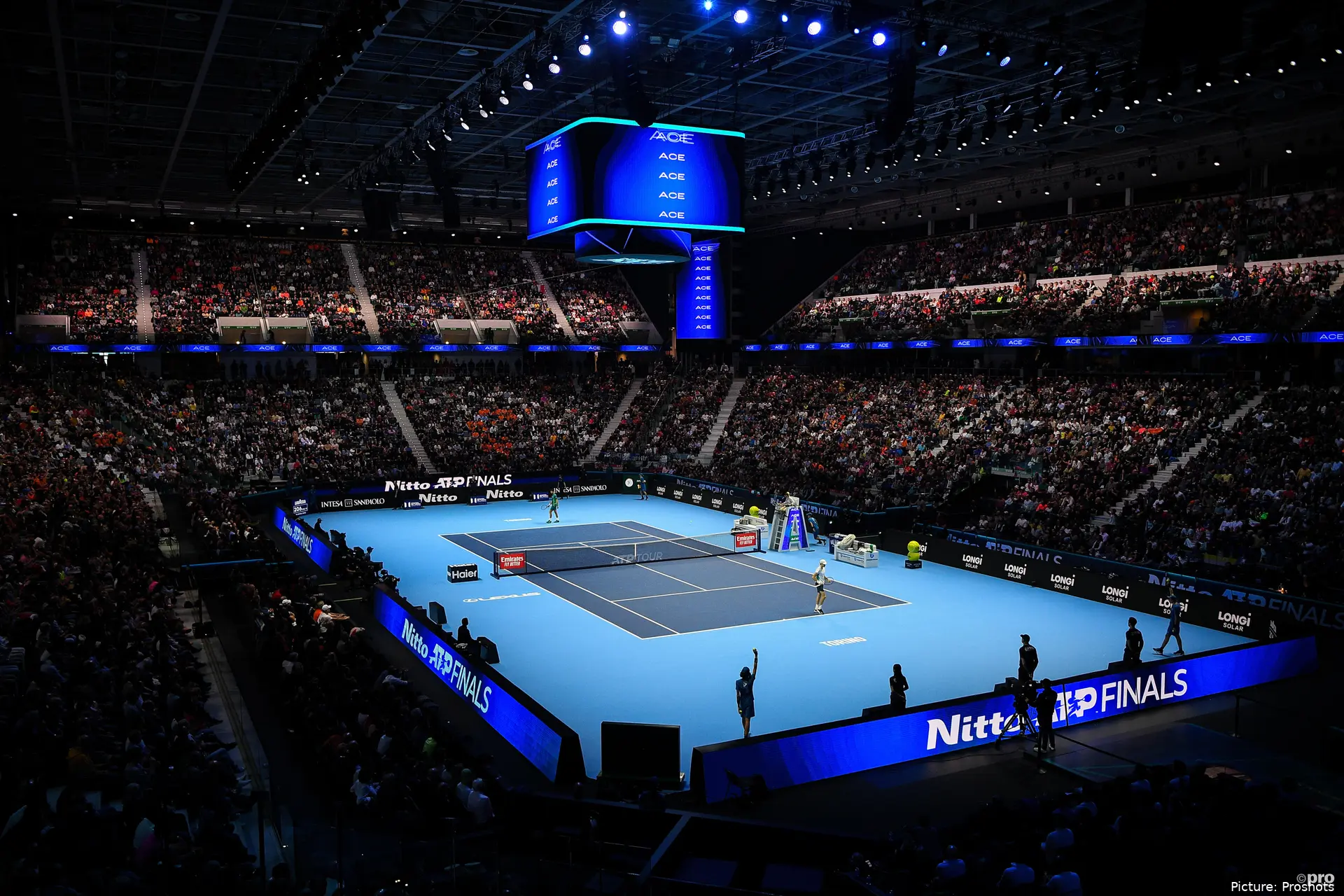
The US Open has never lacked in flair, innovation, and its capacity to take the edge off tennis as entertainment. In 2025, the tournament will take the most daring step so far, remodeling the mixed doubles event into a spectacle that is not only enjoyable for players but also for the global audience. The US Open is hoping that mixed doubles can be a marquee event and not a sideshow with a decreased draw, a record prize purse and a field full of big-name stars.
A Revamped Format and Design
Mixed doubles is conventionally the least-viewed and least-talked-about draw on the Grand Slam calendar. Although purists have appreciated the diversity and tactical finesse, it has seldom garnered prime-time coverage or mainstream interest. The U.S. Open has now reversed that equation. By reducing the number of participating teams to sixteen handpicked ones and adding a $1 million prize to the pot, organizers have added both exclusivity and urgency to the event.
This is a smaller draw, meaning only the most prominent names and market-friendly pairings will advance. Rather than the unknown first-round matches on outlying courts, viewers will now watch well-known stars appear in high-stakes and prime-time matches. It is a recipe that draws on the entertainment-oriented sporting paradigm and meets the contemporary need to have shorter, sharper spectacles.
The Star Appeal
The most interesting part of this reinvention is the quality of players who have joined the board. Emma Raducanu, Carlos Alcaraz, Jack Draper, Iga Swiatek, and even such legends as Venus Williams are entering the mixed doubles arena. This combination of young stars, incumbent title holders, and old-time legends makes the event an exhibition of the entire range of the sport.
The presence of the best singles stars also enhances competitive stakes. It no longer has to be a sideshow, and fans are no longer wondering whether mixed doubles is a sideshow for lower-ranked players or doubles specialists. As soon as the grandest names put their reputations on the line in full stadiums and prime time television, the event immediately gains more credibility.
Sport Vs Entertainment
There are also some critical questions of balance associated with the new format. Is the US Open commercializing mixed doubles and denying its history, or is it finally giving mixed doubles the attention it has always deserved? Critics have claimed that this practice places more emphasis on marketability than on merit, because only a few teams are invited, as opposed to players qualifying by the acquisition of ranking points or by open entry.
Proponents argue that tennis, like any other sport, needs to adapt to remain competitive in a rapidly evolving entertainment market. As younger viewers demand quicker forms of programming and big-name match-ups, this new style may rekindle enthusiasm not only for mixed doubles but for tennis in general. It is the hope of the organizers that what was once an afterthought will become a headliner.
Betting and Fan Engagement
In addition to the changes in the court, the new mixed doubles tournament is likely to spark a surge in fan interest off the court. These matches are expected to receive more attention from sportsbooks, particularly due to the participation of household names. Fans who want to get closer to the action can learn how to bet on tennis matches to enhance their experience of the event.
This combination of entertainment, competition, and betting opportunities reflects a larger change in contemporary sports. The US Open is marketing mixed doubles as a product that is no longer just about winners and losers, but also about developing an interactive and entertaining spectacle that can appeal to a global audience.
The Place of Tradition in a Transforming Game
A question that still lingers, especially among the traditionalists in tennis, is the impact of the innovations on the long-held culture of the sport. The Grand Slam competitions have always been associated with a certain air of prestige, based on their continuity and the fact that the tournaments and draws have a generational connection of champions. By changing mixed doubles as radically as it has, the US Open risks losing that connection.
But tennis has never been left behind. Change has been constant since the introduction of the tiebreaker in the 1970s to the use of electronic line-calling in the 2000s. Every innovation met with controversy, but later became an integral part of the sport. Mixed doubles is perhaps now undergoing a similar change - a fringe custom becoming a main attraction.
Player Perspectives
The new format presents both opportunities and risks for players. The mixed doubles is a much more visible and financially rewarding event to play now; however, it also comes with a lot more pressure. A poor showing would also sully a player's brand in a manner that a silent first-round loss in a conventional mixed doubles draw never would.
Simultaneously, numerous celebrities have shown enthusiasm over the task. For singles players like Alcaraz or Swiatek, having the opportunity to play in a less severe, more experimental setting with their partners, with whom they do not usually play, is a new experience. To veterans like Venus Williams, it is a way to maintain a connection to the game and also help it evolve in new ways.
The Turning Point of Mixed Doubles
One of the most significant experiments in modern tennis may be the US Open's move to revamp mixed doubles. Should it be successful, it might open the doors to other Grand Slams adopting the same approach and forever altering the position of mixed doubles in the sporting hierarchy. In the event of failure, critics will use it as one of the indicators that spectacle cannot replace authenticity.
Whatever the result, the shift demonstrates a desire to change and experiment with big ideas in pursuit of increased relevance and engagement. When tennis faces an infinite number of sporting and entertainment alternatives, such readiness to innovate can be the only thing that stands between stagnation and growth.

Samuel GillEditor-in-Chief
Samuel Gill is the Chief Content Officer (CCO) of TennisUpToDate.com, a role he has held since 2020. He is responsible for editorial governance across the platform, including setting content standards, overseeing accuracy and consistency, and guiding long-term editorial strategy. Since joining, he has contributed more than 10,000 articles and editorial pieces across the TennisUpToDate network, playing a central role in the daily operation and development of the site.
Based in Leicester, Samuel has a broad background in tennis media. In his current role, he works closely with editors and writers to ensure coverage meets clear journalistic standards, with particular attention to verification, consistency, and timely updates when new information becomes available.
claps 0visitors 0
Just In


Popular News
Latest Comments
- Great article! Thiem was similar to Del Potro in that both men had won Grand Slams and injured wrists each stole their careers away. Sad really.DaveyWavey22-08-2026
- I’m not quite sure what’s happening with Sabalenka but she is horrible on court when she’s losing (which is a lot lately). If you cannot control your self at all once you start losing matches - especially at 28 - you need to see a therapist or take a break from the sport. Terrible attitude. This is what represents the women’s tennis tour? Yikes!DaveyWavey20-08-2026
- Love Halep’s post! Very pointed yet simple.DaveyWavey20-08-2026
- He’s such a hypocritical douche! I remember when Sinner was out for three months on his ban and Kyrgios made such disparaging comments towards him and how awful he was. He’s such a mess of a human being.DaveyWavey19-08-2026
- Help me understand this. Nick tests positive for cocaine and gets suspended but Marketa gets banned for four years?Rapunzel19-08-2026
- Her main problem is that she needs a new coach. Her dad made her win the AO, but she needs somebody to make her stronger mentally, and improve her game.swantiez19-08-2026
- Stop the madness! Tournament directors operate in insanity everytime they give Venus a wildcard. They are using her just to rake in the money! Can she not see that!? They don't care about her! They care about the money. I cannot stand to see her play and now Serena has joined the madness. Unbelievable! They just need to retire and go enjoy their beautiful husbands and kids....smh. The madness is Unbelievable!!!Rapunzel18-08-2026
- The most egregious thing these Egomaniacs are doing is enough reason to STOP WASTING WILDCARDS. It's all plain and simple in this partial sentence by the author: "... the players trying to earn those main-draw spots certainly don’t need it."
 mandoist18-08-2026
 - Iga #3 and 4 slam winner ? The article is okay but check the very basic info on the players pleasedarwinobambino18-08-2026
- But pro tennis, like other sports & much of life, IS in the celebrity exemption business. Do we not look the other way when Krygios throws chairs around the court or Swiatek delays play to suit her own rhythm? Are we not right now making a BIG deal about Eala .. & making light of the fact that her fans are annoyingly boisterous. & are screwing with the timing of match play? Tourney decision-makers have been handing out wild cards to whomever they wish for a long time.. to players in their country, to former greats, to potential greats & maybe there are even 'secret' choices happening.. who knows. Yes, if I were Venus, I would be embarrassed by now.. & end it myself.. But if she wants to keep playing & directors have whatever reason they have for giving her another wild card, I'm going to watch her play with dignity & grace.. & maybe achieve a win.
 tennishappens15-08-2026

Loading