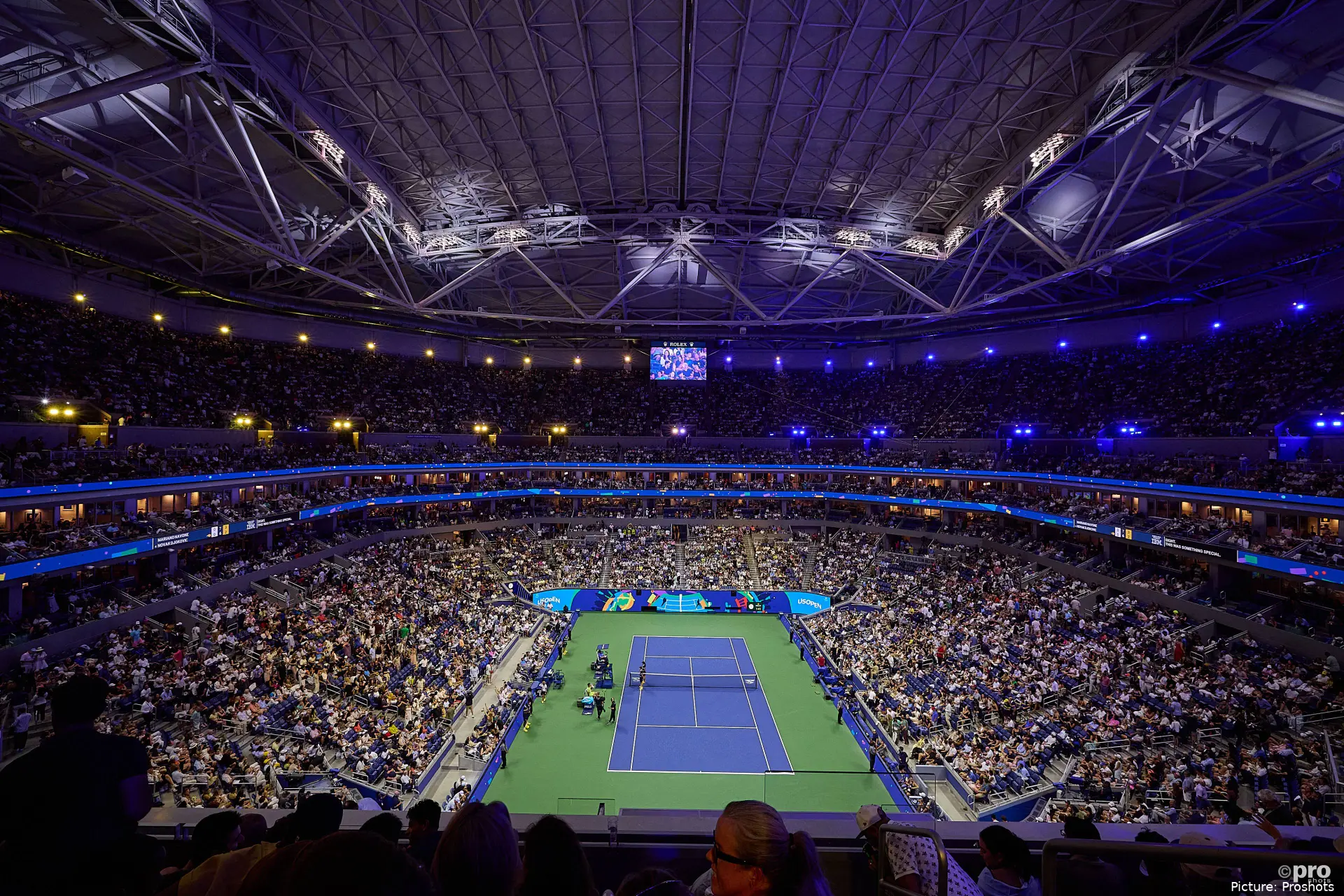
A tennis match can change direction in a
matter of minutes. A player may dominate the opening set, control most of the
rallies and appear comfortable, only to lose momentum after one difficult
service game.
These shifts are part of what makes
professional tennis so compelling. Rankings and recent results provide useful
context, but they rarely explain everything that happens on court.
Understanding serve patterns, break-point
pressure and physical endurance offers a more complete picture of why matches
unfold the way they do.
The First Serve Is About More Than Power
A powerful first serve can give a player
an immediate advantage, but speed alone does not guarantee success.
Placement, consistency and the quality of
the next shot are equally important.
A player who regularly lands first serves
out wide can force opponents away from the centre of the court, creating space
for an aggressive follow-up.
However, relying too heavily on pace can
become a weakness when first-serve accuracy drops.
This was evident in TennisUpToDate's
coverage of Ben Shelton's comeback against Frances Tiafoe at the US
Open, where Shelton's serving helped him regain control after losing
the opening set.
Why Break Points Reveal Mental Strength
Break points are among the most important
moments in tennis because they create opportunities to disrupt an opponent's
service rhythm.
Yet creating opportunities and converting
them are different challenges.
A player might generate several break
points without winning any of them, while an opponent converts their first
opportunity.
These moments can influence confidence
and tactical decisions.
For example, a player defending repeated
break points may begin taking fewer risks, allowing the returner to dictate
longer rallies.
TennisUpToDate highlighted the importance
of resilience in its report on Barbora Krejcikova's dramatic comeback against Taylor
Townsend, demonstrating how a match can change despite seemingly
overwhelming pressure.
How New Information Changes Match Expectations
Pre-match assessments often focus on
rankings, head-to-head records and recent form. However, information about
physical condition, scheduling or playing surface can significantly change
expectations.
A player returning from injury may look
competitive in practice but struggle to maintain intensity across three sets.
These developments can also influence a sports
prediction market, where traders reassess the probability of
different sporting outcomes as new information emerges.
For example, a hypothetical player's
estimated chance of winning might shift from 60% to 45% following credible
fitness concerns. Such percentages represent changing market assessments, not
guaranteed results.
Surface Conditions Change the Tactical Battle
Clay, grass and hard courts create
different challenges.
On clay, longer rallies often reward
patience, movement and the ability to construct points.
Grass generally places greater emphasis
on effective serving and quick reactions.
Hard courts can produce a more balanced
contest, although their speed varies between tournaments.
These differences mean that a player's
success on one surface does not automatically translate to another.
Why Tiebreaks Demand Special Attention
When a set reaches 6-6 under the standard
tiebreak format, the margin for error becomes especially small.
According to the International Tennis Federation's official rules,
a standard tiebreak is won by the first player to reach at least seven points
with a two-point advantage.
A single poorly executed second serve or
rushed return can therefore have significant consequences.
Players who remain composed and maintain
their usual patterns often give themselves the best opportunity to succeed.
The Bigger Picture
Tennis is rarely decided by one
statistic.
First-serve percentage, break-point
conversion, movement and tactical adaptability all contribute to the final
result.
A player who looks dominant early may
struggle when conditions change, while an opponent who starts slowly can
gradually find solutions.
That is why meaningful tennis analysis
requires more than checking rankings or final scores.
The most revealing details are often
found in how players respond when a match begins to move against them.

Samuel GillEditor-in-Chief
Samuel Gill is the Chief Content Officer (CCO) of TennisUpToDate.com, a role he has held since 2020. He is responsible for editorial governance across the platform, including setting content standards, overseeing accuracy and consistency, and guiding long-term editorial strategy. Since joining, he has contributed more than 10,000 articles and editorial pieces across the TennisUpToDate network, playing a central role in the daily operation and development of the site.
Based in Leicester, Samuel has a broad background in tennis media. In his current role, he works closely with editors and writers to ensure coverage meets clear journalistic standards, with particular attention to verification, consistency, and timely updates when new information becomes available.
claps 0visitors 0
Just In

Popular News
Latest Comments
- A healthy Qinwen may be hard to stop next season. She was already scaring her opponents before her medical leave(s). Unfortunately, Zheng insisted on singing again. On the positive side -- Mirra did not sing!! ;~}
 mandoist11-10-2026
 - Where is it written that athletes, entertainers... People in general... are mandated to keep looking at -- or even using [anti]Social Media? Public & private figures consistently complain and reveal their concerns about negativity and violence thrown at them -- yet they insist on participating. Avoid it, don't use it, don't read it. It's okay to occasionally look up at the World instead beating your eyes & thumbs to death on The Inventions out there.mandoist11-10-2026
- great articlestennisseserver07-10-2026
- Medvedev was leading Djokovic 7-5, 3-5 when an attempted return..' NO you ignorants, Djokovic was leading .weiss05-10-2026
- No more bullshit "Wildcards" to these two. Qualify like everyone else -- there will be cameras there, too. Time to scream... WTF ????!!!!mandoist29-09-2026
- Let's not BS the general public -- Sabalenka started showing cracks in her game last season. Her losses and near-losses started at about the same time she began being distracted by Fame (constant Selfies, making TV commercials, magazine shoots, endless Social Media nonsense, etc., etc.) One would think even Saba could recognize the parallels with others who failed before her -- Raducanu, Giorgi, Bouchard to name a few.mandoist25-09-2026
- Gross!! Hey Raducanu, Giorgi, and Bouchard -- reserve a seat at your Social Media Selfie table for Saba + Naomi. They're heading in your direction soon enough.mandoist24-09-2026
- And then these same players will complain about how lengthy their season’s were and need more time-off. I’m all for more tennis but the amount of tennis we get now is actually kind of crazy! We all need a break, especially the players.DaveyWavey23-09-2026
- You should do a comparison article for "different kinds of justice" the courts decide for tennis players. I can think of at least three players who received very small bans of a few months, however Tara Moore has been fighting for her literal survival the past few years. It seems odd considering she is not a "name" player, unlike the other cases.DaveyWavey22-09-2026
- PRIZE MONEY & POINTS Winner - $185,500 Finalist - $114,500 Semi-Finalist - $66,003 Quarter-Finalist - $35,000 Round of 16 - $18,045 Round of 32 - $13,005 Winner - 500 Finalist - 325 Semi-Finalist - 195 Quarter-Finalist - 108 Round of 16 - 60 Round of 32 - 1DaveyWavey20-09-2026

Loading