From world No. 4 to outside the top 1,000: Holger Rune hit rock bottom, but five players show it is not the end
ATP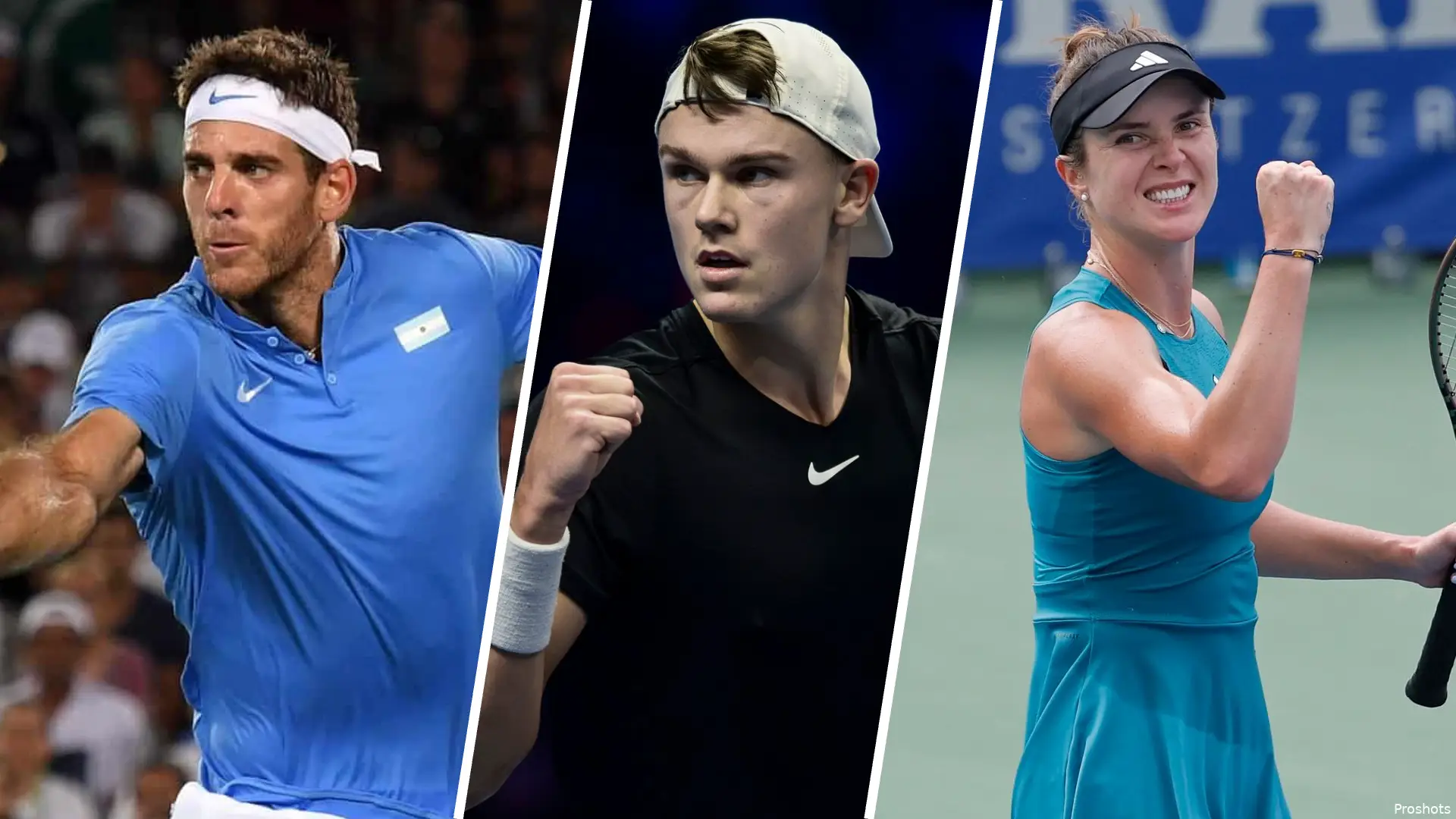
The last time Holger Rune was ranked this low, he was 16 years old and had never played an ATP match. When the rankings update after the Shanghai Masters, the former world No. 4 is projected to fall outside the top 1,000. It is not the result of a collapse in form. It is what happens when a torn Achilles leaves a player with almost nothing on his ranking sheet.
It looks like a fall that is hard to come back from, and in some ways it is a statistical illusion. The ranking counts the last 52 weeks, not talent, and it has no way of recording what a player was before the injury. The sport has seen players tumble even lower and climb back to the top. Five of them, from both tours and from three different eras, show what a recovery can look like, and what it can cost.
How Rune got here
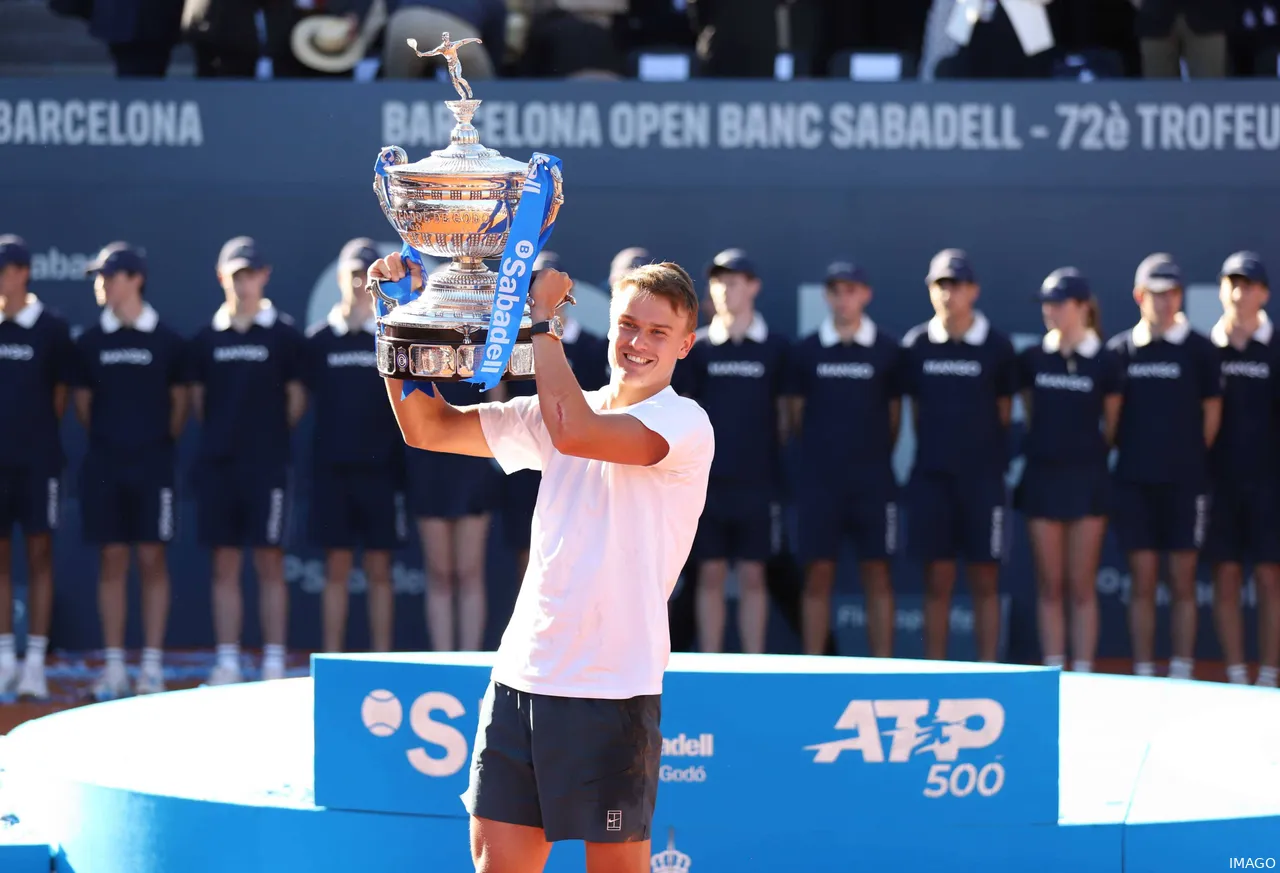
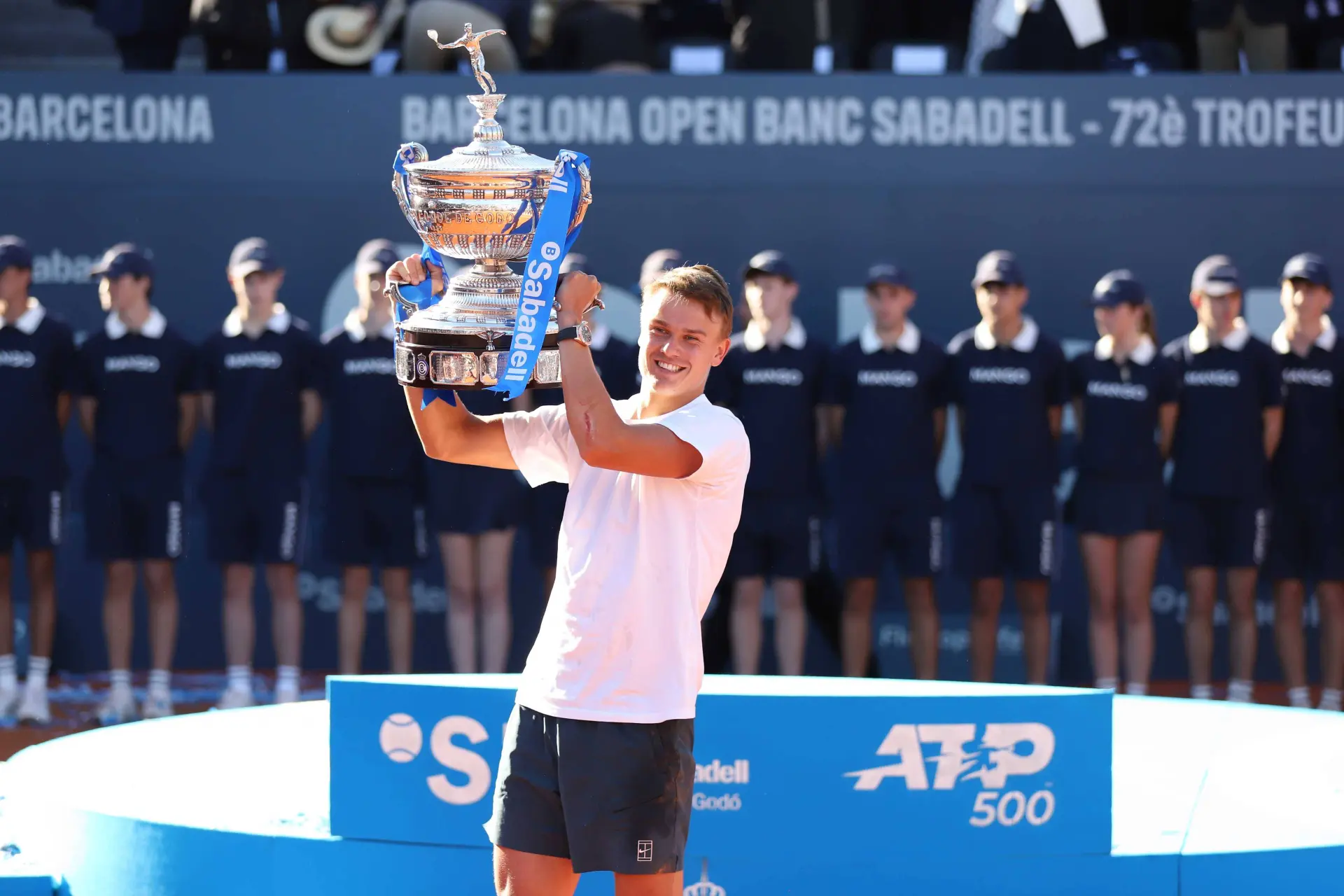
Rune was playing some of the best tennis of his career when it ended. In 2025 he won the Barcelona title over Carlos Alcaraz, 7-6(6), 6-2, and reached the Indian Wells final. Then, in the semifinals of the Nordic Open in Stockholm last October, he tore his left Achilles tendon against Ugo Humbert, and the season was over.
Heartbreak in Stockholm 💔 Holger Rune was forced to retire while leading his semi-final vs Ugo Humbert at the Nordic Open. Get well soon, Holger! 🤕 https://t.co/6QrVzkU585
— TNT Sports (@tntsports) October 18, 2025
The road back has been slower than anyone planned. He targeted Hamburg in May, then pulled out of Roland Garros and decided to wait for the grass. That did not happen either, and he ended up missing all four Grand Slams this year. A planned return at Cincinnati was pushed back again, with his mother saying the priority was building up his stamina first.
He finally came back at the Davis Cup, where he helped Denmark beat Bulgaria with wins over Grigor Dimitrov and Iliyan Radulov. On the ATP Tour, though, he is still looking for his first win: Kyrian Jacquet beat him 6-3, 6-1 in Tokyo, and in Shanghai he lost to Daniel Altmaier 1-6, 7-6(5), 6-4 after winning the first set easily. He said afterward that he felt on the right track, noting that he had won more points than his opponent.
| When | Ranking | Context |
| 2023 | No. 4 (career high) | Top-5 player, three Grand Slam quarterfinals in his career |
| May 2026 | No. 40 | Achilles recovery delayed, withdraws from Roland Garros |
| Early Aug. 2026 | No. 99 | Withdraws from Cincinnati before a planned return |
| Aug. 31, 2026 | No. 133 | Still no tour-level match played |
| Oct. 5, 2026 | No. 195 | After two tour-level losses; Davis Cup wins only |
| After Shanghai update | Outside the top 1,000 | Last 2025 points expire (projected beyond No. 1,200) |
Why the number is misleading
Rankings operate on a rolling 52-week window, meaning points earned at a tournament the previous year drop off when that event returns to the calendar. Rune's slide from No. 40 to the edge of the rankings is therefore not necessarily a verdict on his level, but a reflection of how many points he has lost during his absence.
By the time the ATP rankings update after Shanghai, his remaining points from the Stockholm semifinal and last year's Shanghai quarterfinal, where he lost to eventual champion Valentin Vacherot, will also have expired.
What keeps him eligible for tournament entry is a protected ranking, which allows an injured player to enter certain events based on his ranking before his absence. It can help Rune access Masters 1000 tournaments such as Shanghai despite his current position in the rankings. However, it does not award him any points. He must earn every ranking point again through his results on court.
That creates an unusual situation. A player returning with few or no points to defend can climb the rankings rapidly after a single deep run, making the early stages of a comeback particularly volatile. Rune can use his protected ranking for several months, meaning a carefully planned schedule could allow him to regain positions relatively quickly.
The key opportunities will include the Paris Masters - last Masters 1000 event of the season, followed by the Australian Open in January 2027 and the Sunshine Double in March, comprising Indian Wells and the Miami Open. These tournaments offer Rune valuable opportunities to rebuild his ranking, with consecutive wins and deep runs potentially allowing him to climb the standings rapidly.
The five comebacks at a glance
| Player | Lowest ranking | Cause | Return | What happened next |
| Juan Martín del Potro | No. 1,045 (2016) | Three left-wrist surgeries (2014–15) | Feb. 2016, first match in 11 months | Olympic silver (2016), Indian Wells title over Federer (2018), career-high No. 3 (Aug. 2018) |
| Tommy Haas | Outside the top 200 (start of 2012) | Hip and shoulder surgeries; out 14 months from Feb. 2010 | 2011 | Halle title over Federer (2012), year-end No. 21 (2012) and No. 12 (2013) |
| Andre Agassi | No. 141 (Nov. 1997) | Slump, not injury | Challenger circuit, late 1997 | Top 10 within a year, French Open and US Open titles (1999), world No. 1 again |
| Elina Svitolina | No. 1344 (Apr 2023) | Maternity leave | April 2023 | Strasbourg title as No. 508, Wimbledon semifinal (2023), top 10 again in Jan. 2026. |
| Naomi Osaka | No. 833 (Jan. 2024) | Maternity leave | Jan. 2024 | Year-end No. 59 (2024), No. 16 (2025), US Open semifinal (2025). |
Juan Martín del Potro: the original rock-bottom story
Del Potro is the original rock-bottom story. At 20 he won the 2009 US Open, beating Roger Federer in the final, and reached No. 4. He then lost much of 2010 to a right-wrist injury and fell as low as No. 485. He fought back to No. 4 again by 2014, then lost most of two years to left-wrist injuries and three surgeries, sliding to No. 1,045 in 2016. He has described being close to quitting before the third operation.
His return came at Delray Beach in February 2016, where he beat Denis Kudla 6-1, 6-4 in his first ATP match in 11 months. It took him six months to reach the Olympic final, where he won silver, and about two years to win Indian Wells over Roger Federer in 2018. By August of that year he was back at a career-high No. 3. Rune is 23; Del Potro was 27 when that climb began.

Juan Martin del Potro at Roland Garros 2019
Elina Svitolina: Just seven weeks for a title
Svitolina, ranked No. 24 when she left for maternity leave, came back at Charleston in April 2023 outside the top 800. Seven weeks later she won Strasbourg as the world No. 508, the fourth-lowest-ranked champion in WTA history, and reached the Wimbledon semifinals that summer. It was a reminder that the number on the screen and the player on the court can be very far apart.
Her top-10 return took longer: it arrived in January 2026 after an Auckland title and an Australian Open semifinal with wins over Mirra Andreeva and Coco Gauff. She is now No. 7. Her case is useful for Rune precisely because the first result came so early and the ranking took almost three years to confirm it.

Tommy Haas: the comeback at 33
Haas is the closest thing to a precedent for what Rune is facing, because his case was a long injury and not a slump. He had reached No. 2 in the world around 2002, and he did not play after February 2010, out for 14 months after surgery on his right hip and right shoulder, an injury described at the time as potentially career-ending. He returned in 2011 and reached the US Open third round, but by the start of 2012 he was 33 and ranked outside the top 200.
Instead of fading, he spent 2012 climbing. He reached the semifinals in Munich, qualified at Roland Garros after being denied a wild card and reached the third round, then won the Halle title by beating Roger Federer in the final. A Shanghai quarterfinal, with wins over No. 9 Janko Tipsarevic and No. 11 Nicolás Almagro, took him back into the top 20 in October, and he finished 2012 at No. 21. A year later he ended 2013 at No. 12, at 35.

Andre Agassi: from No. 1 to No. 141 and back
Agassi's case is different from Rune's, because his fall came from a slump and not from an injury, but it is still the most dramatic number on this list. On November 10, 1997, he was ranked No. 141, his lowest position since 1986, only 18 months after he had been world No. 1. He had skipped the Australian Open and Roland Garros that year, played 13 tournaments and won 11 matches, and his best result was a fourth-round loss to Patrick Rafter at the US Open.
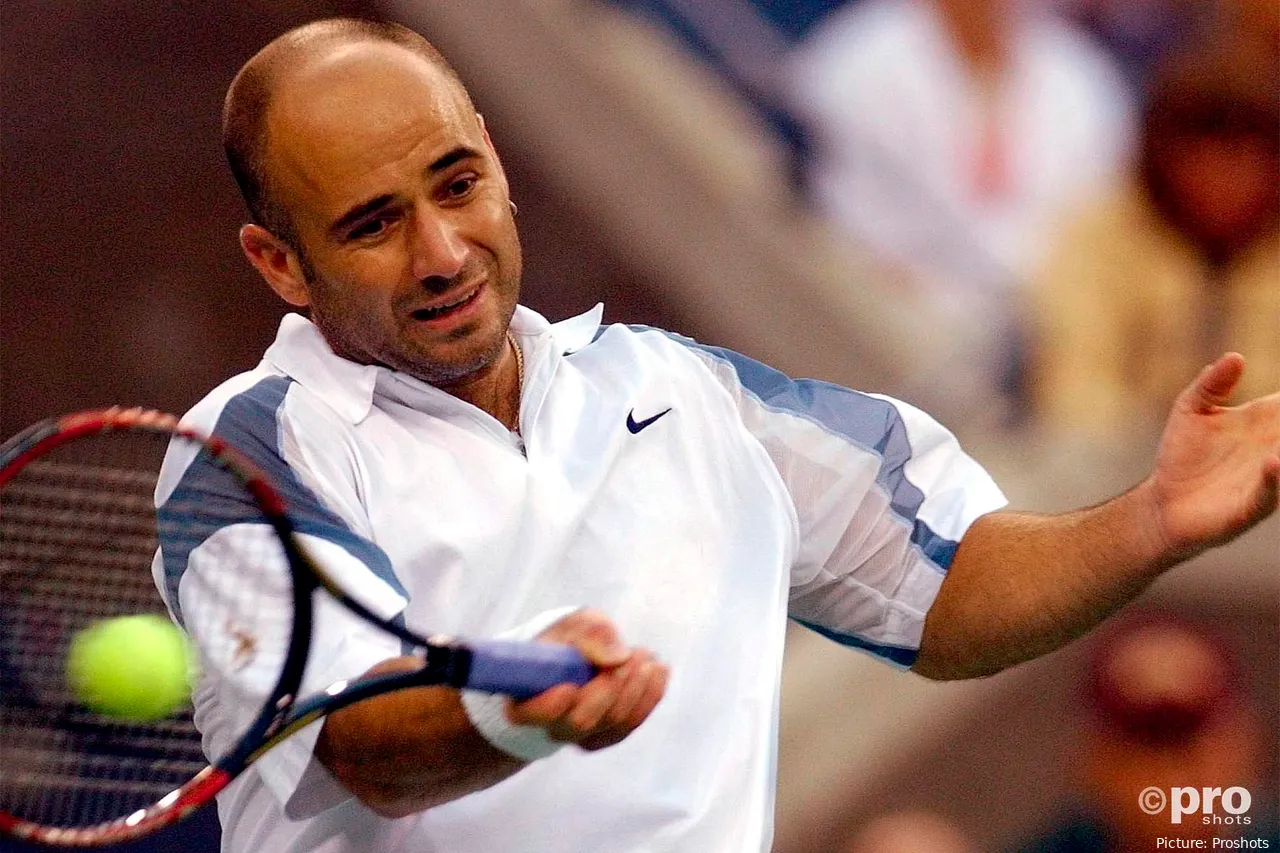
What he did next is the point. He went back to the Challenger circuit, reached the final in Las Vegas (losing to the No. 202 Christian Vinck) and won in Burbank, beating Sargis Sargsian. About a year after his low point he was back in the top 10, and reached No. 4 in November 1998. In 1999 he won the French Open to complete his career Grand Slam, then the US Open, and finished the year as world No. 1.
Naomi Osaka: a slower, steadier climb
Osaka's return to the WTA Tour followed a slower trajectory after she gave birth to her daughter in July 2023 and resumed competition in January 2024. She returned ranked No. 833, facing the challenge of rebuilding her ranking while adjusting to life on tour as a mother. Rather than immediately returning to the top, the Japanese gradually regained consistency and match sharpness, finishing 2024 at No. 59 as she worked her way back into contention against the leading players.
Her progress accelerated in 2025, when Osaka reached the US Open semifinals and the Canadian Open final, results that helped her finish the season at No. 16. Those runs demonstrated that she could again compete deep into major tournaments and WTA 1000 events, even if returning to the level that had made her a four-time Grand Slam champion required sustained work.
Osaka has continued to build on that progress in 2026, reaching her first Wimbledon quarterfinal and defeating Aryna Sabalenka along the way. Her journey from No. 833 to the top 20 took roughly two years, making it a useful example of the time and consistency required to rebuild a ranking after an extended absence.

Naomi Osaka of Japan reacts during her match against Leylah Fernandez of Canada during round of 16 National Bank Open Tennis
What it means for Rune: hope and caution
The common thread in all five cases is that the ranking lagged the level. Svitolina won a title at No. 508, Haas won Halle over Federer in a season he began outside the top 200, and Agassi was back in the top 10 within a year of touching No. 141. None of them waited for the number to catch up first. The results came, and the number followed, sometimes quickly and sometimes over years.
Read also
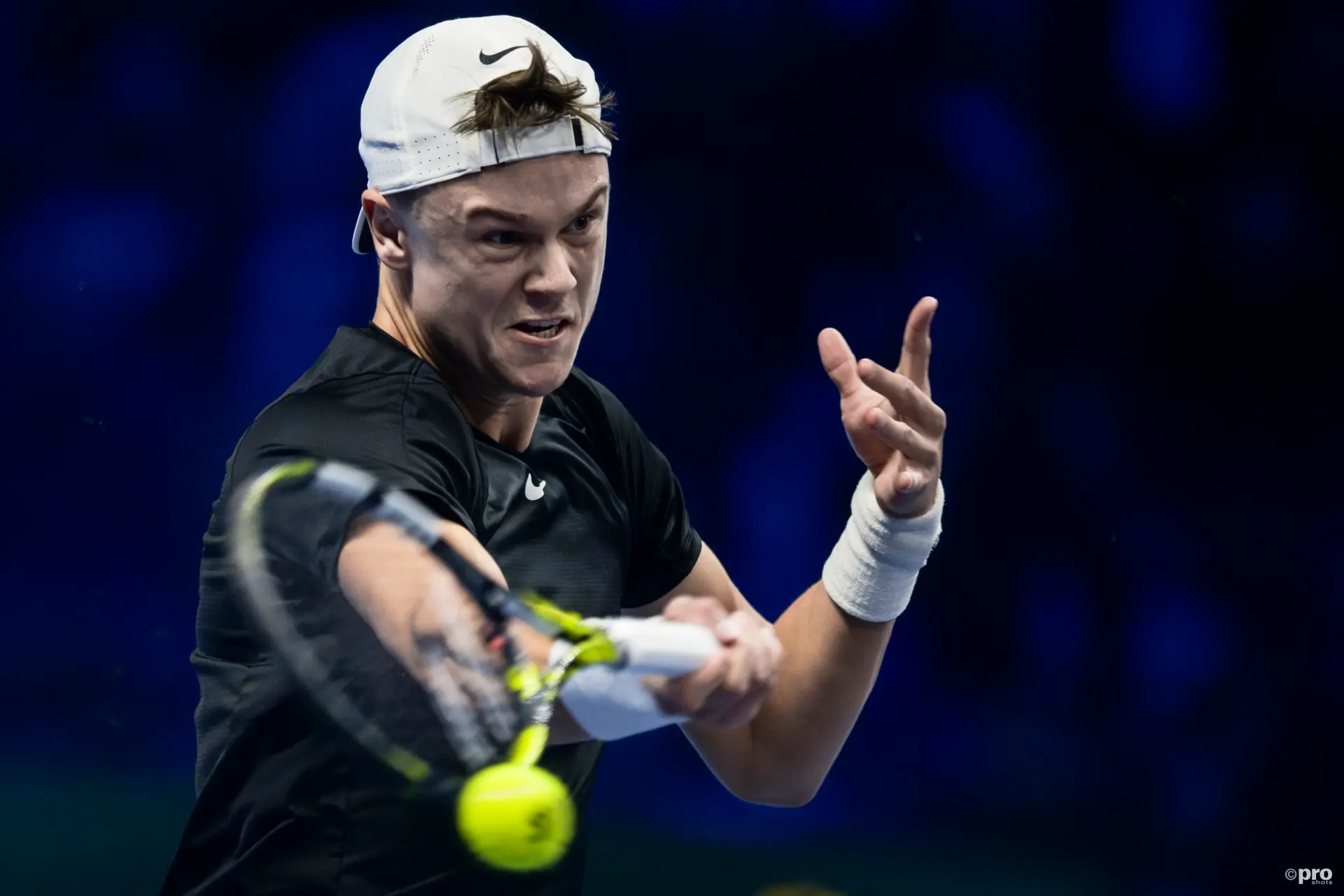
The caution is real. There is no long list of top men's players who tore an Achilles, came back within months and played at the same level, so the precedents are imperfect. Alcaraz, who trained with Rune earlier this year, offered similar advice: be patient, because it will be a slow process, but he will get where he wants to go.
That is probably the right way to read it. Rune's ranking after Shanghai will say very little about what comes next, and the next few weeks, the indoor swing in particular, will say a lot more. The five names above suggest the number can fall to almost nothing and still not define the player. Whether Rune follows them is a question of results, not points, and that is a question he has not yet had the chance to answer.

Cristhián AvilaTennis Journalist
Cristhián Ávila is a tennis journalist based in Santiago, Chile, and has been part of the TennisUpToDate team since early 2023. He covers the ATP and WTA Tours as well as all four Grand Slams, producing breaking news, match reports, analysis, and regular liveblogs from major tournaments.
His reporting combines statistical analysis with clear explanation, helping readers understand tactical developments, player form, and broader storylines across the tour. Working fluently in both Spanish and English, Cristhián collaborates with an international editorial team and contributes to comprehensive global coverage. As part of his work, he has conducted interviews and media interactions with leading figures in the sport, including Caroline Wozniacki and John McEnroe.
In his journalism, Cristhián places strong emphasis on careful sourcing, editorial accuracy, and updating articles promptly when new, verified information becomes available. His coverage is grounded in research, context, and direct engagement with professional tennis.
claps 0visitors 0
Just In



Popular News
Latest Comments
- great articlestennisseserver07-10-2026
- Medvedev was leading Djokovic 7-5, 3-5 when an attempted return..' NO you ignorants, Djokovic was leading .weiss05-10-2026
- No more bullshit "Wildcards" to these two. Qualify like everyone else -- there will be cameras there, too. Time to scream... WTF ????!!!!
 mandoist29-09-2026
 - Let's not BS the general public -- Sabalenka started showing cracks in her game last season. Her losses and near-losses started at about the same time she began being distracted by Fame (constant Selfies, making TV commercials, magazine shoots, endless Social Media nonsense, etc., etc.) One would think even Saba could recognize the parallels with others who failed before her -- Raducanu, Giorgi, Bouchard to name a few.mandoist25-09-2026
- Gross!! Hey Raducanu, Giorgi, and Bouchard -- reserve a seat at your Social Media Selfie table for Saba + Naomi. They're heading in your direction soon enough.mandoist24-09-2026
- And then these same players will complain about how lengthy their season’s were and need more time-off. I’m all for more tennis but the amount of tennis we get now is actually kind of crazy! We all need a break, especially the players.DaveyWavey23-09-2026
- You should do a comparison article for "different kinds of justice" the courts decide for tennis players. I can think of at least three players who received very small bans of a few months, however Tara Moore has been fighting for her literal survival the past few years. It seems odd considering she is not a "name" player, unlike the other cases.DaveyWavey22-09-2026
- PRIZE MONEY & POINTS Winner - $185,500 Finalist - $114,500 Semi-Finalist - $66,003 Quarter-Finalist - $35,000 Round of 16 - $18,045 Round of 32 - $13,005 Winner - 500 Finalist - 325 Semi-Finalist - 195 Quarter-Finalist - 108 Round of 16 - 60 Round of 32 - 1DaveyWavey20-09-2026
- Pegula withdrew from this Singapore event
 tennishappens19-09-2026
 - Serena Williams chose her tournaments. It's not such a bad idea.MuswellHillbilly17-09-2026

Loading