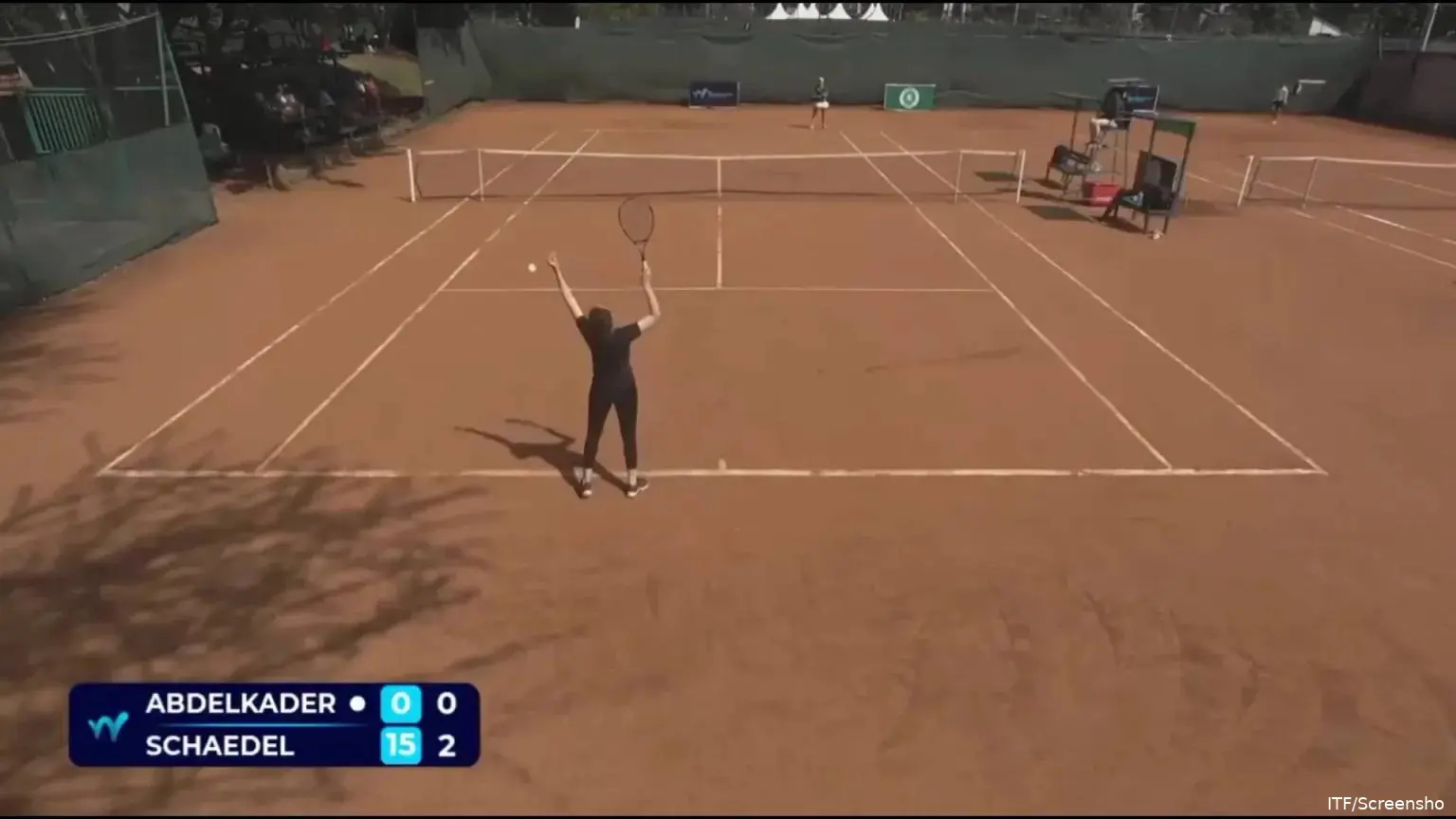
A video from the first round main draw of a $35,000 professional tournament in Nairobi has gone viral today. It’s not viral because of a great rally or an underdog breakthrough. It’s viral because it barely resembles tennis.
The wild card entrant does not know how to keep score. She does not understand the rules. She cannot execute even the most basic strokes. Over the course of the match, she wins three points—two coming from her opponent’s double faults. Watching it feels less like sport and more like a parody. Or worse, a breakdown.
This is not harmless internet fodder. It is tennis carnage. And every time something like this surfaces, it chips away at the game’s credibility in a way that no marketing campaign can fix.
Tennis sells itself as a global, merit-based sport. Rankings matter. Pathways matter. Earning your way into a professional draw is supposed to mean something—to players grinding on the Futures circuit, to sponsors writing checks, to fans investing their time and trust. When a first-round main draw match looks indistinguishable from a beginner clinic gone wrong, that promise collapses.
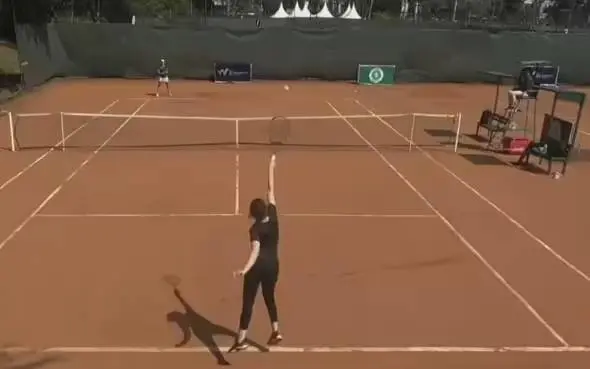
The uncomfortable truth is that tennis has a standards problem. And it’s not confined to one country, one tournament, or one player. Wild cards exist for a reason. They are meant to support development, reward promise, and grow the game locally. They are not meant to be participation trophies. When wild cards are handed out without basic competency thresholds, they stop being developmental tools and start becoming evidence exhibits in everything critics say about the sport.
A conversation that needs to happen
This is where the conversation always gets uncomfortable, because it forces tennis to confront its long-running credibility gap.
At times, tennis remains deeply corrupt—not always in the obvious, headline-grabbing ways, but in the quiet, structural ones. Favor trading. Box-checking development programs. Federations prioritizing optics or politics over standards. A willingness to look the other way so long as the draw gets filled and the event goes on. That mindset is short-sighted. And it’s costing the sport more than it realizes.
For the players who actually belong at that level—many of whom are barely scraping together travel money—moments like this feel like a slap in the face. For sponsors, they raise an obvious question: what exactly are we funding? For fans, especially new ones, the takeaway is simple and brutal—this isn’t serious.
Tennis already struggles with perception issues. The lower tiers of the professional game are underfunded, poorly understood, and vulnerable to integrity concerns. When a viral clip reinforces the idea that professional draws can include players who don’t know the rules, it doesn’t just embarrass one tournament. It undermines the entire ecosystem. The fix is not complicated, but it requires will.
Minimum standards should exist at every professional level. Not aspirational guidelines. Actual enforcement. If a player cannot demonstrate baseline competence—rules knowledge, stroke fundamentals, match readiness—they should not be in a professional main draw. Period. Development can and should happen elsewhere.
This is not about elitism. It’s about respect—for the game, for the players who have earned their place, and for the audiences tennis desperately needs to keep. Because every time tennis stops looking like tennis, everyone loses.

Aron SolomonGuest Author
A Pulitzer Prize-nominated journalist for his groundbreaking op-ed in The Independent exposing the NFL’s “race-norming” policies, Aron Solomon, JD, is a globally recognized thought leader in law, media, and strategy.
As Chief Strategy Officer for AMPLIFY, he leverages his deep expertise to shape the future of legal marketing. Aron has taught entrepreneurship at McGill University and the University of Pennsylvania and was honored as a Fastcase 50 recipient, recognizing him among the world’s top legal innovators. A prolific commentator on law, business, and culture, his insights regularly appear in Newsweek, The Hill, Crunchbase News, and Literary Hub.
He has also been featured in The New York Times, Fast Company, Fortune, Forbes, CBS News, CNBC, USA Today, ESPN, TechCrunch, BuzzFeed, Venture Beat and countless other leading global media outlets. We are proud to have Aron on board at TennisUpToDate, where his deep tennis expertise enriches the site with sharp, original columns that connect the sport to wider cultural debates.
claps 0visitors 0
Just In



Popular News


Latest Comments
- Does Sinner need that 4.5 mil? I doubt it. He can make that with three modelling gigs!😅🤣Rapunzel21-10-2026
- Did "People Magazine" purchase this website? This nonstop storyline is bullshit.
 mandoist21-10-2026
 - Listen... this is of no concern to anyone but these two. Deal with your own issues -- most of us have our own. Thanks, media, for these insignificant follow-ups which are meaningless.mandoist21-10-2026
- This is so very very sad, for all three of them. I truly thought they had an unbreakable bond, but life throws up so many differing challenges. Having your homeland suffering in such a terrible way, makes happiness lose out to guilt as well. Our thoughts are with them. X💔bjsexton20-10-2026
- I have lost all respect for Svitolina! Could she not have waited until he had played at the Paris Masters!!! She is selfish and don't give a damn about Gael. That is NOT how love is demonstrated Elina!!Rapunzel19-10-2026
- Perhaps convenient tennis tour sex is not a strong enough experience in which to base a marriage?mandoist19-10-2026
- Fight the Good Fight... Tennis (sports in general) need more Humans such as yourself.mandoist18-10-2026
- When is WTA going to mandate Genetic Testing (DNA) ???mandoist18-10-2026
- Hey, Dan... you just wake up from a coma? Regardless -- Thanks for the comedy this morning!mandoist18-10-2026
- Two Things: 1. Stop allowing these Spoiled Trust-Fund Elitists to behave badly. Your little hand-slaps do not deter them. 2. STOP the incessantly annoying "towel wiping" nonsense!!!!mandoist15-10-2026

Loading