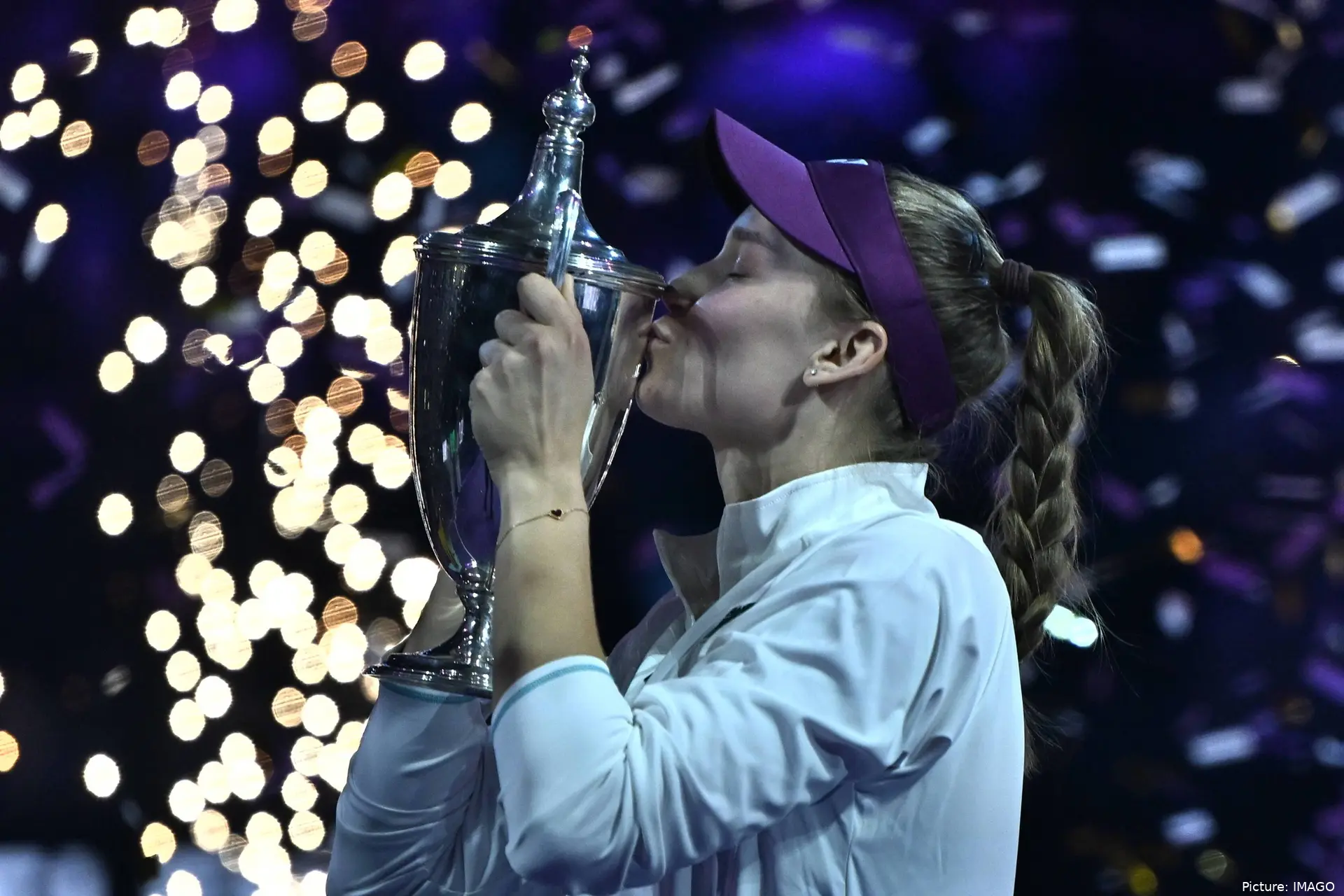
The WTA finally did something big. Not “big for the WTA,” but actually big. A record-shattering, industry-recalibrating, half-billion-dollar deal with Mercedes-Benz that will rename the tour “The WTA Tour driven by Mercedes-Benz.”
This is the kind of move serious sports organizations make. It’s the kind of partnership that signals both relevance and ambition. And frankly, it’s precisely the kind of partnership the WTA has failed to land for decades.
Let’s be honest: Mercedes isn’t just a sponsor. It’s cultural capital. It’s commercial muscle. It’s the rare global brand whose mere presence says, “We take this sport seriously, and you should too.” Which brings us to Hologic. Or rather… why no one ever talked about Hologic.
The Hologic era: Good intentions, zero spark
When the WTA announced in 2022 that Hologic would become its title sponsor, it spun the deal as transformative. And at the time, the $18–20 million a year commitment was substantial. But here’s the problem: outside of earnings calls and biotech circles, almost nobody knew what Hologic was. Many fans still struggle to pronounce it. Even fewer could explain what the company actually does.
Hologic wasn’t a prestige partner. It wasn’t a global brand. It wasn’t a brand with cultural heat. It was a placeholder when the WTA desperately needed credibility. The intentions were fine. The optics? Meh. Title sponsors in major sports should be brands that elevate the property. With Hologic, the WTA spent years trying to elevate its sponsor instead. That’s not how power dynamics in sponsorships are supposed to work.
Mercedes arrives and the room immediately changes
Mercedes-Benz is different. It’s one of the most recognizable names on earth, synonymous with engineering, performance, durability, design, and—let’s just call it what it is—status.
Mercedes doesn’t need the WTA. The WTA needs Mercedes. And that’s exactly why this deal works. With Mercedes, the WTA finally has a partner whose brand strength reinforces the tour rather than forcing fans to Google it. It’s a ridiculously big instant credibility upgrade:
- Massive global recognition.
- Multi-generational legacy.
- Deep experience in elite sports sponsorship, from Formula 1 to soccer to golf.
- A brand identity built on excellence, not obscurity.
For years, the WTA has acted like a big-league property while being sponsored like a mid-tier trade association. Now? The optics finally match the ambition.
A $500 Million reality check for the WTA
Let’s call this what it is: the most impressive business deal in the WTA’s history. A partnership expected to exceed $500 million isn’t just a lifeline, it’s a declaration. It tells the broader sports world that women’s tennis can command the same kind of investment as major men’s leagues. It tells other global sponsors they’ve been underestimating the space. And it tells players—especially the ones who have spent years watching the ATP get the lion’s share of commercial power—that their tour isn’t done fighting.
As someone who has been extremely critical of the WTA’s leadership (and for good reason), this is one of the rare moments where they deserve full credit. Deals of this scale don’t happen by luck. They require strategy, persistence, and a willingness to finally aim higher than the biotech sector.

Why this matters beyond money
The WTA hasn’t just struggled financially in recent years. It has struggled emotionally. Its leadership often looked tentative, reactive, and unsure of its place in the sports hierarchy. The Peng Shuai crisis exposed cracks. The China return exposed confusion. The Hologic deal, while helpful, exposed the tour’s lack of commercial pull.
Mercedes changes the narrative. It signals momentum in a moment when women’s sports are exploding in visibility and investment. It aligns the WTA with a luxury brand rather than a medical diagnostics company. And it tells the world—and more importantly, players—that the tour is finally choosing power over survival.
The beginning of a new era?
It’s easy to mock the WTA. Fans do it. Journalists do it. Players do it, sometimes publicly. But this deal is a reminder that the organization still has the potential to be a global sports juggernaut when it stops playing small. This partnership doesn’t fix everything. The WTA still needs clarity on its calendar, stronger governance, a more coherent marketing strategy, and a more confident voice. Money alone doesn’t fix systemic issues. But money from the right partner? That changes the entire playing field.
Mercedes gives the WTA instant legitimacy and long-term stability. It gives players a sense that the tour is investing in them rather than merely managing them. And it gives fans a reason to believe the WTA can finally match the scale and stature of the athletes who carry it. The WTA didn’t just get a sponsor. It got a brand that lifts the whole enterprise.
Hologic never did that. Mercedes will. And for once, the WTA didn’t just survive. It leveled up.


Aron SolomonGuest Author
A Pulitzer Prize-nominated journalist for his groundbreaking op-ed in The Independent exposing the NFL’s “race-norming” policies, Aron Solomon, JD, is a globally recognized thought leader in law, media, and strategy.
As Chief Strategy Officer for AMPLIFY, he leverages his deep expertise to shape the future of legal marketing. Aron has taught entrepreneurship at McGill University and the University of Pennsylvania and was honored as a Fastcase 50 recipient, recognizing him among the world’s top legal innovators. A prolific commentator on law, business, and culture, his insights regularly appear in Newsweek, The Hill, Crunchbase News, and Literary Hub.
He has also been featured in The New York Times, Fast Company, Fortune, Forbes, CBS News, CNBC, USA Today, ESPN, TechCrunch, BuzzFeed, Venture Beat and countless other leading global media outlets. We are proud to have Aron on board at TennisUpToDate, where his deep tennis expertise enriches the site with sharp, original columns that connect the sport to wider cultural debates.
claps 0visitors 0
Just In

Popular News
Latest Comments
- A healthy Qinwen may be hard to stop next season. She was already scaring her opponents before her medical leave(s). Unfortunately, Zheng insisted on singing again. On the positive side -- Mirra did not sing!! ;~}
 mandoist11-10-2026
 - Where is it written that athletes, entertainers... People in general... are mandated to keep looking at -- or even using [anti]Social Media? Public & private figures consistently complain and reveal their concerns about negativity and violence thrown at them -- yet they insist on participating. Avoid it, don't use it, don't read it. It's okay to occasionally look up at the World instead beating your eyes & thumbs to death on The Inventions out there.mandoist11-10-2026
- great articlestennisseserver07-10-2026
- Medvedev was leading Djokovic 7-5, 3-5 when an attempted return..' NO you ignorants, Djokovic was leading .weiss05-10-2026
- No more bullshit "Wildcards" to these two. Qualify like everyone else -- there will be cameras there, too. Time to scream... WTF ????!!!!mandoist29-09-2026
- Let's not BS the general public -- Sabalenka started showing cracks in her game last season. Her losses and near-losses started at about the same time she began being distracted by Fame (constant Selfies, making TV commercials, magazine shoots, endless Social Media nonsense, etc., etc.) One would think even Saba could recognize the parallels with others who failed before her -- Raducanu, Giorgi, Bouchard to name a few.mandoist25-09-2026
- Gross!! Hey Raducanu, Giorgi, and Bouchard -- reserve a seat at your Social Media Selfie table for Saba + Naomi. They're heading in your direction soon enough.mandoist24-09-2026
- And then these same players will complain about how lengthy their season’s were and need more time-off. I’m all for more tennis but the amount of tennis we get now is actually kind of crazy! We all need a break, especially the players.DaveyWavey23-09-2026
- You should do a comparison article for "different kinds of justice" the courts decide for tennis players. I can think of at least three players who received very small bans of a few months, however Tara Moore has been fighting for her literal survival the past few years. It seems odd considering she is not a "name" player, unlike the other cases.DaveyWavey22-09-2026
- PRIZE MONEY & POINTS Winner - $185,500 Finalist - $114,500 Semi-Finalist - $66,003 Quarter-Finalist - $35,000 Round of 16 - $18,045 Round of 32 - $13,005 Winner - 500 Finalist - 325 Semi-Finalist - 195 Quarter-Finalist - 108 Round of 16 - 60 Round of 32 - 1DaveyWavey20-09-2026

Loading