COLUMN: The Nick Kyrgios–Aryna Sabalenka “Battle of the Sexes” isn’t entertainment. it’s embarrassing.
WTA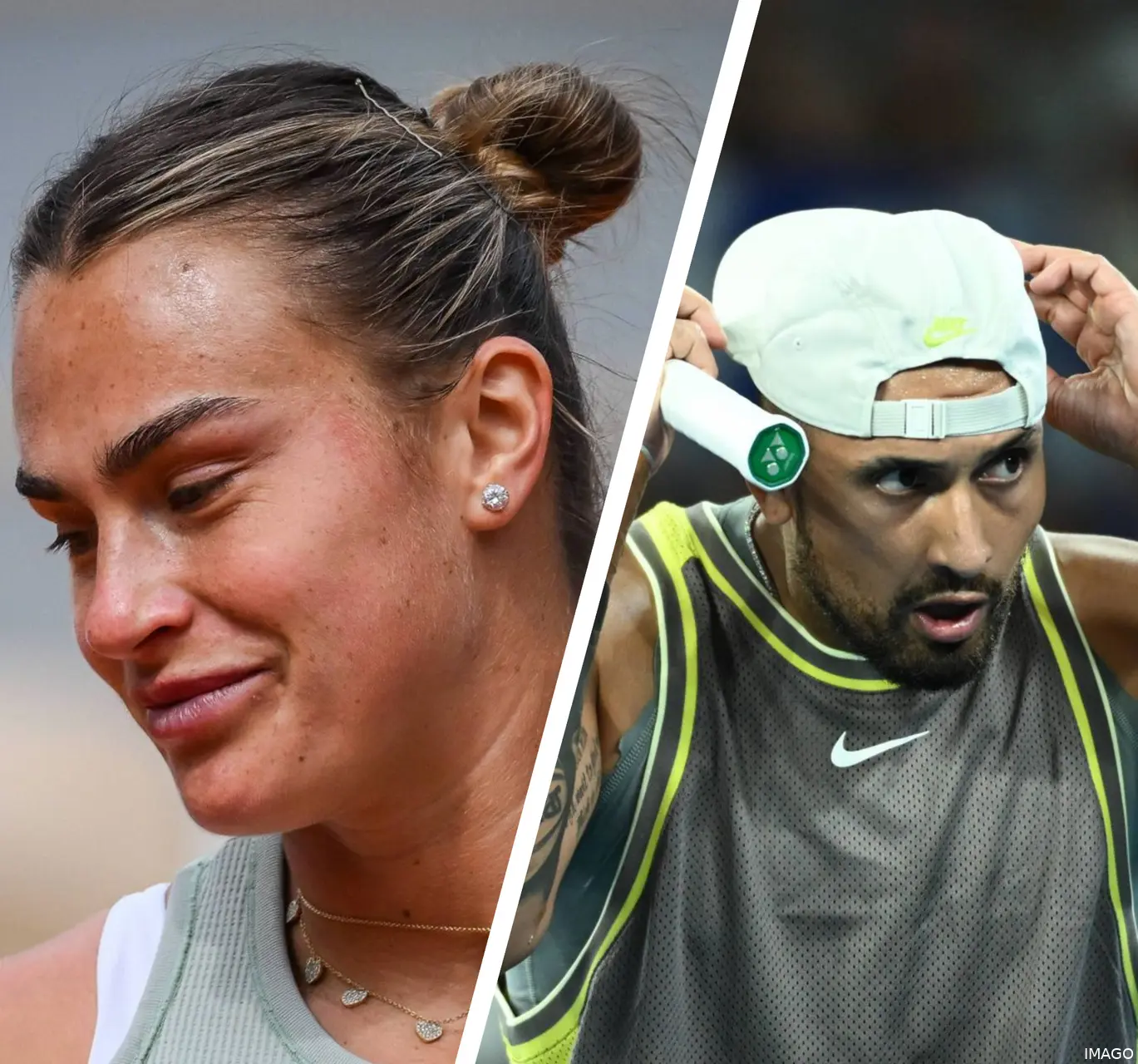
Every few years, sports producers get bored and decide to dust off a bad idea. This time, it’s the “Battle of the Sexes,” repackaged for an era that rewards outrage over substance. Enter Nick Kyrgios and Aryna Sabalenka, two elite athletes in their own right, now cast as characters in a spectacle designed to provoke more clicks than thought.
Let’s be honest: this event isn’t about tennis. It isn’t about gender equality. It isn’t a tribute to Billie Jean King. It’s a circus—built on conflict, engineered for attention, and marketed with the subtlety of a reality-TV reunion show.
The tennis will be awful
Even if you set aside the cultural weirdness, the actual tennis is poised to be excruciating.
Sabalenka is one of the most powerful players in the women’s game, but physics is physics. She will be physically outmatched by a man even if that man is, like Kyrgios, long removed from the grind of the ATP Tour. And let’s be clear: Kyrgios no longer has the mental, emotional, or physical engine required to play professional men’s tennis today or ever again. He can still summon brilliance in short bursts—he always could—but the sustained, top-end demands of the ATP Tour are behind him. This exhibition is the only venue where he can still pretend otherwise.

So what we’re left with is a fundamentally uneven matchup between a woman forced into a strength-disparity spectacle and a man whose body and career can no longer survive the real sport. That is not tennis. It’s theater, and not the good kind.
The Kyrgios problem: attention as fuel
Nick Kyrgios has always been a virtuoso of volatility. His talent is undeniable. His relationship with attention is even more undeniable. He thrives on spectacle, on provocation, on the constant hum of public reaction. At times, it has made him compelling. More often, it has made him exhausting.
In this match, he will likely win the points. But winning the points isn’t the same as winning at anything that matters. The more the spotlight enables the worst incentives of his public persona, the more he sinks into the caricature the event is built around. The match will feed him attention, and that attention is precisely what has pushed him into a tragic loop: the louder the noise, the more he becomes its prisoner.
The Sabalenka problem: The wrong role in the wrong moment
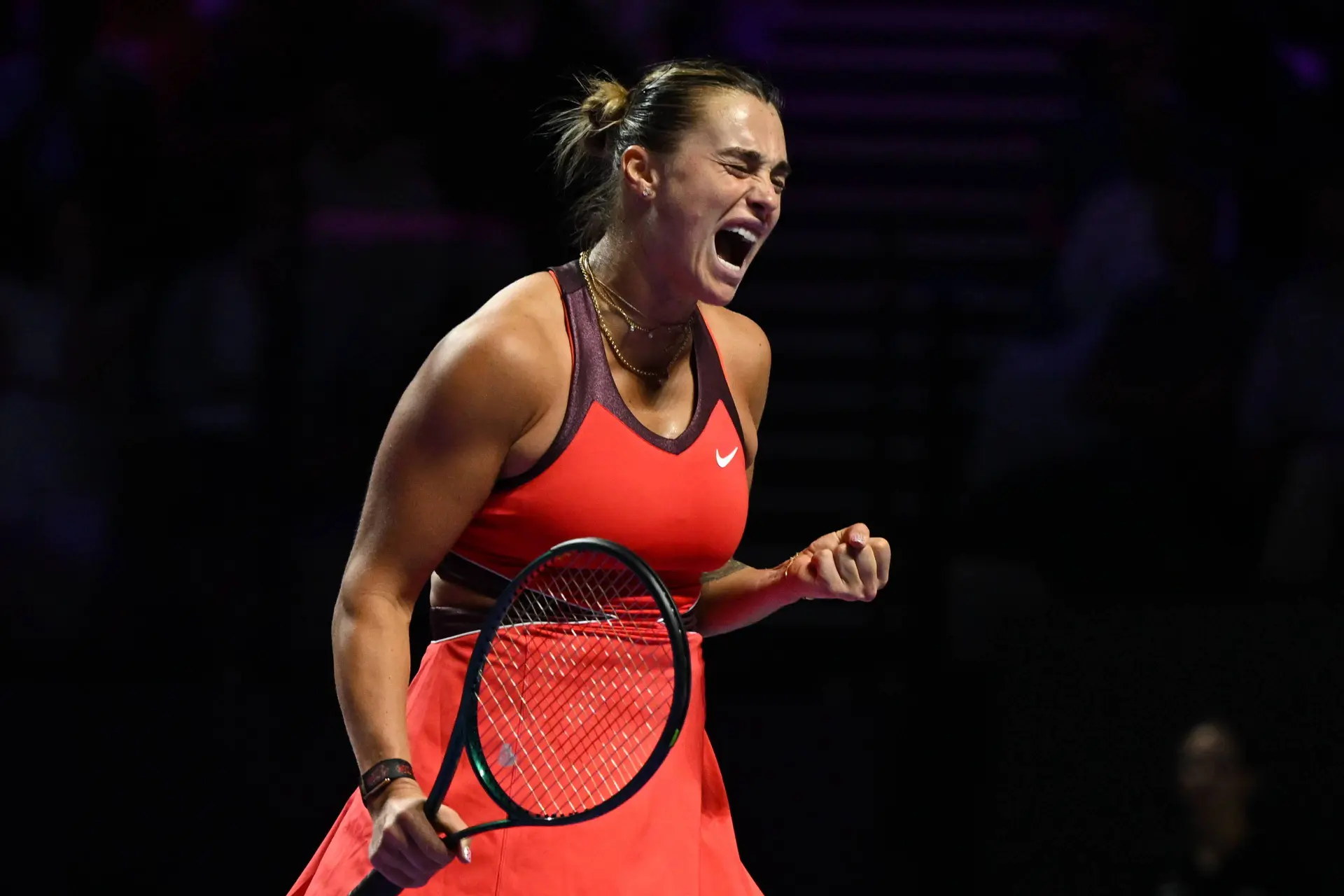
Sabalenka is a tremendous athlete who deserves to be showcased on the merits of her game. Instead, this event reduces her to a prop in a man-versus-woman novelty act that should have been retired decades ago.
She isn’t competing to elevate women’s tennis. She’s competing to satisfy a storyline that someone in marketing decided would “go viral.” And in agreeing to participate, she ends up reinforcing a spectacle that undermines the very legitimacy of the sport she represents.
No woman benefits from this matchup. Not Sabalenka, not the WTA, and not the next generation of players who shouldn’t have to endure the tired trope that women’s tennis is only interesting when measured against men.
A throwback to a time we shouldn’t revisit
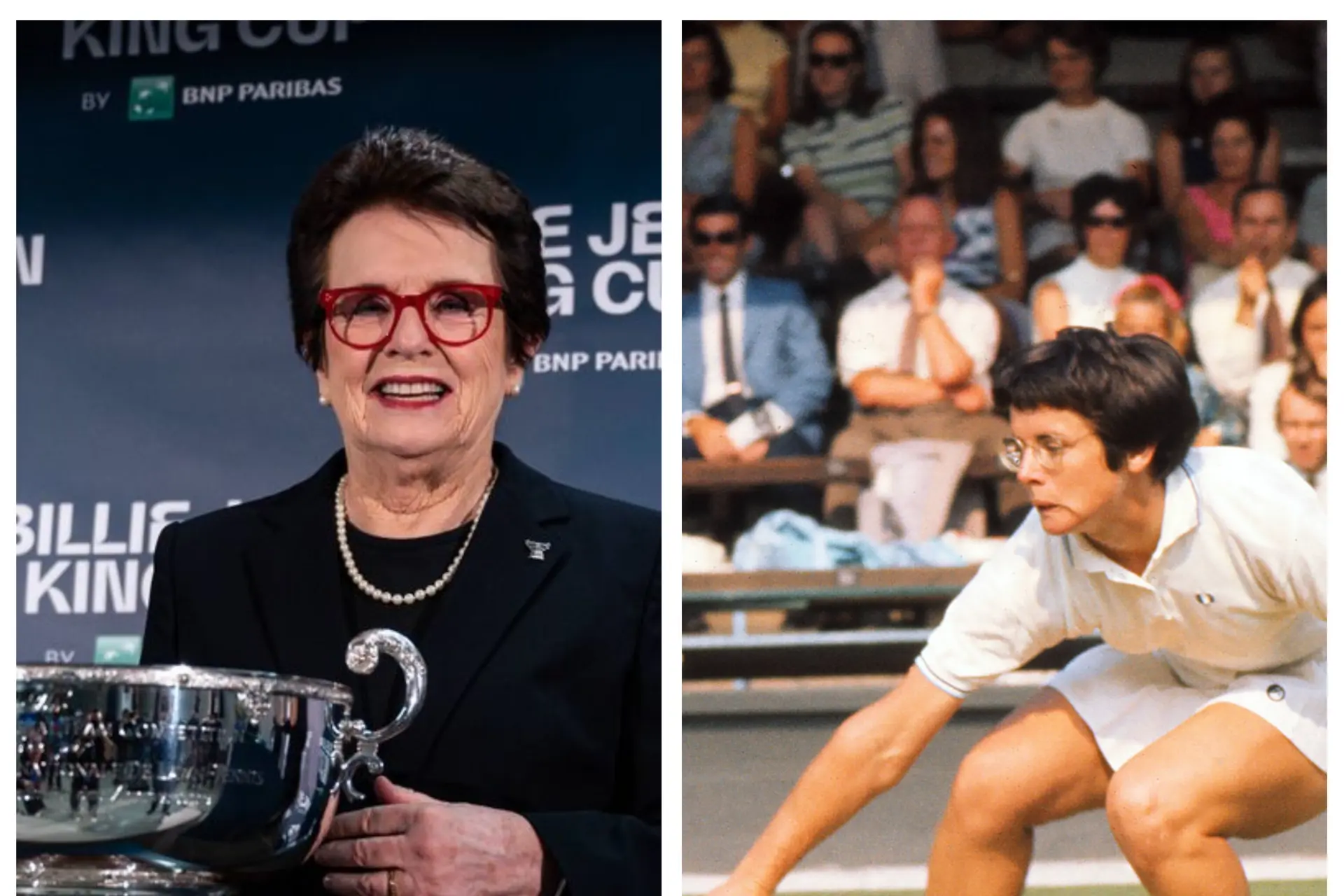
Billie Jean King’s victory over Bobby Riggs in 1973 mattered. It changed culture. Women were fighting for legitimacy. The moment had purpose.
But today, women’s tennis is the most successfully marketed women’s sport on Earth. It commands massive audiences on its own. It has stars, depth, money, and credibility. To drag it back into a carnival show that implicitly suggests its value must still be proven against a male opponent is insulting.
This isn’t progress. It’s regression with a sponsorship package.
We’re rewarding all the wrong things
At the center of this farce is a simple truth: the entire enterprise is built on the notion that if you engineer enough outrage, people will watch. It’s sports entertainment in its cheapest form. It mistakes noise for relevance, heat for substance, and spectacle for value.
The players will get paid. The promoters will get their clicks. Kyrgios will get his attention. Sabalenka will get swept into someone else’s narrative.
Everyone gets something except the sport itself.
The only rational response: don’t watch
Tennis deserves better than this. Fans deserve better than this. And culturally, we deserve better than one more artificially manufactured gender showdown designed to distract us from the reality that the tennis won’t be good, the dynamic won’t be healthy, and the message won’t be meaningful.
Kyrgios may win the match. Sabalenka will play the role the event asks of her. But the entire thing is still a loss. For the sport. For the conversation. For anyone who hoped we had evolved past this kind of sideshow.
The simplest solution is the right one:
Look away. Let it flop. Tennis moves forward when we stop rewarding the things that hold it back.

Aron SolomonGuest Author
A Pulitzer Prize-nominated journalist for his groundbreaking op-ed in The Independent exposing the NFL’s “race-norming” policies, Aron Solomon, JD, is a globally recognized thought leader in law, media, and strategy.
As Chief Strategy Officer for AMPLIFY, he leverages his deep expertise to shape the future of legal marketing. Aron has taught entrepreneurship at McGill University and the University of Pennsylvania and was honored as a Fastcase 50 recipient, recognizing him among the world’s top legal innovators. A prolific commentator on law, business, and culture, his insights regularly appear in Newsweek, The Hill, Crunchbase News, and Literary Hub.
He has also been featured in The New York Times, Fast Company, Fortune, Forbes, CBS News, CNBC, USA Today, ESPN, TechCrunch, BuzzFeed, Venture Beat and countless other leading global media outlets. We are proud to have Aron on board at TennisUpToDate, where his deep tennis expertise enriches the site with sharp, original columns that connect the sport to wider cultural debates.
claps 2visitors 2
Just In

Popular News
Latest Comments
- A healthy Qinwen may be hard to stop next season. She was already scaring her opponents before her medical leave(s). Unfortunately, Zheng insisted on singing again. On the positive side -- Mirra did not sing!! ;~}
 mandoist11-10-2026
 - Where is it written that athletes, entertainers... People in general... are mandated to keep looking at -- or even using [anti]Social Media? Public & private figures consistently complain and reveal their concerns about negativity and violence thrown at them -- yet they insist on participating. Avoid it, don't use it, don't read it. It's okay to occasionally look up at the World instead beating your eyes & thumbs to death on The Inventions out there.mandoist11-10-2026
- great articlestennisseserver07-10-2026
- Medvedev was leading Djokovic 7-5, 3-5 when an attempted return..' NO you ignorants, Djokovic was leading .weiss05-10-2026
- No more bullshit "Wildcards" to these two. Qualify like everyone else -- there will be cameras there, too. Time to scream... WTF ????!!!!mandoist29-09-2026
- Let's not BS the general public -- Sabalenka started showing cracks in her game last season. Her losses and near-losses started at about the same time she began being distracted by Fame (constant Selfies, making TV commercials, magazine shoots, endless Social Media nonsense, etc., etc.) One would think even Saba could recognize the parallels with others who failed before her -- Raducanu, Giorgi, Bouchard to name a few.mandoist25-09-2026
- Gross!! Hey Raducanu, Giorgi, and Bouchard -- reserve a seat at your Social Media Selfie table for Saba + Naomi. They're heading in your direction soon enough.mandoist24-09-2026
- And then these same players will complain about how lengthy their season’s were and need more time-off. I’m all for more tennis but the amount of tennis we get now is actually kind of crazy! We all need a break, especially the players.DaveyWavey23-09-2026
- You should do a comparison article for "different kinds of justice" the courts decide for tennis players. I can think of at least three players who received very small bans of a few months, however Tara Moore has been fighting for her literal survival the past few years. It seems odd considering she is not a "name" player, unlike the other cases.DaveyWavey22-09-2026
- PRIZE MONEY & POINTS Winner - $185,500 Finalist - $114,500 Semi-Finalist - $66,003 Quarter-Finalist - $35,000 Round of 16 - $18,045 Round of 32 - $13,005 Winner - 500 Finalist - 325 Semi-Finalist - 195 Quarter-Finalist - 108 Round of 16 - 60 Round of 32 - 1DaveyWavey20-09-2026

Loading