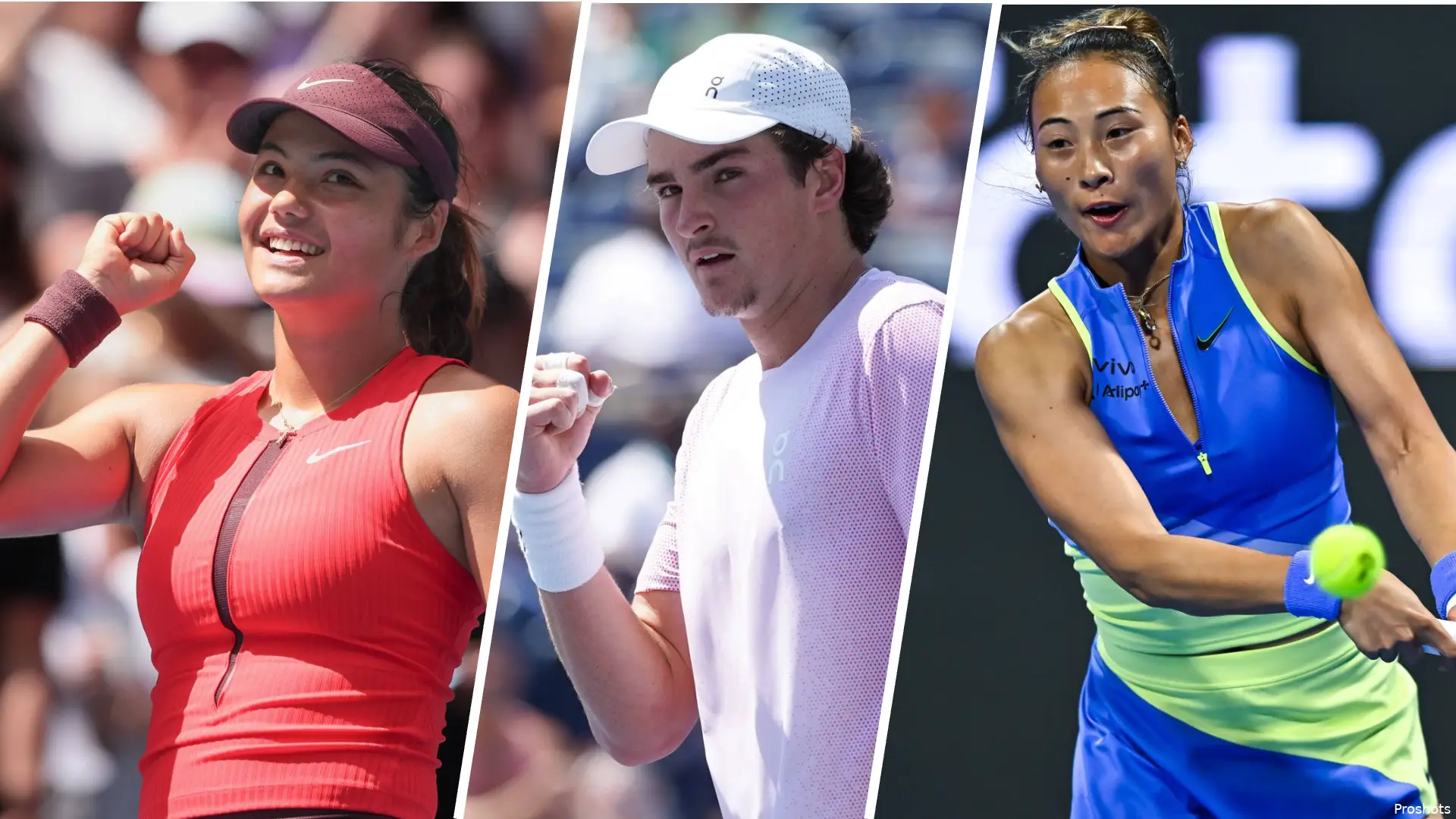
A tennis ranking is supposed to tell us where a player stands at a given moment, but the number next to their name does not always tell the full story. A rolling 52-week system can take months to catch up with a sudden rise in level, while injuries or prolonged slumps can leave a player ranked according to results that no longer resemble their current potential. That is where the sport's ranking ghosts begin to appear.
Emma Raducanu, Zheng Qinwen and Arthur Fils offer three very different examples of that phenomenon, while Learner Tien and Iva Jovic show how quickly a ranking can catch up when strong results continue to arrive. Across the ATP and WTA Tours, we looked at six players whose numbers raise questions about whether their ranking accurately reflects the level they are producing — or the level they could produce right now.
Emma Raducanu
Raducanu is the clearest case on this list. She reached world No. 23 in March, her best position since 2022, off the back of a run of results that suggested the version of her that won the 2021 US Open was genuinely back. Then injuries intervened: a foot problem, a post-viral illness and eventually a stress fracture in her leg that has now kept her out of both Wimbledon and the US Open.
Her ranking has slid to world No. 99 as a direct result, not because her level has actually regressed but because she simply hasn't been able to play. Her last appearance came in the Queen's Club Championships final, the first WTA 500 final of her career, and she arrived with serious ambitions for Wimbledon. Instead, the injury forced her to withdraw just when she appeared to be playing with more confidence than ever.
That's the purest form of a ranking ghost — a number that reflects lost weeks rather than lost quality, attached to a player who was, as recently as the spring, playing some of her best tennis in years. The frustrating part for Raducanu is that this has become a pattern rather than a one-off. She's now missed six majors in five years, and each layoff resets the clock on proving the level is real, even when the results right before the injury said it clearly was.

Great Britain's Emma Raducanu with the runners up trophy following her loss to Croatia's Donna Vekic after the Women's singles final match on day seven of the HSBC Championships at The Queen's Club
Learner Tien
Tien's case is really a story about a gap that's already closing. For most of 2026, his ranking sat well behind what his results were suggesting — an Australian Open quarterfinal in January from a player still outside the Top 50 at the time was exactly the kind of mismatch this whole exercise is built to find. A run to the Montreal Masters semifinal in August, beating Tommy Paul and Gael Monfils along the way, finally dragged his ranking up to match it.
He now sits at a career-high-adjacent No. 15, a small step down from the No.12 peak he touched in August. Considering his youth and the great level he has shown, it would not be surprising to see him break into the Top 10 soon.
That should undoubtedly be the next step for the left-handed American, and from there, his chances of achieving something even bigger will continue to grow. If he maintains his development at the current rate, Tien could be a name making headlines throughout the next decade.

Learner Tien during his fourth round at the Australian Open
Zheng Qinwen
Zheng's gap is even more dramatic in scale. She reached No.4 in June 2025, a genuine Top-5 level backed up by an Olympic gold medal and an Australian Open final. By the summer of 2026, her ranking had collapsed far enough that she needed to come through qualifying just to enter the US Open main draw — an extraordinary fall for a player who had been one match away from a Grand Slam title the year before.
What she did once she got into that draw is the whole point of this exercise. Zheng won seven consecutive matches, including a fourth-round win over six-time major champion Iga Swiatek, before finally losing to the tournament's eventual new world No.1 in the quarterfinals. That's not the tennis of a No. 52 player. It's the tennis of someone whose ranking simply hasn't caught up to a level she's already proven, twice now, that she still has.
The gap here isn't about missed time the way Raducanu's is — Zheng has been playing, just not well enough for long enough to keep the points from her 2025 peak. The US Open run is the clearest evidence yet that the ceiling never actually dropped as far as the number suggests. The Olympic gold medallist in Paris 2024 showed in previous seasons that she can be a Grand Slam contender and maintain a Top-10 level when she is physically healthy. The question now is whether she can return to those positions soon and become a contender for the biggest titles again in 2027.

Zheng Qinwen in action.
Joao Fonseca
Fonseca's number tells a fairly accurate story, even if it slightly underplays his ceiling. He's been remarkably stable inside the Top 30 since last November, while adding a French Open quarterfinal in 2026 to a résumé that already included a Next Gen Finals title and two ATP Tour titles.
If there's a gap at all here, it's a modest one: a player whose best single results, that Roland Garros run in particular, hint at a level a little higher than a mid-20s ranking usually implies. But this isn't a dramatic mismatch, and Fonseca's consistency over the past ten months suggests his ranking is doing a genuinely good job of tracking a player still building steadily rather than one whose level has quietly outgrown his number.
However, his quality has shown much more. At just 20 years old, he already has a couple of victories over Top-10 opponents, including Novak Djokovic at last year's Roland Garros, providing clear evidence that he can go deep in five-set matches. He is still developing and perhaps lacks some maturity in his game, but he has the level to challenge any Top-10 player and arguably possesses a higher ceiling than some of the rivals occupying similar positions in the rankings.

Joao Fonseca after defeating Djokovic to reach the quarter-finals of Roland Garros 2026
Iva Jovic
Jovic's ranking reflects the consistency she has achieved on Tour over the last year, but perhaps not entirely the highest level she has been able to produce. She climbed to a career-high No.14 in August after reaching the fourth round at both Wimbledon and the US Open this year, on top of an Australian Open quarterfinal in January — a genuinely rapid rise for an 18-year-old, and one her ranking has tracked step by step rather than lagged behind.
Sitting at No. 16 now is a two-spot dip from that peak, well within normal week-to-week movement rather than any sign of a gap opening up. The American, however, already looks practically like a Top-10 player. Still a teenager, she has shown that she can compete with anyone at the highest level of the Tour. She recently won her second WTA 500 title and has won three of her last five matches against Top-20 opponents.
Still on an upward trajectory, it seems only a matter of time before Jovic establishes herself inside the Top 10. Given her recent form, she could even put herself in contention for a place at the WTA Finals this year if she maintains her momentum through the final part of the season.

Action photo of Iva Jovic of the United States, champion of the singles tournament at the 2026 WTA Guadalajara Open
Arthur Fils
The Frenchman recently secured his place inside the Top 10 for the first time in his career after climbing to No. 9. The curious part is that he has only one Grand Slam win all year, which came in the first round of Wimbledon. He missed the Australian Open and Roland Garros through injury before suffering a shock first-round defeat to Stefanos Tsitsipas at the US Open. Yet his consistency on Tour has placed him remarkably high in the rankings despite his struggles at the biggest tournaments.
It is debatable whether Fils deserves to be ranked even higher considering he has not performed according to expectations at the majors. However, his recent Masters 1000 title at the Cincinnati Open suggests there is another side to the story. He has a 32-11 record this season, including victories in three of his last four matches against Top-10 opponents.
Read also
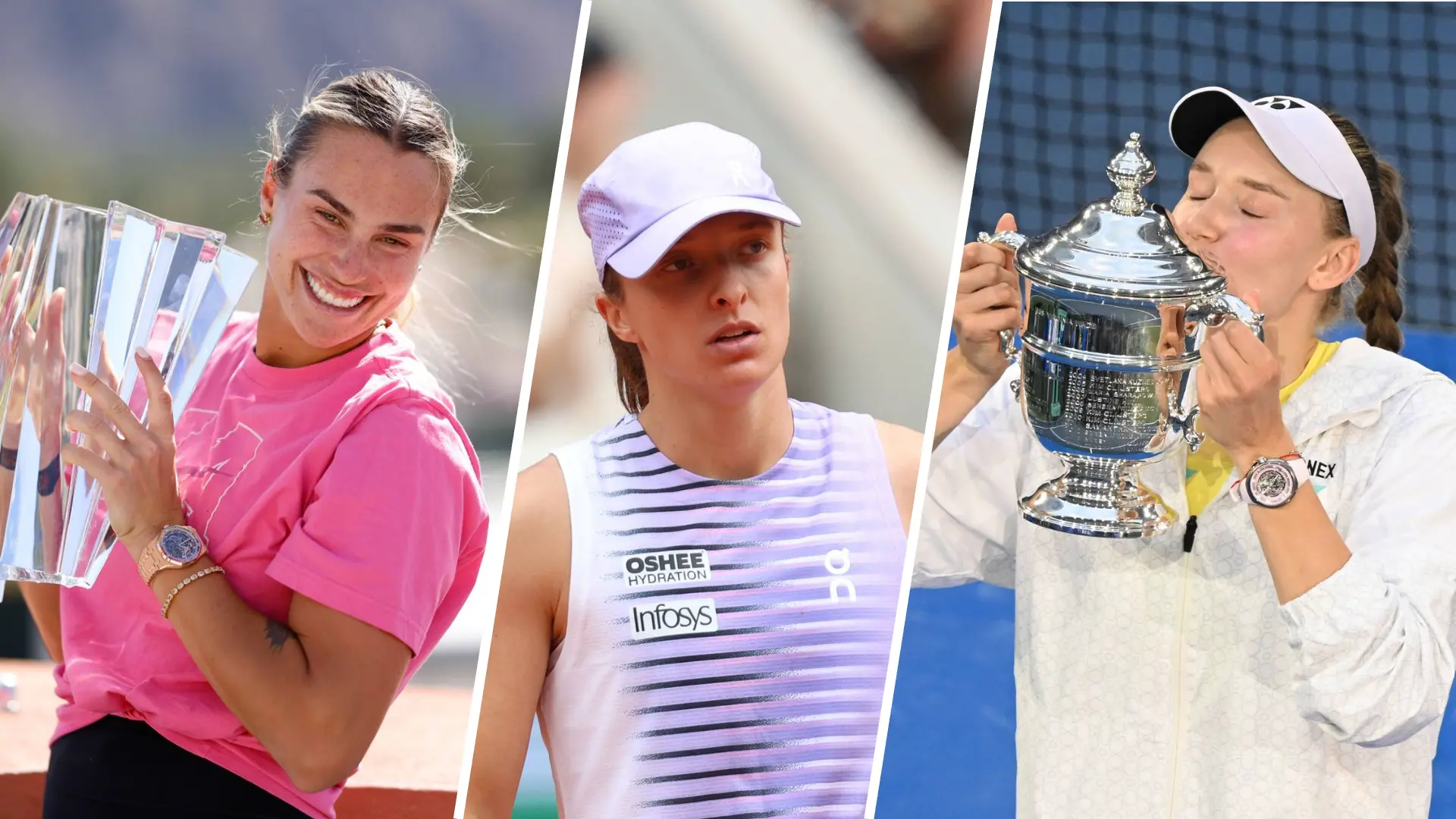
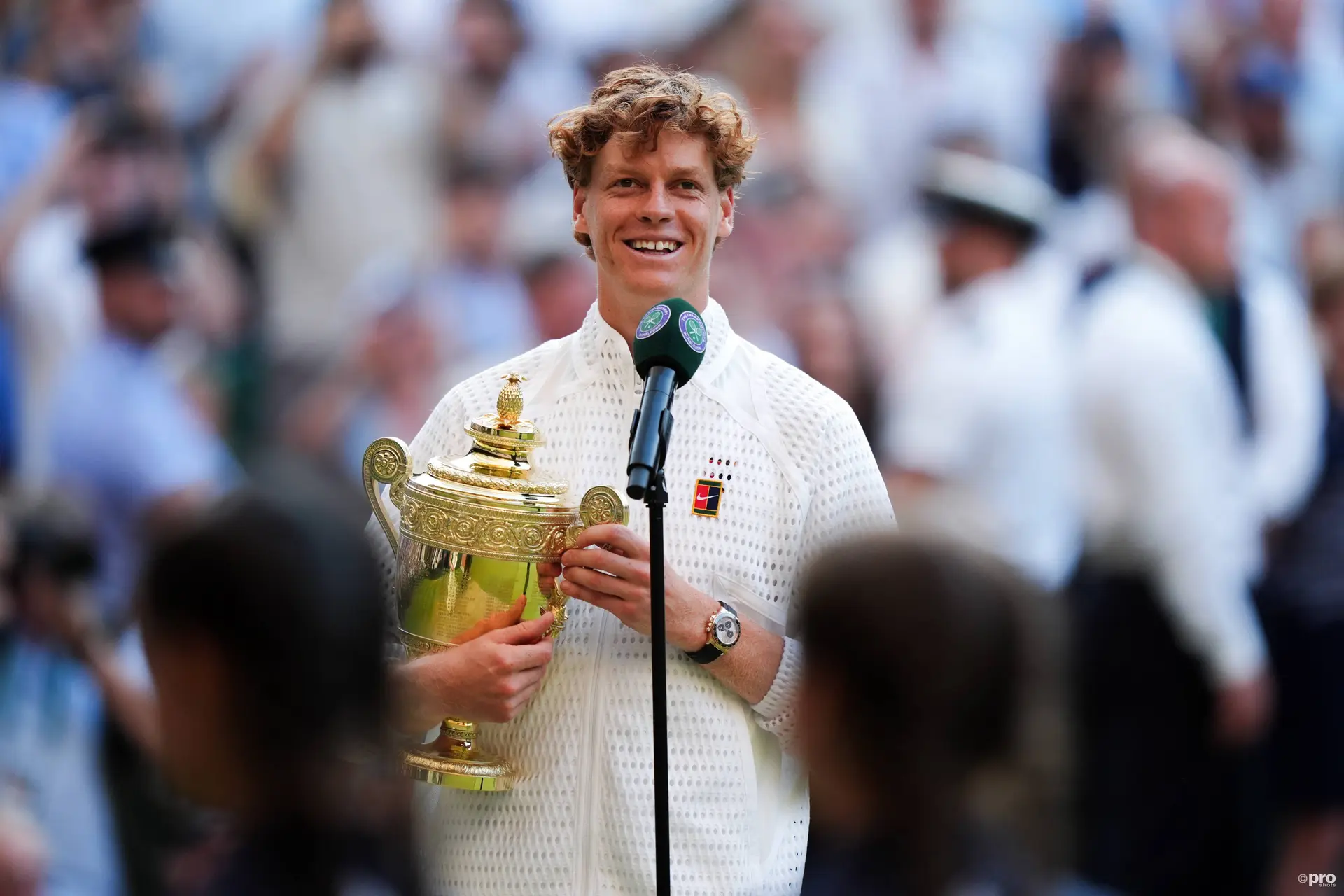
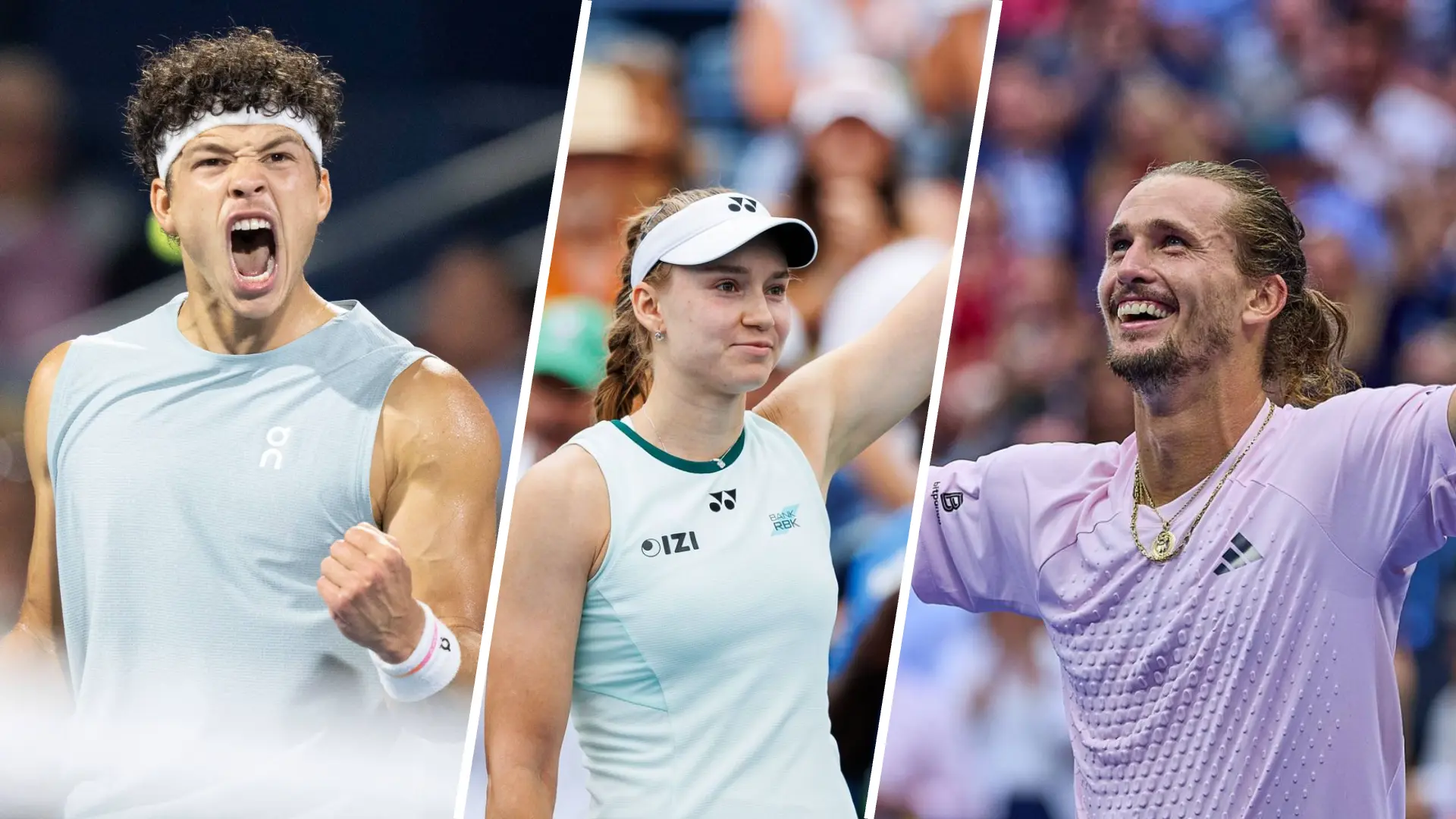
He has suffered some unexpected defeats, but the majority of his appearances have resulted in deep runs. He has reached at least the quarterfinals in five of the six Masters 1000 draws he entered, while also winning two titles this year: his first ATP 500 in Barcelona and his first Masters 1000 in Cincinnati.
His ranking could easily be inside the Top 5 had he advanced a few more rounds at the Grand Slams and not missed months of competition through injury. Heading into 2027, everything points towards Fils fighting to take another step forward and establish himself permanently in the upper reaches of the rankings.

Cristhián AvilaTennis Journalist
Cristhián Ávila is a tennis journalist based in Santiago, Chile, and has been part of the TennisUpToDate team since early 2023. He covers the ATP and WTA Tours as well as all four Grand Slams, producing breaking news, match reports, analysis, and regular liveblogs from major tournaments.
His reporting combines statistical analysis with clear explanation, helping readers understand tactical developments, player form, and broader storylines across the tour. Working fluently in both Spanish and English, Cristhián collaborates with an international editorial team and contributes to comprehensive global coverage. As part of his work, he has conducted interviews and media interactions with leading figures in the sport, including Caroline Wozniacki and John McEnroe.
In his journalism, Cristhián places strong emphasis on careful sourcing, editorial accuracy, and updating articles promptly when new, verified information becomes available. His coverage is grounded in research, context, and direct engagement with professional tennis.
claps 0visitors 0
Just In

Popular News

Latest Comments
- Two Things: 1. Stop allowing these Spoiled Trust-Fund Elitists to behave badly. Your little hand-slaps do not deter them. 2. STOP the incessantly annoying "towel wiping" nonsense!!!!
 mandoist15-10-2026
 - A healthy Qinwen may be hard to stop next season. She was already scaring her opponents before her medical leave(s). Unfortunately, Zheng insisted on singing again. On the positive side -- Mirra did not sing!! ;~}mandoist11-10-2026
- Where is it written that athletes, entertainers... People in general... are mandated to keep looking at -- or even using [anti]Social Media? Public & private figures consistently complain and reveal their concerns about negativity and violence thrown at them -- yet they insist on participating. Avoid it, don't use it, don't read it. It's okay to occasionally look up at the World instead beating your eyes & thumbs to death on The Inventions out there.mandoist11-10-2026
- great articlestennisseserver07-10-2026
- Medvedev was leading Djokovic 7-5, 3-5 when an attempted return..' NO you ignorants, Djokovic was leading .weiss05-10-2026
- No more bullshit "Wildcards" to these two. Qualify like everyone else -- there will be cameras there, too. Time to scream... WTF ????!!!!mandoist29-09-2026
- Let's not BS the general public -- Sabalenka started showing cracks in her game last season. Her losses and near-losses started at about the same time she began being distracted by Fame (constant Selfies, making TV commercials, magazine shoots, endless Social Media nonsense, etc., etc.) One would think even Saba could recognize the parallels with others who failed before her -- Raducanu, Giorgi, Bouchard to name a few.mandoist25-09-2026
- Gross!! Hey Raducanu, Giorgi, and Bouchard -- reserve a seat at your Social Media Selfie table for Saba + Naomi. They're heading in your direction soon enough.mandoist24-09-2026
- And then these same players will complain about how lengthy their season’s were and need more time-off. I’m all for more tennis but the amount of tennis we get now is actually kind of crazy! We all need a break, especially the players.DaveyWavey23-09-2026
- You should do a comparison article for "different kinds of justice" the courts decide for tennis players. I can think of at least three players who received very small bans of a few months, however Tara Moore has been fighting for her literal survival the past few years. It seems odd considering she is not a "name" player, unlike the other cases.DaveyWavey22-09-2026

Loading