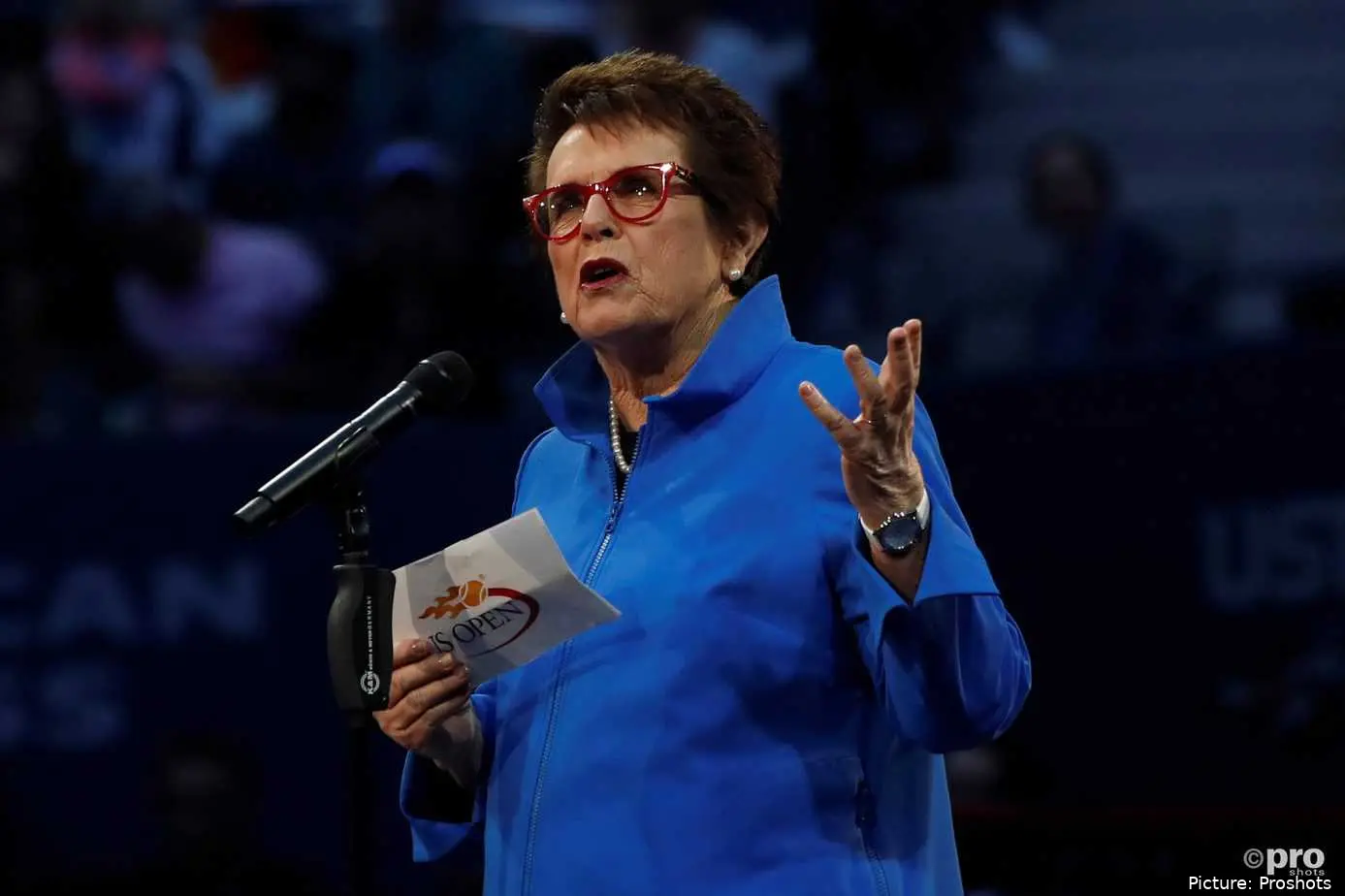
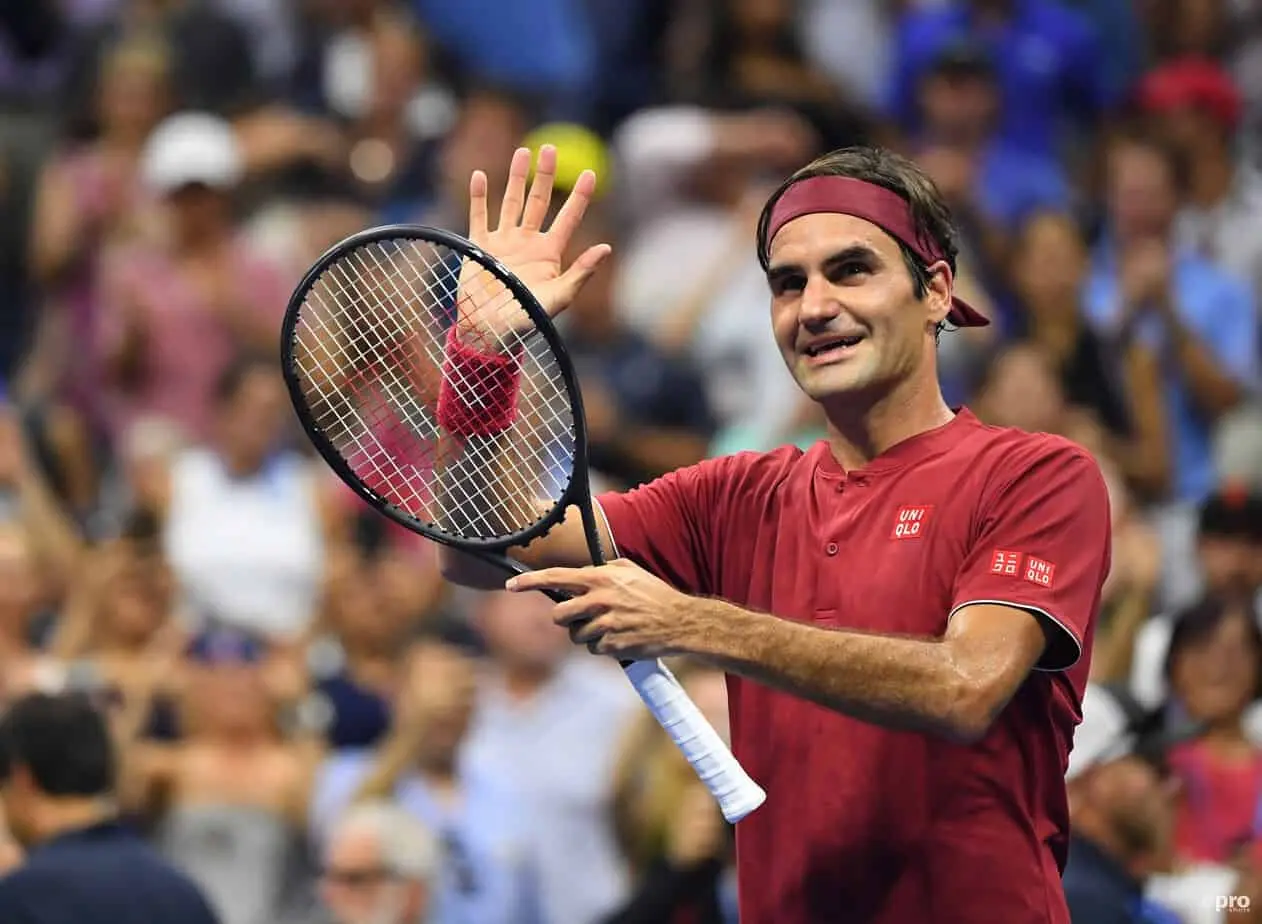
Billie Jean King has questioned whether Roger Federer has done enough to support equality in tennis, arguing that the 20-time Grand Slam champion has the influence to take a stronger position. King, one of the most important advocates for equal prize money in tennis, made the comments while discussing the Swiss legend's approach to the issue.
Federer was back in the spotlight at the 2026 US Open after playing an exhibition set against Andy Roddick and partnering John McEnroe in doubles. He was also inducted into the International Tennis Hall of Fame in Newport on August 29, adding another major honor to his remarkable career.
King, who founded the WTA and defeated Bobby Riggs in the famous 1973 Battle of the Sexes, has spent much of her career challenging the established order in tennis. Her criticism of Federer is therefore particularly notable given his status as one of the sport's most influential former players.
The American does not believe Federer opposes equal prize money. Instead, she appears frustrated that he has not been more willing to actively push the issue, particularly given the platform he has built throughout his career.
King wants Federer to do more
Speaking to Racquet, King pointed to Federer's family while explaining why she believes the Swiss could be a stronger advocate for equality. “I wish he would fight for equality more because I keep saying, ‘You have two boys and two girls! You have equality in your household!’”
King then suggested that Federer has never been particularly interested in challenging the status quo, contrasting his approach with the kind of activism that defined much of her own career. “You think he’d ever do anything to rock the boat? He doesn’t want to. I’d want to make money, too.”

Her comments come despite Federer having previously expressed support for equal prize money. During the 2016 Miami Open, he made clear that he backed the principle while also arguing that different tournaments had different histories and circumstances.
“I’m all for equal prize money. But then you have to look at the history of each and every event, where it came from. Some tournaments were a men’s tournament, then the women joined or vice versa, it was a women’s tournament and we joined them.”
Federer also pointed to his own efforts to increase prize money at the Grand Slam level, saying he understood that such changes would benefit both tours.
“When I was fighting for prize money increases, especially at the Slam level. I was always very aware of the fact that it was always going to impact the women’s game, which I was very happy about. Both at the same time were growing.”
Read also
King's criticism, therefore, is not that Federer has opposed equality. Instead, she wants one of tennis's biggest names to be more forceful in fighting for it.
For someone who spent decades challenging the sport's establishment herself, King appears to believe that Federer has the influence to make a bigger impact — even if doing so means being willing to “rock the boat.”

Cristhián AvilaTennis Journalist
Cristhián Ávila is a tennis journalist based in Santiago, Chile, and has been part of the TennisUpToDate team since early 2023. He covers the ATP and WTA Tours as well as all four Grand Slams, producing breaking news, match reports, analysis, and regular liveblogs from major tournaments.
His reporting combines statistical analysis with clear explanation, helping readers understand tactical developments, player form, and broader storylines across the tour. Working fluently in both Spanish and English, Cristhián collaborates with an international editorial team and contributes to comprehensive global coverage. As part of his work, he has conducted interviews and media interactions with leading figures in the sport, including Caroline Wozniacki and John McEnroe.
In his journalism, Cristhián places strong emphasis on careful sourcing, editorial accuracy, and updating articles promptly when new, verified information becomes available. His coverage is grounded in research, context, and direct engagement with professional tennis.
claps 0visitors 0
Just In




Popular News

Latest Comments
- Lena... Takin' care of business
 mandoist25-10-2026
 - Can you please stop publishing this nonsense? Stick to Tennis.mandoist25-10-2026
- Does Sinner need that 4.5 mil? I doubt it. He can make that with three modelling gigs!😅🤣Rapunzel21-10-2026
- Did "People Magazine" purchase this website? This nonstop storyline is bullshit.mandoist21-10-2026
- Listen... this is of no concern to anyone but these two. Deal with your own issues -- most of us have our own. Thanks, media, for these insignificant follow-ups which are meaningless.mandoist21-10-2026
- This is so very very sad, for all three of them. I truly thought they had an unbreakable bond, but life throws up so many differing challenges. Having your homeland suffering in such a terrible way, makes happiness lose out to guilt as well. Our thoughts are with them. X💔bjsexton20-10-2026
- I have lost all respect for Svitolina! Could she not have waited until he had played at the Paris Masters!!! She is selfish and don't give a damn about Gael. That is NOT how love is demonstrated Elina!!Rapunzel19-10-2026
- Perhaps convenient tennis tour sex is not a strong enough experience in which to base a marriage?mandoist19-10-2026
- Fight the Good Fight... Tennis (sports in general) need more Humans such as yourself.mandoist18-10-2026
- When is WTA going to mandate Genetic Testing (DNA) ???mandoist18-10-2026

Loading