Two careers, one number: How Rafael Jodar and Maja Chwalinska climbed from outside the top 140 to No. 11
Tennis News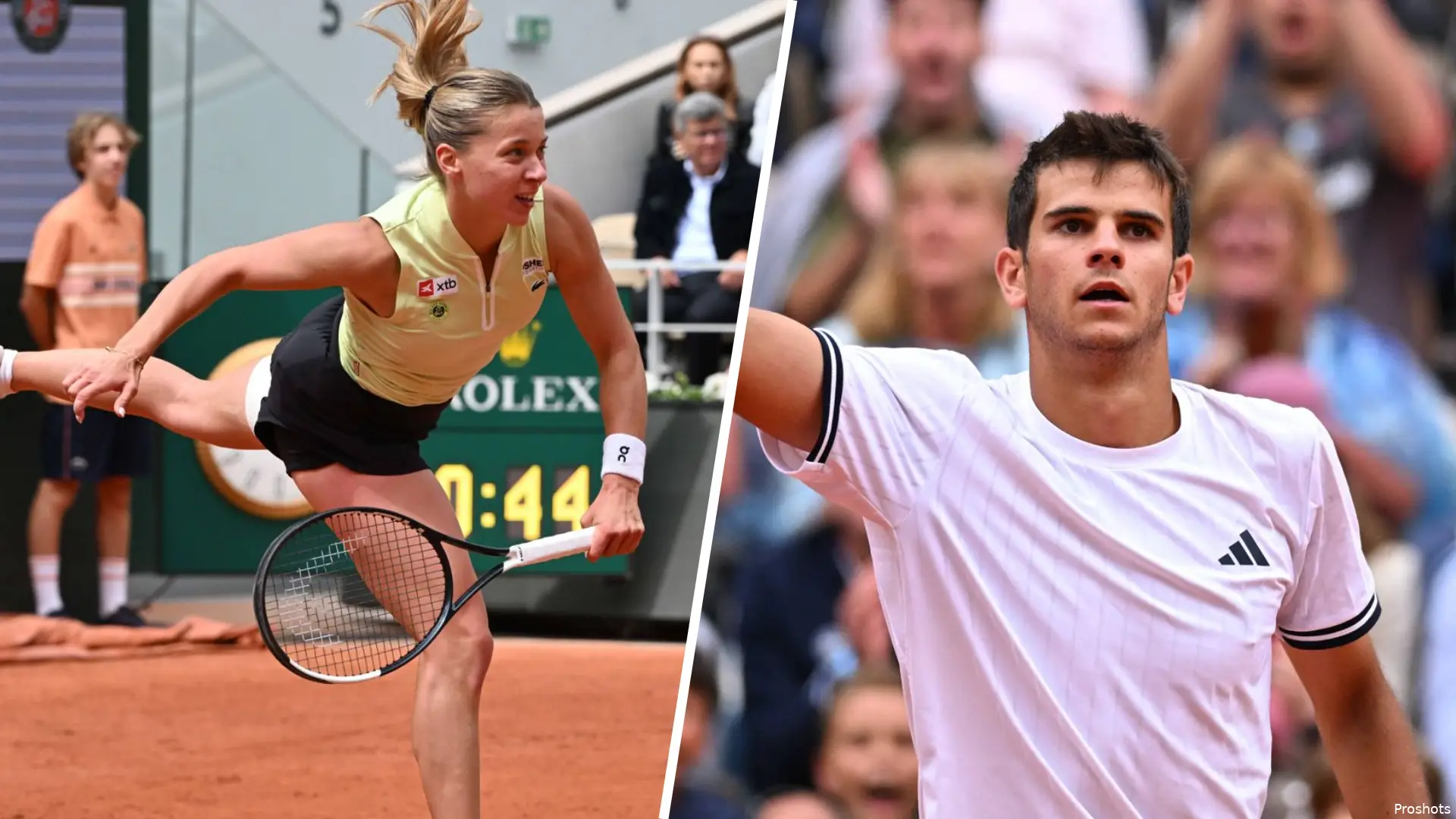
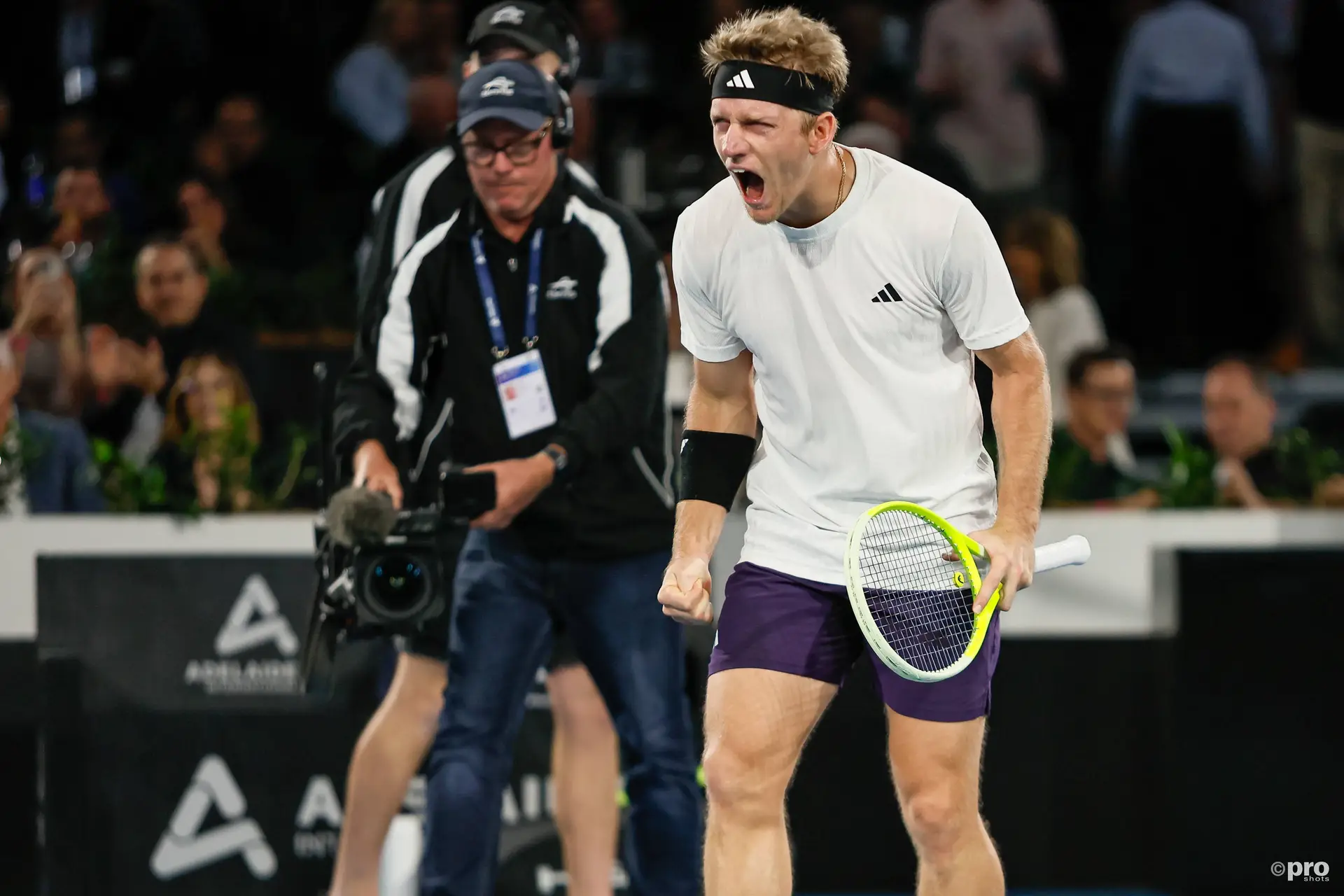
On Sunday, October 18, two players who began 2026 outside the top 140 played for the biggest titles of their careers, on opposite sides of China. In Shanghai, 20-year-old Rafael Jodar led by a set and a double break and was two points from winning his first Masters 1000, before Alejandro Davidovich Fokina came back to win 1-6, 7-6(5), 6-4. In Wuhan, 25-year-old Maja Chwalinska rallied past Sonay Kartal 2-6, 6-4, 6-2 to win the first title of her career at WTA 1000 level.
When the new rankings came out on Monday, both sat at No. 11: Jodar in a tie for his career high, Chwalinska in the top 20 for the first time. Their routes could hardly be more different. Jodar built his year brick by brick, from a college dorm in Virginia to a Masters final. Chwalinska's rise rests mainly on one extraordinary fortnight in Paris in June, which she has now confirmed with a title.
However, they have something in common. Both were largely off the tennis world's radar at the start of the season, and in less than a year, they have become two players capable of competing for the biggest titles. This is the story of their two seasons side by side.
| Rafael Jodar | Maja Chwalinska | |
| Age | 20 | 25 |
| Country | Spain | Poland |
| Ranking, Jan. 2026 | No. 165 | No. 146 |
| Ranking, Oct. 19 | No. 11 | No. 11 |
| Best Grand Slam result | Roland Garros quarterfinal | Roland Garros final |
| Titles in 2026 | 1 (Marrakech, ATP 250) | 2 (Oeiras, WTA 125; Wuhan, WTA 1000) |
| Finals in 2026 | 3 (Marrakech W, Washington L, Shanghai L) | 3 (Oeiras W, Roland Garros L, Wuhan W) |
Jodar: the college student who skipped the line
Born in 2006, Jodar spent his early childhood idolizing Rafael Nadal, though he was not named after him: his father, grandfather and great-grandfather were all Rafael. He was a top junior, winning the 2024 US Open boys' title over Nicolai Budkov Kjær and reaching a career-high junior ranking of No. 4. He then did something unusual for a Spanish prospect and went to college, playing for the University of Virginia, where he went 19-3 and reached the NCAA No. 4 singles ranking.
In 2025 the pieces came together. He started the year ranked No. 895 and, on the Challenger Tour with a wild card from the Next Gen Accelerator program, won three titles in a few weeks of the autumn, in Crete, Lincoln and Charlottesville.
In December he qualified for the Next Gen ATP Finals in Jeddah, where he saved four match points against top seed Learner Tien, and on December 31 he announced he was turning professional. A year before his Shanghai final, he was ranked No. 283 and playing college tennis.
Jodar's 2026: a season built one level at a time
What makes Jodar's year unusual is that it had no single peak: it had a steady climb through every level of the sport. He qualified for the Australian Open in January, reached a Challenger final in Canberra, and broke into the top 100 in March after reaching the third round at the Miami Open. In April he won his first ATP title in Marrakech over Marco Trungelliti, 6-3, 6-2, then reached the Barcelona semifinals as a wild card.

The clay swing made him a star. In Madrid he beat Alex de Minaur, then the world No. 8, for the loss of four games, and then João Fonseca before losing to Jannik Sinner in the quarterfinals.
A week later he reached the Rome quarterfinals, becoming the first teenager to get that far since Novak Djokovic in 2007, and the first to do it in Rome and Madrid in the same season since Nadal in 2005. At Roland Garros, as the 27th seed, he came back from two sets down against compatriot Pablo Carreño Busta to reach his first Grand Slam quarterfinal, where Alexander Zverev beat him in straight sets.
| Date | Result | Ranking after |
| Jan. 2026 | Qualifies at the Australian Open; Canberra Challenger final | No. 165 (start of year) |
| March 29 | Miami third round, first Masters wins | No. 89 |
| April 5 | Wins Marrakech (first ATP title) | No. 57 |
| April 19 | Barcelona semifinal as a wild card | No. 42 |
| May 3 | Madrid quarterfinal (beats De Minaur, Fonseca) | No. 34 |
| May 17 | Rome quarterfinal (beats Tien) | No. 29 |
| June 7 | Roland Garros quarterfinal | No. 23 |
| Aug 9 | Washington final (lost to Fritz), Canadian Open semifinal | No. 11 (career high) |
| Sept. 13 | After a first-round loss at the US Open | No. 14 |
| Oct. 19 | Shanghai Masters final | No. 11 (career high) |
Shanghai: so close to the top 10
A three-match losing streak had put his season in doubt before Shanghai. He beat Thiago Agustín Tirante in three sets in the second round, then Jiří Lehečka, Botic van de Zandschulp and Casper Ruud, and in the semifinals he beat Daniil Medvedev 6-3, 6-4 for his second win over a top-10 player. At 20 he became the youngest finalist in the tournament's history and the first man born in 2006 or later to reach a Masters 1000 final.
In the final he dominated the first set 6-1 without facing a break point and won all seven points that lasted longer than nine shots. He led 3-2 with a double break in the second, before Davidovich Fokina came back. Jodar was two points from the title at 5-5 in the tiebreak, then appeared to fade physically in the decider.
The result left him one win short of becoming a top-10 player, but he is ninth in the Race to Turin, effectively the last qualifying spot with Sinner out for the rest of 2026, and he has a 43-17 tour-level record this year.
Chwalinska: the late bloomer from the mining belt
Chwalinska's path started much earlier and moved much slower. She was born on 2001 and started playing at seven, partly inspired by Federer, Nadal and Djokovic, and since the age of 10 has been close friends with Iga Swiatek. The two won European junior doubles titles together and helped Poland win the Junior Fed Cup in 2016, and they reached the Australian Open girls' doubles final in 2017.
Her professional career was slower and more difficult than Swiatek’s. In 2021, at 19, she paused her career and said publicly that she had been dealing with depression since the end of 2019.
She came back in 2022, qualified for Wimbledon and beat Katerina Siniakova for her first Grand Slam win. Swiatek was already a multi-time Grand Slam champion and world No. 1, while Chwalinska was only just securing her first main-draw Grand Slam victory. She then spent several years competing primarily at Challenger level.
The left-hander, who is 5-foot-5, built a game on slice, topspin and drop shots. A style that contrasts with the power that dominates modern women's tennis, Chwalinska has had to develop alternative weapons to compensate for her lack of height, unlike most top players. Chwalinska won WTA 125 titles in Florianópolis (December 2024), Montreux (September 2025) and Oeiras (April 2026), and finished 2025 ranked No. 150.
Paris: the fortnight that changed everything
Ranked No. 114 and never in the top 100, she arrived at Roland Garros needing to qualify. She won three matches to get into the main draw and then won six more, beating Zheng Qinwen, Elise Mertens, Maria Sakkari, Diane Parry, Anna Kalinskaya and Diana Shnaider. She dropped one set in the whole tournament, to Sakkari, and the final was against Mirra Andreeva, who won 6-3, 6-2.

The run produced a string of records. She was the first qualifier to ever reach the Roland Garros final and the second in the Open Era to reach any major final, after Emma Raducanu at the 2021 US Open. At No. 114 she was the lowest-ranked finalist in French Open history and the third Polish woman in a major final, after Agnieszka Radwanska and Swiatek. She jumped 93 places to No. 21.
| Round | Opponent | Rank | Score |
| Q1 | Alice Ramé | 192 | 6-0, 6-3 |
| Q2 | Carole Monnet | 181 | 6-0, 6-1 |
| Q3 | Suzan Lamens (17) | 96 | 7-6(4), 7-5 |
| R1 | Zheng Qinwen | 53 | 6-4, 6-0 |
| R2 | Elise Mertens (23) | 23 | 6-4, 6-0 |
| R3 | Maria Sakkari | 48 | 1-6, 6-3, 6-2 |
| R4 | Diane Parry | 94 | 6-3, 6-2 |
| QF | Anna Kalinskaya (22) | 22 | 7-6(3), 6-3 |
| SF | Diana Shnaider (25) | 25 | 7-6(4), 6-4 |
| F | Mirra Andreeva (8) | 8 | 3-6, 2-6 |
Wuhan: proof it was not a fluke
What followed was not easy. She was seeded 20th as a wild card at Wimbledon and lost her opening match to a qualifier after slipping on a match point, then lost to Taylor Townsend in the first round of the US Open. That is why Wuhan matters: on a hard court, in an event with a much deeper field, she showed Paris was no one-off.
She beat Mayar Sherif, Marie Bouzková (from a set down), Iva Jovic, Maria Sakkari and, in an all-Polish semifinal, Świątek. In the final against Kartal, who had missed six months with a back injury and began the week ranked No. 170, she saved three break points serving at 5-2 in the third set and converted her third championship point after 2 hours and 43 minutes.
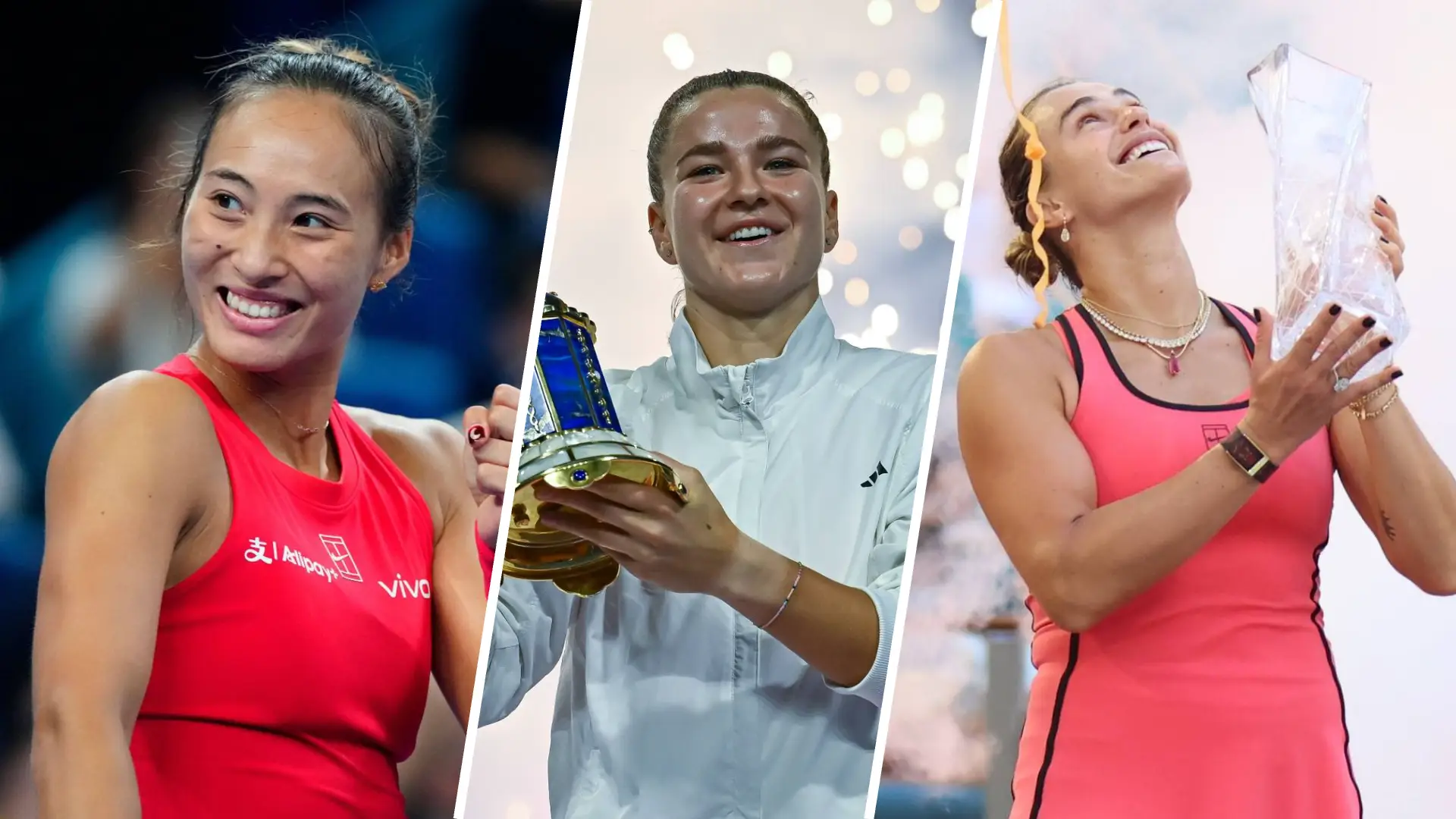
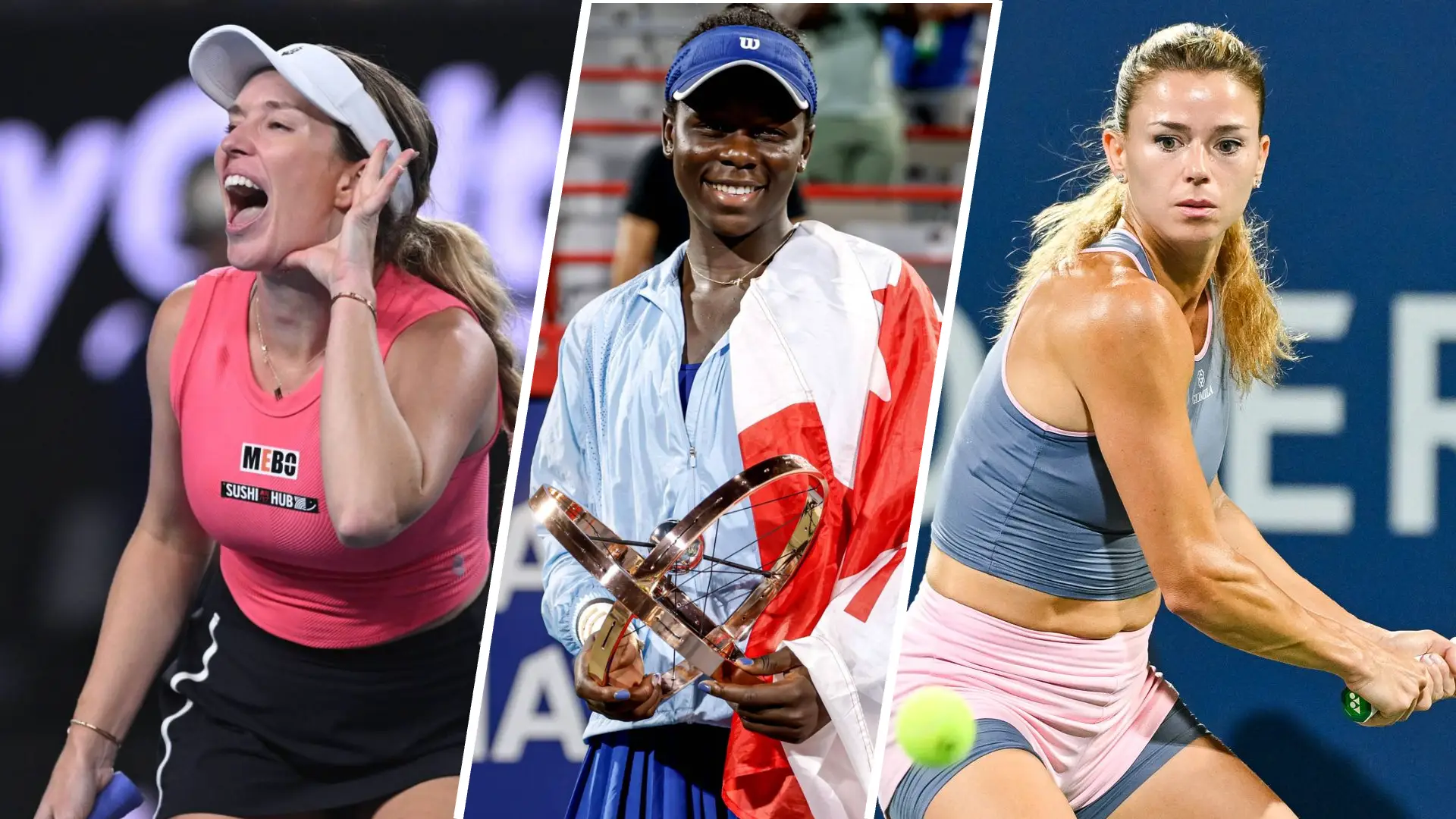
She became only the fourth player to win her first WTA title at the 1000 level, after Naomi Osaka, Bianca Andreescu and Victoria Mboko, and earned 1,000 points, taking her total to 2,681.
Two routes to the same place
The difference between the two seasons is a matter of shape. Jodar's rise is wide: a title, a 500 final, a Masters final, a Grand Slam quarterfinal and wins at every tier, which made him a top-15 player in the summer and kept him there.
Chwalinska's is tall: one major final that changed her career, followed by a first title that confirmed it. Both had pedigree, Jodar as a top-4 junior and Chwalinska as one of Poland's best, and both used the autumn on hard courts to prove they were more than clay-court stories.
Read also
The next step is different for each. For Jodar it is the top 10 and a first appearance at the ATP Finals in Turin, where he would become the third player to play there the year after the Next Gen Finals, after Alcaraz and Tsitsipas.
For Chwalinska it is to hold a top-20 place after a season in which she began at No. 146 and has yet to play a full year at this level. Both still have a first full offseason ahead, and each has reasons to think the year was only the beginning.

Cristhián AvilaTennis Journalist
Cristhián Ávila is a tennis journalist based in Santiago, Chile, and has been part of the TennisUpToDate team since early 2023. He covers the ATP and WTA Tours as well as all four Grand Slams, producing breaking news, match reports, analysis, and regular liveblogs from major tournaments.
His reporting combines statistical analysis with clear explanation, helping readers understand tactical developments, player form, and broader storylines across the tour. Working fluently in both Spanish and English, Cristhián collaborates with an international editorial team and contributes to comprehensive global coverage. As part of his work, he has conducted interviews and media interactions with leading figures in the sport, including Caroline Wozniacki and John McEnroe.
In his journalism, Cristhián places strong emphasis on careful sourcing, editorial accuracy, and updating articles promptly when new, verified information becomes available. His coverage is grounded in research, context, and direct engagement with professional tennis.
claps 0visitors 0
Just In


Popular News
Latest Comments
- Fight the Good Fight... Tennis (sports in general) need more Humans such as yourself.
 mandoist18-10-2026
- When is WTA going to mandate Genetic Testing (DNA) ???mandoist18-10-2026
- Hey, Dan... you just wake up from a coma? Regardless -- Thanks for the comedy this morning!mandoist18-10-2026
- Two Things: 1. Stop allowing these Spoiled Trust-Fund Elitists to behave badly. Your little hand-slaps do not deter them. 2. STOP the incessantly annoying "towel wiping" nonsense!!!!mandoist15-10-2026
- A healthy Qinwen may be hard to stop next season. She was already scaring her opponents before her medical leave(s). Unfortunately, Zheng insisted on singing again. On the positive side -- Mirra did not sing!! ;~}mandoist11-10-2026
- Where is it written that athletes, entertainers... People in general... are mandated to keep looking at -- or even using [anti]Social Media? Public & private figures consistently complain and reveal their concerns about negativity and violence thrown at them -- yet they insist on participating. Avoid it, don't use it, don't read it. It's okay to occasionally look up at the World instead beating your eyes & thumbs to death on The Inventions out there.mandoist11-10-2026
- great articlestennisseserver07-10-2026
- Medvedev was leading Djokovic 7-5, 3-5 when an attempted return..' NO you ignorants, Djokovic was leading .weiss05-10-2026
- No more bullshit "Wildcards" to these two. Qualify like everyone else -- there will be cameras there, too. Time to scream... WTF ????!!!!mandoist29-09-2026
- Let's not BS the general public -- Sabalenka started showing cracks in her game last season. Her losses and near-losses started at about the same time she began being distracted by Fame (constant Selfies, making TV commercials, magazine shoots, endless Social Media nonsense, etc., etc.) One would think even Saba could recognize the parallels with others who failed before her -- Raducanu, Giorgi, Bouchard to name a few.mandoist25-09-2026

Loading