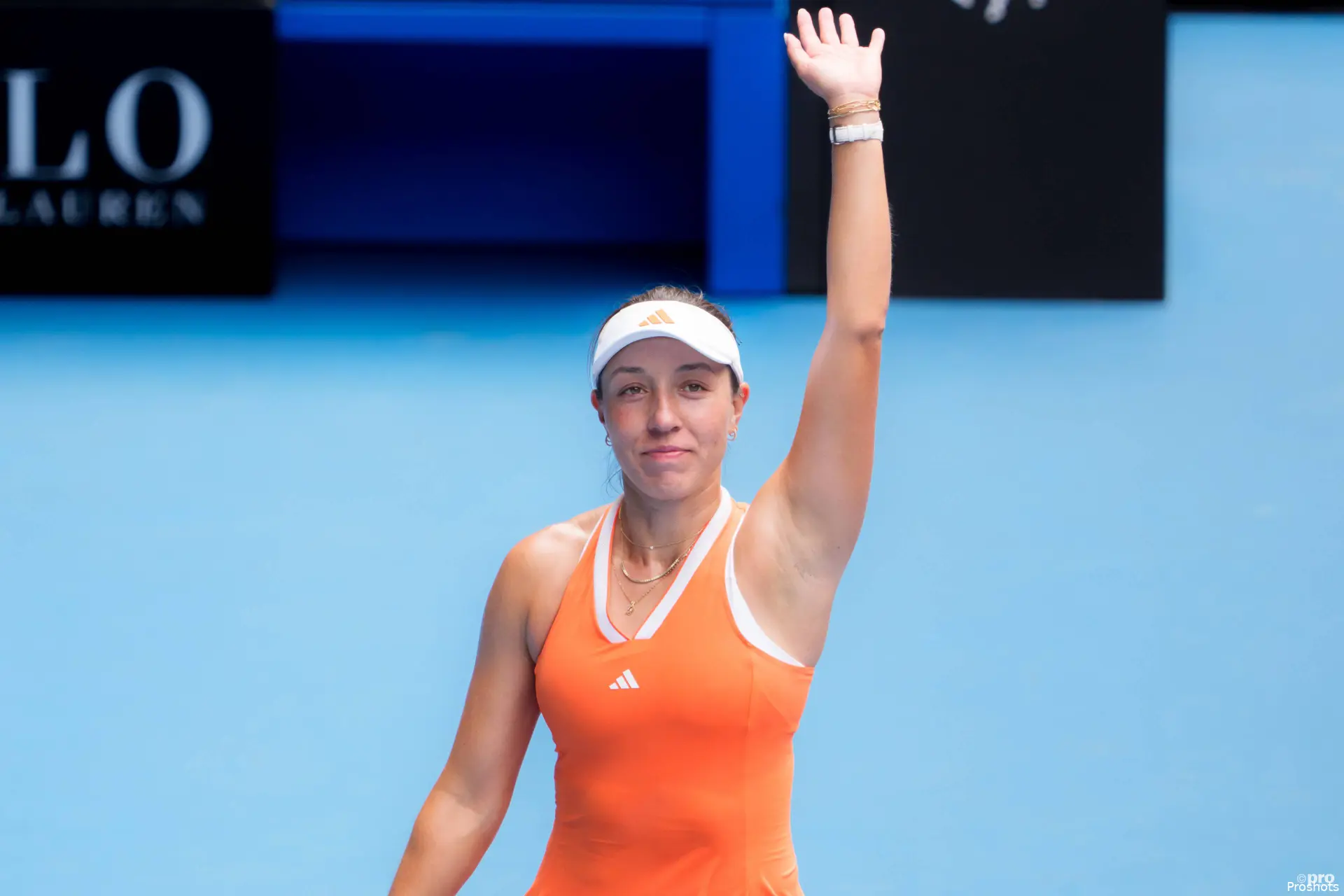
Jessica Pegula arrives at the 2026 Charleston Open in a position that blends continuity with adjustment. The American, currently ranked World No. 5, returns to South Carolina as defending champion, carrying both recent consistency and a clear technical recalibration developed over the past six months.
The 32-year-old’s trajectory since mid-2025 has been defined by a corrective phase following a brief dip in form. After a stretch that included a 2–4 record between Wimbledon and Cincinnati last summer, Pegula and her coaching team moved to reassess key elements of her game. The outcome has been a sustained run of results that now places her among the most reliable performers on tour entering the clay swing.
Since her early loss at the Cincinnati Open 2025, Pegula reached at least the semi-finals in the next seven tournaments she played — across the latter part of 2025 and the beginning of 2026 — including the US Open, Australian Open and WTA Finals. Her semi-final streak only came to an end during this Sunshine Double — although not by much, as she still produced solid runs to the quarter-finals at Indian Wells and Miami Open — losing on both occasions to Elena Rybakina, current World No. 2.
That sequence extended a broader pattern, with Pegula reaching at least the quarter-finals in nine consecutive tournaments, underlining her consistency at the highest level. The American’s return to Charleston also carries the weight of her 2025 title run, where she lifted the trophy on green clay as part of a season that featured multiple finals and titles across surfaces.

Pegula explains ‘back to basics’ reset after mid-season struggles
Pegula’s mid-season struggles last year were not rooted in physical limitations alone, but in a disconnect between execution and identity. She described that period in direct terms, noting that the issue extended beyond results and into how she experienced her own game during matches. “I didn’t feel like myself,” she reflected in an interview at the Charleston Open. “I didn’t feel like I was playing my game.”
That diagnosis prompted a structured response alongside her coaches, Mark Knowles and Mark Merklein. Rather than introducing new tactical layers, the emphasis shifted toward reinforcing existing strengths — earlier ball striking, improved footwork patterns and a greater focus on serve efficiency. The objective was clarity, not reinvention. “My coaches and I worked on a lot of stuff to get my game back, to emphasize what I do really well, kind of get back to the true roots of my game.”
The adjustments have translated into measurable improvements. Pegula’s ability to generate free points on serve has increased, while her baseline patterns have regained the early timing that defines her style. “We went back to emphasizing how I play tennis,” the World No. 5 said. “We kind of went back to the basics of, ‘Okay, this is how you play. It’s special. How do we make that more efficient?’”
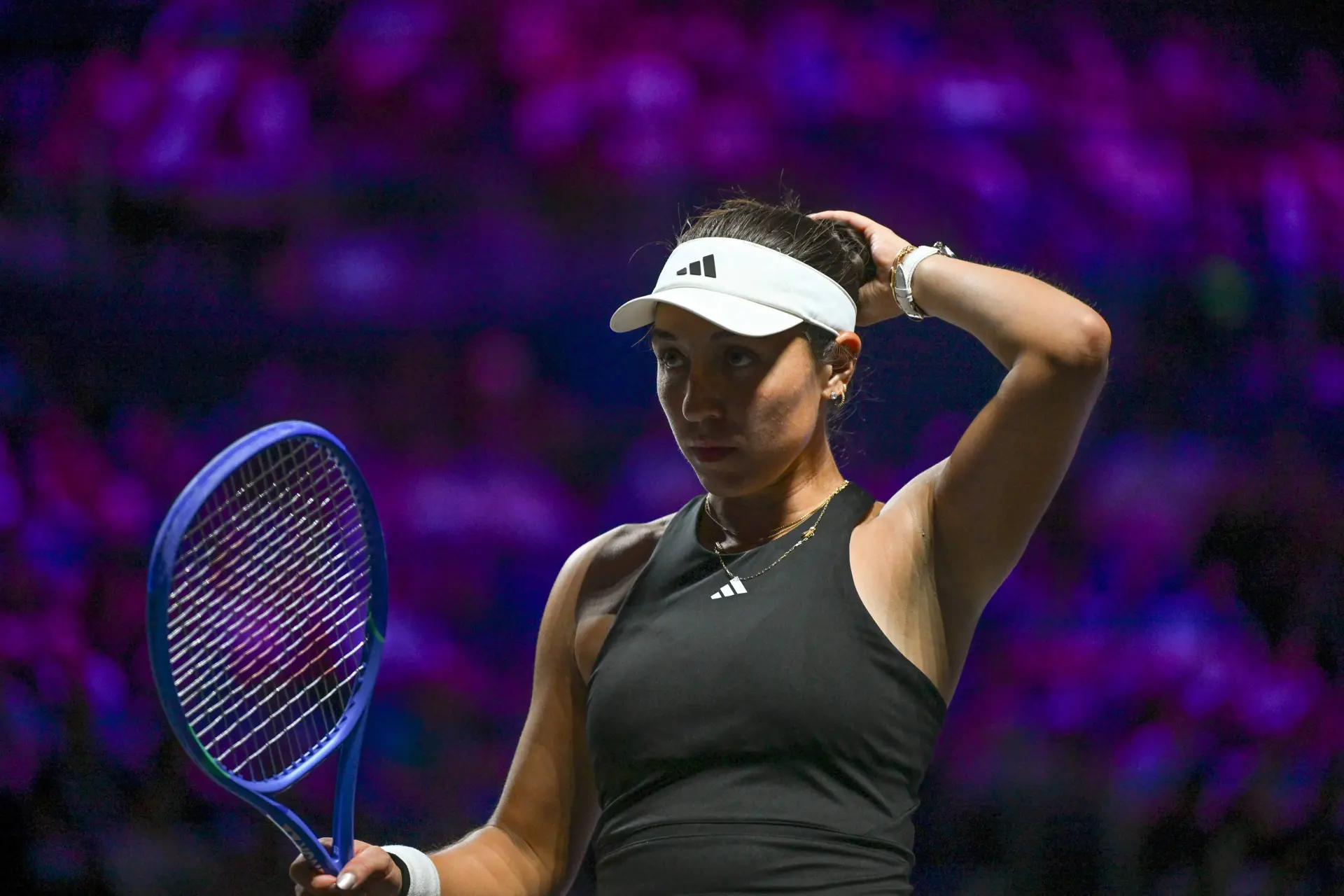
Pegula highlights American depth ahead of Charleston Open challenge
Beyond her individual trajectory, Pegula’s return to Charleston unfolds within a broader context: the sustained rise of American women on the WTA Tour. The tournament draw includes former champions such as Madison Keys and Sloane Stephens, alongside players like Iva Jovic, Sofia Kenin and Hailey Baptiste, all contributing to a dense competitive field.
Several U.S. players remain established within the Top 20, reflecting both depth and continuity at the elite level. Pegula herself has been a consistent Top 10 presence across recent seasons, while compatriots have continued to produce results across surfaces.
“Our depth in the U.S. is pretty crazy right now,” Pegula said. “I feel like every time I go deep, there’s multiple Americans that are there. It’s been incredible. I’m glad that I’ve been able to be a part of this era of all these girls doing really well in the States. I know it’s definitely motivated me to see them do well.”
The generational dynamic is also shifting, with younger players entering the conversation and increasing competitive pressure within the same national group. Pegula acknowledged that evolution while positioning herself as both participant and reference point within that structure.
“It’s an honor to be a part of this amazing group,” she added. “There’s a lot of young ones like Iva that are coming up, whom I’m way older than, which is really depressing. [Laughs.] I’m glad I’m able to inspire and show that next generation that’s coming up.”


Cristhián AvilaTennis Journalist
Cristhián Ávila is a tennis journalist based in Santiago, Chile, and has been part of the TennisUpToDate team since early 2023. He covers the ATP and WTA Tours as well as all four Grand Slams, producing breaking news, match reports, analysis, and regular liveblogs from major tournaments.
His reporting combines statistical analysis with clear explanation, helping readers understand tactical developments, player form, and broader storylines across the tour. Working fluently in both Spanish and English, Cristhián collaborates with an international editorial team and contributes to comprehensive global coverage. As part of his work, he has conducted interviews and media interactions with leading figures in the sport, including Caroline Wozniacki and John McEnroe.
In his journalism, Cristhián places strong emphasis on careful sourcing, editorial accuracy, and updating articles promptly when new, verified information becomes available. His coverage is grounded in research, context, and direct engagement with professional tennis.
claps 0visitors 0
Just In


Popular News

Latest Comments
- Does Sinner need that 4.5 mil? I doubt it. He can make that with three modelling gigs!😅🤣Rapunzel21-10-2026
- Did "People Magazine" purchase this website? This nonstop storyline is bullshit.
 mandoist21-10-2026
 - Listen... this is of no concern to anyone but these two. Deal with your own issues -- most of us have our own. Thanks, media, for these insignificant follow-ups which are meaningless.mandoist21-10-2026
- This is so very very sad, for all three of them. I truly thought they had an unbreakable bond, but life throws up so many differing challenges. Having your homeland suffering in such a terrible way, makes happiness lose out to guilt as well. Our thoughts are with them. X💔bjsexton20-10-2026
- I have lost all respect for Svitolina! Could she not have waited until he had played at the Paris Masters!!! She is selfish and don't give a damn about Gael. That is NOT how love is demonstrated Elina!!Rapunzel19-10-2026
- Perhaps convenient tennis tour sex is not a strong enough experience in which to base a marriage?mandoist19-10-2026
- Fight the Good Fight... Tennis (sports in general) need more Humans such as yourself.mandoist18-10-2026
- When is WTA going to mandate Genetic Testing (DNA) ???mandoist18-10-2026
- Hey, Dan... you just wake up from a coma? Regardless -- Thanks for the comedy this morning!mandoist18-10-2026
- Two Things: 1. Stop allowing these Spoiled Trust-Fund Elitists to behave badly. Your little hand-slaps do not deter them. 2. STOP the incessantly annoying "towel wiping" nonsense!!!!mandoist15-10-2026

Loading