"I would wake up and think, 'I have to go practice,' and I didn’t want to" - Former Grand Slam champion Gabriela Sabatini unearths decision to retire at 26 following rapid rise
WTA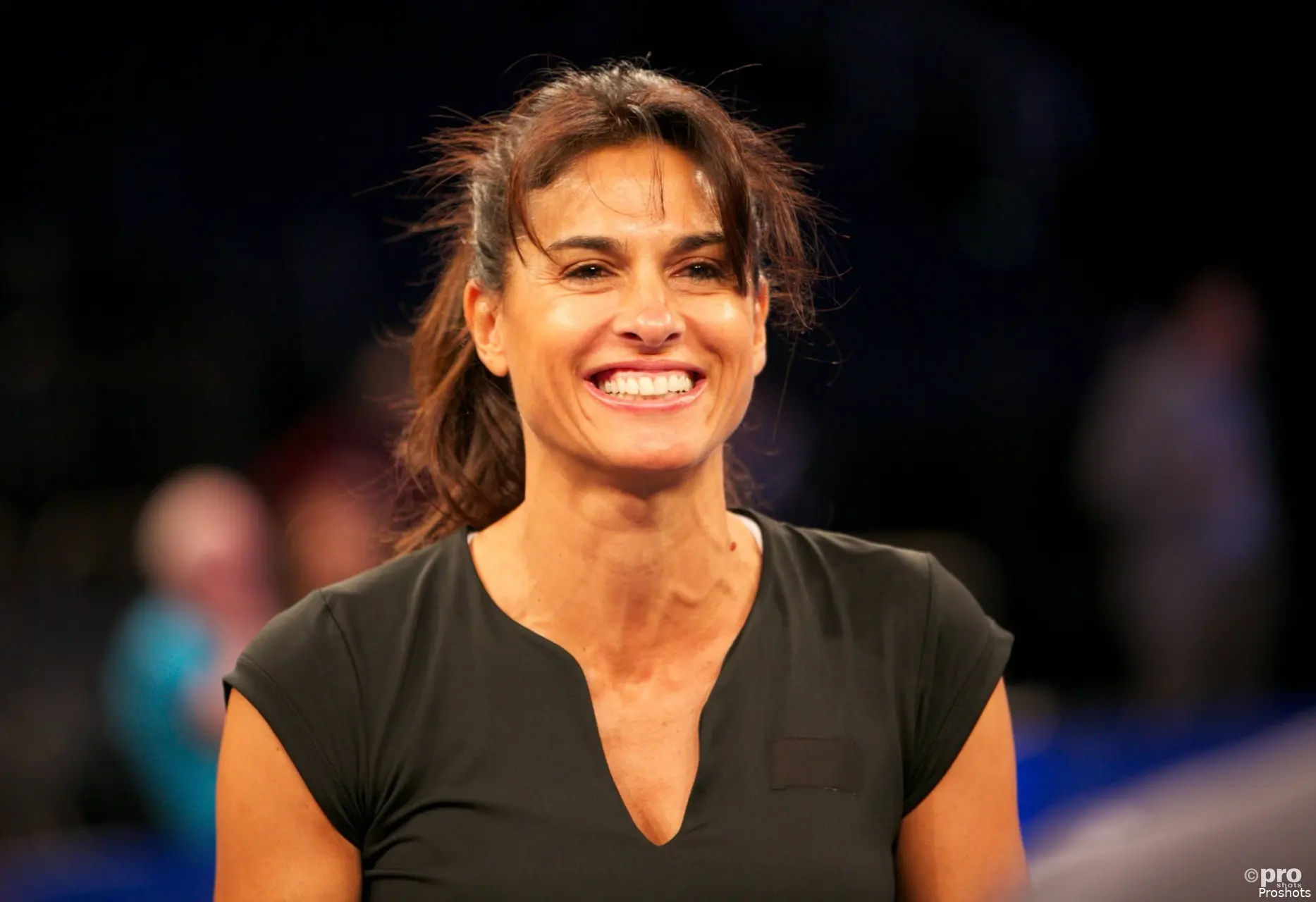
Gabriela Sabatini was a huge talent in tennis. Coming from Argentina, she was destined for a flourishing and decorated career at the top of the sport. This never worked out that way. Retired by 26 with only one Grand Slam, she spoke on the Love All Podcast with former world number one Kim Clijsters about her progression into the sport before ultimately deciding to step away.
The turning point in her career
Sabatini was attracting a lot of attention in her early days as a tennis player. Despite being a very shy kid, she would be bombarded with more and more recognition as she became a teenager.
"A big moment was when I played junior tournaments at 14. I travelled with Mercedes Paz, just the two of us, on a long tour," she reminisced. "I ended up winning most of the tournaments, including Roland Garros. When I came back home, I remember arriving at the airport with my father and seeing a huge crowd."
She was very confused upon arrival before recognising members of the crowd. Her life would never be the same. "I asked him, “What are all these people doing here?” Then I started recognising my friends, neighbours, my grandfather, my uncle, and journalists. That was a real turning point—everything changed from that moment."

She was launched into the deep end through tennis, which has become a very positive thing to combat her shyness. "It helped me become more expressive—to talk to people, say hello, say thank you. It really helped me grow as a person."
Despite going on to achieve what she did on court, the attention and fame were something she never craved or asked for. This affected her when growing up, not wanting to stand out among her fellow peers. However, when surrounded by people in the same boat as her, she was a lot more comfortable. "I didn’t want to stand out—I just wanted to be normal like the other kids," she confirmed. "Later, when I started playing international junior tournaments, I felt like I had found “my people.” Everyone there was in the same situation, from all over the world, and that became my social life—my family. Even today, I still feel that way about tennis."
Looking back on her intense rivalries with the best
Sabatini came from an era where a lot of tennis legends were making their mark in the sport. "With players like Steffi Graf, Monica Seles, and Arantxa Sánchez Vicario, we were big rivals," she listed. This was fixated permanently on the court, not leaking over to the current day. "But today, we talk to each other, and it’s really nice. We talk about different things now—it feels like coming back to a place that’s familiar."
22-time Grand Slam champion Graf was a thorn in her progress in a lot of the big events. The German was a force to be reckoned with in this time period, regularly winning and reaching finals of Grand Slams. Eventually, the Argentine finally got the better of her nemesis, and at a crucial time. She defeated Graf in the final of the 1990 US Open for her first and only major triumph.
A lot of work was put into this. "There was a lot of analysis. You study the game and try to find solutions," she stated. "With Steffi, she always brought the best out of me. She beat me most of the time, but eventually you reach a point where you find a way. I felt I had the tools—I just wasn’t executing them. I always enjoyed playing against her. It was something special."
They would go from rivals to teammates in an awkward double pairing. "It was funny. Her father approached my coach and suggested we play together—maybe to get to know me better. We didn’t talk much, even on court. During changeovers, we would just sit there in silence. But we did quite well together."
After the pair hung up their rackets, their relationship blossomed. "After we both retired, we started to get closer. We played exhibitions together, including for her foundation, and began talking more often. I have a lot of admiration for her—what she did for tennis, both on and off the court. For me, she’s one of the greatest, if not the greatest. Now we’re close friends. We’ve even talked about going on a trip together."
Decision to retire
26 is a very early stage for a tennis player to retire, but that was the case for Sabatini. "I think I started feeling burnout a couple of years before I retired," she explained. "I had to keep pushing through, and I began working with a psychologist because I felt stuck and uninterested in tennis."
It was not the first time this had occurred. "This had actually happened to me before, when I was around 17, but only for a short time. So at 24 or 26, I thought maybe it would pass again—but it didn’t."
Everything felt like a burden for her, and the spark that was once there had vanished. "Working with the psychologist helped me realise that this was it—I didn’t want to continue. I just wasn’t happy anymore. I would wake up and think, 'I have to go practice,' and I didn’t want to. I was already arguing with my coach. I felt like I had no interest in anything—I just wasn’t happy. Tennis had given me so much, and I felt it wasn’t fair to continue like that. You have to prioritise yourself and your happiness."
There were concerns and doubts about how the reaction would be met by a nation that had so much hope and expectancy placed on her shoulders. But she opted to do the best thing for her. "It was a very tough decision, especially in Argentina where there were high expectations," she said. "Announcing it was probably the hardest moment because I knew how people would react. But I was sure—it was the right decision for me."
Still only 26, there was plenty of time to make a comeback to the sport, but that never came to fruition. "Not really in a serious way," she answered when asked whether she considered returning. "I think it’s important to follow what you feel inside. If something feels true, then that’s what matters most."
The transition into retirement was not a smooth one at first. "It was very hard in the beginning," she said. "I didn’t feel like I belonged anymore. I didn’t even want to go to tournaments. It took me five or six years before I attended one again. The first few times, I even bought tickets—I didn’t want to ask for a pass. I didn’t want anyone to see me. But now I realise tennis is a big family. When I go to tournaments, I see familiar faces and it feels good again."
As she grew older, she discovered how important it was to stay away from tennis and not be continuously surrounded by the sport in all aspects. "You should never lose who you are," she said. "You have to give time to that part of yourself because you continue growing as a person. You shouldn’t abandon that—in fact, it’s the opposite. One day, tennis will end, and you need to have something else in your life. You always have to listen to yourself and follow what you enjoy. I think in recent years I’ve realised how important that time away from tennis really is."

Lucas MichaelTennis Journalist
Lucas Michael is a tennis journalist based in Cambridge, UK, specializing in comprehensive coverage of the ATP and WTA tours. For the past 1.5 years, he has been a core contributor to TennisUpToDate, where he has authored more than 3,000 data-driven match reports, deep-dive analysis pieces, and engaging liveblogs.
Lucas pairs real-time statistical analysis with on-the-ground reporting, frequently traveling to tournaments to cover the action firsthand from the press box and player press conferences. This blend of advanced metrics and direct access allows him to provide sharp context regarding player form, tactical trends, and breaking tour developments.
He holds a BA (Hons) in Sports Journalism. Grounded in core journalistic ethics, Lucas places a strict emphasis on meticulous sourcing, editorial accuracy, and a commitment to updating live content swiftly as verified information emerges.
claps 0visitors 0
Just In


Popular News

Latest Comments
- Does Sinner need that 4.5 mil? I doubt it. He can make that with three modelling gigs!😅🤣Rapunzel21-10-2026
- Did "People Magazine" purchase this website? This nonstop storyline is bullshit.
 mandoist21-10-2026
 - Listen... this is of no concern to anyone but these two. Deal with your own issues -- most of us have our own. Thanks, media, for these insignificant follow-ups which are meaningless.mandoist21-10-2026
- This is so very very sad, for all three of them. I truly thought they had an unbreakable bond, but life throws up so many differing challenges. Having your homeland suffering in such a terrible way, makes happiness lose out to guilt as well. Our thoughts are with them. X💔bjsexton20-10-2026
- I have lost all respect for Svitolina! Could she not have waited until he had played at the Paris Masters!!! She is selfish and don't give a damn about Gael. That is NOT how love is demonstrated Elina!!Rapunzel19-10-2026
- Perhaps convenient tennis tour sex is not a strong enough experience in which to base a marriage?mandoist19-10-2026
- Fight the Good Fight... Tennis (sports in general) need more Humans such as yourself.mandoist18-10-2026
- When is WTA going to mandate Genetic Testing (DNA) ???mandoist18-10-2026
- Hey, Dan... you just wake up from a coma? Regardless -- Thanks for the comedy this morning!mandoist18-10-2026
- Two Things: 1. Stop allowing these Spoiled Trust-Fund Elitists to behave badly. Your little hand-slaps do not deter them. 2. STOP the incessantly annoying "towel wiping" nonsense!!!!mandoist15-10-2026

Loading