
Good for her. That was my first reaction when I read that Destanee Aiava is stepping away from professional tennis. Not shock. Not outrage. Not even disappointment. Just a steady sense that she is choosing herself in a system that rarely chooses its players.
I have seen Aiava play multiple times, both live and on television, and I have always come away impressed. She strikes the ball cleanly. She competes with conviction. She carries herself with a quiet resolve that does not always show up in highlight packages but is unmistakable when rallies stretch and matches tighten. She has the kind of game that makes you believe there is more in there, more to unlock, more to give.
But even the most resilient competitors have limits. When Aiava announced that this coming year would be her last and described tennis as racist, misogynistic, homophobic, and hostile to anyone who does not fit the mould, some people focused on her language. That misses the point entirely. The real story is not that she used expletives. The real story is that a 25-year-old professional athlete felt the only way to leave was by setting the record straight in the bluntest possible terms.

The straw that broke the camels back
Aiava, who reached a career-high ranking of No. 147 and won 10 ITF singles titles, spoke about feeling less than. She spoke about social media users who comment on her body, her career, and whatever else they choose to tear down. She paid tribute to the Pacific Islander community and wrote about inspiring young boys and girls who look like her to chase dreams in rooms that were not built for them. That line alone should force reflection. Tennis prides itself on being global and inclusive, yet the experiences of players who fall outside the traditional image of the sport often tell a different story.
Professional tennis loves its traditions. It loves the language of class, heritage, and respectability. It loves the image of white outfits and manicured lawns. But beneath that surface is a far more complicated culture, one that can be unforgiving, insular, and at times openly hostile. Online abuse has become an almost expected consequence of losing a match. Racial slurs, misogynistic insults, and homophobic taunts arrive instantly and anonymously. For women in particular, criticism frequently veers into commentary about appearance rather than performance.
Layered on top of all this is the sport’s deep integration with gambling. Tennis is one of the most heavily bet-on sports in the world. Every point can be wagered on in real time. That ecosystem generates enormous revenue and engagement, and the sport has leaned into it. But the downstream effect is that players become targets for angry bettors who lose money on a missed forehand or a double fault. Abuse linked to gambling is not sporadic. It is persistent and corrosive. It follows players from tournament to tournament and from platform to platform.
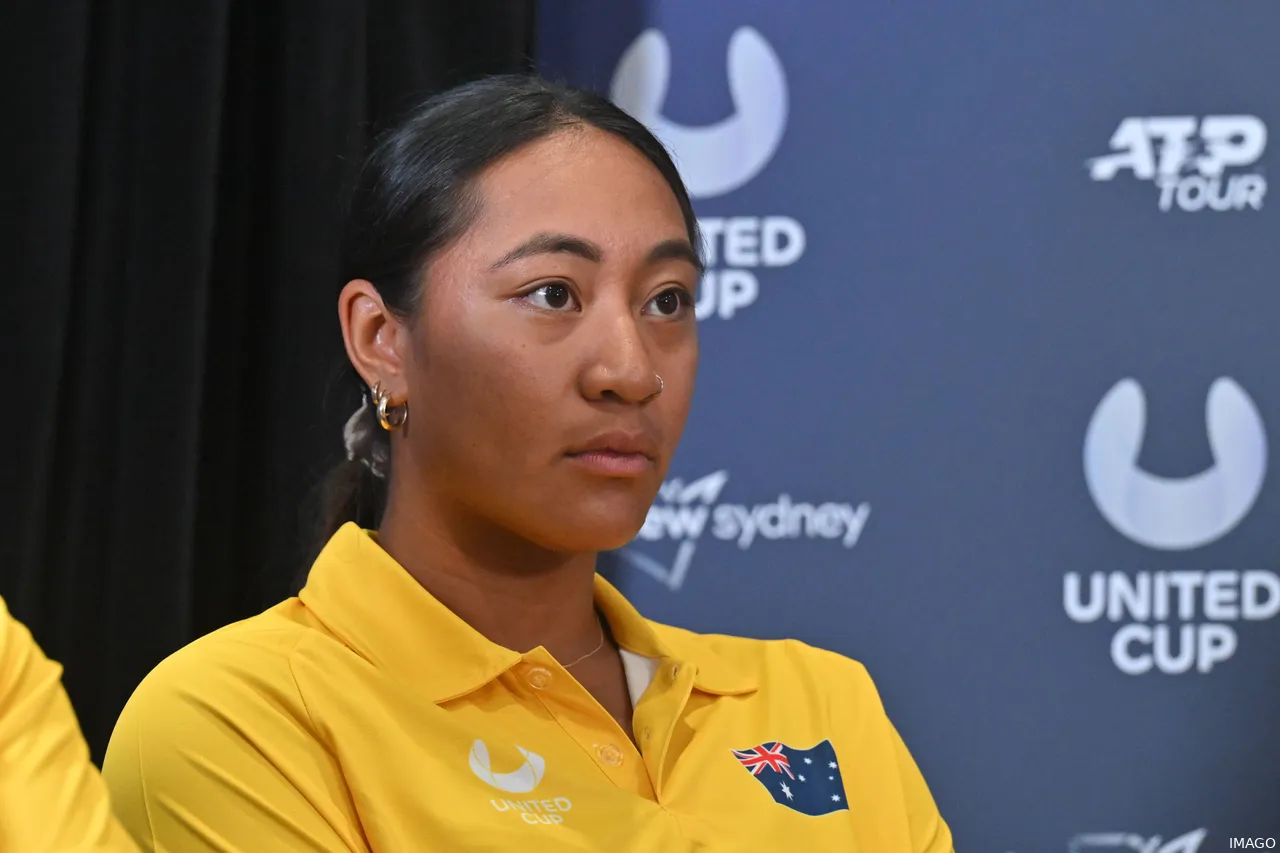
Destanee Aiava will retire amid racism, misogyny and a myriad of other factors.
This should be a moment of reckoning for the Women’s Tennis Association. It should be an awakening about player protection, online harassment, and the culture that allows discrimination and abuse to fester. Yet it is hard to believe that anything fundamental will change. We will likely see statements about player welfare and new reporting tools for social media abuse. What we rarely see are structural changes that address the incentives driving the problem. As long as gambling partnerships and data feeds remain central to the sport’s business model, the environment that fuels harassment will continue.
Aiava also described her experience representing Australia at the United Cup as weird and hostile. That kind of description should not be brushed aside as frustration or exaggeration. When players speak openly about hostile environments, whether on tour or within national setups, those accounts deserve serious and transparent examination. Tennis governance is famously fragmented, with tours, federations, and international bodies sharing responsibility in ways that often diffuse accountability. Everyone supports players in theory. In practice, players frequently feel alone.
What Aiava ultimately said was that life is not meant to be lived in misery and that she wants to wake up each day and love what she does. That is a simple aspiration. It is also an indictment of a system in which pursuing a professional dream can feel like enduring a toxic relationship. When stepping away feels healthier than staying, the problem is not the individual athlete. The problem is the environment.
There is a path forward if the sport chooses to take it. That path would include serious cooperation with betting operators to identify and sanction abusive accounts. It would include centralized and proactive mental health resources for players at all levels. It would include transparent processes for investigating claims of discrimination and hostility, with public reporting on findings and reforms. It would also require an honest assessment of who the sport serves and who it marginalizes.
Destanee Aiava gave tennis her talent and her effort. She inspired young people who saw themselves in her. She competed at the highest level and represented her country. If she has decided that protecting her peace matters more than continuing in a culture that drains it, that is not weakness. It is clarity.
The real question is whether the sport will show the same clarity about itself. Unless it confronts the root causes of the hostility Aiava described, she will not be the last to decide that walking away is the healthiest option available.

Aron SolomonGuest Author
A Pulitzer Prize-nominated journalist for his groundbreaking op-ed in The Independent exposing the NFL’s “race-norming” policies, Aron Solomon, JD, is a globally recognized thought leader in law, media, and strategy.
As Chief Strategy Officer for AMPLIFY, he leverages his deep expertise to shape the future of legal marketing. Aron has taught entrepreneurship at McGill University and the University of Pennsylvania and was honored as a Fastcase 50 recipient, recognizing him among the world’s top legal innovators. A prolific commentator on law, business, and culture, his insights regularly appear in Newsweek, The Hill, Crunchbase News, and Literary Hub.
He has also been featured in The New York Times, Fast Company, Fortune, Forbes, CBS News, CNBC, USA Today, ESPN, TechCrunch, BuzzFeed, Venture Beat and countless other leading global media outlets. We are proud to have Aron on board at TennisUpToDate, where his deep tennis expertise enriches the site with sharp, original columns that connect the sport to wider cultural debates.
claps 1visitors 1
Just In




Popular News



Latest Comments
- Does Sinner need that 4.5 mil? I doubt it. He can make that with three modelling gigs!😅🤣Rapunzel21-10-2026
- Did "People Magazine" purchase this website? This nonstop storyline is bullshit.
 mandoist21-10-2026
 - Listen... this is of no concern to anyone but these two. Deal with your own issues -- most of us have our own. Thanks, media, for these insignificant follow-ups which are meaningless.mandoist21-10-2026
- This is so very very sad, for all three of them. I truly thought they had an unbreakable bond, but life throws up so many differing challenges. Having your homeland suffering in such a terrible way, makes happiness lose out to guilt as well. Our thoughts are with them. X💔bjsexton20-10-2026
- I have lost all respect for Svitolina! Could she not have waited until he had played at the Paris Masters!!! She is selfish and don't give a damn about Gael. That is NOT how love is demonstrated Elina!!Rapunzel19-10-2026
- Perhaps convenient tennis tour sex is not a strong enough experience in which to base a marriage?mandoist19-10-2026
- Fight the Good Fight... Tennis (sports in general) need more Humans such as yourself.mandoist18-10-2026
- When is WTA going to mandate Genetic Testing (DNA) ???mandoist18-10-2026
- Hey, Dan... you just wake up from a coma? Regardless -- Thanks for the comedy this morning!mandoist18-10-2026
- Two Things: 1. Stop allowing these Spoiled Trust-Fund Elitists to behave badly. Your little hand-slaps do not deter them. 2. STOP the incessantly annoying "towel wiping" nonsense!!!!mandoist15-10-2026

Loading