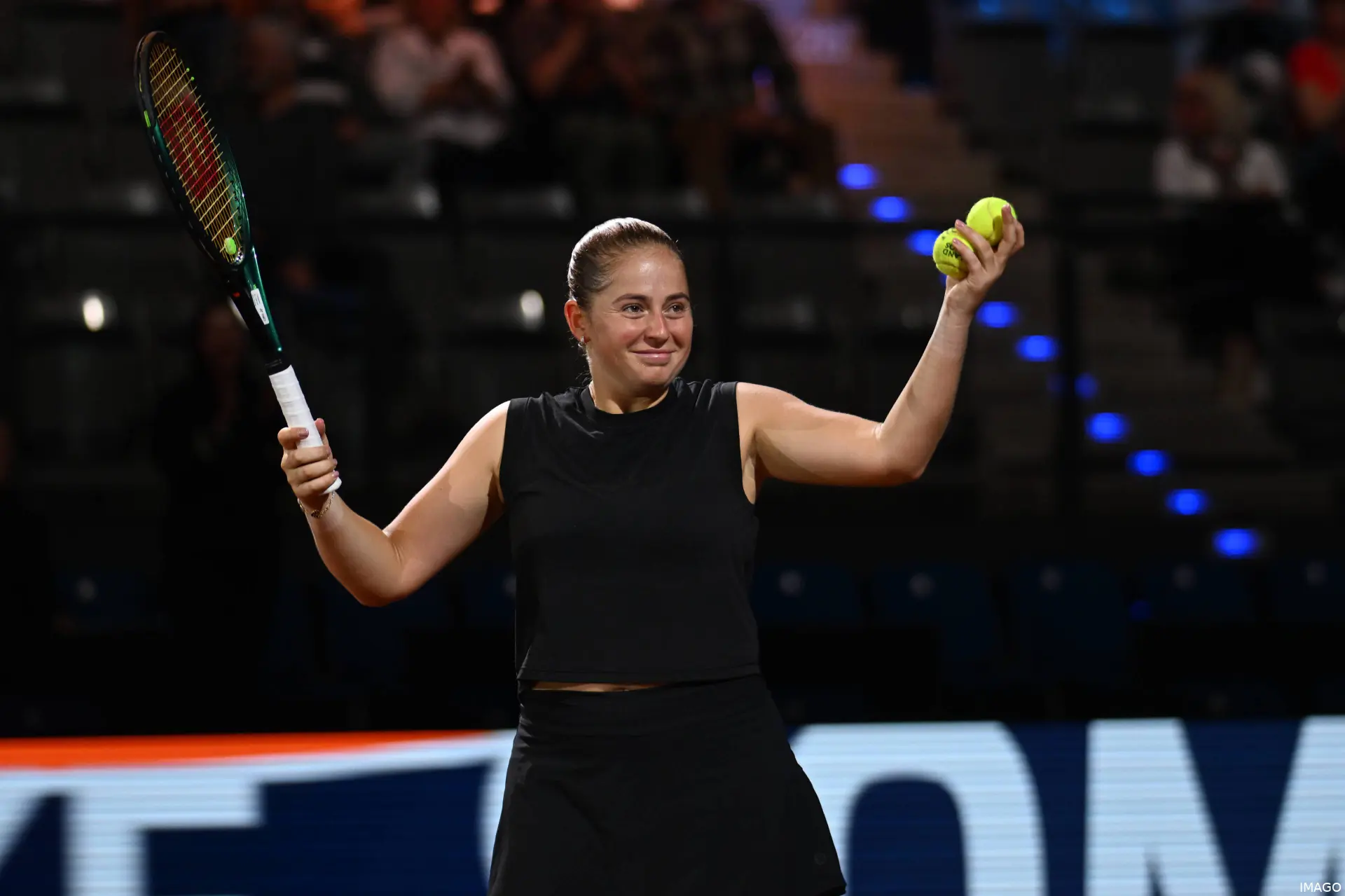
Here’s the thing about tennis etiquette: it’s not the Magna Carta. There’s no line in the rulebook requiring you to murmur “sorry” after a net-cord dribbler, and there’s no sportsmanship police writing tickets for warming up near the service line. What is in the rulebook—and what the sport actually has to enforce—is the simple idea that you can’t verbally abuse your opponent.
That’s why Jelena Ostapenko’s post-match tirade at Taylor Townsend last night should draw more than a finger-wag or a routine fine. It should trigger a real response from tennis’s stewards—beginning with a significant U.S. Open penalty and, given Ostapenko’s behavioral patterns, a WTA suspension.
First, the facts. After Townsend beat the 2017 French Open champion 7–5, 6–1, the handshake rapidly morphed into a confrontation. Townsend says Ostapenko told her she had “no class” and “no education”—and, chillingly, to “see what happens when we get outside the U.S.” That’s not a heat-of-battle mutter under your breath; that’s targeted, personal, and public. Multiple outlets captured both the exchange and Townsend’s account immediately afterward. Social media, as expected, has been feasting all night
Because Townsend is a Black athlete, reporters rightly asked whether there were racial undertones—particularly given the long, ugly history of “uneducated” tropes used to diminish Black competitors. Townsend, with poise that frankly put the adults in the room to shame, declined to brand the comments explicitly racist while noting the very stereotypes those words have carried for generations. That’s a hard needle to thread, and she threaded it.
Read also
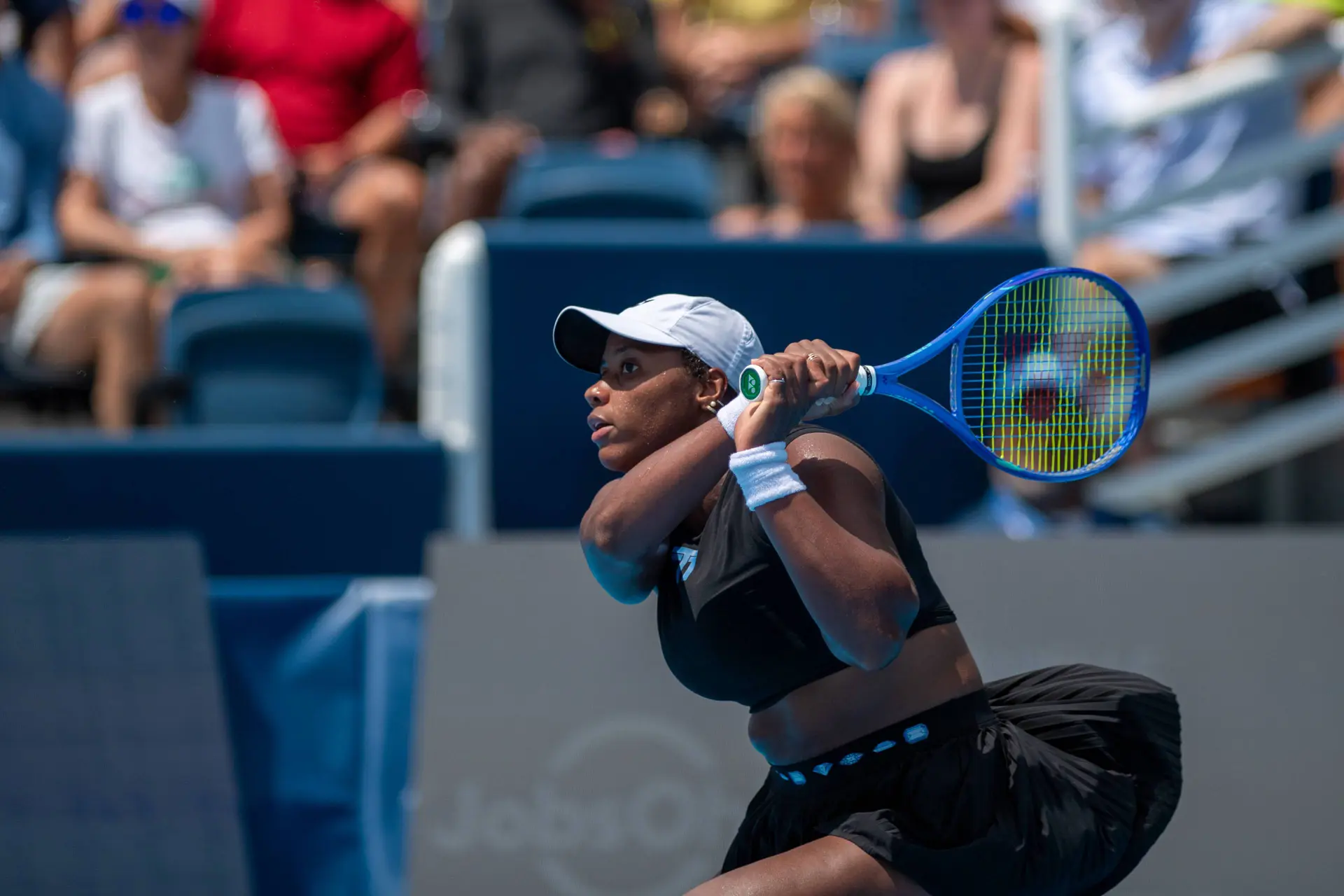
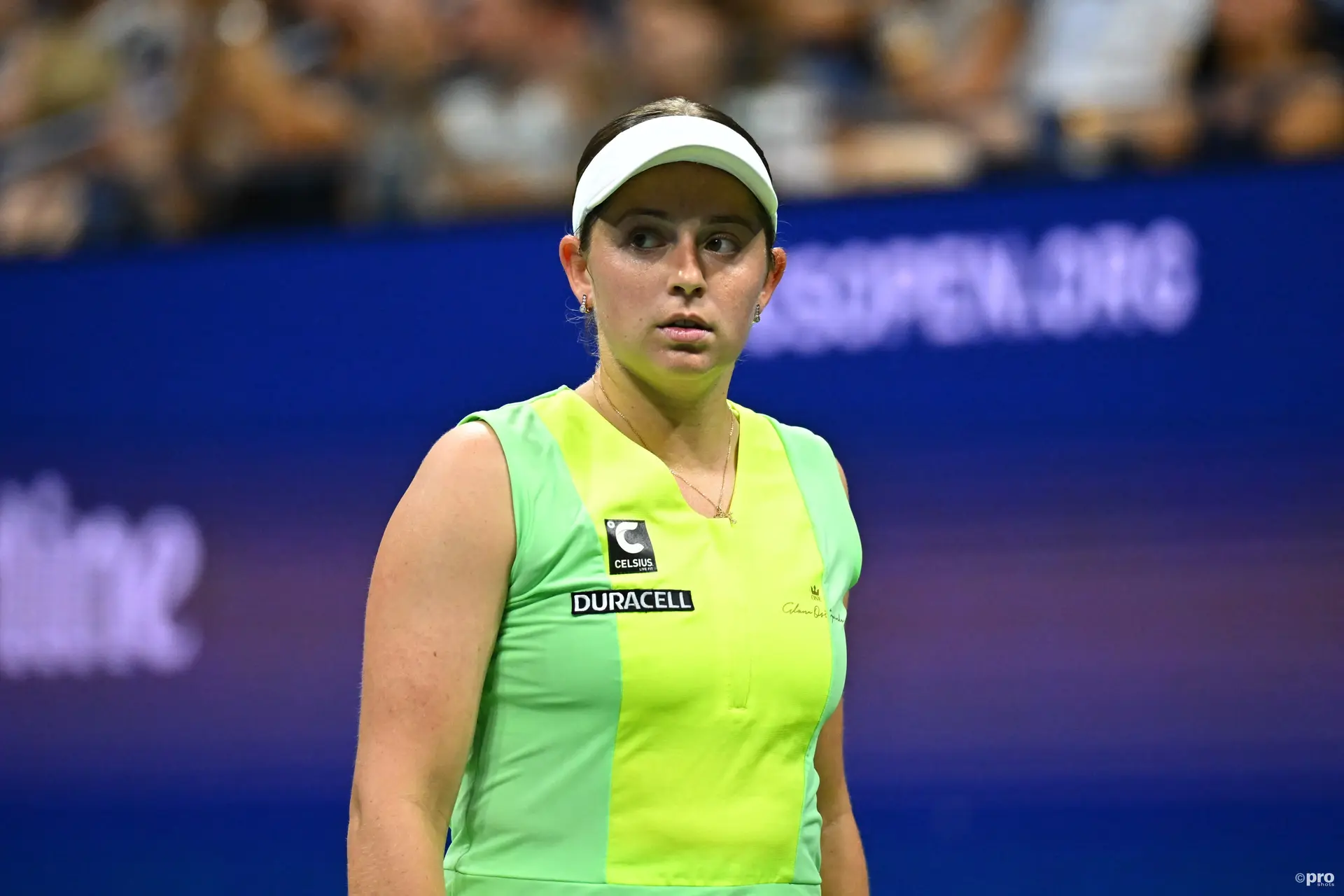
Ostapenko, for her part, tried to reframe the whole thing as a lecture on etiquette—no apology after a net-cord, warm-up habits she didn’t like, etc.—and later took to Instagram to deny any racial intent. But “you broke unwritten rules” is not a defense to “you insulted your opponent’s personhood.” You can be irked about customs; you can’t weaponize that irritation into personal degradation at the net.
Now, about those actual rules. The Grand Slam rulebook—the one that governs the U.S. Open—explicitly prohibits verbal abuse “at any time” toward an opponent or others within the tournament precincts, and authorizes fines up to $50,000 for each violation. That’s not theoretical; the event has already shown this week that it will levy meaningful penalties for on-court misbehavior. (Daniil Medvedev was just hit with a $42,500 bill for unsportsmanlike conduct and racket abuse, which is over one-third of his tournament winnings.) If the Open wants to show that words can be as corrosive to the sport as splintered graphite, it should move accordingly.
But this shouldn’t stop at Flushing Meadows. The WTA’s own Code of Conduct goes further, and it exists precisely for moments like this. The Code bars “verbal abuse” and, crucially, defines “Aggravated Behavior” to include either a single, particularly egregious incident injurious to the WTA or its tournaments or a pattern of conduct that, taken together, is collectively egregious. The penalties aren’t symbolic: a fine (up to the greater of $25,000 or a player’s prize money) and/or suspension from play for 21 days up to one year. The WTA also reserves the “sole authority” to declare a violation upon a formal, substantiated complaint. Translation: if the tour wants to act, it has the tools.
Read also
Match Statistics Ostapenko vs. Townsend
| Ostapenko | VS | Townsend |
|---|---|---|
| Service | ||
| 0 | Aces | 3 |
| 2 | Double Faults | 0 |
| 57% (29/51) | 1st Service Percentage | 78% (39/50) |
| 59% (17/29) | 1st Service Points Won | 74% (29/39) |
| 43% (10/23) | 2nd Service Points Won | 82% (9/11) |
| 38% (3/8) | Break Points Saved | 60% (3/5) |
| 44% (4/9) | Service Games | 80% (8/10) |
| Return | ||
| 26% (10/39) | 1st Return Points Won | 41% (12/29) |
| 18% (2/11) | 2nd Return Points Won | 57% (13/23) |
| Other | ||
| 1h 18m | Match Duration | 1h 18m |
Ostapenko's pattern
And the pattern? Ostapenko’s résumé of combustions is not a one-line CV. We’ve seen blow-ups at officials (remember the 2024 Australian swing warm-up rant at the chair umpire) and one of the nastiest Wimbledon spats in recent memory, when she and Ajla Tomljanovic traded accusations—“liar,” “no respect,” “worst player on tour”—after a medical time-out controversy. That’s a multi-year arc, not a one-off lapse.
Some will say: c’mon, it’s emotional sport—don’t criminalize passion. Agreed. Passion in this amazing sport (the world’s greatest sport, in my opinion) is the point. But there’s a bright line between playing with fire and burning the house down. Tennis has always asked its pros to hold two ideas at once: compete like a maniac and carry yourself like a pro. When players torch that second part—especially with demeaning, personal attacks—the damage outlives the highlight reel. It erodes the locker room, gives oxygen to the worst parts of fan culture, and tells kids watching at home that winning excuses everything.
Others will argue that Townsend didn’t call the comments racist, so what’s the problem? That’s precisely why the adults in charge need to lead. It shouldn’t fall on the target of an insult to litigate its cultural lineage in real time. The job here is narrower and simpler: enforce the rules, protect players, and set a standard that verbal abuse—whatever the abuser’s intent—has consequences.
Consequences for Ostapenko
What should those consequences be? Start with the U.S. Open applying the Grand Slam code’s verbal-abuse provision—real dollars, not couch-cushion money. Then the WTA should open an Aggravated Behavior review. This incident was public, direct, and demeaning; it also falls against a backdrop of prior high-profile blowups. Under the WTA’s own framework, that’s enough to consider a short suspension—measured in weeks, not months—to make clear that personal attacks are out of bounds. A suspension isn’t about vengeance; it’s about deterrence and dignity.
And while we’re here, let’s retire the etiquette smokescreen. If the sport wants to codify a net-cord apology, have at it—although good luck writing that into law without turning tennis into the Emotions Bureau. The better path is the one the rulebooks already paved: focus on conduct, not customs. You can be exuberant, curt, celebratory, even a little spicy. What you can’t be is personally abusive.
Tennis is booming with new voices and new audiences; the women’s game in particular has never been more global, more competitive, or more compelling. That’s exactly why leadership matters. The U.S. Open should show that its standards aren’t just for broken rackets. The WTA should show that patterns of disrespect have a shelf life. And the rest of us should take a cue from Taylor Townsend: play your heart out, answer loaded questions with grace, and let your game do most of the talking.
The message should be as crisp as a clean winner up the line: fines are the floor, not the ceiling—and for Ostapenko, this time, the ceiling needs to come down a bit.
Read also

Aron SolomonGuest Author
A Pulitzer Prize-nominated journalist for his groundbreaking op-ed in The Independent exposing the NFL’s “race-norming” policies, Aron Solomon, JD, is a globally recognized thought leader in law, media, and strategy.
As Chief Strategy Officer for AMPLIFY, he leverages his deep expertise to shape the future of legal marketing. Aron has taught entrepreneurship at McGill University and the University of Pennsylvania and was honored as a Fastcase 50 recipient, recognizing him among the world’s top legal innovators. A prolific commentator on law, business, and culture, his insights regularly appear in Newsweek, The Hill, Crunchbase News, and Literary Hub.
He has also been featured in The New York Times, Fast Company, Fortune, Forbes, CBS News, CNBC, USA Today, ESPN, TechCrunch, BuzzFeed, Venture Beat and countless other leading global media outlets. We are proud to have Aron on board at TennisUpToDate, where his deep tennis expertise enriches the site with sharp, original columns that connect the sport to wider cultural debates.
claps 20visitors 15
Just In


Popular News


Latest Comments
- Does Sinner need that 4.5 mil? I doubt it. He can make that with three modelling gigs!😅🤣Rapunzel21-10-2026
- Did "People Magazine" purchase this website? This nonstop storyline is bullshit.
 mandoist21-10-2026
 - Listen... this is of no concern to anyone but these two. Deal with your own issues -- most of us have our own. Thanks, media, for these insignificant follow-ups which are meaningless.mandoist21-10-2026
- This is so very very sad, for all three of them. I truly thought they had an unbreakable bond, but life throws up so many differing challenges. Having your homeland suffering in such a terrible way, makes happiness lose out to guilt as well. Our thoughts are with them. X💔bjsexton20-10-2026
- I have lost all respect for Svitolina! Could she not have waited until he had played at the Paris Masters!!! She is selfish and don't give a damn about Gael. That is NOT how love is demonstrated Elina!!Rapunzel19-10-2026
- Perhaps convenient tennis tour sex is not a strong enough experience in which to base a marriage?mandoist19-10-2026
- Fight the Good Fight... Tennis (sports in general) need more Humans such as yourself.mandoist18-10-2026
- When is WTA going to mandate Genetic Testing (DNA) ???mandoist18-10-2026
- Hey, Dan... you just wake up from a coma? Regardless -- Thanks for the comedy this morning!mandoist18-10-2026
- Two Things: 1. Stop allowing these Spoiled Trust-Fund Elitists to behave badly. Your little hand-slaps do not deter them. 2. STOP the incessantly annoying "towel wiping" nonsense!!!!mandoist15-10-2026

Loading