COLUMN: Mirra Andreeva wins WTA Finals, Elina Svitolina comes up short, and Charlotte gets its chance
WTA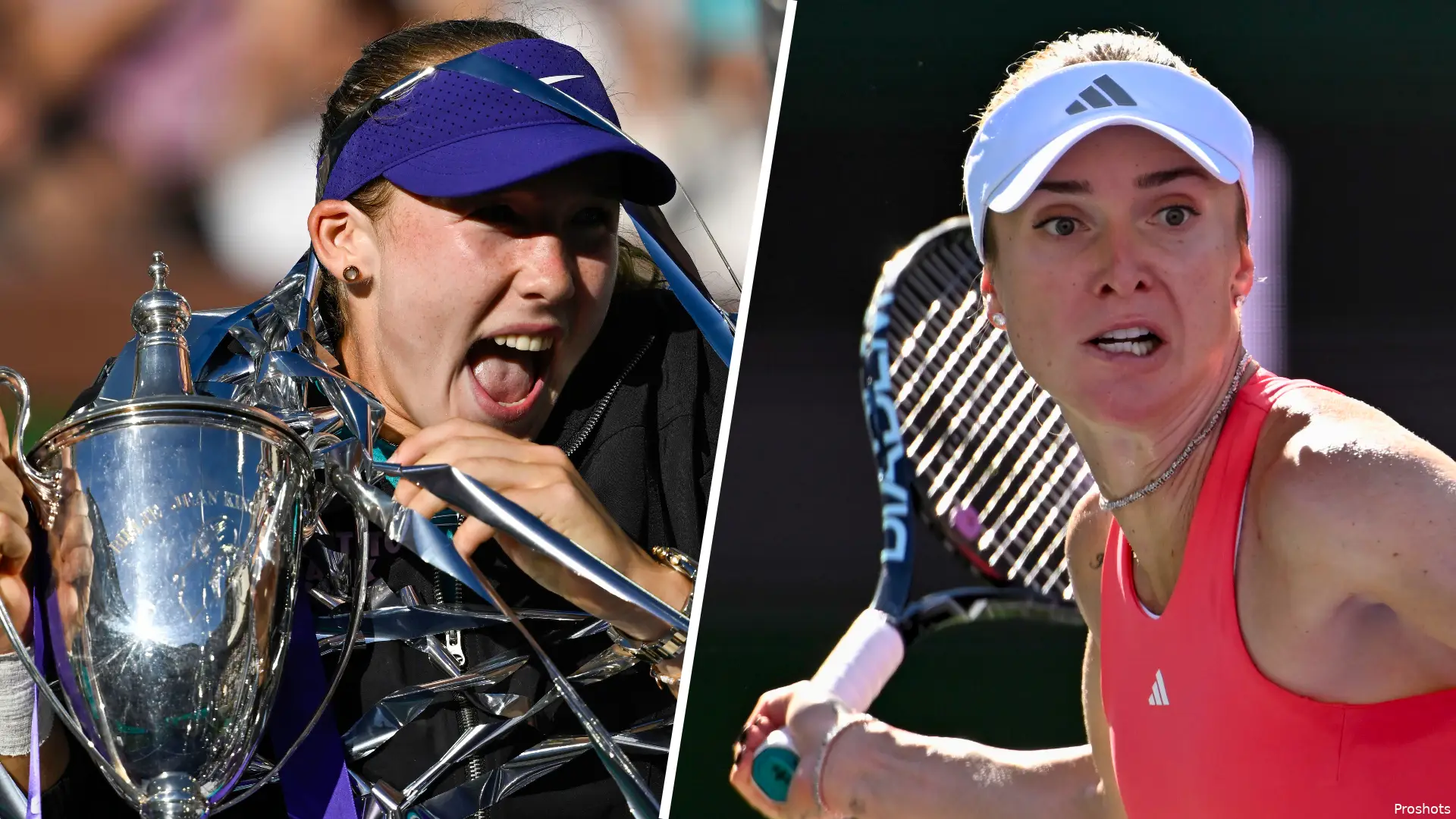
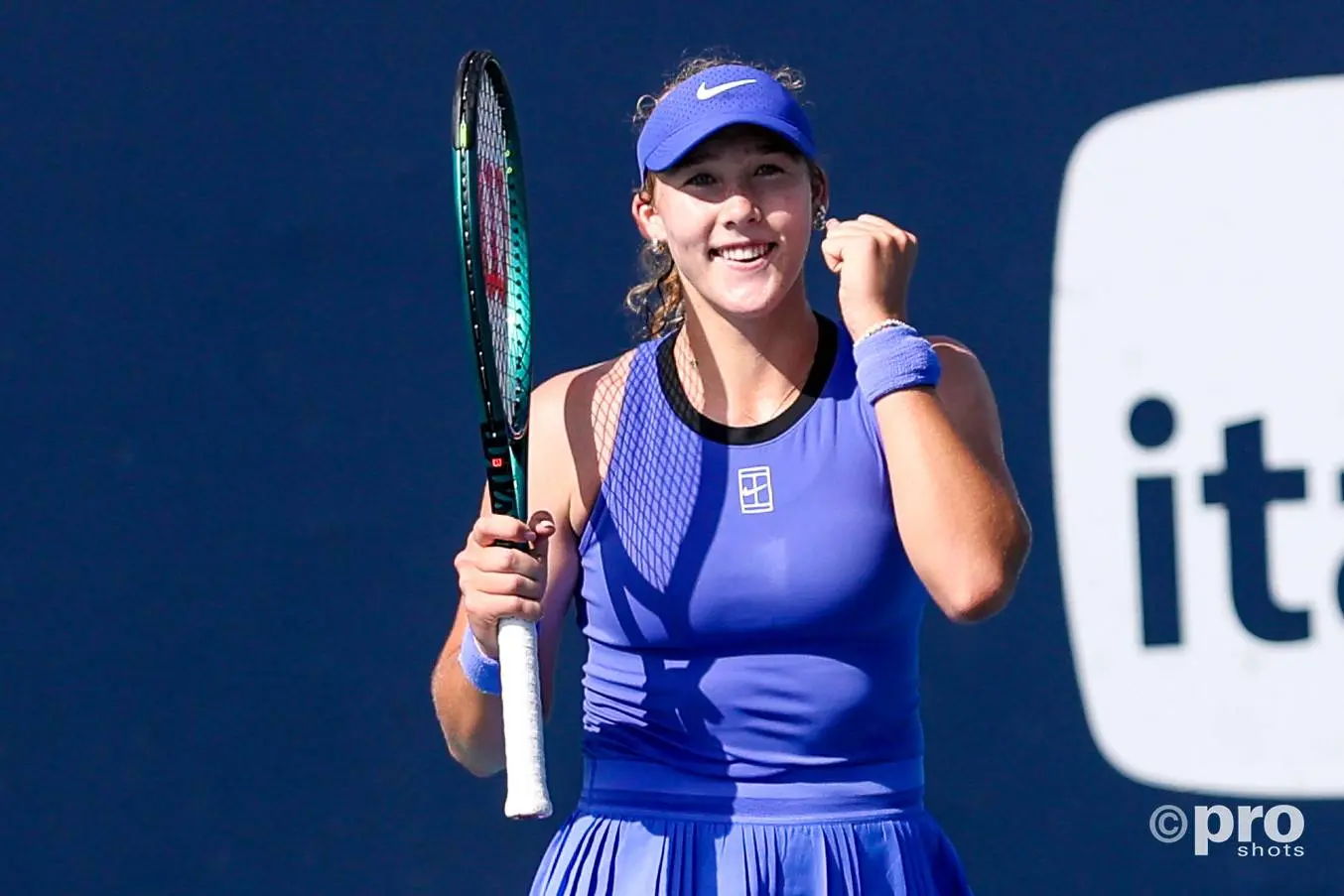
Mirra Andreeva, all of 19 years old, is the WTA Finals champion after defeating Elina Svitolina 7–5, 6–3 on Sunday afternoon at Indian Wells. It was a good match, occasionally a very good one, but not quite the spectacular finale we might have hoped for after Saturday’s extraordinary semifinals.
That’s not a criticism of Andreeva. She was the deserving champion, and frankly, I’m not sure anyone else could have beaten her this week.
What makes her victory particularly impressive is that she didn’t need to produce the same almost frightening level of tennis she displayed against Jessica Pegula in Saturday’s semifinal. She played well, took her opportunities, and never allowed Svitolina to develop the kind of sustained momentum that might have made the championship match considerably more complicated.
For a 19-year-old competing in the biggest match of her season, that’s quite an accomplishment. And while I’ve spent much of this tournament predicting that Linda Nosková would win the title, I have absolutely no difficulty acknowledging that Andreeva was the best player at Indian Wells this week.
Sometimes your prediction is wrong because you misjudged the tennis. Sometimes it’s wrong because somebody plays even better than you imagined. This was very much the latter.
Mirra Andreeva's route to the 2026 WTA Finals title
| Round | Opponent | Result |
| Round-robin | Elina Svitolina | Won |
| Round-robin | Aryna Sabalenka | Won |
| Round-robin | Jessica Pegula | Won |
| Semifinal | Jessica Pegula | Won |
| Final | Elina Svitolina | 7–5, 6–3 |
The First Set was better than the second
The championship match began with exactly the kind of ball striking we had hoped to see. Andreeva broke Svitolina in the opening game, held serve, and quickly established a 2–0 lead. Both women were absolutely smacking the fuzz off the ball, taking chances, hitting through the court, and showing why they had earned their places in the final.
There was nothing tentative about the opening exchanges. Svitolina, who had played magnificent tennis against Sabalenka and Nosková over the previous two days, wasn’t interested in simply defending against Andreeva’s power. She was prepared to attack, change direction, and make the teenager work.
Andreeva, meanwhile, looked remarkably comfortable. That’s been one of the revelations of this tournament. We knew she was enormously talented. Anyone who has watched her over the past couple of seasons understands that.
But there’s a difference between possessing talent and knowing how to use it when the stakes become enormous.
Andreeva has spent the past week demonstrating that she understands the difference. The first set was very good tennis. Both players took chances, and neither seemed particularly interested in waiting for the other to make mistakes. Svitolina competed beautifully, but Andreeva maintained her advantage and eventually took the set 7–5.
It wasn’t the kind of set that left you breathless, but it was thoroughly entertaining. And, more importantly, it established something that would become increasingly obvious as the afternoon progressed. Svitolina was going to have to do something extraordinary to beat Andreeva.
The moment when a comeback seemed possible
Andreeva broke immediately to open the second set, and I wondered whether the championship match was about to end rather quickly.
After all, she’d already defeated Svitolina convincingly in the round-robin portion of the tournament. And now she had a set and a break in the final. But Svitolina wasn’t finished. She broke straight back in the second game, and for a moment, I thought the momentum might be shifting.
Tennis is funny that way. A player can spend an hour looking thoroughly in control, then lose a service game and suddenly appear vulnerable. The question wasn’t whether Svitolina could make the second set competitive. She clearly could.
The question was whether she could win two consecutive sets against an Andreeva who had been playing exceptional tennis all week. And I simply couldn’t convince myself that she could. Even if Svitolina managed to take the second set, would she have enough left to win a third? Would Andreeva’s level drop sufficiently to give her that opportunity?
Nothing we’d watched over the previous seven days suggested that Andreeva was particularly interested in helping her opponents. At 2–2, Andreeva broke again.
And that was the moment when I began to feel the tournament reaching its inevitable conclusion. There was no dramatic collapse from Svitolina, no spectacular implosion, and certainly nothing resembling what we’d witnessed from Sabalenka earlier in the week.
There was simply a better player gradually taking control of the match. Andreeva went ahead 3–2, and I had the strong sense that we’d be finished within another 20 minutes or so.
We weren’t far off. The teenager closed out the championship 7–5, 6–3, and the WTA Finals had its youngest champion in more than two decades.
Mirra Andreeva's championship statistics
| Statistic | Achievement |
| Age | 19 |
| Tournament | 2026 WTA Finals |
| Final opponent | Elina Svitolina |
| Final score | 7–5, 6–3 |
| Sets dropped | 0 |
| Tournament record | Undefeated |
Svitolina deserves more than a consolation prize
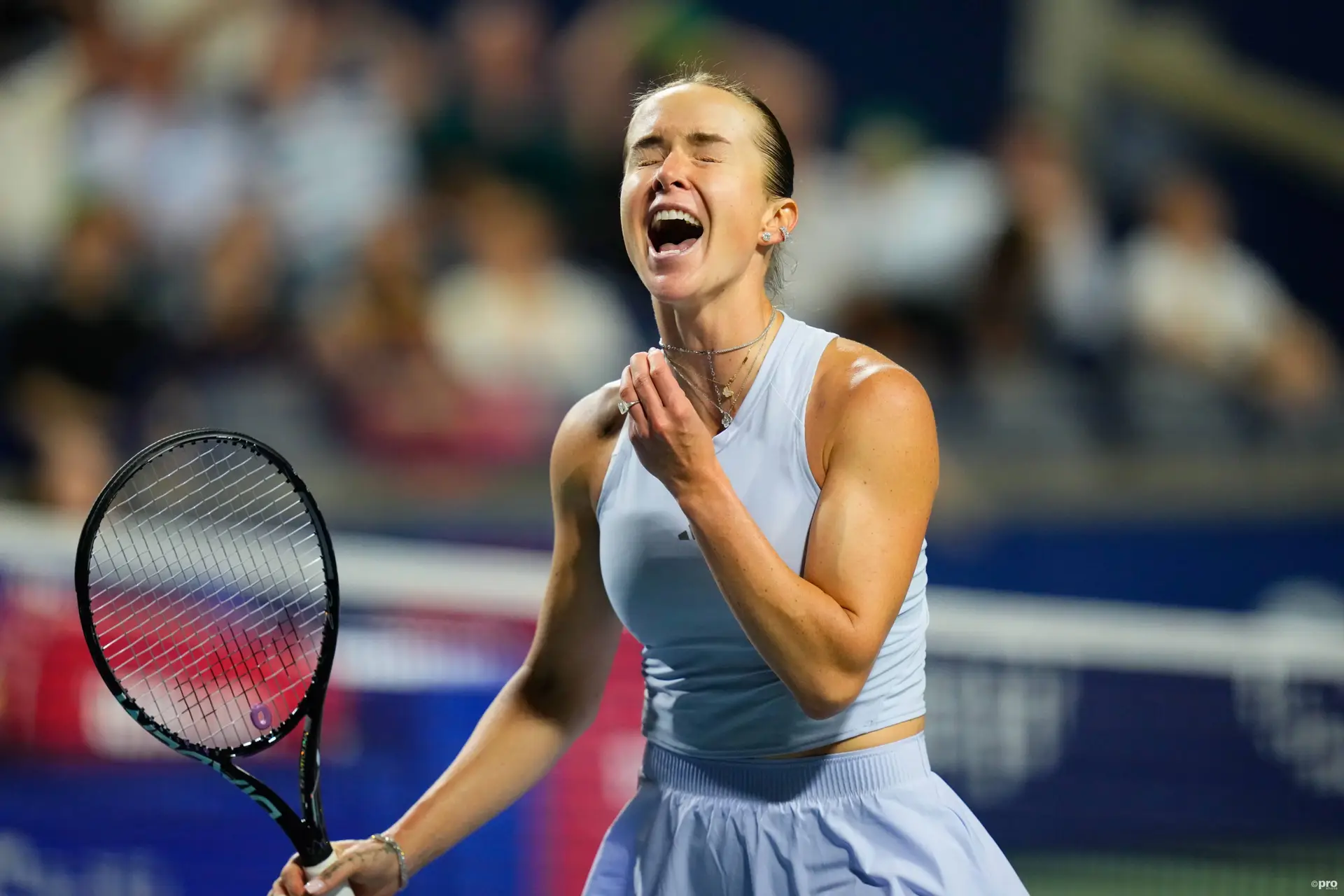
I don’t want Andreeva’s victory to overshadow what Svitolina accomplished this week. Her run to the final was remarkable, particularly considering the circumstances surrounding her season and the emotional weight she carries as one of Ukraine’s most prominent athletes.
On Friday, she defeated Sabalenka in a match that featured one of the Belarusian’s more spectacular emotional collapses. On Saturday, she produced what I thought was an even better performance against Nosková, playing with extraordinary precision and composure.
By Sunday, she was facing an opponent who had barely put a foot wrong throughout the tournament. Andreeva had been the dominant player of the week. She’d dismantled Sabalenka, overwhelmed Pegula, and already beaten Svitolina once. That Svitolina made the championship match competitive is a credit to her.

Elina Svitolina deserved so much more.
And there’s something else worth acknowledging. This final carried a political dimension that was impossible to ignore. Svitolina is Ukrainian. Andreeva is Russian. Russia’s invasion of Ukraine continues, and Svitolina has been outspoken about the war and its consequences for her country.
Andreeva has expressed support for peace without publicly condemning the invasion. She was a young teenager when the full-scale war began, and we should be careful about assuming we know her private political beliefs. But none of that erases the reality that these two women arrived on court carrying very different experiences of the same conflict.
Svitolina has made representing Ukraine a central part of her public identity during the war. She has also consistently declined to shake hands with Russian and Belarusian opponents. We can recognize those circumstances without making Andreeva personally responsible for the actions of her government. And we can celebrate Andreeva’s championship without pretending that Sunday’s match existed entirely outside the world in which these athletes live. Both women deserve respect for the tennis they played.
A Week That Wasn’t Always Pretty
I’ve written about these WTA Finals every day, and I don’t think anyone could accuse me of being excessively generous in my assessments. There were matches early in the week that were genuinely disappointing. The players often looked exhausted, the tennis occasionally lacked intensity, and the atmosphere sometimes felt more like the end of a very long school year than the most prestigious event on the WTA calendar.
I’ve made plenty of jokes about the Maldives, but there’s a serious point behind them. The women’s tennis season is simply too long. By November, even the world’s best players are physically and emotionally depleted. Asking them to produce their finest tennis after 10 months of relentless competition is a difficult proposition.
And yet, as the week progressed, the tournament became considerably better. Nosková’s victory over Gauff was excellent. Pegula’s dramatic win over Nosková was one of the week’s most entertaining matches. Svitolina’s victories over Sabalenka and Nosková were remarkable, and Andreeva’s semifinal performance against Pegula was, in my opinion, the finest tennis anyone played at Indian Wells. Sunday’s final didn’t quite reach that standard. But it was a fitting conclusion.
The best player of the week won the championship. Sometimes that’s enough.
Goodbye, Indian Wells. Hello, Charlotte.
There’s another important story coming out of these Finals, and it has nothing to do with who lifted the trophy.
This was a one-off event at Indian Wells. Beginning in 2027, the WTA Finals will move to Charlotte, North Carolina. More significantly, the WTA itself is relocating its global headquarters to Charlotte, bringing the organization’s leadership and its signature championship into the same city. Women’s Tennis Association +1
I think this represents a tremendous opportunity. For years, the WTA Finals have moved around the world, sometimes successfully and sometimes under circumstances that made you wonder whether anyone involved had a coherent long-term plan.

Mirra Andreeva., the queen in California.
Indian Wells was an excellent temporary solution. The facilities are magnificent, the crowds were generally enthusiastic, and there’s a reason the venue is considered one of the finest in tennis. But the November conditions were not ideal.
We saw the problems created by the low sun and deep shadows, particularly during Saturday’s Nosková–Svitolina semifinal. Players were sometimes serving directly into blinding sunlight, then attempting to return shots emerging from dark sections of the court.
Indian Wells in March is tennis paradise. Indian Wells in November is a somewhat different proposition.
Charlotte, however, offers something potentially much more valuable than another attractive venue. It offers permanence. And permanence matters.
The WTA has an opportunity to build an identity around its season-ending championship, develop relationships with local businesses and sponsors, create traditions that fans will anticipate every year, and establish a genuine home for women’s professional tennis. The headquarters relocation makes this even more interesting.
Rather than treating the Finals as a traveling event that requires a new organizational effort every few years, the WTA can integrate the championship into its broader business and marketing strategy.
Charlotte has a substantial corporate community, an established professional sports culture, and the infrastructure to support major events. There’s no reason the WTA Finals can’t become one of the most anticipated annual sporting events in the American Southeast. But it won’t happen automatically.
The WTA needs to approach Charlotte as an opportunity to build something enduring, not simply as another city willing to host a tournament.
That means developing relationships with fans who might not currently follow women’s tennis, making the event accessible to families, creating programming that extends beyond the matches, and giving the championship a personality that belongs to Charlotte. It also means taking the lessons of Indian Wells seriously.
The tournament needs better scheduling, a calendar that allows players to arrive in reasonable physical condition, and a genuine commitment to making the Finals feel like a celebration of women’s tennis rather than the last obligation before everyone disappears on vacation. There are financial challenges to address as well. The WTA has acknowledged that 2026 has been a transitional year, and its leadership is looking toward 2027 as an opportunity to strengthen the organization’s financial position. Reuters
Charlotte won’t solve every problem. But it provides a foundation on which real success and growth can be built. And after watching the WTA struggle with questions of leadership, identity, scheduling, and presentation over the past several seasons, I think that’s something worth being genuinely excited about.
The Right Champion, and a New Beginning
So what will I remember about the 2026 WTA Finals? I’ll remember Nosková playing the kind of tennis that made me believe she could win the championship, even though she ultimately didn’t.
I’ll remember Sabalenka producing two extraordinary implosions in three days. I’ll remember Pegula’s resilience, Muchová’s unfortunate withdrawal, and Svitolina’s remarkable run to the final.
And I’ll remember Andreeva. Not simply because she won, but because of how she won.
At 19, she demonstrated a combination of power, intelligence, composure, and competitive maturity that should concern just about everyone else on the WTA Tour.
There will be difficult moments ahead. There always are for young players, particularly those who achieve extraordinary success so early in their careers. But Andreeva has shown us something important this week.
She isn’t merely a promising young player anymore. She’s a champion capable of beating the very best players in the world, repeatedly, on one of the sport’s biggest stages. That’s a pretty good way to end a season.
Read also
And as the WTA packs up its temporary home in Indian Wells and prepares for a new chapter in Charlotte, perhaps there’s something fitting about having a 19-year-old champion leading the way.
The future of women’s tennis looks extraordinarily promising. Now the people running the sport need to make sure they’re building something worthy of the players who will define it.

Aron SolomonGuest Author
A Pulitzer Prize-nominated journalist for his groundbreaking op-ed in The Independent exposing the NFL’s “race-norming” policies, Aron Solomon, JD, is a globally recognized thought leader in law, media, and strategy.
As Chief Strategy Officer for AMPLIFY, he leverages his deep expertise to shape the future of legal marketing. Aron has taught entrepreneurship at McGill University and the University of Pennsylvania and was honored as a Fastcase 50 recipient, recognizing him among the world’s top legal innovators. A prolific commentator on law, business, and culture, his insights regularly appear in Newsweek, The Hill, Crunchbase News, and Literary Hub.
He has also been featured in The New York Times, Fast Company, Fortune, Forbes, CBS News, CNBC, USA Today, ESPN, TechCrunch, BuzzFeed, Venture Beat and countless other leading global media outlets. We are proud to have Aron on board at TennisUpToDate, where his deep tennis expertise enriches the site with sharp, original columns that connect the sport to wider cultural debates.
claps 0visitors 0
Just In

Popular News
Latest Comments
- Mirra's very funny words have been in my head since yesterday. "If I win the car I have 5 people in my box that can drive me around. I will forever be a passenger princess. I have a plan..." And I will never forget how she had me rolling on the floor laughing when asked how she beat Jess Pegula so handily: "I don't know what happened; It must have been the Diva in me". CLASSIC STUFF !
 mandoist15-11-2026
- Can whomever has a microphone in the Final... PLEASE STOP YAMMERING ABOUT YOURSELVES NONSTOP THROUGHOUT THE MATCH???? Get a grip and STFU once in awhile so we can 'hear' the actual play on court.mandoist15-11-2026
- Martina is one of the most competent, knowledgeable, and 99.999% correct in her analysis. Most of all -- WHILE A COMMENTATOR IN MATCHES SHE KNOWS WHEN NOT TO TALK AND DISTRACT FROM THE ACTION !!! Someone please pass that idea on to Austin, Shriver, and whoever else has been f-ing YAPPING throughout the play. How thoughtless and elitist can these people be squawking nonstop throughout an entire game about themselves. STFU, please (I said "please"). Let us 'hear' the game play on court.mandoist15-11-2026
- Tennis "fans" have short memories. This is exactly who Saba always was... granted she found a 'new' persona when she began winning matches and tourneys. Off-court she's always been a racist potty-mouth. Her meanness also shines through when she thinks no one else is around. In short, the "person" you've witnessed in post-match on-court interviews is NOT who she is. As for her familiar "apologies, she can stick that routine in her racquet bags because I never believed her words nor phony "respect" for her opponents -- and I ain't buying that now.mandoist15-11-2026
- Was Saba not paying attention to those who sought an inordinate amount of attention outside of their sport (occupation)... and to the point they lost their focus and eventually their place in tennis? For example: Giorgi, Bouchard, Raducanu, etc. They became infatuated with endless Selfies, videos, podcasts, TV commercials, magazine shoots, and so on. Thus their tennis suffered. Priorities are important.mandoist14-11-2026
- I, like writer of this wonderful article, also picked Noskova to win this entire thing. I would love it if she and Andreeva are in the final.Rapunzel12-11-2026
- "Priorities", Saba... spend less time in front of cameras, anti-Social Media, selfies and back to Tennis.mandoist12-11-2026
- Tell this to Andreeva!mandoist12-11-2026
- Andreeva with 11 games in a row to add to Saba's downward spiral issue !!! Personal feelings aside... Jess Pegula may want to reassess her evaluation of Mirra's abilities.mandoist12-11-2026
- I predicted whenthe list was finalised that Linda Noskova would win the WTA Finals and her matches against Gauff and Kostyuk prove that. She is the best (underrated) player in the world!Rapunzel11-11-2026
