COLUMN - The flag is already gone, finish the job as WTA should suspend Russian and Belarusian players after Yastremska apartment destruction
WTASunday, 13 September 2026 at 09:34
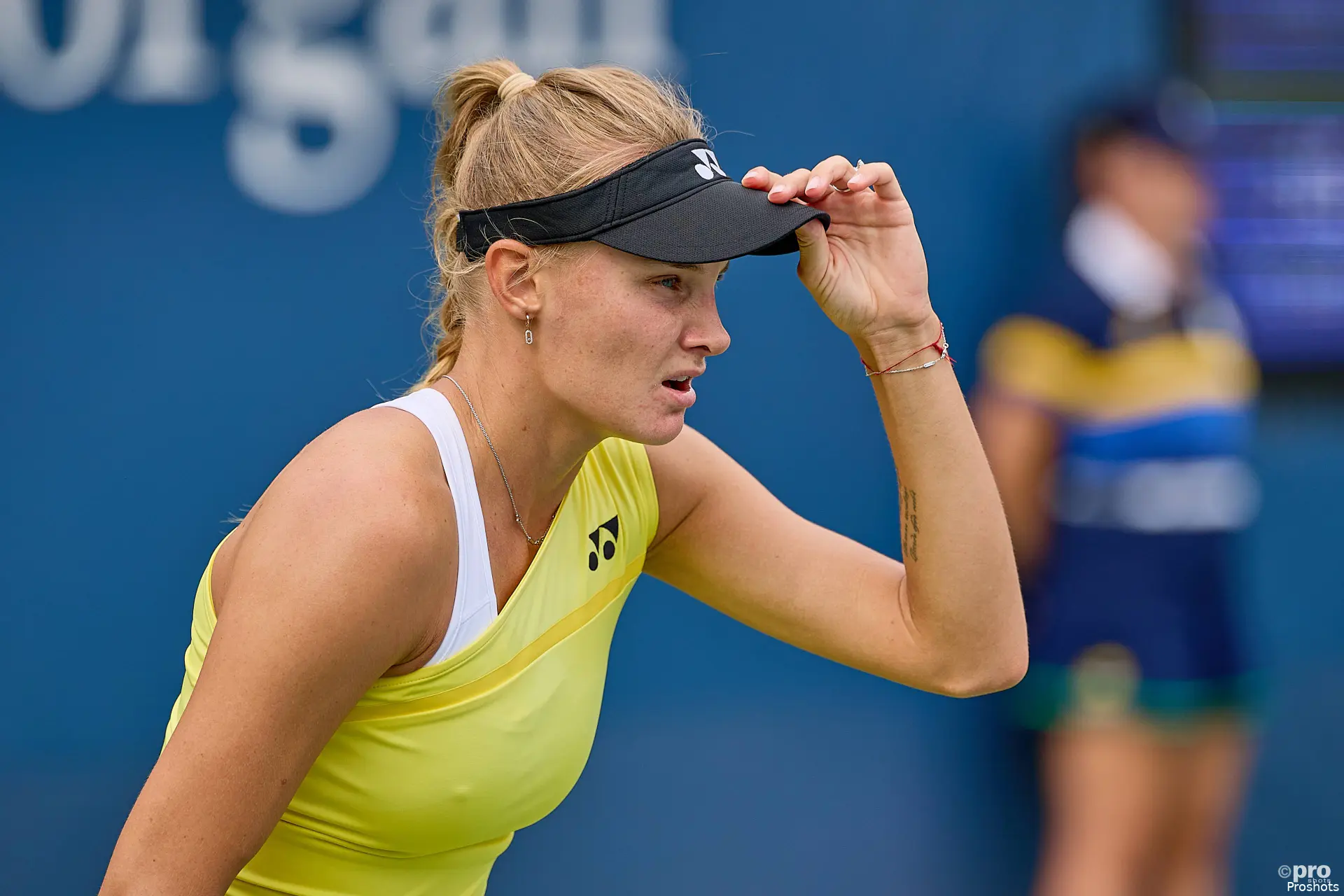
There is no Russian flag next to the names of Russian players on WTA scoreboards. There is no Belarusian flag next to Belarusian players. There hasn’t been for years.
After what happened to Dayana Yastremska’s family in Odesa this weekend, I think it is time to ask the question tennis has spent four and a half years trying not to answer: Why are the players still there?
A Russian missile struck the residential building where Yastremska’s family apartment was located during a massive attack on Odesa. Her family’s home was destroyed. At least 38 people were reportedly injured in the attack, including a five-month-old baby.
Yastremska posted photographs of the destruction. Among the debris was something almost surreal: an orange Roland Garros towel. “A piece of world tennis survived a Russian missile,” she wrote. “Our home did not.”
There are moments when the comfortable language we use to keep sport separated from the world outside it simply collapses. This should be one of them.
The WTA should suspend Russian and Belarusian players from its tournaments. Not because those individual players fired the missile. Not because Aryna Sabalenka, Mirra Andreeva or any other tennis player is personally responsible for Vladimir Putin’s war.
They are not. But because the compromise professional tennis devised in 2022 has become morally indefensible. Russian and Belarusian players can compete. They can earn millions of dollars. They can become world No. 1. They can win Grand Slams.
Tennis simply removed the flags next to their names. That was supposed to be the consequence. Enough.

Dayana Yastremska's apartment was bombed.
The Blank Space was always an admission
There is a basic contradiction at the heart of tennis’s policy that we have somehow learned to stop noticing. If nationality has nothing to do with an individual athlete, why remove the flags at all?
Why isn’t the Russian flag still next to every Russian player? Because tennis knows nationality matters. That blank space on the scoreboard is an acknowledgment that something happened so grave that allowing Russian and Belarusian athletes to compete normally under their national identities was unacceptable.
Tennis just decided to stop halfway. It created the fiction of the “neutral” athlete and congratulated itself for finding a compromise. Meanwhile, the war continued.
Ukrainian cities were bombed. Ukrainian civilians were killed. Ukrainian athletes lost family members, friends, homes and training facilities. And every week the Ukrainians on tour were expected to arrive at another tournament, walk into another locker room and carry on.
That is not neutrality. It is a decision about who is required to absorb the consequences. For years, tennis has obsessed over whether excluding Russian and Belarusian players would unfairly punish people who did not start the war. It is a legitimate concern. But where has the same concern been for the Ukrainians?
Kate Koval had a door
A remarkable situation in American college basketball recently showed that there is another way to think about this.
Kate Koval is Ukrainian. She was born in Kyiv and played basketball at LSU. Her father serves in Ukraine’s military. She has spoken about people close to her being killed and wounded and about places where she grew up and learned basketball being destroyed by Russian attacks. LSU coach Kim Mulkey brought Russian player Anna Minaeva into the program.
Koval decided she could not stay. Mulkey reportedly explained her position by saying she could not make a recruiting decision based on “a conflict between two countries.”
But those words themselves reveal part of the problem. This is not some border dispute between two equally situated countries. Russia invaded Ukraine. By the time Koval decided to leave LSU, however, the NCAA transfer portal had closed. Under the rules, she could not simply transfer somewhere else and continue playing.
So Koval asked for relief. And the NCAA gave it to her. It granted her a waiver allowing her to enter the portal without sacrificing her ability to play this season.
That shouldn’t be remarkable. But compared with how international tennis has handled this issue, it is. The NCAA did not have to declare Minaeva responsible for Putin. It did not have to punish her. It did not have to solve the war in Ukraine. It simply recognized that an extraordinary circumstance was being imposed upon a Ukrainian athlete and found a way to give her a choice. Now tell me what Dayana Yastremska’s choice is.
There Is No Transfer Portal on the WTA Tour
There isn’t another tour Yastremska can join. There isn’t another league for Elina Svitolina. Marta Kostyuk cannot transfer to another conference.
A Ukrainian tennis player who decides she can no longer share locker rooms, player lounges, practice courts and draws with Russian and Belarusian athletes cannot ask the WTA for a waiver and go somewhere else. If she wants to compete at the highest level of her profession, she has to stay.
That changes the moral equation. In college basketball, Koval had a door. The NCAA opened it. Professional tennis gives Ukrainian players no door at all.
So someone has to bear the burden. The WTA has decided, year after year, that it will be them. Russian and Belarusian players lost their flags. Ukrainian players have lost their homes. Please stop pretending those are equivalent sacrifices.
🤯 Dayana Yastremska says a Russian missile destroyed an apartment belonging to her family in Odesa
— Ukrainian Tennis • BTU (@ukrtennis_eng) September 12, 2026
The residential building was hit during another Russian attack on the city.
“This night… This apartment belonged to OUR FAMILY,” Yastremska wrote on social media. “This is what… pic.twitter.com/s0zEENcsr4
And Now the Olympics Wants to Go Backward
As if tennis’s failure of nerve were not enough, the International Olympic Committee is now moving in precisely the opposite direction. In July, the IOC provisionally lifted the suspension of the Russian Olympic Committee and advised international sports federations to wind down the three-year system under which Russian athletes had to be individually vetted before being permitted to compete as neutrals.
Why? Because qualification for the 2028 Los Angeles Olympics is beginning and, according to the IOC, there is a “need to offer equal access to these competitions to all athletes.” Equal access. Read those words again. A Russian missile can destroy the family home of a Ukrainian professional athlete, and international sport is worried about equal access for Russian athletes.
The possibility now exists that by Los Angeles in 2028 we could be watching a Russian Olympic team again compete under its flag and hear its anthem played for Russian gold medalists.
What exactly will have changed? Not the invasion. Not the missiles. Not the graves. Apparently, the calendar. Qualification has started.
This is where the idea of sporting neutrality becomes almost absurd. International sporting bodies impose sanctions when the television pictures are horrifying and public outrage is overwhelming. Then time passes. Attention moves elsewhere. Administrators begin talking about procedural fairness, qualification pathways and equal access. Eventually, everyone is expected to forget why the sanction existed.
The Ukrainians do not have that luxury. Dayana Yastremska’s family certainly doesn’t.
Sport Was Never Neutral
I understand the romance of saying sport should transcend politics. I love sport partly because sometimes it does. But international sport has never been politically neutral.
Countries are suspended. Federations are sanctioned. National teams are excluded. Flags and anthems are prohibited. Athletes have historically lost opportunities because their governments crossed lines the international sporting community decided could not be ignored.
That can be unfair to an individual athlete. Of course it can. Sanctions are almost always unfair to somebody who did not personally make the decision that caused them.
The relevant question is whether that unfairness is greater than the alternative. Right now, the alternative is asking Ukrainian athletes to behave as though the destruction of their country is something they should leave at the locker-room door. Imagine receiving the message that your family home has been destroyed by a missile.
Then imagine arriving at your next tournament. Check in. Pick up your credential. Practice. Do media. Look at the draw. And there, potentially, is a Russian player waiting on the other side. Then someone from tennis explains that sport must remain neutral. Try saying it out loud.
Enough
I don’t want Russian or Belarusian players harassed. I don’t want them personally blamed for bombs they did not drop or missiles they did not fire. This isn’t about personal guilt.
It is about whether participation in international professional sport can remain completely insulated from what nations do. Tennis itself answered that question in 2022.
No. That is why the flags disappeared. The problem is that tennis wanted the symbolism of taking action without accepting the consequences of actually taking it.
Four and a half years later, the Ukrainians are still paying the price for that compromise. The NCAA encountered one Ukrainian athlete who said she could not remain in that situation and found a way to let her leave.
The WTA cannot offer its Ukrainian players the same thing. There is nowhere for them to go.
So the burden has to move. Suspend Russian and Belarusian players until the circumstances that caused tennis to remove their flags have fundamentally changed. Not forever. Not out of vengeance.
Not because every Russian athlete is Vladimir Putin. Because sanctions that disappear simply because everyone else has grown tired of enforcing them aren’t sanctions at all.
Read also
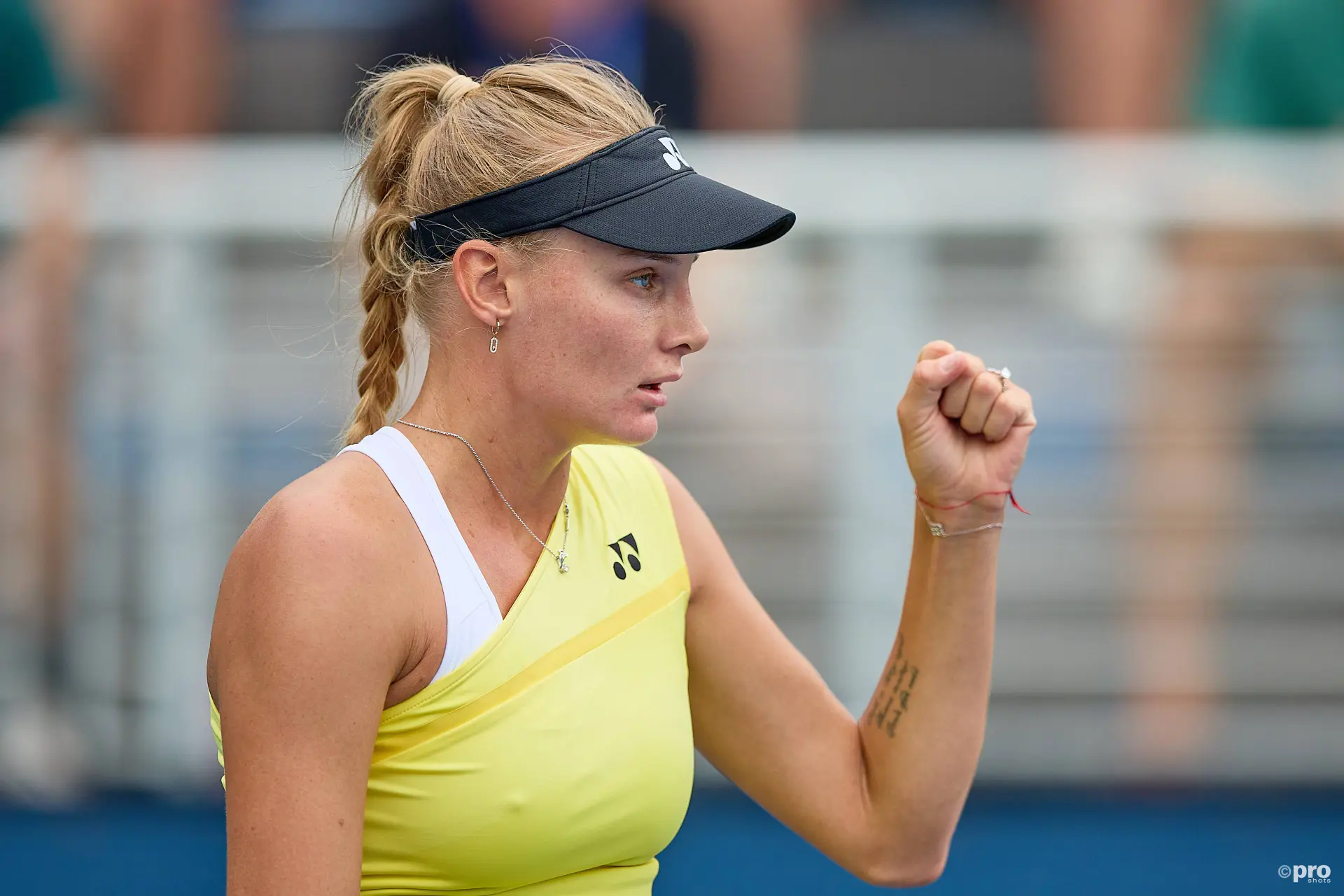
Dayana Yastremska has now given the tennis world an image it should not be able to shake. A destroyed family apartment. Debris everywhere. And amid it, an orange Roland Garros towel. A little piece of professional tennis survived.
Her home didn’t. So take another look at the next WTA scoreboard. Look at the empty space where the Russian and Belarusian flags used to be. That blank space was supposed to mean something. It is time that it did.
Aron SolomonGuest Author
A Pulitzer Prize-nominated journalist for his groundbreaking op-ed in The Independent exposing the NFL’s “race-norming” policies, Aron Solomon, JD, is a globally recognized thought leader in law, media, and strategy.
As Chief Strategy Officer for AMPLIFY, he leverages his deep expertise to shape the future of legal marketing. Aron has taught entrepreneurship at McGill University and the University of Pennsylvania and was honored as a Fastcase 50 recipient, recognizing him among the world’s top legal innovators. A prolific commentator on law, business, and culture, his insights regularly appear in Newsweek, The Hill, Crunchbase News, and Literary Hub.
He has also been featured in The New York Times, Fast Company, Fortune, Forbes, CBS News, CNBC, USA Today, ESPN, TechCrunch, BuzzFeed, Venture Beat and countless other leading global media outlets. We are proud to have Aron on board at TennisUpToDate, where his deep tennis expertise enriches the site with sharp, original columns that connect the sport to wider cultural debates.
claps 10visitors 1
Just In


Popular News

Latest Comments
- Sabalenka began showing signs of her game gradually 'changing' since last season. I predicted her fascination with posting endless Selfies, participating in commercial media distractions and constant Social Media nonsense could impact her in a negative way. Her off-court Life was sure to interfere with her performace level. Visions of Raducanu, Giorgi, Bouchard come to mind. The Final yesterday was a weird case of polar-opposites. Sabalenka and Rybakina could not be any more different in personalities! Saba often portrays a somewhat fake persona, including her Phony Screaming. Her usual habit of acting like the nice girl with a sense of humor is a misconception. People take her lack of intellect as "cute" and "funny". So anyway... yesterday viewers witnessed that Fake Scream be reduced to a whimper and sometimes no vocal gymnastics at all once she knew the jig was up. We all saw her look into the camera post-match and say "F... You". Also, pretty hard to not see Saba making untoward facial expressions, rolling her eyes, etc., behind Rybakina while on the podium. Elena Rybakina, on the other hand, was her usual 'in-control' self as she spoke clearly and calmly, without making faces nor any ill-will toward anyone = 100% Class Act. Lena appeared more than aware of Saba's sour attitude and made a point of not looking in her direction most of the time. FWIW: I have never -- not ever -- heard Sabalenka make any sounds on practice courts. So it is indeed a nonsensical ruse as she thinks (incorrectly) it affects opponents. It does not. In fact, as was the case yesterday, I saw Lena occasionally take a side-eye glance at Saba on her way to the bench... as if to calculate her emotions. Saba is actually a very easy 'read'.
 mandoist13-09-2026
 - WTA really, really hates this sort of thing. They surely are satisfied to make believe no such thing happens (or happened).mandoist13-09-2026
- WTA and ATP cannot even make their dope testing equal and precise across the board. They sure as hell cannot escape a stituation they themselves made over the ridiculous "penalty" of omitting a player's country flag. Nothing regarding which flags to display (or not) should be a Thing. It proves nothing; solves nothing. If anything, all it did was cause stress, tension, and even outbursts between players in the WTA locker room. Let's not even start with the asinine practice of not shaking hands at the net with "the enemy". There seems to be a general lack of intelligence behind Pro Tennis administrations' Closed Doors. .mandoist13-09-2026
- Big Babe Tennis! Hoping for a good final.DaveyWavey12-09-2026
- Director needs to return to his old "job" at the Australia Open. He's clueless in NYC.mandoist12-09-2026
- You keep writing ridiculous crap... why are you even watching tennis?mandoist12-09-2026
- They probably have a very good reason for this. I do not get it. Annoying that it finishes so late
 AceOfBase12-09-2026
 - I hope he wins. Would be great to have a USA winner again with the men.AceOfBase12-09-2026
- I love WTA matches. Seek them out as much as possible on youtube and other platforms I already subscribe to. With that in mind, I do not wish to pay $$$ to a notoriously slippery subscription conglomerate sports broadcaster (like SkySports) just for the privilege to watch it and the tnt/eurosport/discovery subscription went from $$ to $$$+ annually in a blink of an eye. With ATP I have been begrudgingly paying xyz tennis only channel and try to catch up on slams elsewhere (pubs, youtube with USO later on games are just as enjoyable to watch and a smart move to upload on their official channel) but they don't cover WTA. I tried another Tennis dedicated channel that advertised originally as broadcasting where I live, but turned out, they took the money, but didn't cover the matches (only fluff/filler value documentaries). I don't understand why it is so hard to not lock the live matches to one broadcaster only refusing so many people who are happy to pay for the privilege just not through that one entry point. WTA is so exciting for the last few years and they really should capitalise on it as much as possible. And I know it is somewhat naive talking without knowing the inner works, but not being able to find any WTA other than youtube (and then only highlights mostly) is just so frustrating.JayJay11-09-2026
- Clearly not AI :-)AceOfBase11-09-2026

Loading