COLUMN - The US Open can stay up all night, its players shouldn’t have to
WTAMonday, 31 August 2026 at 12:14
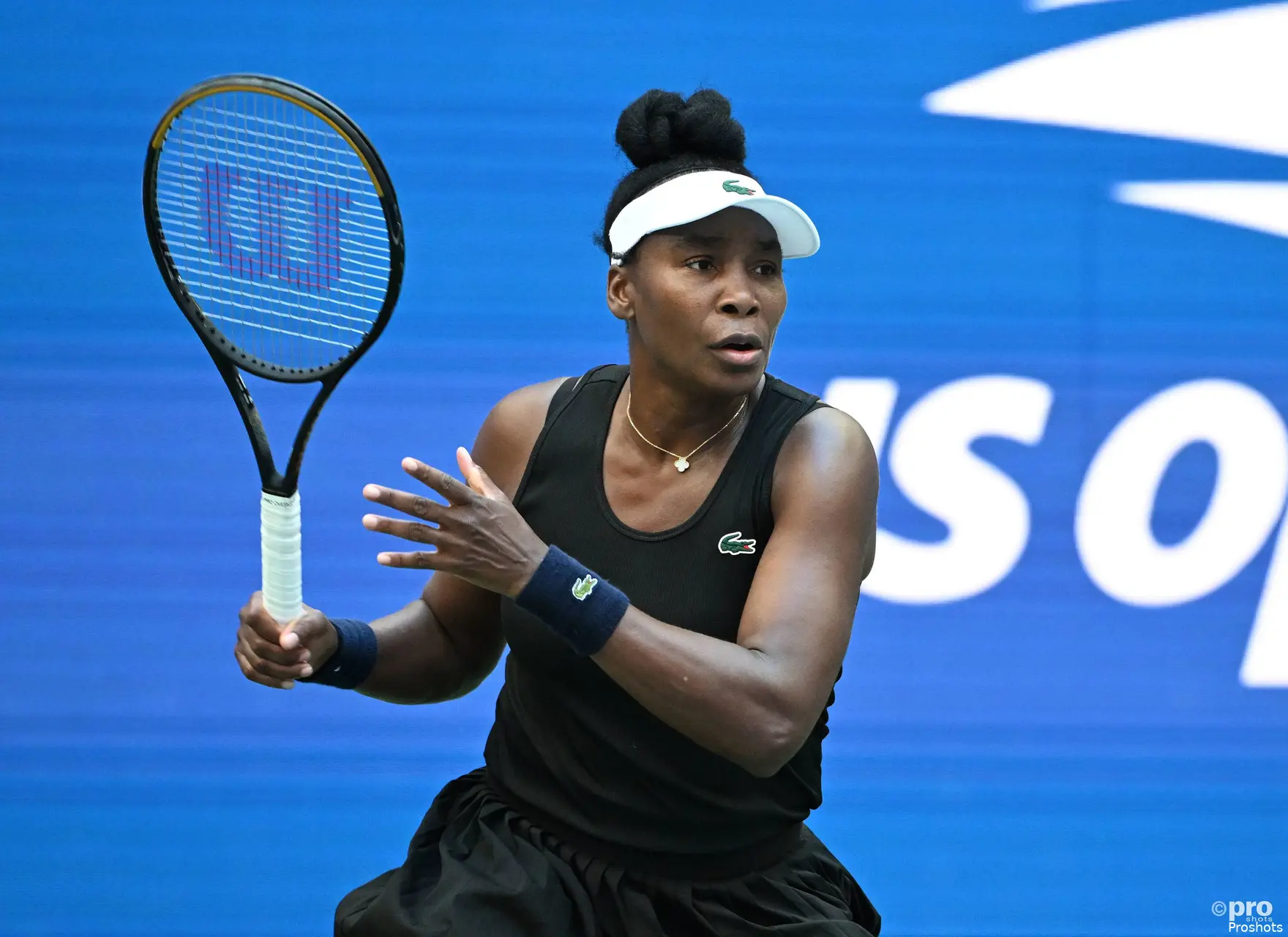
There is something wonderfully New York about tennis at midnight. The lights are blazing at Arthur Ashe Stadium. The crowd is loud. Celebrities are still in their seats. Television has its spectacle. Somewhere outside the grounds, the 7 train is still running and Manhattan is very much awake.
There is just one problem with this charming little “city that never sleeps” tradition. The people on the court are professional athletes, not nightclub patrons.
Early Monday morning, the U.S. Open set a record it should be embarrassed to own. Venus Williams and her opponent did not begin their match until 12:13 a.m., the latest starting time for a match in tournament history.
Not finishing time. Starting time. Williams had spent hours waiting after Novak Djokovic and Mariano Navone played a marathon lasting four hours and 36 minutes. There was uncertainty about whether the women would be moved to Louis Armstrong Stadium. Eventually, they remained on Ashe and walked onto the court at an hour when professional athletes should be recovering from competition, not beginning it.
Read also
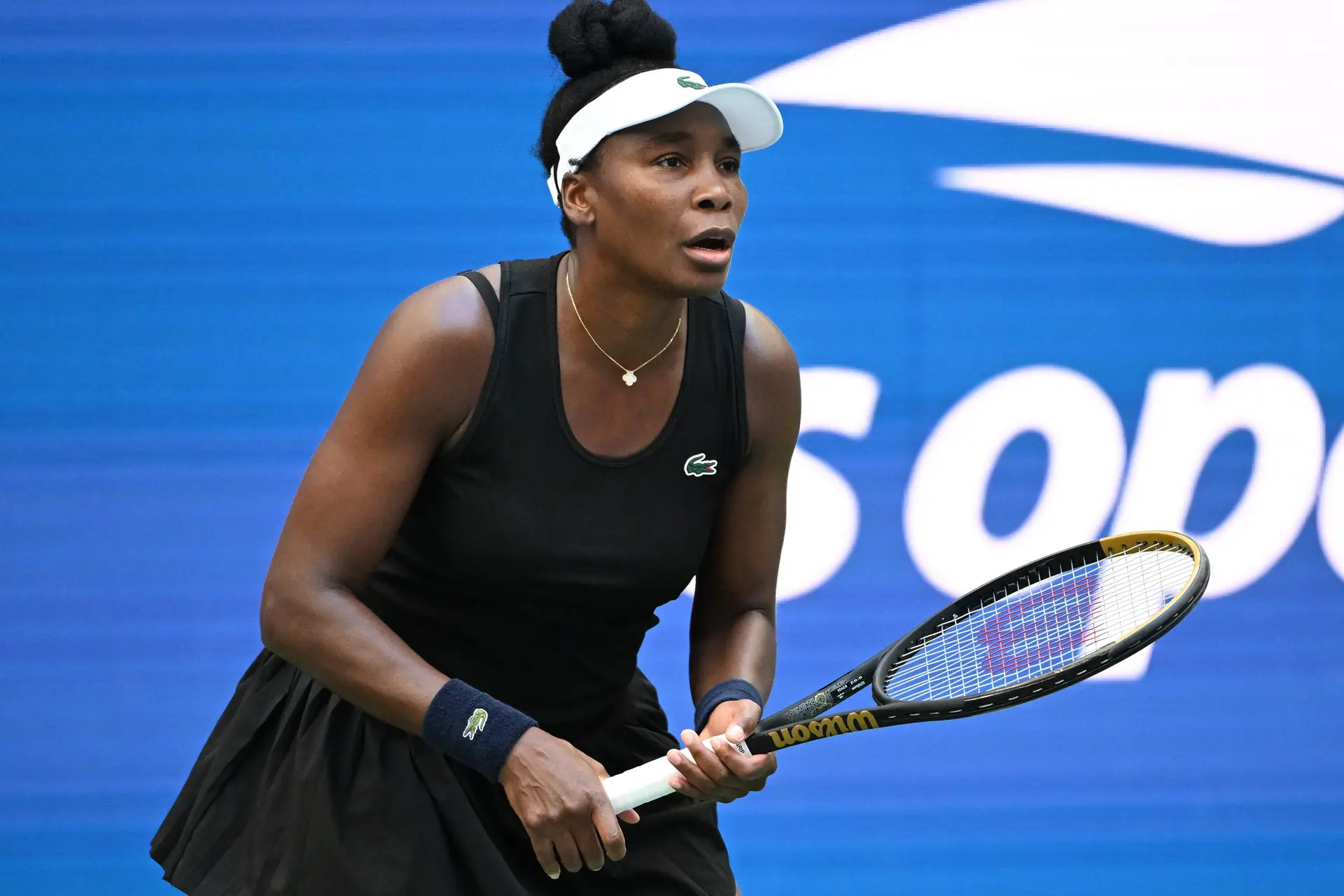
Williams was diplomatic afterward. “It’s not ideal,” she said. “I would have preferred something else, definitely. It wasn’t great for either of us.” No, it wasn’t. And it is long past time for tennis players to have an organization powerful enough to make sure it doesn’t happen again.
Late nights at the U.S. Open are hardly new. They have become part of the tournament’s identity. New York stays up late. The night crowds are different. There is an undeniable electricity to a great match under the lights at Ashe, and some of the greatest matches in U.S. Open history have ended at ridiculous hours.
But we have confused something memorable with something sensible. There is also an important difference between a match that unexpectedly runs late and one that begins after midnight. Tennis cannot control whether a match lasts 90 minutes or five hours. The U.S. Open can control whether it sends two more players onto the court when the clock already says tomorrow.
A problem that keeps getting worse
And this problem is getting worse. The previous U.S. Open record for the latest start came only two years ago, when Aryna Sabalenka and Ekaterina Alexandrova began at 12:07 a.m. Now Williams and her opponent have pushed that record another six minutes. At some point, a record stops being a curiosity and becomes evidence that the system is broken.
Consider what happens after one of these matches finally ends. Players do not simply shake hands, walk into the locker room and fall asleep.

Aryna Sabalenka held the previous record.
There is recovery work. Treatment. Food. Hydration. Media obligations. Transportation back to the hotel. Then, somehow, they are supposed to come down from the adrenaline of competing before thousands of people and get meaningful sleep.
During a two-week Grand Slam. While preparing to play again. We talk constantly about protecting athletes’ health. We worry about the length of the tennis season, the number of tournaments, injuries and recovery. Yet one of the biggest events in the sport is perfectly willing to begin a match at 12:13 in the morning because the schedule got backed up. It doesn’t have to be this way.
In fact, tennis already has a better rule. Wimbledon does not permit play after 11 p.m. The curfew isn’t simply a benevolent policy dreamed up by tournament organizers; it stems from Wimbledon’s agreement with its local council.
Whatever its origins, it is an excellent rule. The ATP and WTA should adopt it everywhere. No professional tennis match should continue after 11 p.m. local time. Not in London. Not in New York. Not in Melbourne. Not because television wants another match. Not because night-session ticket holders haven’t gotten enough tennis. And not because somebody thinks playing until 2 in the morning reinforces New York’s reputation as the city that never sleeps.

At 11 p.m., stop. Finish the match the following day. Yes, that will occasionally create scheduling problems. Television networks may hate it. Tournaments will complain about ticket holders, court availability and the logistical headache of fitting an unfinished match into the following day’s schedule.
Those are tournament problems. Sleep and recovery are player problems. And right now, the people with the tournament problems have vastly more power than the people with the player problems.
That brings us to the larger issue. Tennis needs a real players’ union. Imagine an NFL team being told its game will kick off at 12:13 a.m. because the previous television window ran long. Imagine the NBA routinely beginning playoff games after midnight local time because late-night basketball is part of a city’s personality.
Should demand a curfew
How long would that last? The players’ associations would have something to say about it. Tennis is different. There are organizations representing player interests, most notably the Professional Tennis Players Association. But players still do not have the kind of collectively bargained labor structure that gives athletes in other major professional sports meaningful leverage over their working conditions.
A real union should make an 11 p.m. curfew one of its demands. And I don’t mean an 11 p.m. last-start rule.
I mean an 11 p.m. stop-playing-tennis rule. That distinction matters. Starting a match at 10:45 isn’t much of an improvement if everyone knows the players could still be competing at 2 in the morning.
Read also
Wimbledon has demonstrated that professional tennis can live with a hard stop. Interestingly, it took an outside authority with actual leverage to impose it. The rest of tennis should not need a town council to force it to do something sensible. Scheduling would hardly be the only reason for players to unionize. Players have interests in prize money, pensions, medical care, tournament obligations, travel demands, scheduling and a season that barely seems to end before the next one begins.
Individually, even the biggest stars possess surprisingly little power over the structure of their sport. Collectively, they would possess plenty.
That is why the 12:13 a.m. start at Arthur Ashe Stadium matters beyond one absurd night in New York. It showed what happens when the people making the schedule and the people required to play it do not have equal leverage. I love late-night tennis at the U.S. Open. I don’t want to turn Ashe into a library at 9:30 p.m. Keep the lights. Keep the music. Keep the rowdy crowds. Keep New York being New York.
Just start the night session earlier. And at 11 p.m., put the racquets away. The city that never sleeps will survive. Professional athletes shouldn’t be required to live up to its nickname.
Aron SolomonGuest Author
A Pulitzer Prize-nominated journalist for his groundbreaking op-ed in The Independent exposing the NFL’s “race-norming” policies, Aron Solomon, JD, is a globally recognized thought leader in law, media, and strategy.
As Chief Strategy Officer for AMPLIFY, he leverages his deep expertise to shape the future of legal marketing. Aron has taught entrepreneurship at McGill University and the University of Pennsylvania and was honored as a Fastcase 50 recipient, recognizing him among the world’s top legal innovators. A prolific commentator on law, business, and culture, his insights regularly appear in Newsweek, The Hill, Crunchbase News, and Literary Hub.
He has also been featured in The New York Times, Fast Company, Fortune, Forbes, CBS News, CNBC, USA Today, ESPN, TechCrunch, BuzzFeed, Venture Beat and countless other leading global media outlets. We are proud to have Aron on board at TennisUpToDate, where his deep tennis expertise enriches the site with sharp, original columns that connect the sport to wider cultural debates.
claps 4visitors 4
Just In

Popular News
Latest Comments
- Great article!!
 AceOfBase31-08-2026
 - Snorting hard drugs is not an "accident" nor a "mistake". That is a Choice.
 mandoist28-08-2026
 - No... athletes retire and that's it. No 'giftng' Wildcards -- QUALIFY LIKE EVERYONE ELSE NOT RANKED HIGH ENOUGH or stay home and cherish yourselves in the mirrors all over your houses!. This shitshow needs to be stopped... the "Look At Me" nonsense has gone on far too long.mandoist28-08-2026
- Great article! I began cheering for the “real” doubles specialists at the beginning but once they all lost their respective matches I really didn’t care who actually won the whole tournament. I liked the last four teams in the semifinals and would have enjoyed seeing any of them win the trophy! Not sure it really feels like a TRUE Grand Slam win however (and I know history will say it is!). Happy for Muchova/Mensik. Karolina is now a Grand Slam winner.DaveyWavey27-08-2026
- …and Foseca ;)DaveyWavey25-08-2026
- All the men dropping like flies. Something’s gotta be done with the tournament calendar or many more players will be on the sidelines in the near future. Surprised Carlos is back as soon as he is. Get well soon Sinner, Draper, Fokina, Rune, etc. etc. etc……DaveyWavey25-08-2026
- I want Pegula to surprise as a one-slam wonder winning in New York. She would then jump over the other three ladies for a number one ranking! I’d put my money on the two American girlies, Jessica and Coco to win in New York. Rybakina cannot seem to perform under this kind of pressure and Sabalenka appears in an anger fog ATM.DaveyWavey24-08-2026
- Well said, Andy. I got sick of Nick carrying on and on and on about Sinner. He absolutely refused to look at the facts. Now look at him. Karma is real!!!Rapunzel23-08-2026
- The fact that ANDY RODDICK of all people has become the voice of “reason” is interesting. He’s absolutely correct about Kyrgios too. He’s become a tennis influencer who is a total hypocrite and bully! I agree with RODDICK 100%DaveyWavey23-08-2026
- Great article! Thiem was similar to Del Potro in that both men had won Grand Slams and injured wrists each stole their careers away. Sad really.DaveyWavey22-08-2026

Loading