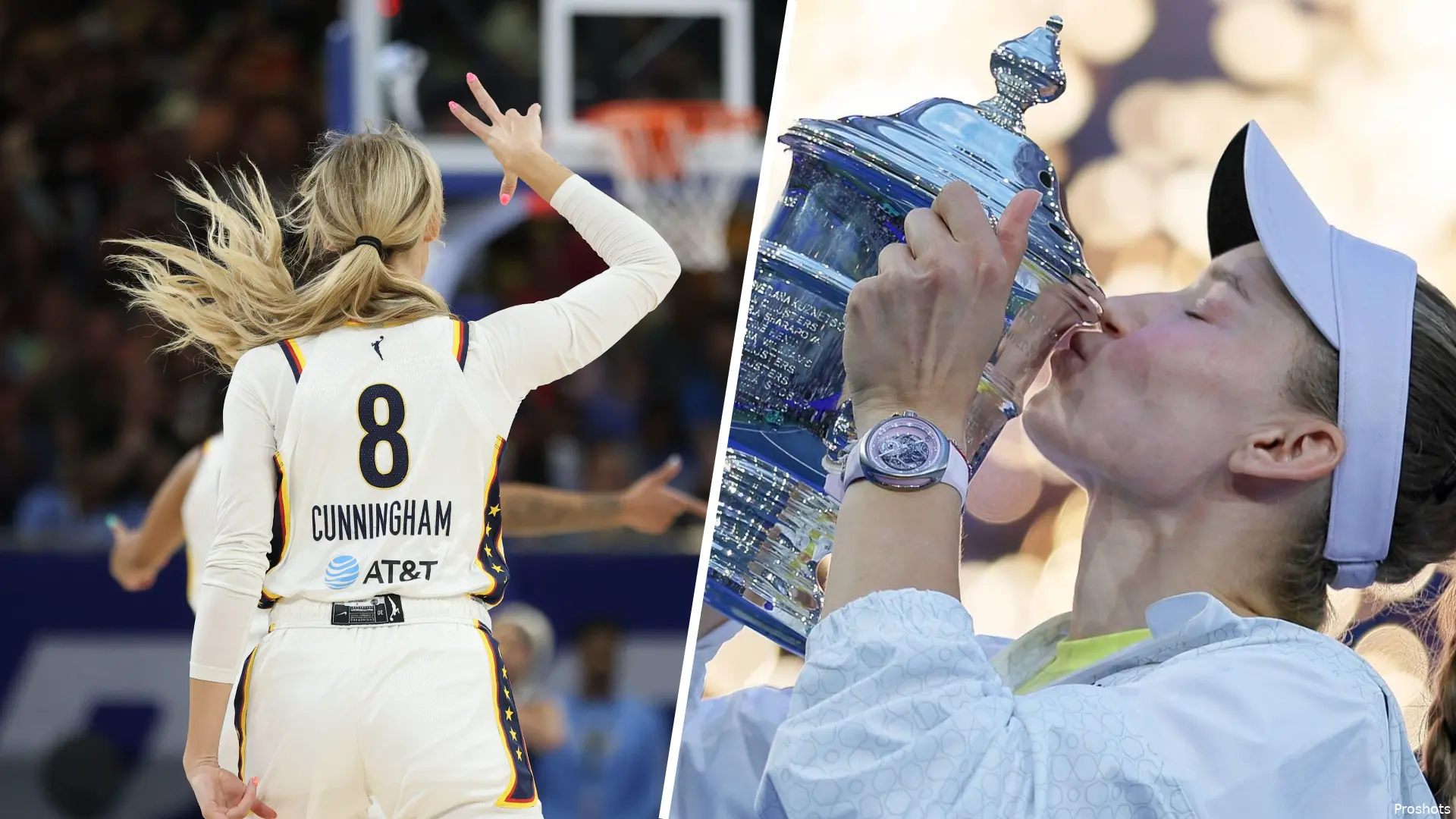
There is a strange thing happening right now in women’s sports. Two of its most established professional leagues are approaching the end of their seasons. Both have extraordinary athletes. Both have stars worth building around. Both have enormous opportunities sitting directly in front of them. And somehow they feel as if they are traveling in completely opposite directions.
The WNBA is finishing the best season in its 30-year history. The WTA is finishing another season that feels approximately 30 years long.
Start with basketball. The WNBA playoffs begin Sunday afternoon, and I cannot remember being more excited for them. The basketball this season has been ridiculous. Not “good for women’s basketball.” Not interesting because women’s sports are having a moment.
Great basketball. The league has stars everywhere. It has rivalries. It has young players arriving who look completely unafraid of the moment. It has veterans playing some of the best basketball of their careers. And it has enough compelling teams that the postseason feels genuinely unpredictable.
My favorite revelation has been Olivia Miles. Miles arrived in Minnesota as the second pick in the draft and has spent her rookie season looking like someone forgot to tell her that rookies are supposed to need time.

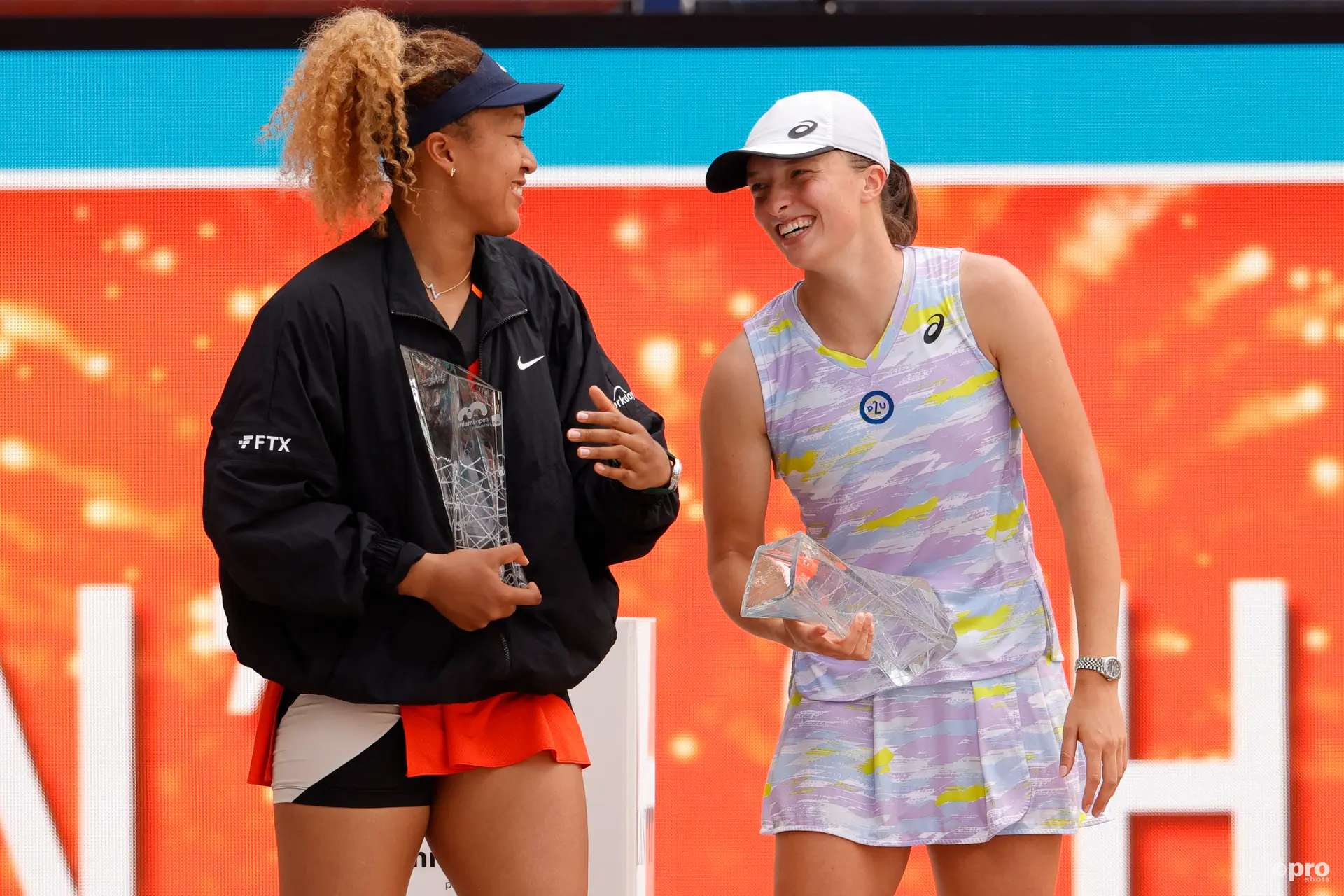
Elena Rybakina Vs Naomi Osaka in Louis Armstrong Stadium during The US Open
She has already become a star. She broke the WNBA rookie scoring record. She scores, creates and sees the floor like a player who has been doing this professionally for years. I would have her right in the MVP conversation.
And then there is Kelsey Mitchell. Mitchell is producing an astonishing season for Indiana while simultaneously pursuing a Ph.D. in educational leadership. Think about that for a moment. Most of us would like a nap after answering 11 emails. Mitchell is playing professional basketball at an absurdly high level and then apparently opening the laptop and working on a doctorate.
The WNBA has personalities worth knowing and stories worth following. More importantly, it has the thing every professional sports league ultimately needs:
The games are good. That sounds ridiculously obvious. It isn’t. Because the WNBA has certainly done its best at times to make everything surrounding the basketball more complicated than necessary. Its leadership has been uneven. Commissioner Cathy Engelbert is retiring at the end of the year after a tenure that coincided with enormous growth but also considerable controversy. The league has repeatedly found itself dragged into cultural and political arguments that have sometimes overshadowed what happens on the court.
There are legitimate debates about how the WNBA has handled many of those issues. But here is the league’s enormous advantage: The basketball keeps bailing everybody out. You can dislike the commissioner. You can complain about officiating. You can argue about marketing. You can roll your eyes at whatever the controversy of the week happens to be.
Then Olivia Miles picks up the ball. Or Kelsey Mitchell starts cooking. And suddenly we’re talking about basketball again.
That is an incredibly valuable thing for a sports league to have. Which brings us, unfortunately, to tennis.
The WTA nearly there...but they're not
Because the WTA should be looking at what is happening in the WNBA and asking itself a very uncomfortable question:
Why doesn’t women’s tennis feel like this? The talent certainly isn’t the problem.
Women’s tennis has extraordinary players. It has perhaps the deepest collection of elite athletes it has had in years. It has established champions, emerging stars and teenagers who look capable of taking over the sport before they can legally rent a car.
The actual tennis can be spectacular. And yet the WTA increasingly feels rudderless. I will give the organization enormous credit for one recent decision because it deserves it.
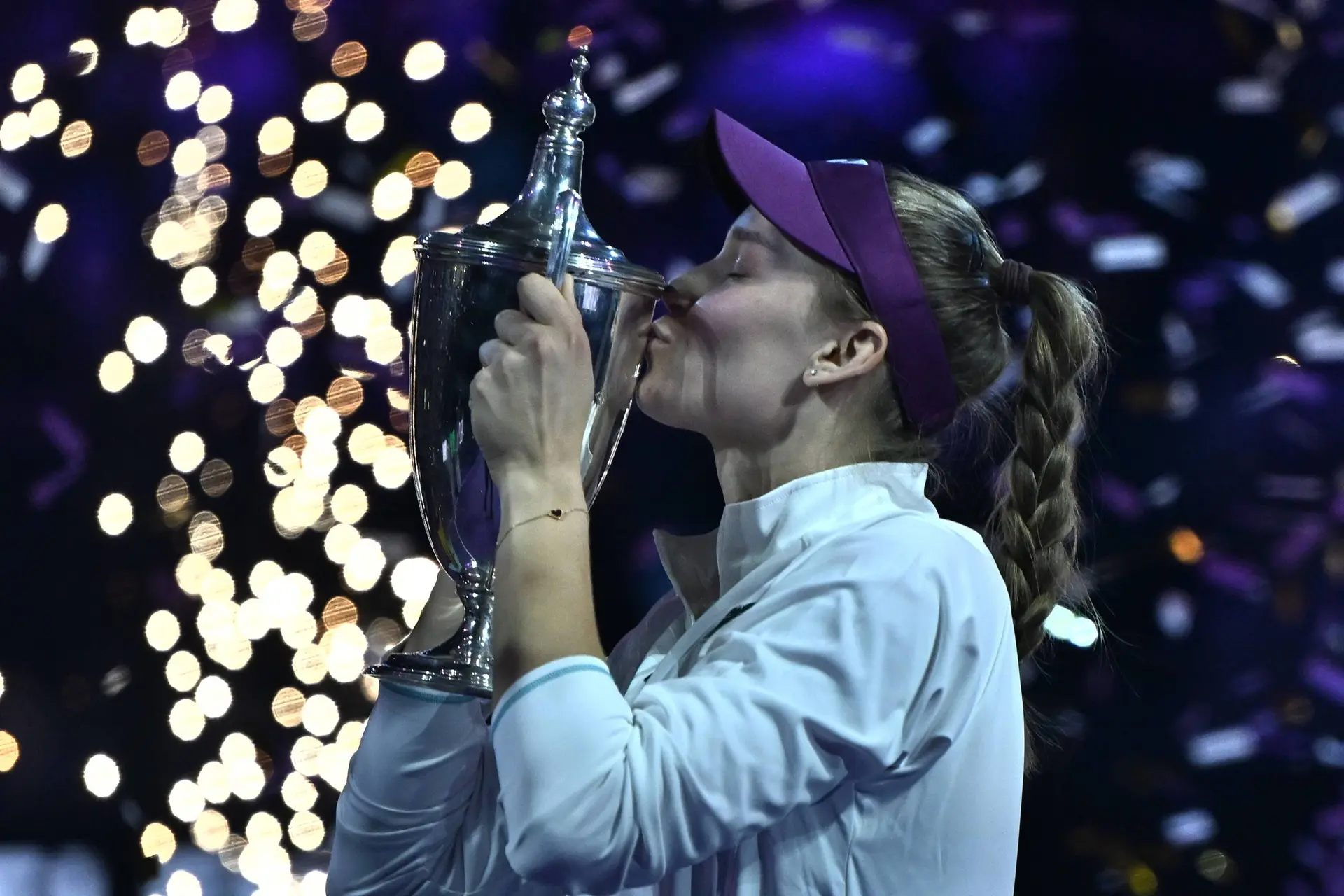
Moving the WTA Finals to Charlotte from 2027 through 2029 and relocating the tour’s global headquarters there was brilliant. Not good. Brilliant.
Charlotte gives the WTA a major American sports market, a sophisticated corporate community, a real arena and, most importantly, the possibility of building something permanent.
For once, somebody at the WTA appeared to look beyond the next tournament and ask what women’s tennis could look like five or ten years from now. More of that, please.
Because one excellent announcement does not erase decades of strange decisions. Start with the calendar. The season is absurdly long. I have been beating this drum for years, and I will continue beating it until someone at the WTA confiscates the drum.
The WTA Finals should basically be happening now. Finish the meaningful season in September. Crown your champion. Let everyone go home. Then give these women something professional tennis apparently regards as a radical concept: An offseason. A real one.
Not 10 days during which somebody flies home, sees their family, does three sponsor obligations, gets treatment on six different body parts and then starts preparing for Australia.
Three months. Imagine what that could do.
Players could recover physically. They could recover mentally. Fans could actually miss tennis. The beginning of the next season would feel like an event rather than Tuesday.
Absence, it turns out, can make the heart grow fonder. Instead, professional tennis seems determined to test whether absence’s opposite — endlessness — makes the heart change the channel. And the WTA has another problem.
It does not seem to know how to present its stars.
Some fans complain that the leading players can seem inaccessible. Others think too much attention goes to social media personalities whose tennis has not caught up with their follower counts. Some of that criticism is unfair. Some of it isn’t.
But ultimately this is the tour’s problem to solve. Stars do not market themselves. Leagues create environments in which stars become larger than life.
WTA does terrible job at introducing players to the world
The WNBA increasingly understands this, sometimes almost accidentally. You watch Olivia Miles for ten minutes and want to know more about her. You hear that Kelsey Mitchell is doing doctoral work between basketball games and immediately have another reason to be interested in her. Sports needs characters.
Not manufactured characters. Not fake feuds. Not TikTok personalities assembled by a marketing department. People. Women’s tennis has them.
It simply does a terrible job introducing them to the world. And then there is the corporate question.
Who owns women’s tennis in the public imagination? Which major global companies are synonymous with the WTA? What does the WTA brand itself stand for?
Those questions should have obvious answers. They don’t. That is particularly remarkable because women’s tennis had an enormous head start.
Billie Jean King and the women who built the professional game created something revolutionary. For decades, women’s tennis was the gold standard of women’s professional sports.
Now look around. Women’s basketball is exploding. Women’s soccer is exploding. Women’s hockey is building something serious. Investment is pouring into women’s sports. The WTA should be leading this revolution. Instead, too often it feels like it is watching it. That is why these next few weeks offer such an interesting contrast.
The WNBA postseason begins Sunday with a league that has plenty of institutional problems but an irresistible product. The WTA season staggers toward its conclusion with an organization that has an irresistible product too — except it keeps asking the product to work harder, travel farther and play longer.
One league’s athletes are overcoming the people running the sport. The other league’s athletes increasingly look exhausted by the people running theirs. Charlotte gives me some hope. It suggests that somebody, somewhere inside the WTA understands that women’s tennis needs permanent homes, corporate relationships, American visibility and long-term thinking. Now keep going. Shorten the season. Give the players an offseason.
Build stars instead of simply ranking them. Find corporate partners that want to be identified with women’s tennis.
Turn the WTA Finals into something people circle on their calendars rather than something that arrives after everybody, including the players, looks ready for bed. And above all, remember what the WNBA is demonstrating right now. You can survive bad leadership for a while if the product is spectacular.
Read also
But imagine what happens when spectacular athletes finally get spectacular leadership. That’s the opportunity sitting in front of women’s tennis.
The WNBA playoffs start Sunday. I can’t wait. As for the WTA? I’m still waiting.

Aron SolomonGuest Author
A Pulitzer Prize-nominated journalist for his groundbreaking op-ed in The Independent exposing the NFL’s “race-norming” policies, Aron Solomon, JD, is a globally recognized thought leader in law, media, and strategy.
As Chief Strategy Officer for AMPLIFY, he leverages his deep expertise to shape the future of legal marketing. Aron has taught entrepreneurship at McGill University and the University of Pennsylvania and was honored as a Fastcase 50 recipient, recognizing him among the world’s top legal innovators. A prolific commentator on law, business, and culture, his insights regularly appear in Newsweek, The Hill, Crunchbase News, and Literary Hub.
He has also been featured in The New York Times, Fast Company, Fortune, Forbes, CBS News, CNBC, USA Today, ESPN, TechCrunch, BuzzFeed, Venture Beat and countless other leading global media outlets. We are proud to have Aron on board at TennisUpToDate, where his deep tennis expertise enriches the site with sharp, original columns that connect the sport to wider cultural debates.
claps 0visitors 0
Just In

Popular News
Latest Comments
- Two Things: 1. Stop allowing these Spoiled Trust-Fund Elitists to behave badly. Your little hand-slaps do not deter them. 2. STOP the incessantly annoying "towel wiping" nonsense!!!!
 mandoist15-10-2026
 - A healthy Qinwen may be hard to stop next season. She was already scaring her opponents before her medical leave(s). Unfortunately, Zheng insisted on singing again. On the positive side -- Mirra did not sing!! ;~}mandoist11-10-2026
- Where is it written that athletes, entertainers... People in general... are mandated to keep looking at -- or even using [anti]Social Media? Public & private figures consistently complain and reveal their concerns about negativity and violence thrown at them -- yet they insist on participating. Avoid it, don't use it, don't read it. It's okay to occasionally look up at the World instead beating your eyes & thumbs to death on The Inventions out there.mandoist11-10-2026
- great articlestennisseserver07-10-2026
- Medvedev was leading Djokovic 7-5, 3-5 when an attempted return..' NO you ignorants, Djokovic was leading .weiss05-10-2026
- No more bullshit "Wildcards" to these two. Qualify like everyone else -- there will be cameras there, too. Time to scream... WTF ????!!!!mandoist29-09-2026
- Let's not BS the general public -- Sabalenka started showing cracks in her game last season. Her losses and near-losses started at about the same time she began being distracted by Fame (constant Selfies, making TV commercials, magazine shoots, endless Social Media nonsense, etc., etc.) One would think even Saba could recognize the parallels with others who failed before her -- Raducanu, Giorgi, Bouchard to name a few.mandoist25-09-2026
- Gross!! Hey Raducanu, Giorgi, and Bouchard -- reserve a seat at your Social Media Selfie table for Saba + Naomi. They're heading in your direction soon enough.mandoist24-09-2026
- And then these same players will complain about how lengthy their season’s were and need more time-off. I’m all for more tennis but the amount of tennis we get now is actually kind of crazy! We all need a break, especially the players.DaveyWavey23-09-2026
- You should do a comparison article for "different kinds of justice" the courts decide for tennis players. I can think of at least three players who received very small bans of a few months, however Tara Moore has been fighting for her literal survival the past few years. It seems odd considering she is not a "name" player, unlike the other cases.DaveyWavey22-09-2026

Loading