“Everything I have written now puts me at risk" - Oliynykova threatened by WTA after calling out tennis talents surrounding war in Ukraine
WTA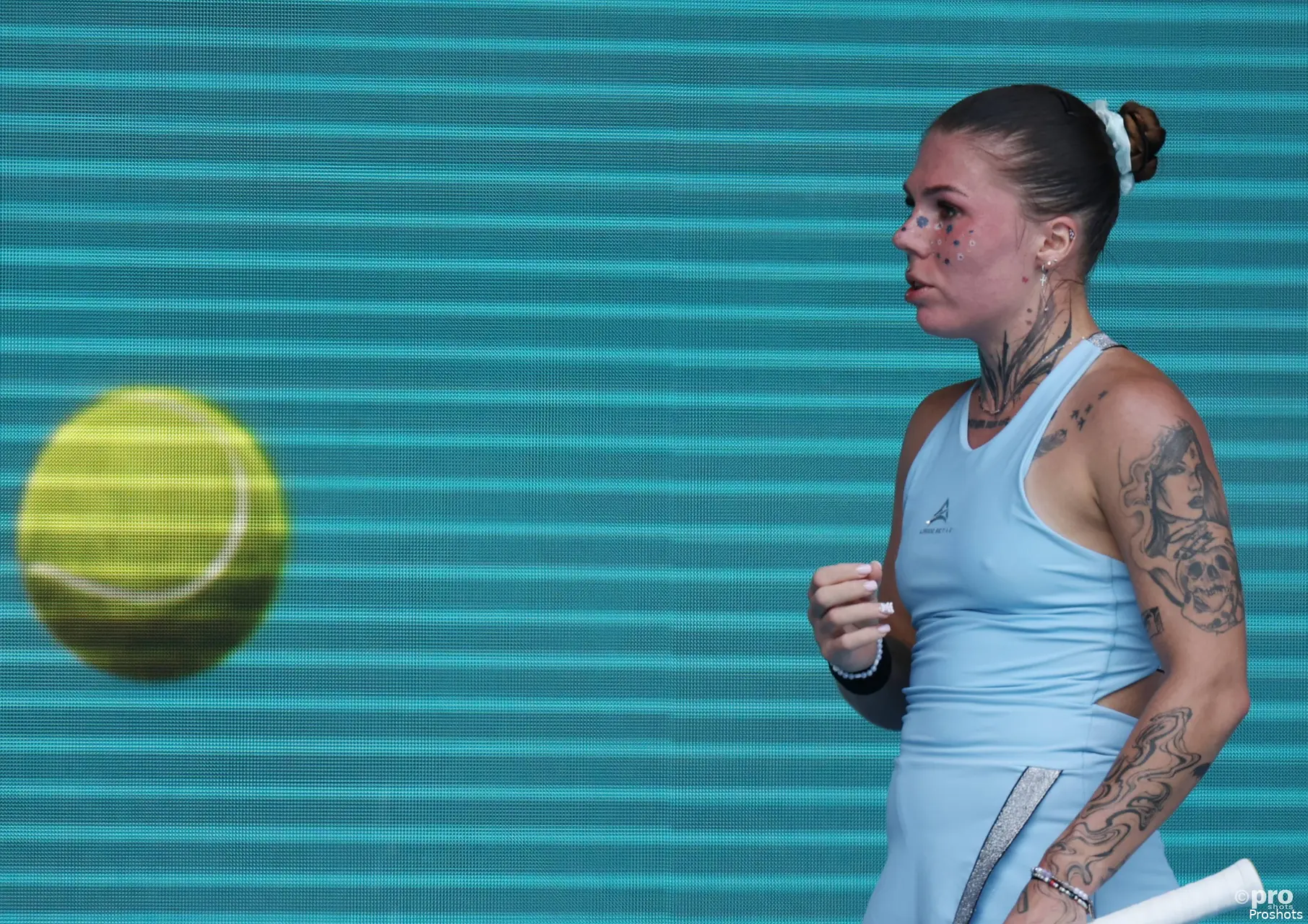
Oleksandra Oliynykova has found herself in the news a lot in 2026, and not all to do with her impressive rise in the sport. After formerly calling out Aryna Sabalenka and Daniil Medvedev over their support of the war in Ukraine, she has claimed that the WTA had pressured her to depersonalise her statements or risk being fined or disqualified.
The Ukrainian is an unmissable character on court. From regularly utilising the moonball tactic to her tattoos she has stand her out from the rest of the field. She has also enjoyed some deep runs this year, debuting in the top 100. She qualified for the Australian Open, reaching the first round before losing to reigning champion Madison Keys. Other notable runs include the semi-final of the Transylvania Open and the final of a WTA 125 event.
She currently sits 70th in the world after reaching a high of 66 earlier this year. Oliynykova will hope to make more progress within the next weeks and months, but with more recognition comes a platform where people will listen to you.
Oliynykova has made the most of this, sharing her support for her country in these tough times while calling out certain Russian and Belarusian players on tour. This includes world number one Sabalenka for her support of the Belarusian President Alexander Lukashenko and slamming Medvedev for competing in an exhibition event organised by Gazprom in Russia, featuring a number of Russian talents. Others include Diana Shnaider for her support of Russian President Vladimir Putin and Anna Bondar after she also competed in the Gazprom exhibition, refusing to shake hands with her in Rouen.
Oliynykova unveils warnings from WTA
The 25-year-old has recently come onto Instagram to release a statement regarding the WTA coming to her and pressuring to stop mentioning players names as it could be harmful to them.
“I began to be threatened with fines of tens of thousands of dollars, with disqualification," she wrote. "My tournaments (before matches, during the event, after it ended) became accompanied by constant conversations with WTA representatives, who would come to 'educate' me on how I should speak - or rather, how I should stay silent.”
These jabs by the WTA have not forced her to go back in her shell, knowing that this statement could put her under more risk but willing to get her voice across.
“Everything I have written now puts me at risk. I will likely not receive an answer as to why I am being sanctioned for stating the fact that there are players who participate in Russian propaganda, attend propaganda tournaments, take blood money, and normalise the war for ordinary Russians - who then go on to kill innocent people in Ukraine - and yet they continue to play without consequence.”
While all this conflict continues, she vowed to keep speaking up in support of her own country. “I am still here. And I will speak. I will not accept being forced into silence. I know that no matter who tries to convince me otherwise, human solidarity will protect me.”
Lucas MichaelTennis Journalist
Lucas Michael is a tennis journalist based in Cambridge, UK, specializing in comprehensive coverage of the ATP and WTA tours. For the past 1.5 years, he has been a core contributor to TennisUpToDate, where he has authored more than 3,000 data-driven match reports, deep-dive analysis pieces, and engaging liveblogs.
Lucas pairs real-time statistical analysis with on-the-ground reporting, frequently traveling to tournaments to cover the action firsthand from the press box and player press conferences. This blend of advanced metrics and direct access allows him to provide sharp context regarding player form, tactical trends, and breaking tour developments.
He holds a BA (Hons) in Sports Journalism. Grounded in core journalistic ethics, Lucas places a strict emphasis on meticulous sourcing, editorial accuracy, and a commitment to updating live content swiftly as verified information emerges.
claps 0visitors 0
Just In


Popular News
Latest Comments
- No more bullshit "Wildcards" to these two. Qualify like everyone else -- there will be cameras there, too. Time to scream... WTF ????!!!!
 mandoist29-09-2026
 - Let's not BS the general public -- Sabalenka started showing cracks in her game last season. Her losses and near-losses started at about the same time she began being distracted by Fame (constant Selfies, making TV commercials, magazine shoots, endless Social Media nonsense, etc., etc.) One would think even Saba could recognize the parallels with others who failed before her -- Raducanu, Giorgi, Bouchard to name a few.mandoist25-09-2026
- Gross!! Hey Raducanu, Giorgi, and Bouchard -- reserve a seat at your Social Media Selfie table for Saba + Naomi. They're heading in your direction soon enough.mandoist24-09-2026
- And then these same players will complain about how lengthy their season’s were and need more time-off. I’m all for more tennis but the amount of tennis we get now is actually kind of crazy! We all need a break, especially the players.DaveyWavey23-09-2026
- You should do a comparison article for "different kinds of justice" the courts decide for tennis players. I can think of at least three players who received very small bans of a few months, however Tara Moore has been fighting for her literal survival the past few years. It seems odd considering she is not a "name" player, unlike the other cases.DaveyWavey22-09-2026
- PRIZE MONEY & POINTS Winner - $185,500 Finalist - $114,500 Semi-Finalist - $66,003 Quarter-Finalist - $35,000 Round of 16 - $18,045 Round of 32 - $13,005 Winner - 500 Finalist - 325 Semi-Finalist - 195 Quarter-Finalist - 108 Round of 16 - 60 Round of 32 - 1DaveyWavey20-09-2026
- Pegula withdrew from this Singapore event
 tennishappens19-09-2026
 - Serena Williams chose her tournaments. It's not such a bad idea.MuswellHillbilly17-09-2026
- This child is just too fragile. Step away from tennis for a year. Get healthy, get fit; train hard;ranking be damned, and come back as strong contender. Anisimova did it. So can Emma.Rapunzel17-09-2026
- Double standards, what can be said!? Venus is p**ing on media and public. Can't face defeat. Cowerdness! Shouldn't be given any other wild cards ever. That's gross disrespect.DragosJacob16-09-2026

Loading