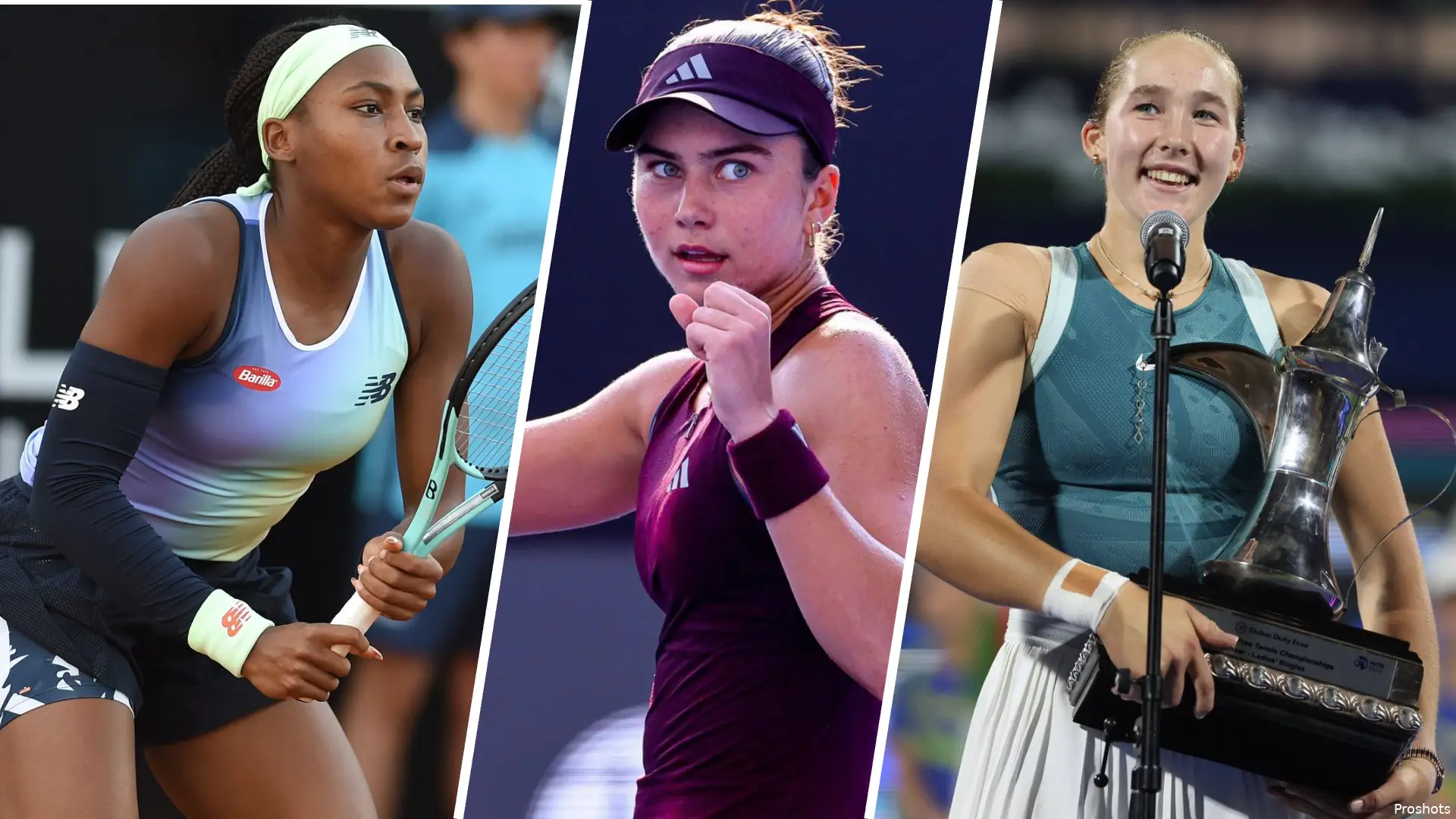
Eighteen-year-olds are not supposed to look this settled. Iva Jovic spent September defending her Guadalajara title without dropping a single set, the kind of week that reads more like a veteran closing out a tournament she already understood than a teenager doing it for the first time.
It pushed her to a career-high No. 14, the best ranking of any American teenager since Coco Gauff, and it raises an obvious question: how does a season like this actually stack up against the other teenage breakthroughs the WTA has produced in the last few years?
Jovic turned 18 in December 2025, which means the entirety of her 2026 season has been played as an 18-year-old, start to finish. That makes her the cleanest test case available right now. Mirra Andreeva and, fittingly, Gauff herself offer two very different blueprints for what an 18-year-old season is supposed to look like, and Jovic's does not line up neatly with either one.
The season on paper
Jovic opened 2026 with a final in Hobart, then reached the quarterfinals of the Australian Open, beating seventh seed Jasmine Paolini along the way and becoming the youngest American woman to get that far in Melbourne since Venus Williams in 1998. Semifinals followed at Charleston and Queen's, where she beat second seed Amanda Anisimova, then a fourth round at Wimbledon and another at the US Open, where Gauff eventually ended her run.
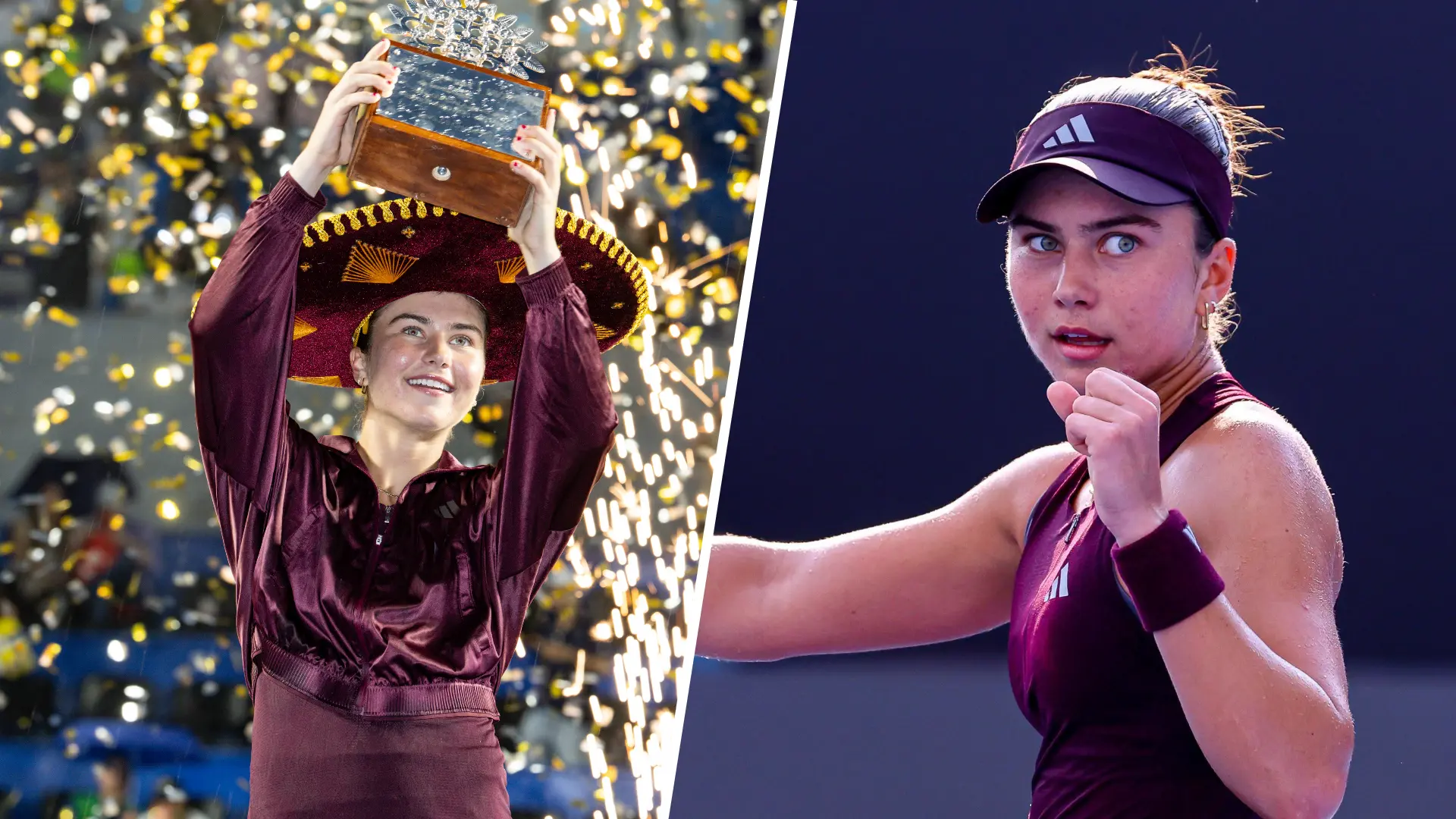
The number that anchors the whole season, though, is Guadalajara. Jovic won the WTA 500 there in 2025 at 17, then came back in September 2026 and beat Peyton Stearns in the final without facing a single break point over the whole week, becoming the first player ever to defend the title. Two tour-level trophies, both from the same city, sit alongside a Grand Slam quarterfinal as the backbone of her case.
What separates this run from a hot streak is how spread out it's been. Jovic hasn't had one explosive month and gone quiet for the rest of the year; she's strung together results from January through September, across hard courts and clay, against seeded opponents. That's the part that tends to get undersold when a breakthrough season gets reduced to a single ranking number.

Action photo of Iva Jovic of the United States, champion of the singles tournament at the 2026 WTA Guadalajara Open
Where Andreeva already was at 18
Mirra Andreeva makes the comparison uncomfortable fast. By the time she turned 18 in April 2025, Andreeva had already won two WTA 1000 titles, Dubai and Indian Wells, becoming the youngest player ever to win a tournament at that level. She wasn't chasing the top 10 at 18. She was already living there, and she spent the rest of that season adding a Roland Garros semifinal and a Wimbledon quarterfinal on top of it.
That gap matters for context, not for discouragement. Andreeva's rise remains one of the fastest in recent WTA history, and measuring any teenager against it is closer to measuring a rookie season against a Hall of Famer's than a fair like-for-like test. Jovic's ranking of 14 at 18 is genuinely rare air. It just happens to sit one tier below where Andreeva was standing at the exact same age.
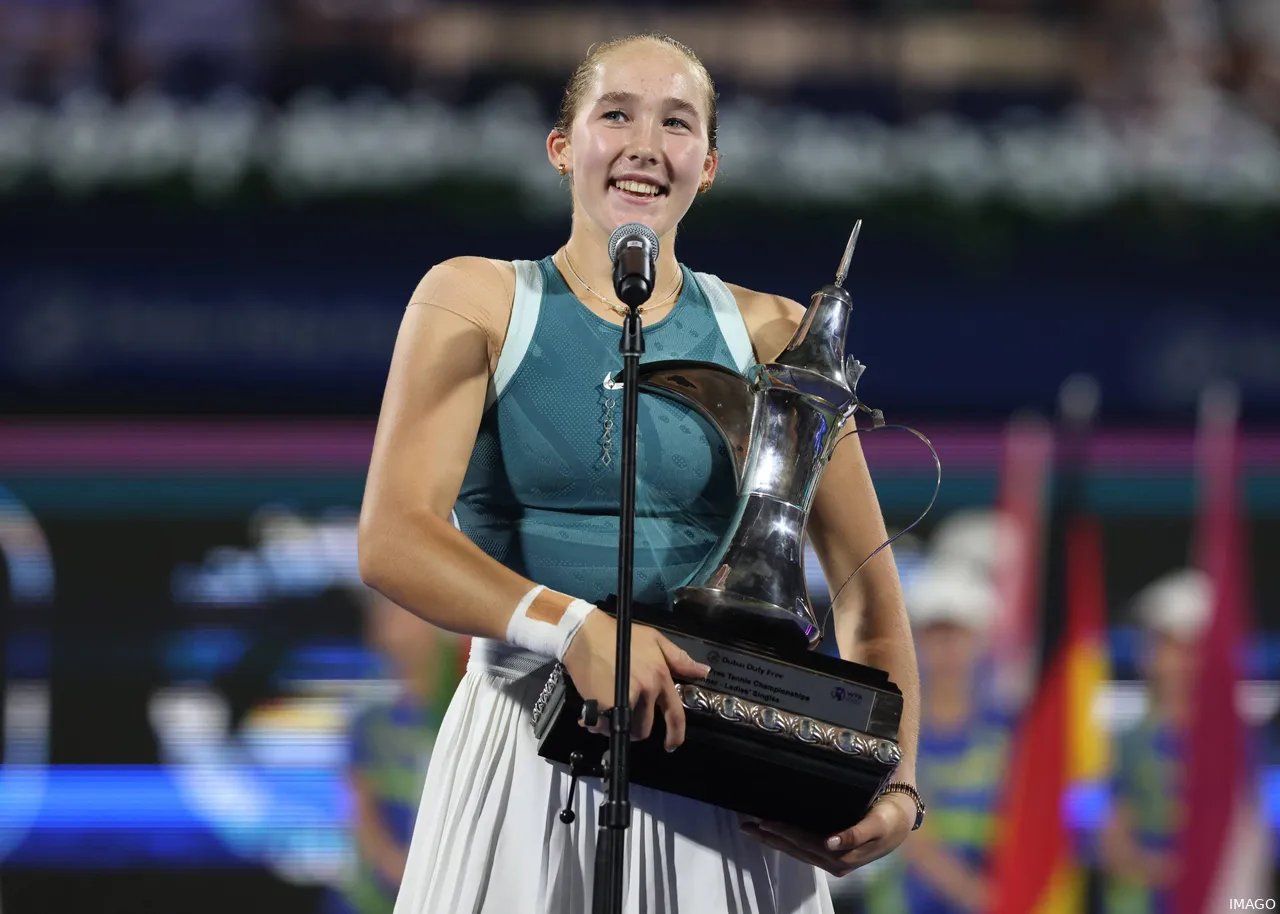
Mirra Andreeva with her first WTA 1000 trophy at Dubai Duty Free Tennis Championships.
Where Gauff was at 18, and why the parallel is closer than it looks
Gauff is the more instructive comparison precisely because the two seasons were strong in very different ways. At 18, in 2022, she reached her first Grand Slam final at Roland Garros and then cracked the top 10 for the first time after reaching the US Open quarterfinals. She finished the year at No. 7, while Jovic is currently at a career-high No. 14.
That is where the comparison becomes interesting. Gauff had the bigger individual achievement, reaching a Grand Slam final, but did not win a singles title during her 18-year-old season. Jovic, meanwhile, has already won two WTA 500 titles in Guadalajara and added a Grand Slam quarterfinal at the Australian Open. Her case is built more on consistency across the season than one deep Slam run.
The difference becomes even clearer when looking at what came next. Gauff won her first tour-level title in Washington at 19 in 2023, then claimed her maiden Grand Slam trophy at the US Open later that year. Jovic has already collected tour-level silverware at 18, meaning the next step in her development is different: can she turn that consistency into the kind of deep Grand Slam run that defined Gauff's breakthrough?
That makes Jovic's season difficult to place against Gauff's rather than simply better or worse. Gauff's 18-year-old campaign produced a higher ranking and a Grand Slam final, while Jovic has accumulated more titles and a broader collection of strong results. They represent two different versions of an elite teenage breakout, with Jovic now trying to add the signature Slam run that Gauff produced at the same age.
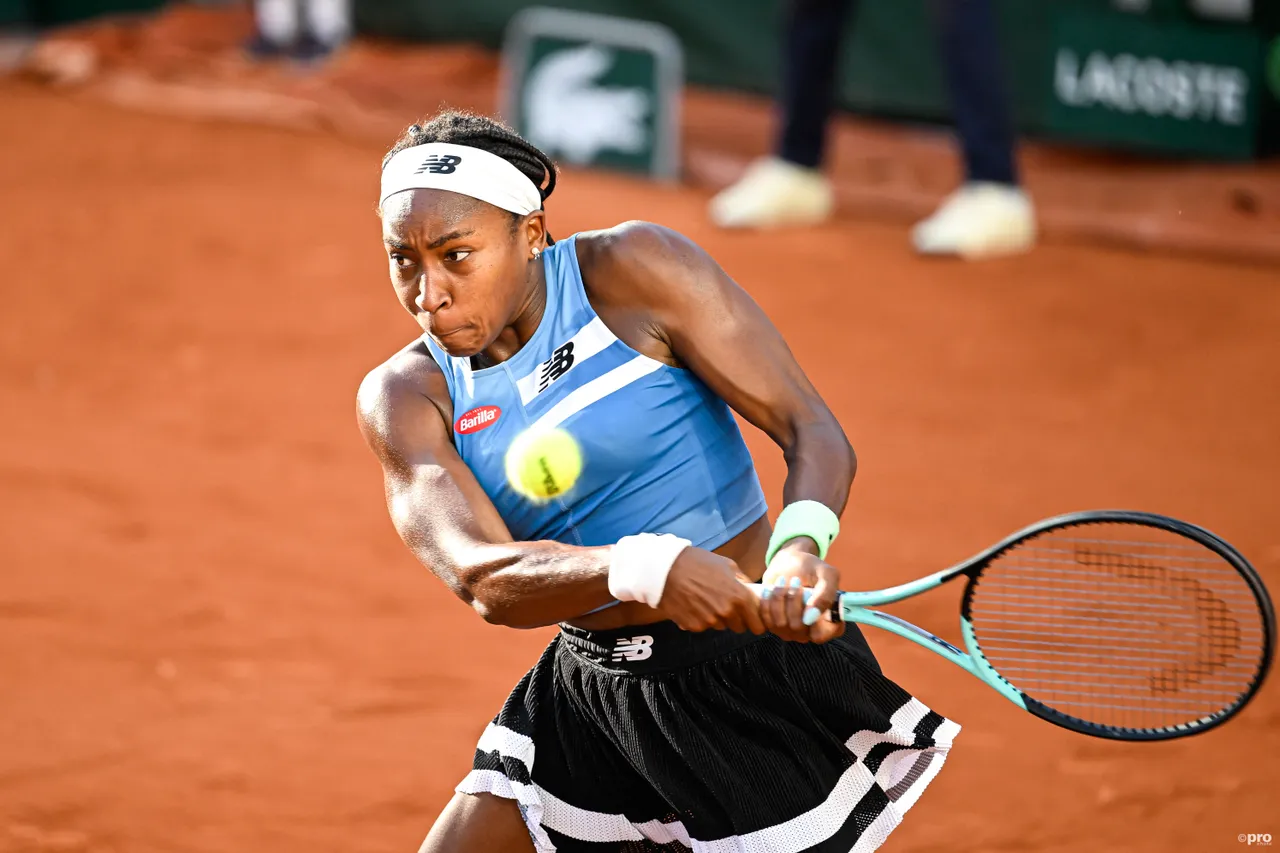
Coco Gauff during her run at Roland Garros 2022. She reached her first Grand Slam final at age 18 but lost to world number one Iga Swiatek.
The age-18 season, side by side
| Iva Jovic (2026) | Mirra Andreeva (2025) | Coco Gauff (2022) | |
| Ranking at 18 | Top 20 | Top 10 | Top 20 |
| Year-end ranking at 18 | No. 14 (career high, in progress) | No. 9 | No. 7 |
| Tour-level titles won by 18 | 2 (both Guadalajara) | 3 (WTA 1000s: Dubai, Indian Wells) | 2 |
| Best Grand Slam result at that age | QF, Australian Open | SF, Roland Garros | F, Roland Garros |
| First tour-level title | 17 | 16 | 15 |
What the gap actually tells you
Put next to Andreeva, Jovic's season looks strong but still a level below in the results that tend to define a career: no Grand Slam semifinal, no Masters-level title, a ranking several spots shy of where Andreeva already sat.
Put next to Gauff, the picture is closer to a trade: Jovic has more hardware and a steadier spread of good results, Gauff had the deeper Slam run and the higher year-end ranking, but neither had cracked a major final and a Masters title in the same season the way Andreeva effectively did.
Neither comparison settles the question on its own. Together, they say something more useful: an 18-year-old's résumé predicts far less than the tour tends to assume, and it can be lopsided in either direction and still point toward a real career.
Andreeva proved a player can arrive fully formed, with the results-and-ranking package complete before 18. Gauff proved a player can peak early in moments — one deep Slam run — and still need another year or two to build the consistency around it. Jovic, for now, is building the consistency first and waiting on the signature run.
Read also
That's the piece worth watching as the rest of 2026 plays out. Andreeva's route front-loaded almost everything at once. Gauff's route delivered the marquee result early and let the trophies catch up later. Jovic is threading a third path, steady rather than explosive, that hasn't cracked under its own weight so far.
Whether that holds up against a full season of opponents who now have a year of tape on her — and whether the deep Slam run eventually arrives the way it did for Gauff at 19 — is the question that actually decides which of these three trajectories ages best.

Cristhián AvilaTennis Journalist
Cristhián Ávila is a tennis journalist based in Santiago, Chile, and has been part of the TennisUpToDate team since early 2023. He covers the ATP and WTA Tours as well as all four Grand Slams, producing breaking news, match reports, analysis, and regular liveblogs from major tournaments.
His reporting combines statistical analysis with clear explanation, helping readers understand tactical developments, player form, and broader storylines across the tour. Working fluently in both Spanish and English, Cristhián collaborates with an international editorial team and contributes to comprehensive global coverage. As part of his work, he has conducted interviews and media interactions with leading figures in the sport, including Caroline Wozniacki and John McEnroe.
In his journalism, Cristhián places strong emphasis on careful sourcing, editorial accuracy, and updating articles promptly when new, verified information becomes available. His coverage is grounded in research, context, and direct engagement with professional tennis.
claps 0visitors 0
Just In

Popular News
Latest Comments
- Two Things: 1. Stop allowing these Spoiled Trust-Fund Elitists to behave badly. Your little hand-slaps do not deter them. 2. STOP the incessantly annoying "towel wiping" nonsense!!!!
 mandoist15-10-2026
 - A healthy Qinwen may be hard to stop next season. She was already scaring her opponents before her medical leave(s). Unfortunately, Zheng insisted on singing again. On the positive side -- Mirra did not sing!! ;~}mandoist11-10-2026
- Where is it written that athletes, entertainers... People in general... are mandated to keep looking at -- or even using [anti]Social Media? Public & private figures consistently complain and reveal their concerns about negativity and violence thrown at them -- yet they insist on participating. Avoid it, don't use it, don't read it. It's okay to occasionally look up at the World instead beating your eyes & thumbs to death on The Inventions out there.mandoist11-10-2026
- great articlestennisseserver07-10-2026
- Medvedev was leading Djokovic 7-5, 3-5 when an attempted return..' NO you ignorants, Djokovic was leading .weiss05-10-2026
- No more bullshit "Wildcards" to these two. Qualify like everyone else -- there will be cameras there, too. Time to scream... WTF ????!!!!mandoist29-09-2026
- Let's not BS the general public -- Sabalenka started showing cracks in her game last season. Her losses and near-losses started at about the same time she began being distracted by Fame (constant Selfies, making TV commercials, magazine shoots, endless Social Media nonsense, etc., etc.) One would think even Saba could recognize the parallels with others who failed before her -- Raducanu, Giorgi, Bouchard to name a few.mandoist25-09-2026
- Gross!! Hey Raducanu, Giorgi, and Bouchard -- reserve a seat at your Social Media Selfie table for Saba + Naomi. They're heading in your direction soon enough.mandoist24-09-2026
- And then these same players will complain about how lengthy their season’s were and need more time-off. I’m all for more tennis but the amount of tennis we get now is actually kind of crazy! We all need a break, especially the players.DaveyWavey23-09-2026
- You should do a comparison article for "different kinds of justice" the courts decide for tennis players. I can think of at least three players who received very small bans of a few months, however Tara Moore has been fighting for her literal survival the past few years. It seems odd considering she is not a "name" player, unlike the other cases.DaveyWavey22-09-2026

Loading