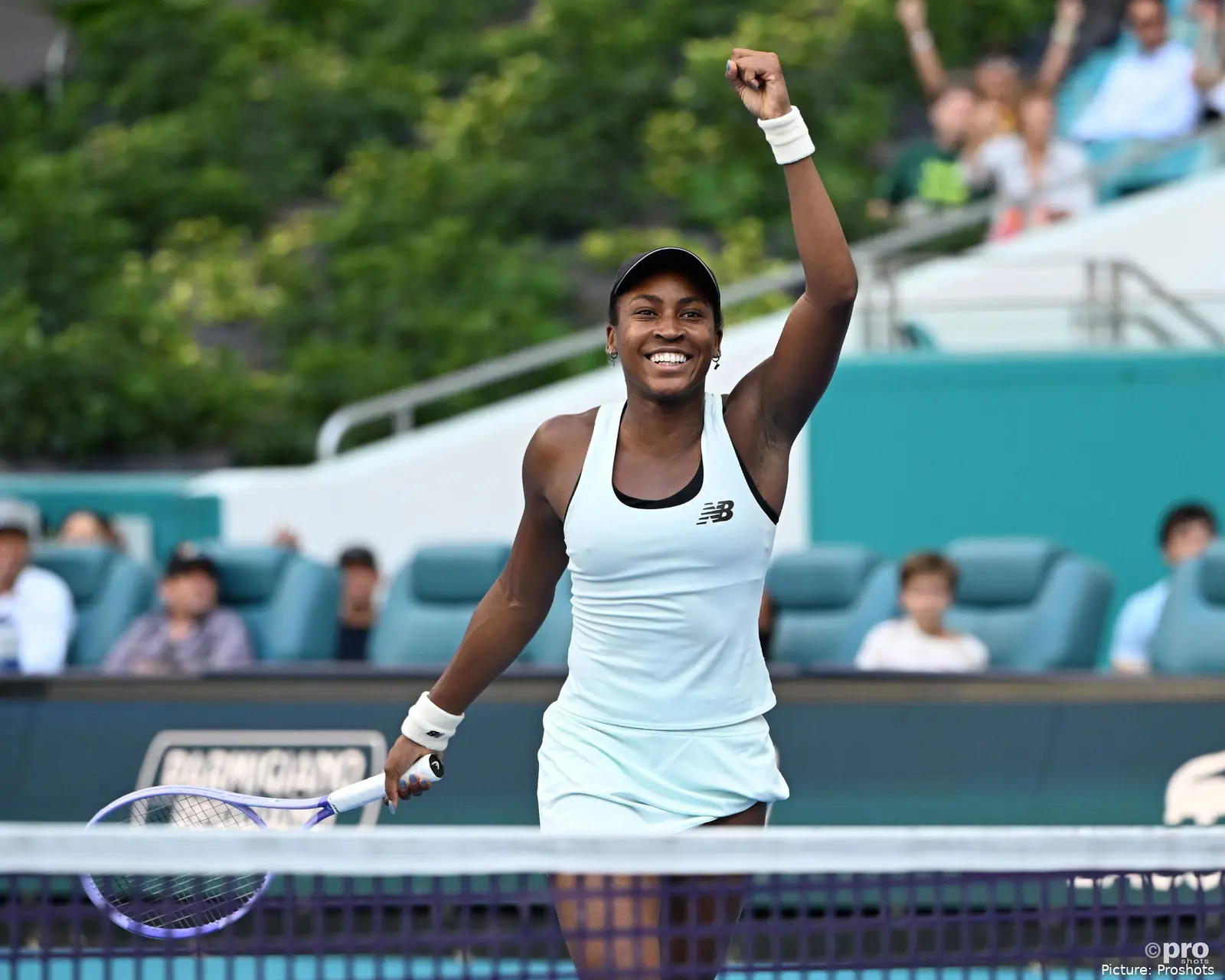
Coco Gauff advanced to the Miami Open final with a commanding 6-1, 6-1 victory over Karolina Muchova, capping a week that began with uncertainty and evolved into one of the most consistent runs of her season. The American, currently ranked World No. 4, produced her most complete performance of the tournament at a crucial stage.
The result secured Gauff’s place in her sixth WTA 1000 final and marked her first appearance in a Miami final, a tournament she has long identified as one of personal significance. At 22, she also became the youngest American to reach the final in Miami since Serena Williams in 2003.
Her progression through the draw has been defined by contrast. While earlier rounds required extended three-set battles, the semi-final against Muchova was decided in just over an hour, with Gauff winning 12 of the final 13 games after conceding an early break.
That late-stage dominance reflects a broader shift in approach following Indian Wells, where injury concerns had left her uncertain about competing in Miami. Two weeks later, she finds herself one win away from the title, with Aryna Sabalenka or Elena Rybakina awaiting in the final.
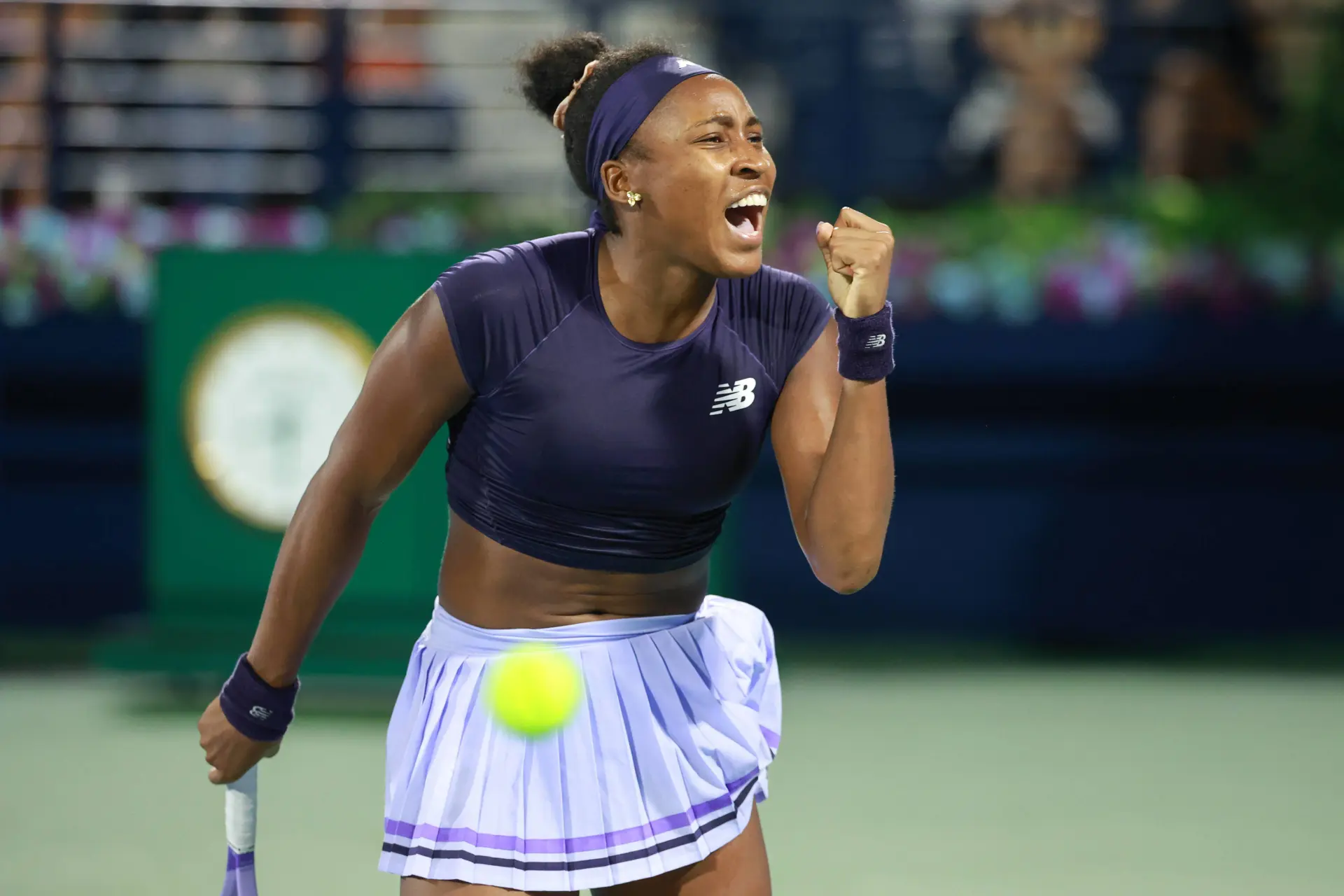
Hat choice becomes symbol of momentum during Miami run
Beyond the results, an unexpected detail has come to define Gauff’s run in Miami: her decision to wear a hat throughout the tournament, a departure from her usual on-court look. What began as a practical choice quickly became a constant as victories accumulated.
Gauff admitted the decision had little strategic basis, instead emerging from routine and circumstance. After using the hat in practice, she continued with it into competition and chose not to change after securing her opening win. “I don’t even know, because I actually don’t like it at all," the world No. 3 said to Tennis Channel. "I started wearing it because I didn’t feel like doing my hair that day. Then I kept it, and I won my first round, so I felt like I had to stick with it.”
The detail has taken on added relevance given the consistency of her performances since. Despite reservations about its appearance and practicality, Gauff maintained the routine throughout the tournament, even noting the limitations of having only one available. “The crazy thing is I literally have one hat, so I’ve been washing it every day because New Balance never thought to send me hats. I told them to stop sending me hats. But I think this is one and done.”

From injury doubts to tactical clarity in dominant semi-final
Gauff’s presence in the final follows a period of uncertainty after Indian Wells, where physical discomfort and early elimination prompted consideration of skipping Miami altogether. Her decision to compete was influenced by both fitness and the opportunity to play in familiar surroundings.
She described entering the tournament with adjusted expectations, focusing initially on regaining enjoyment rather than results. That shift in perspective proved significant as she navigated a series of demanding matches early in the week. “I thought I wasn’t going to play this tournament. Then I woke up one day and felt like I needed to try if I was healthy. If there was going to be a tournament to help me find my joy and my groove again, I felt like it would be this one.”
By the semi-final stage, that approach translated into clarity on court. Against Muchova, Gauff executed a more aggressive and controlled game plan, avoiding the lapses that had extended previous matches and limiting her opponent’s ability to dictate rallies. “In Australia, after I won the first set, I felt like I played well, but she wasn’t playing great. Today I had to stay aggressive, not making silly decisions, but not letting her get a chance to play her rhythm.”
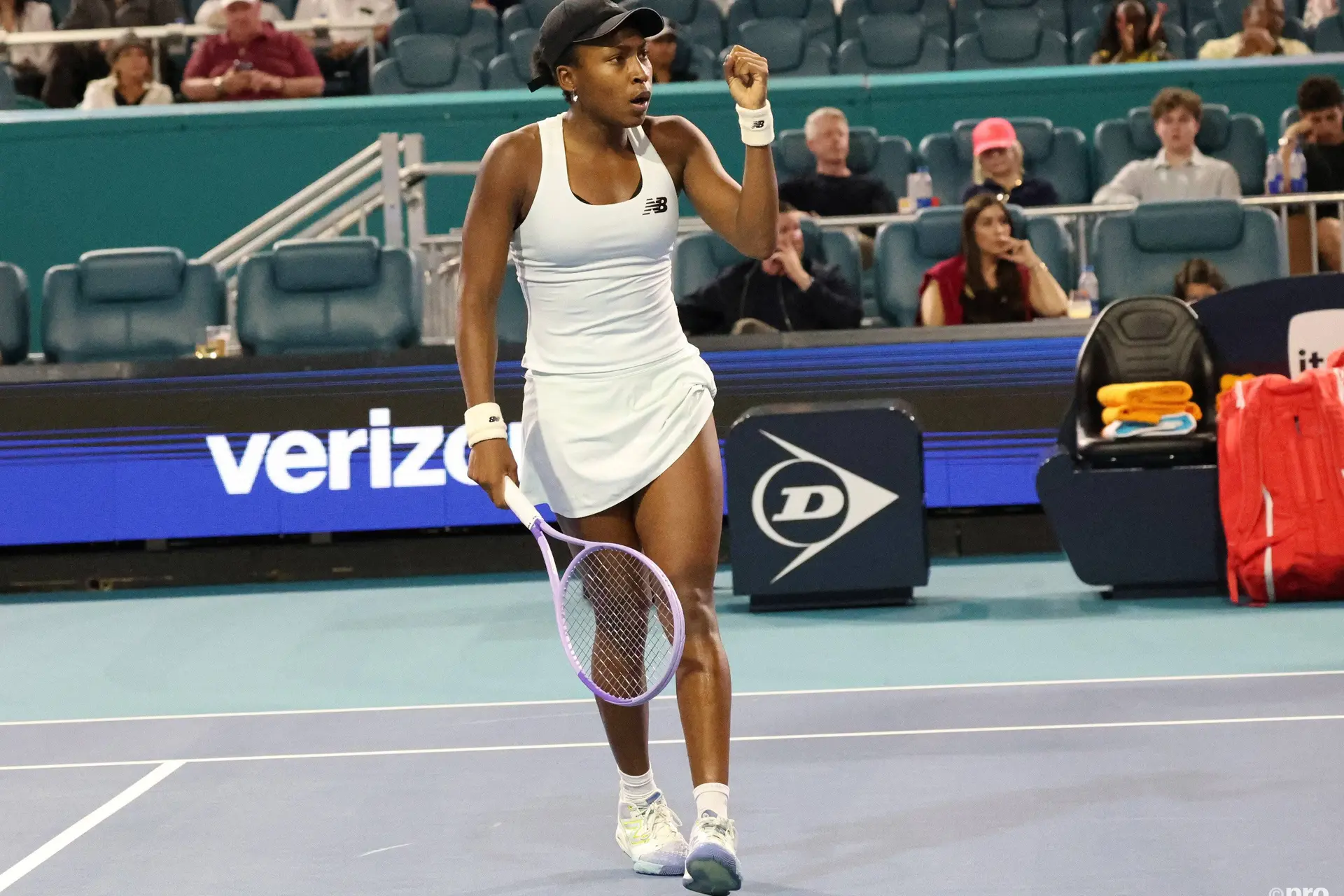
Confidence built through adversity shapes path to final
Gauff’s route to the final was defined by early three-set matches that forced her to adjust under pressure. Those contests, rather than disrupting her momentum, provided a framework for managing key moments more effectively as the tournament progressed.
By the semi-finals, she translated those lessons into a more controlled and decisive performance, particularly when playing from ahead. “I think those three-set matches gave me a lot of confidence this week. I learned from each match. I was in a similar position earlier and handled it better today.”

Cristhián AvilaTennis Journalist
Cristhián Ávila is a tennis journalist based in Santiago, Chile, and has been part of the TennisUpToDate team since early 2023. He covers the ATP and WTA Tours as well as all four Grand Slams, producing breaking news, match reports, analysis, and regular liveblogs from major tournaments.
His reporting combines statistical analysis with clear explanation, helping readers understand tactical developments, player form, and broader storylines across the tour. Working fluently in both Spanish and English, Cristhián collaborates with an international editorial team and contributes to comprehensive global coverage. As part of his work, he has conducted interviews and media interactions with leading figures in the sport, including Caroline Wozniacki and John McEnroe.
In his journalism, Cristhián places strong emphasis on careful sourcing, editorial accuracy, and updating articles promptly when new, verified information becomes available. His coverage is grounded in research, context, and direct engagement with professional tennis.
claps 0visitors 0
Just In

Popular News
Latest Comments
- Two Things: 1. Stop allowing these Spoiled Trust-Fund Elitists to behave badly. Your little hand-slaps do not deter them. 2. STOP the incessantly annoying "towel wiping" nonsense!!!!
 mandoist15-10-2026
 - A healthy Qinwen may be hard to stop next season. She was already scaring her opponents before her medical leave(s). Unfortunately, Zheng insisted on singing again. On the positive side -- Mirra did not sing!! ;~}mandoist11-10-2026
- Where is it written that athletes, entertainers... People in general... are mandated to keep looking at -- or even using [anti]Social Media? Public & private figures consistently complain and reveal their concerns about negativity and violence thrown at them -- yet they insist on participating. Avoid it, don't use it, don't read it. It's okay to occasionally look up at the World instead beating your eyes & thumbs to death on The Inventions out there.mandoist11-10-2026
- great articlestennisseserver07-10-2026
- Medvedev was leading Djokovic 7-5, 3-5 when an attempted return..' NO you ignorants, Djokovic was leading .weiss05-10-2026
- No more bullshit "Wildcards" to these two. Qualify like everyone else -- there will be cameras there, too. Time to scream... WTF ????!!!!mandoist29-09-2026
- Let's not BS the general public -- Sabalenka started showing cracks in her game last season. Her losses and near-losses started at about the same time she began being distracted by Fame (constant Selfies, making TV commercials, magazine shoots, endless Social Media nonsense, etc., etc.) One would think even Saba could recognize the parallels with others who failed before her -- Raducanu, Giorgi, Bouchard to name a few.mandoist25-09-2026
- Gross!! Hey Raducanu, Giorgi, and Bouchard -- reserve a seat at your Social Media Selfie table for Saba + Naomi. They're heading in your direction soon enough.mandoist24-09-2026
- And then these same players will complain about how lengthy their season’s were and need more time-off. I’m all for more tennis but the amount of tennis we get now is actually kind of crazy! We all need a break, especially the players.DaveyWavey23-09-2026
- You should do a comparison article for "different kinds of justice" the courts decide for tennis players. I can think of at least three players who received very small bans of a few months, however Tara Moore has been fighting for her literal survival the past few years. It seems odd considering she is not a "name" player, unlike the other cases.DaveyWavey22-09-2026

Loading