“I was terrified and started to cry”: Simona Halep explains why surgery became inevitable in her junior years
WTA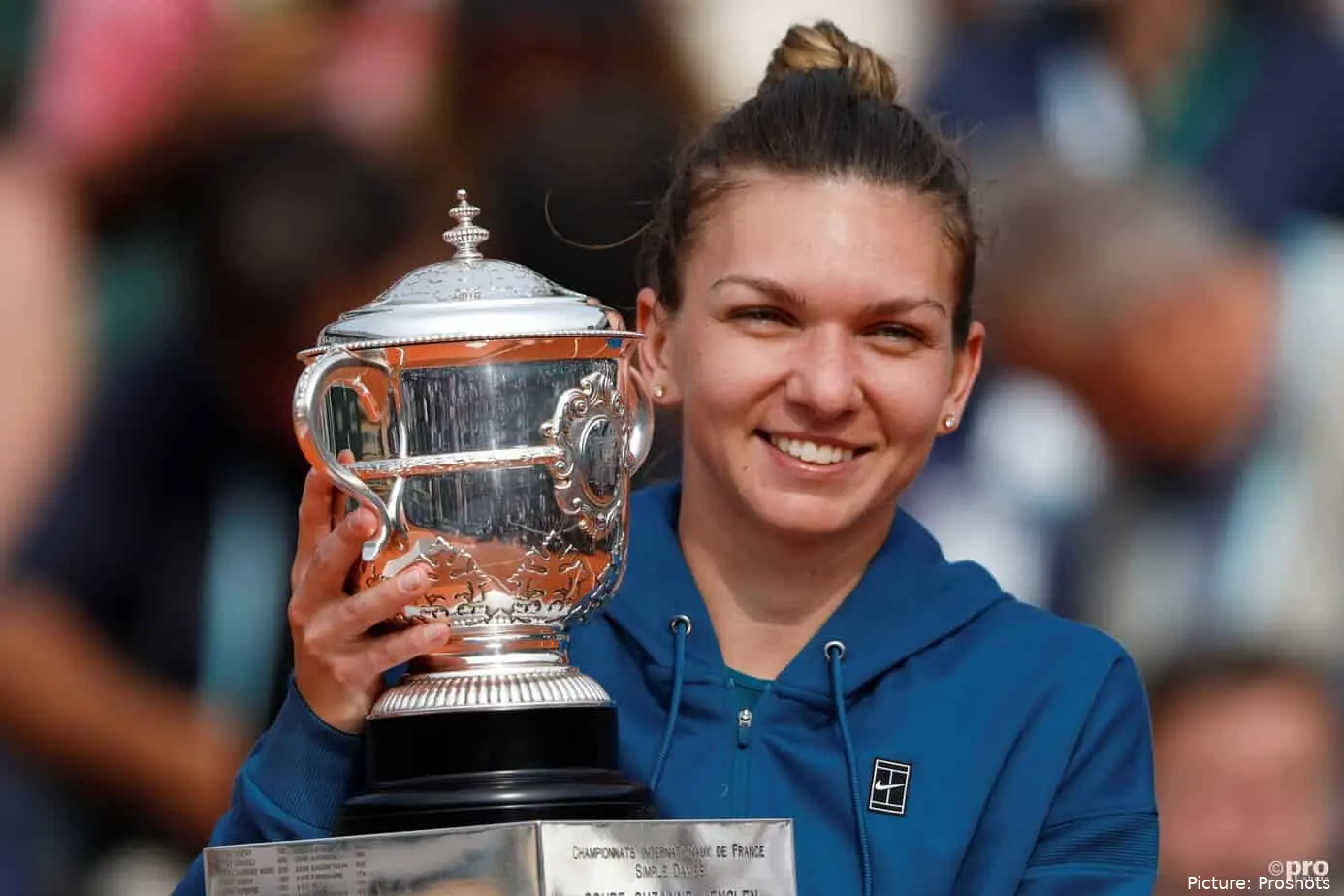
Simona Halep has spoken candidly about one of the most defining and misunderstood decisions of her life: the breast-reduction surgery she underwent as a teenager to save her tennis career. In a newly shared video published by one of her sponsors, the Romanian star revisited the moment that forced her to confront fear, doubt, and the reality of her physical limits just as her professional journey was beginning. “I arrived at Roland Garros in great shape and I won it. It was a dream,” Halep recalled. “And then, during training, suddenly… I locked up. I couldn’t move. I was very scared and I started to cry,”
For Halep, then only 17, the issue was far more serious than simple discomfort. A chronic back problem—unknown to many at the time—had begun to impact her biomechanics, confidence, and ability to compete at the intensity required to progress in the sport. The junior Roland Garros champion suddenly found herself debating a career-altering operation long before most players even break into the professional ranks. “I already had a serious spine problem. I was 17 and it was too early to make such a decision, but it was a yes-or-no issue. I knew I could not play tennis at the highest level without it,” the former world No. 1 added.
The teenager who had just won the biggest junior title in the world was forced to choose between immediate physical relief and a long future on the tour. Halep described feeling overwhelmed by the pressure, yet guided by a conviction stronger than the uncertainty around her. The surgery, she revealed, was ultimately driven by a belief that her long-term career depended on it. “I had faith; I knew the sacrifice was worth it,” the Romanian said, reflecting on a decision that shaped her rise to two Grand Slam titles and the World No. 1 ranking.
Her message now, years later, is aimed at young athletes and anyone facing a difficult, deeply personal crossroads. Halep emphasises the role of inner conviction, determination and courage in forging a path forward. Her closing words in the video underline the philosophy that guided her through one of the hardest moments of her youth: “You build your own future. The first step is faith—that you can reach where you want.”

A defining choice that rewrote her future
The physical change translated into on-court evolution. Known for her explosive movement and clean baseline timing, Halep became one of the fastest and most tactically disciplined players on the WTA Tour. Her post-surgery rise was rapid: 6 titles in 2013, her first Grand Slam final in 2014 at Roland Garros. Her breakthrough into the Top 10 and subsequent ascent to No. 1 would not have been possible without the physical liberation she gained at 17.
She wonr her first major at the 2018 French Open, after lost in three consecutive finals. She added a second Slam at Wimbledon in 2019, famously defeating Serena Williams in a near-flawless performance with just three unforced errors. In her own telling, that choice was the first major test of her career—and the moment she realised that faith in one’s path must precede visible results.
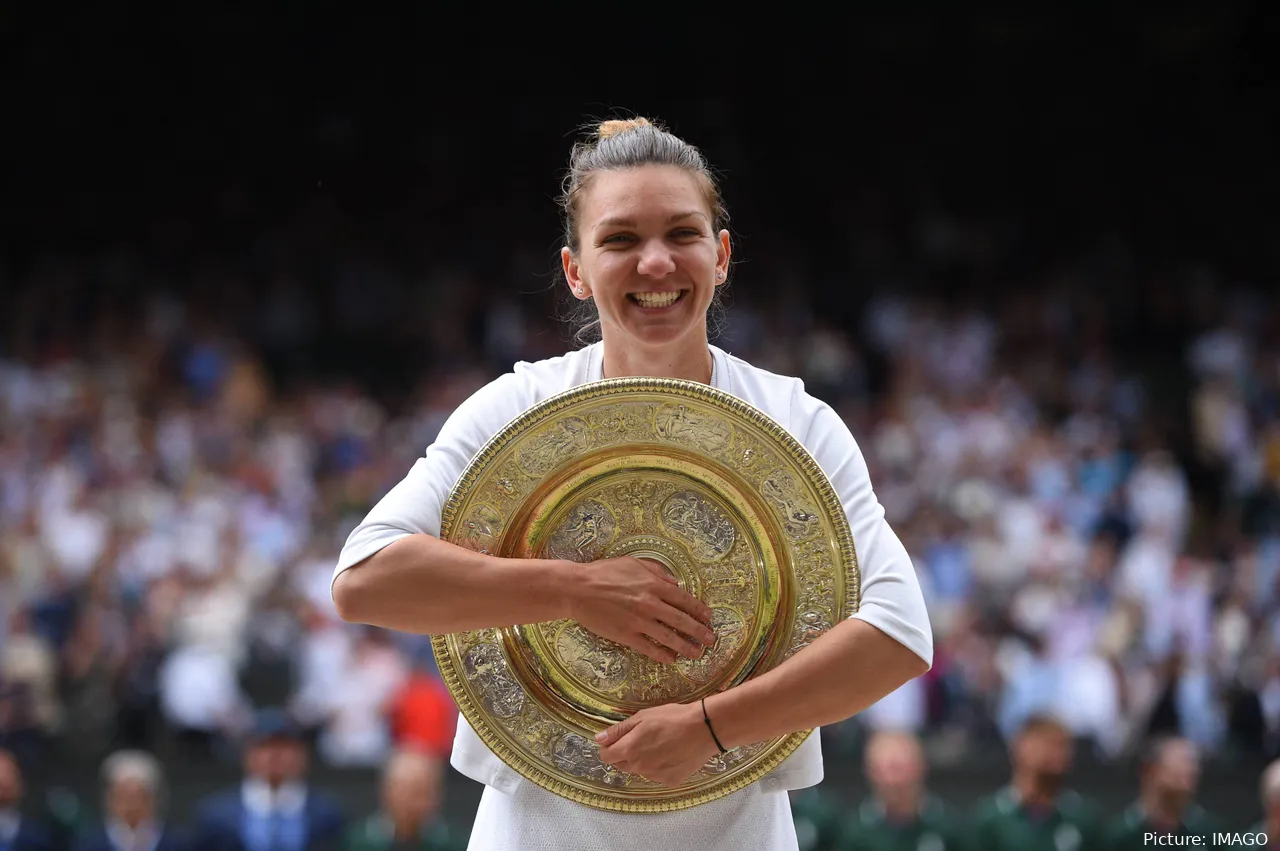
Simona Halep won her second major title at 2019 Wimbledon, after beating Serena Williams 6-2, 6-2.
The turning page: doping ban, comeback and retirement
Halep’s career took an unexpected detour with her 2022 suspension for testing positive for Roxadustat at the US Open. She always maintained her innocence, insisting the substance entered her system through contaminated supplements. After months of legal battles, appeals, and independent reviews, the Court of Arbitration for Sport reduced her suspension from four years to nine months, acknowledging unintentional ingestion. The reduction theoretically made her eligible to return immediately.
The controversy deeply affected her reputation and mental health, and Halep openly described the period as the most difficult of her life. She attempted a comeback in 2024 but struggled with rhythm, timing, and lingering injuries. Despite significant public support, Halep ultimately decided to step away from the sport for good, officially confirming her retirement in 2025 as she concluded that her body could no longer sustain the demands of elite-level tennis.

Cristhián AvilaTennis Journalist
Cristhián Ávila is a tennis journalist based in Santiago, Chile, and has been part of the TennisUpToDate team since early 2023. He covers the ATP and WTA Tours as well as all four Grand Slams, producing breaking news, match reports, analysis, and regular liveblogs from major tournaments.
His reporting combines statistical analysis with clear explanation, helping readers understand tactical developments, player form, and broader storylines across the tour. Working fluently in both Spanish and English, Cristhián collaborates with an international editorial team and contributes to comprehensive global coverage. As part of his work, he has conducted interviews and media interactions with leading figures in the sport, including Caroline Wozniacki and John McEnroe.
In his journalism, Cristhián places strong emphasis on careful sourcing, editorial accuracy, and updating articles promptly when new, verified information becomes available. His coverage is grounded in research, context, and direct engagement with professional tennis.
claps 0visitors 0
Just In

Popular News
Latest Comments
- A healthy Qinwen may be hard to stop next season. She was already scaring her opponents before her medical leave(s). Unfortunately, Zheng insisted on singing again. On the positive side -- Mirra did not sing!! ;~}
 mandoist11-10-2026
 - Where is it written that athletes, entertainers... People in general... are mandated to keep looking at -- or even using [anti]Social Media? Public & private figures consistently complain and reveal their concerns about negativity and violence thrown at them -- yet they insist on participating. Avoid it, don't use it, don't read it. It's okay to occasionally look up at the World instead beating your eyes & thumbs to death on The Inventions out there.mandoist11-10-2026
- great articlestennisseserver07-10-2026
- Medvedev was leading Djokovic 7-5, 3-5 when an attempted return..' NO you ignorants, Djokovic was leading .weiss05-10-2026
- No more bullshit "Wildcards" to these two. Qualify like everyone else -- there will be cameras there, too. Time to scream... WTF ????!!!!mandoist29-09-2026
- Let's not BS the general public -- Sabalenka started showing cracks in her game last season. Her losses and near-losses started at about the same time she began being distracted by Fame (constant Selfies, making TV commercials, magazine shoots, endless Social Media nonsense, etc., etc.) One would think even Saba could recognize the parallels with others who failed before her -- Raducanu, Giorgi, Bouchard to name a few.mandoist25-09-2026
- Gross!! Hey Raducanu, Giorgi, and Bouchard -- reserve a seat at your Social Media Selfie table for Saba + Naomi. They're heading in your direction soon enough.mandoist24-09-2026
- And then these same players will complain about how lengthy their season’s were and need more time-off. I’m all for more tennis but the amount of tennis we get now is actually kind of crazy! We all need a break, especially the players.DaveyWavey23-09-2026
- You should do a comparison article for "different kinds of justice" the courts decide for tennis players. I can think of at least three players who received very small bans of a few months, however Tara Moore has been fighting for her literal survival the past few years. It seems odd considering she is not a "name" player, unlike the other cases.DaveyWavey22-09-2026
- PRIZE MONEY & POINTS Winner - $185,500 Finalist - $114,500 Semi-Finalist - $66,003 Quarter-Finalist - $35,000 Round of 16 - $18,045 Round of 32 - $13,005 Winner - 500 Finalist - 325 Semi-Finalist - 195 Quarter-Finalist - 108 Round of 16 - 60 Round of 32 - 1DaveyWavey20-09-2026

Loading