"I was upset and cried afterward because I missed an opportunity": Diana Shnaider admits bitterness over failing to convert Roland Garros chance
WTA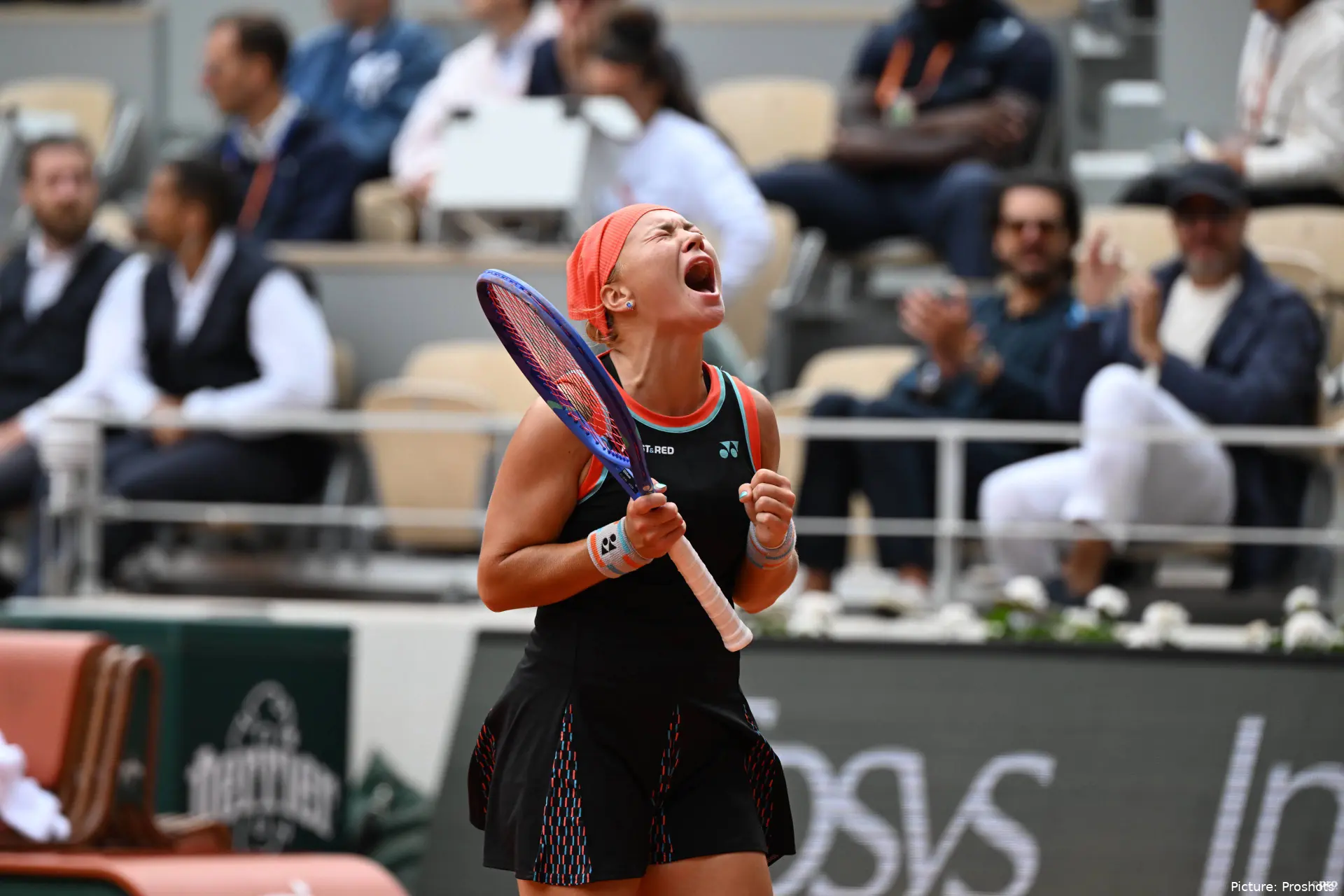
Diana Shnaider emerged from the open draw that was the 2026 French Open to take a semi-final from the tournament, but she admitted she cried afterwards as she failed to convert the chance that was qualifier Maja Chwalinska in the semi-finals.
Speaking on this week's Nothing Major with Sam Querrey and Steve Johnson though there was the admission that she didn't expect to reach the latter stages despite being a high ranked player. "Honestly, I was already thrilled just to make the third round because I had never done it before. Reaching the second week was a huge goal. After that, every win felt like a bonus," said Shnaider on Nothing Major.
But while she was thrilled to reach that point and despite being a player who often has been on the cusp of the top 10 and has won titles, beating the World No.1 in Aryna Sabalenka was a barrier she didn't believe she could cross.
"Not really. Before the match I didn't genuinely believe I would beat the world No. 1. But as the match progressed I started figuring out what worked tactically. I became more aggressive, trusted my shots, and my belief grew."
"I stopped trying to simply absorb her pace and started attacking more. Once I committed to being aggressive and disciplined at the same time, I felt I had a chance."
Asked how satisfying it was, she said that taking a set was a big deal enough, but defeating her to reach the semi-finals was a different level.
"Very satisfying. Taking a set off the world No. 1 was already something nobody else had done at that tournament. Then winning the match and reaching the semifinals was an incredible feeling."
But by her own admission in losing to Maja Chwalinska who was more of a surprise than Shnaider in reaching the final eventually, Shnaider said she was hitting a wall and coping with a different game style even to Sabalenka proved to be a difficult hurdle to cross.
"Very different. I was physically tired from the previous rounds and had less recovery time. My opponent had a completely different style, with more slices, drop shots, and variation. It was a difficult adjustment."
The same can be said for after the loss with Shnaider saying by her own admission, she cried her eyes out after losing the chance to make a Grand Slam final. But that her coach Sascha Bajin proved instrumental in skewing that emotional mindset into something more meaningful.
"I was upset and cried afterward because I missed an opportunity to make a Grand Slam final. But after talking with Sascha Bajin, I felt proud because I had left everything on the court and tried every solution I could think of."
Joining forces with Sascha Bajin
Winning the US Open with Naomi Osaka and the Australian Open, Bajin has coached a lot of high profile female stars including Pliskova, Azarenka, Alycia Parks and Donna Vekic among others and took over the reigns mid last year with the Russian who has gone through coaching limbo.
She had success with Dinara Safina who promptly quit and she had to go back to her family being involved coaching her. But has now found someone who she gets on with well and believes in her game and process.
"Extremely important. We share the same vision for my game and development. Even when results didn't come immediately, we both believed in the process. Our relationship has felt natural from the beginning."
But he provides both the coaching and the driving, she hilariously said as she said she enjoys F1 and wants to do a simulator but doesn't try.
"I'd love to try a simulator. Sascha and I almost did one in Madrid, but our schedule became too busy. I enjoy karting with my younger brother, but I still don't have a driver's license. Usually Sascha drives. I'm the passenger princess."
But she does plan to in the future. "Hopefully. I can drive a little, but I still need to officially get my license, probably in Russia."
College and feeling of loneliness
Shnaider also spoke about growing up and playing other sports as well as choosing the NC State route for college. "Besides tennis, I danced, played piano, and studied chess. Eventually I dropped dancing because I wanted to spend more time on the tennis court, and later I stopped piano when tournaments became more important. I can still play a little chess."
"At the time I didn't have a stable coaching situation or training base. My family and I felt I needed a backup plan. The NC State coaches were honest with me and understood what I wanted to achieve. I trusted them. That relationship mattered more than whether the school was considered a traditional tennis powerhouse."
"My mother wanted me to go to college. My father was against it. Eventually he told me I was old enough to make my own decision, and I chose NC State. Looking back, it was one of the most important decisions I've made."

Diana Shnaider at Gazprom exhibition
Albeit she never thought about leaving despite admitting balancing everything was a chore. "Balancing academics, team matches, and professional tournaments. Some classes were incredibly difficult. American history was especially challenging because I understood the English but not always the historical context. There were times when I was crying to my coaches and academic advisors because I felt overwhelmed."
"Once I committed to staying for the season, I wanted to keep my word. Even after good professional results, I still planned to return because I felt a responsibility to my teammates and coaches."
But after turning pro, she admits there was one issue with the new found life. "It felt lonely. I went from always being surrounded by teammates to traveling mostly by myself. That was one of the biggest changes."
Shnaider though became well known as the player with a bandana something which she says doesn't have a huge reason. But it is more who she is. "It's become part of my identity. If another player wore one, I wouldn't be upset. I'd actually be proud that someone wanted to try it."
Blazing a trail and doing it her way, Shnaider now shoots towards Wimbledon after an incredible time of it in Paris aiming for more heroics.
Samuel GillEditor-in-Chief
Samuel Gill is the Chief Content Officer (CCO) of TennisUpToDate.com, a role he has held since 2020. He is responsible for editorial governance across the platform, including setting content standards, overseeing accuracy and consistency, and guiding long-term editorial strategy. Since joining, he has contributed more than 10,000 articles and editorial pieces across the TennisUpToDate network, playing a central role in the daily operation and development of the site.
Based in Leicester, Samuel has a broad background in tennis media. In his current role, he works closely with editors and writers to ensure coverage meets clear journalistic standards, with particular attention to verification, consistency, and timely updates when new information becomes available.
claps 0visitors 0
Just In

Popular News

Latest Comments
- Does Sinner need that 4.5 mil? I doubt it. He can make that with three modelling gigs!😅🤣Rapunzel21-10-2026
- Did "People Magazine" purchase this website? This nonstop storyline is bullshit.
 mandoist21-10-2026
 - Listen... this is of no concern to anyone but these two. Deal with your own issues -- most of us have our own. Thanks, media, for these insignificant follow-ups which are meaningless.mandoist21-10-2026
- This is so very very sad, for all three of them. I truly thought they had an unbreakable bond, but life throws up so many differing challenges. Having your homeland suffering in such a terrible way, makes happiness lose out to guilt as well. Our thoughts are with them. X💔bjsexton20-10-2026
- I have lost all respect for Svitolina! Could she not have waited until he had played at the Paris Masters!!! She is selfish and don't give a damn about Gael. That is NOT how love is demonstrated Elina!!Rapunzel19-10-2026
- Perhaps convenient tennis tour sex is not a strong enough experience in which to base a marriage?mandoist19-10-2026
- Fight the Good Fight... Tennis (sports in general) need more Humans such as yourself.mandoist18-10-2026
- When is WTA going to mandate Genetic Testing (DNA) ???mandoist18-10-2026
- Hey, Dan... you just wake up from a coma? Regardless -- Thanks for the comedy this morning!mandoist18-10-2026
- Two Things: 1. Stop allowing these Spoiled Trust-Fund Elitists to behave badly. Your little hand-slaps do not deter them. 2. STOP the incessantly annoying "towel wiping" nonsense!!!!mandoist15-10-2026

Loading