“It’s a situation-ship”: Anna Kalinskaya opens clay season with measured expectations in Charleston
WTA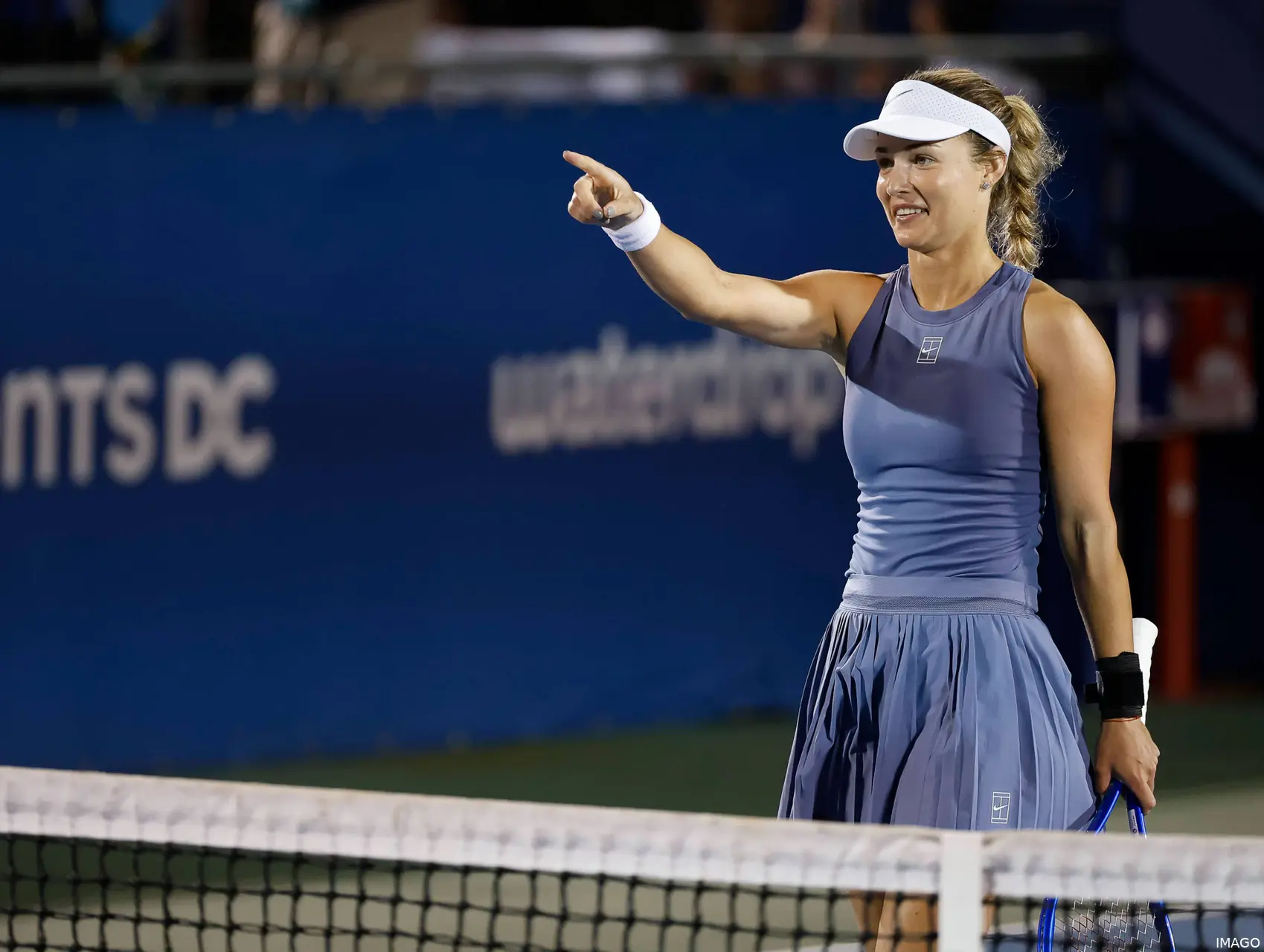
Anna Kalinskaya opened her clay-court season at the Charleston Open 2026 with a straight-sets win over Viktoriya Tomova, defeating the Bulgarian qualifier 6-2, 6-4 in the Round of 32. The Russian, seeded eighth in Charleston and ranked as world No. 22, continues to establish herself as a consistent presence on the WTA Tour following a breakthrough 2024 season that saw her reach a WTA 1000 final in Dubai.
Despite her rise in the rankings, Kalinskaya has yet to secure a WTA singles title, with her results built on regular deep runs rather than standout victories. That pattern has carried into 2026, where she remains a dangerous opponent across draws but is still seeking to convert consistency into silverware.
Her transition into the clay swing comes with a degree of caution. Unlike hard courts, where her aggressive baseline game is most effective, clay has historically required adjustments in both patience and shot selection—areas she acknowledged remain under development.
Kalinskaya’s opening-round performance reflected that balance. While able to dictate through her backhand and impose movement on her opponent, she also highlighted the need to adapt her natural power-based game to longer rallies and higher bounce conditions typical of clay courts.

“Situation-ship” with clay reflects ongoing adaptation
Kalinskaya offered a candid assessment of her relationship with clay, describing it as a “situation-ship” rather than a surface she feels fully comfortable on. The comment captures both gradual improvement and lingering limitations as she continues to adapt her game.
“I think I prefer hard court in general, even maybe grass. But every year I think I’m more comfortable on clay," she admitted in Tennis Channel. "Maybe just more experience on clay every year. But it’s definitely something I need to improve. It’s the most challenging time of the season for me.”
Her explanation points to structural challenges for aggressive players on clay, where point construction and patience often outweigh first-strike tennis. Kalinskaya acknowledged the need to moderate her instinct to hit through opponents, particularly given the slower conditions. “Just the bounce. You have to be very patient. You cannot hit every ball as powerful as on hard court. So this is the problem.”
That adjustment remains central to her development on the surface. While incremental progress has been evident, including improved comfort in extended rallies, clay continues to expose the margins within her game compared to her performances on faster courts.
Backhand and coaching stability underpin consistency
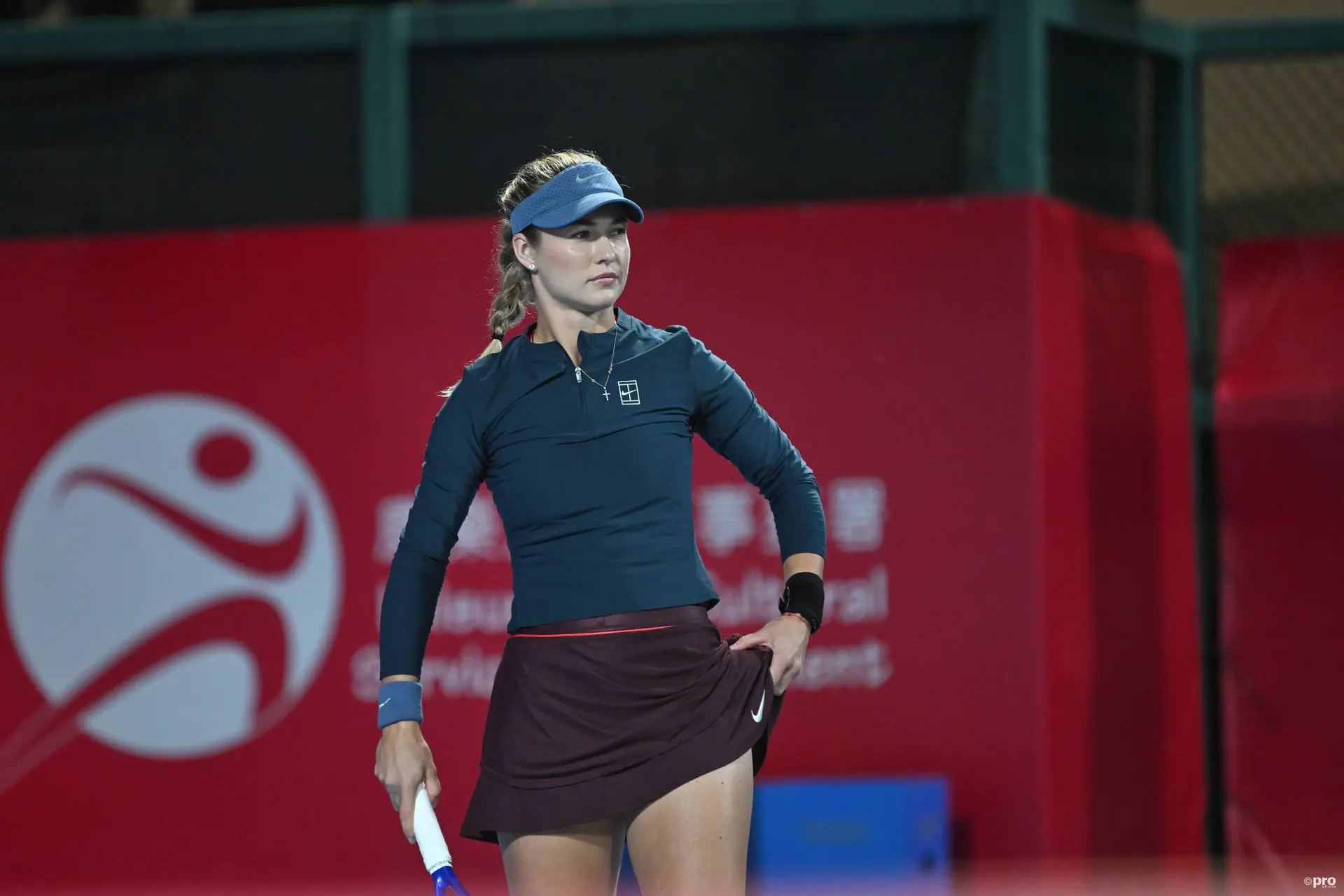
Kalinskaya pointed to her backhand as the key element in her opening win, using it both to construct points and to finish rallies. The shot has become a reliable anchor in her game, particularly when managing transitions between surfaces. “I was happy with my backhand. I think it was the key today—to switch it, to make her move, and sometimes to finish the point.”
Beyond technical aspects, Kalinskaya’s stability off the court has also played a role in her sustained competitiveness. She has worked with the same coach for nearly seven years, an uncommon continuity on the WTA Tour, where coaching changes are frequent. “After almost seven years together, she’s like a family to me. I think it’s very important to feel comfortable because you spend so much time with this person.”
That long-term partnership has provided a consistent framework for development, allowing incremental improvements rather than abrupt changes in direction. Kalinskaya emphasised the balance between professionalism and personal connection as a defining feature of the relationship.
“We enjoy being on court, working together, and also sharing moments outside of the court. It’s important to keep balance—to stay professional when you have to work. I think we’re doing that well.”
Her approach heading into the clay swing reflects that same balance—measured expectations, incremental adaptation, and a focus on execution rather than external factors such as rankings or draw difficulty. “When I’m on court, I don’t think about who is higher in the ranking. Just one ball at a time. I have to be focused on myself.”

Cristhián AvilaTennis Journalist
Cristhián Ávila is a tennis journalist based in Santiago, Chile, and has been part of the TennisUpToDate team since early 2023. He covers the ATP and WTA Tours as well as all four Grand Slams, producing breaking news, match reports, analysis, and regular liveblogs from major tournaments.
His reporting combines statistical analysis with clear explanation, helping readers understand tactical developments, player form, and broader storylines across the tour. Working fluently in both Spanish and English, Cristhián collaborates with an international editorial team and contributes to comprehensive global coverage. As part of his work, he has conducted interviews and media interactions with leading figures in the sport, including Caroline Wozniacki and John McEnroe.
In his journalism, Cristhián places strong emphasis on careful sourcing, editorial accuracy, and updating articles promptly when new, verified information becomes available. His coverage is grounded in research, context, and direct engagement with professional tennis.
claps 0visitors 0
Just In


Popular News
Latest Comments
- Does Sinner need that 4.5 mil? I doubt it. He can make that with three modelling gigs!😅🤣Rapunzel21-10-2026
- Did "People Magazine" purchase this website? This nonstop storyline is bullshit.
 mandoist21-10-2026
 - Listen... this is of no concern to anyone but these two. Deal with your own issues -- most of us have our own. Thanks, media, for these insignificant follow-ups which are meaningless.mandoist21-10-2026
- This is so very very sad, for all three of them. I truly thought they had an unbreakable bond, but life throws up so many differing challenges. Having your homeland suffering in such a terrible way, makes happiness lose out to guilt as well. Our thoughts are with them. X💔bjsexton20-10-2026
- I have lost all respect for Svitolina! Could she not have waited until he had played at the Paris Masters!!! She is selfish and don't give a damn about Gael. That is NOT how love is demonstrated Elina!!Rapunzel19-10-2026
- Perhaps convenient tennis tour sex is not a strong enough experience in which to base a marriage?mandoist19-10-2026
- Fight the Good Fight... Tennis (sports in general) need more Humans such as yourself.mandoist18-10-2026
- When is WTA going to mandate Genetic Testing (DNA) ???mandoist18-10-2026
- Hey, Dan... you just wake up from a coma? Regardless -- Thanks for the comedy this morning!mandoist18-10-2026
- Two Things: 1. Stop allowing these Spoiled Trust-Fund Elitists to behave badly. Your little hand-slaps do not deter them. 2. STOP the incessantly annoying "towel wiping" nonsense!!!!mandoist15-10-2026

Loading
