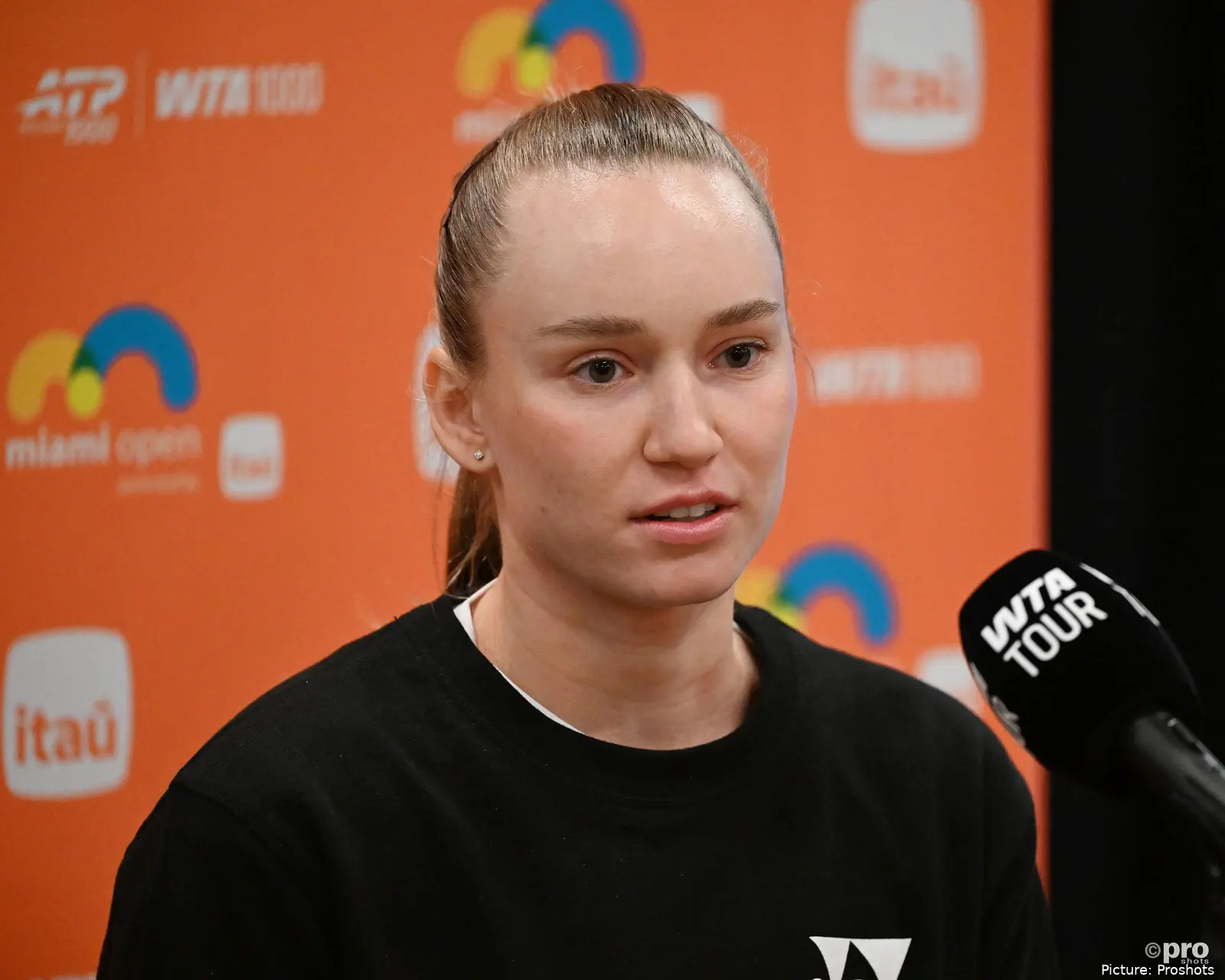
Elena Rybakina advanced to the semifinals of the Miami Open after a 2–6, 6–3, 6–4 comeback victory over World No. 5 Jessica Pegula, extending her winning streak in the matchup to five consecutive matches. The Kazakhstani reaches the final four in Miami for the third time in her career, consolidating another deep run at WTA 1000 level following her recent Indian Wells final appearance.
The match was defined by a clear shift in momentum after a one-sided opening set. Pegula capitalised on Rybakina’s early errors to take control, but the Wimbledon champion gradually imposed her serve and first-strike patterns, finishing with 15 aces and improving her court positioning as the match progressed.
Rybakina’s ability to reset mid-match has been a recurring feature of her 2026 season, where she has consistently remained among the leading contenders on hard courts. Her run in Miami reinforces that trajectory, placing her once again within reach of another WTA 1000 final.
After the match, the No. 4 seed offered a detailed assessment of her performance, focusing on the internal adjustments that allowed her to reverse the momentum. Her reflections centred on frustration, tempo control, and adapting to conditions, providing insight into the turning point of the contest.

“I couldn’t stop my attitude”: managing frustration and turning the match
Rybakina pointed directly to her mindset as the primary issue during the opening stages, acknowledging that her frustration affected both shot selection and rhythm. The early deficit, including two breaks of serve, reflected a lack of control rather than tactical inferiority against Pegula.
“I didn’t start the best and honestly I was frustrated with all my mistakes," the world No. 2 said to Tennis Channel. I was rushing and I couldn’t stop my attitude, but I’m happy that in the second set I went to take a break, breathe a little bit, and managed to turn it around.”
The adjustment came through a conscious effort to slow the match down. Rybakina reduced the pace between points and focused on constructing rallies with greater clarity, which allowed her to stabilise her level and regain scoreboard control. Her willingness to step forward and finish points at the net also played a role in shifting momentum.
“I was trying to find a way in the second set and I was taking a little bit more time and trying not to rush as much during the points. I also came to the net a couple of times. I was a bit lucky, but I’m happy it went my way and in the end I’m looking forward to the semifinals.”
“Conditions are completely different”: adapting from Indian Wells to Miami
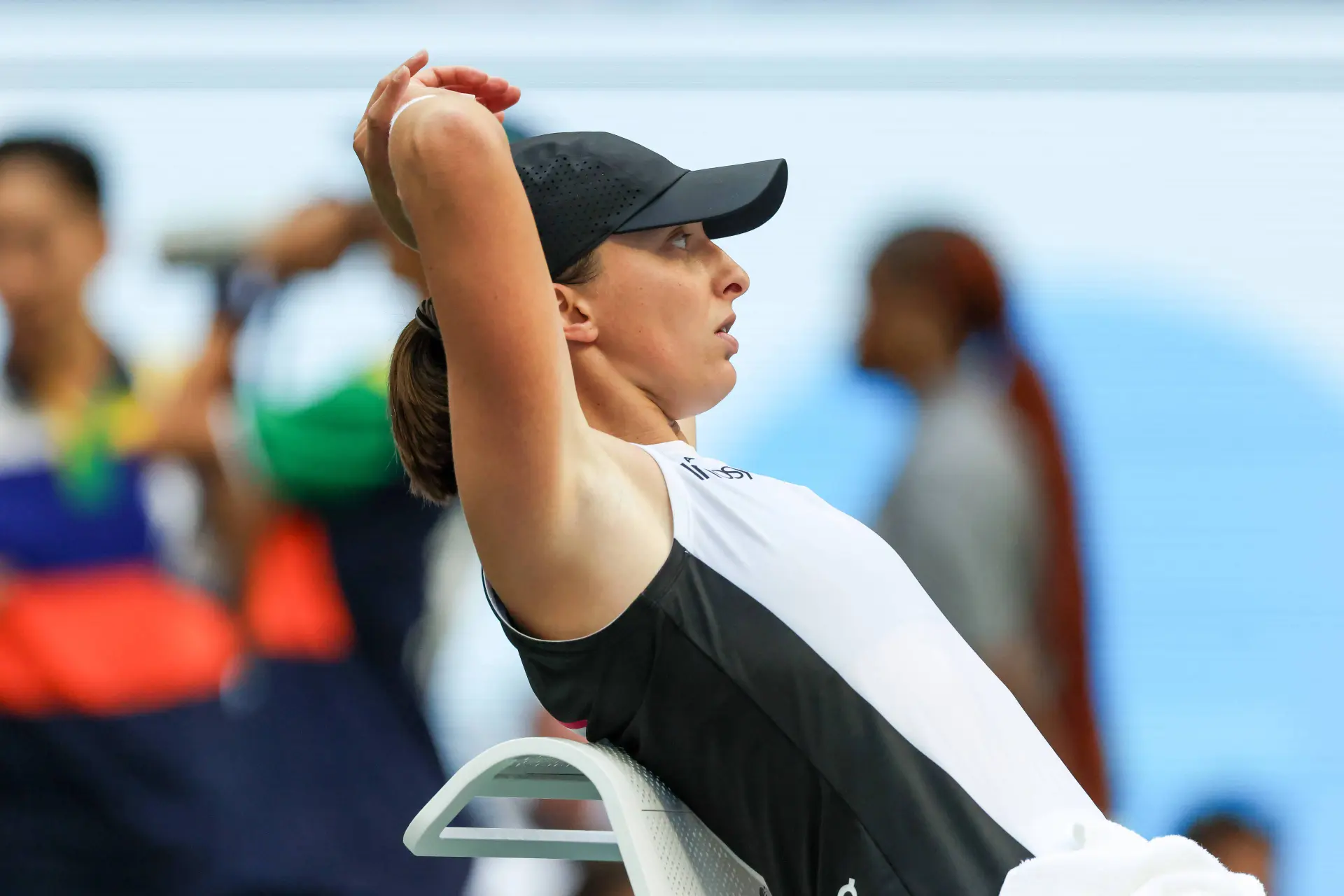
A key factor in Rybakina’s analysis was the transition between Indian Wells and Miami, two events that require distinct tactical approaches despite being played on hard courts. She indicated that her initial difficulties were partly linked to these adjustments, particularly in movement and timing.
“I felt like I was not pushing enough with my legs… coming from night matches and even trying to practice earlier, it’s still not the same. Not the same court and not the same conditions.”
As the match progressed, she shifted towards a more aggressive positioning, stepping inside the baseline to take time away from Pegula. This contrasted with her approach in Indian Wells, where higher trajectories and variation are often more effective due to slower conditions.
“For example, Indian Wells and here are completely different. Here I was trying to step in more and play really aggressively, and in Indian Wells you can maybe change the pace a little bit and play higher. Here it’s more difficult.”
Read also
“It’s not about revenge”: Rybakina downplays Sabalenka narrative
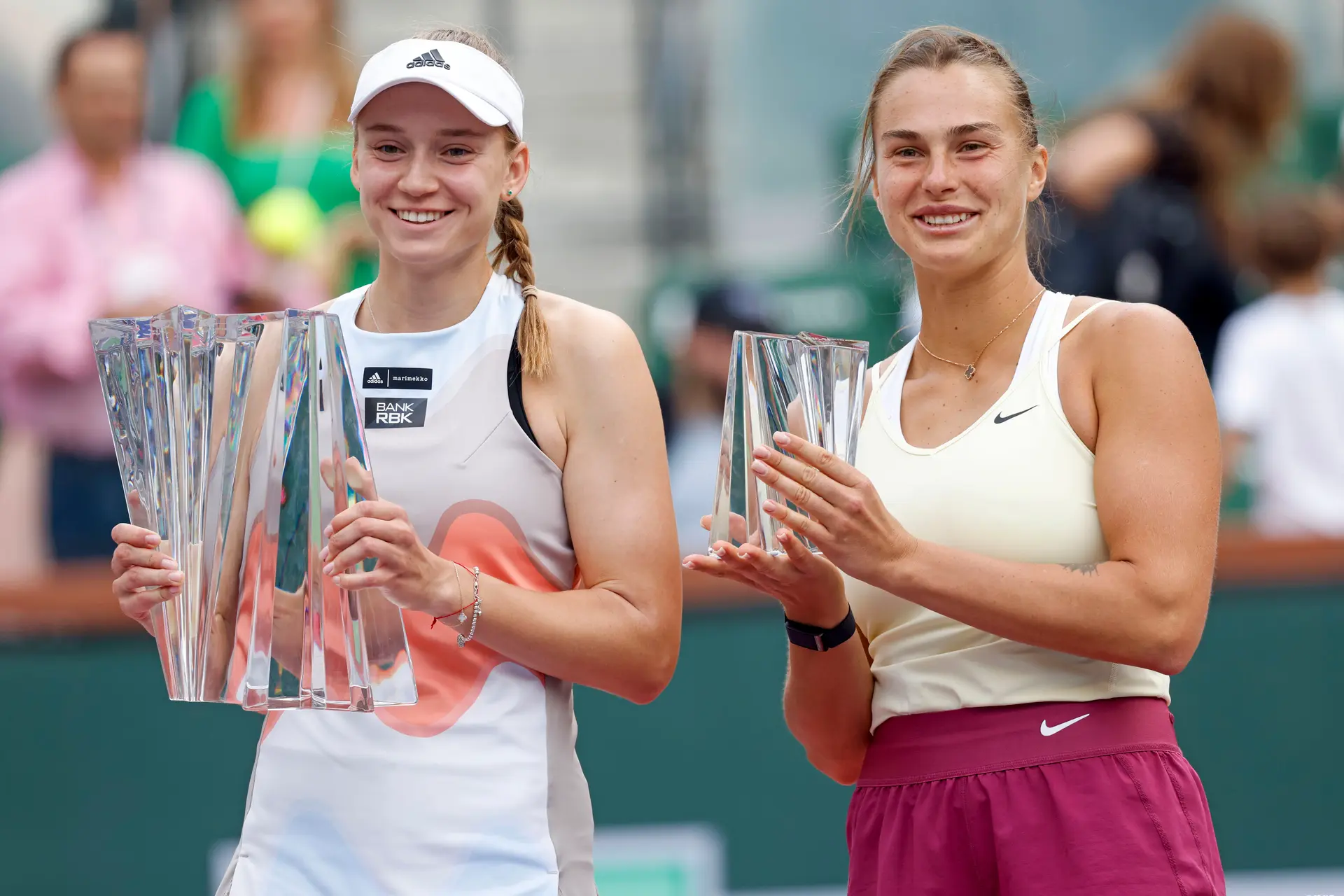
With Aryna Sabalenka still active in the draw, the prospect of another meeting between the two remains a central storyline following their recent Indian Wells final. However, Rybakina rejected the idea that revenge is a motivating factor in potential future encounters. “Well, not necessarily. I would prefer maybe to play in the final if she wins, but honestly, for me, it’s not really about the revenge.”
Instead, she framed those matches as part of an ongoing competitive process, highlighting the narrow margins that have defined their recent meetings and the learning opportunities they provide.
“I had a lot of opportunities and in the third set it was kind of a roulette in Indian Wells. I just know that we push each other and you can learn from these matches. I want to come out of the match no matter the result being happy with what happened on the court, what worked, maybe some small improvements.”

Cristhián AvilaTennis Journalist
Cristhián Ávila is a tennis journalist based in Santiago, Chile, and has been part of the TennisUpToDate team since early 2023. He covers the ATP and WTA Tours as well as all four Grand Slams, producing breaking news, match reports, analysis, and regular liveblogs from major tournaments.
His reporting combines statistical analysis with clear explanation, helping readers understand tactical developments, player form, and broader storylines across the tour. Working fluently in both Spanish and English, Cristhián collaborates with an international editorial team and contributes to comprehensive global coverage. As part of his work, he has conducted interviews and media interactions with leading figures in the sport, including Caroline Wozniacki and John McEnroe.
In his journalism, Cristhián places strong emphasis on careful sourcing, editorial accuracy, and updating articles promptly when new, verified information becomes available. His coverage is grounded in research, context, and direct engagement with professional tennis.
claps 0visitors 0
Just In


Popular News
Latest Comments
- A healthy Qinwen may be hard to stop next season. She was already scaring her opponents before her medical leave(s). Unfortunately, Zheng insisted on singing again. On the positive side -- Mirra did not sing!! ;~}
 mandoist11-10-2026
 - Where is it written that athletes, entertainers... People in general... are mandated to keep looking at -- or even using [anti]Social Media? Public & private figures consistently complain and reveal their concerns about negativity and violence thrown at them -- yet they insist on participating. Avoid it, don't use it, don't read it. It's okay to occasionally look up at the World instead beating your eyes & thumbs to death on The Inventions out there.mandoist11-10-2026
- great articlestennisseserver07-10-2026
- Medvedev was leading Djokovic 7-5, 3-5 when an attempted return..' NO you ignorants, Djokovic was leading .weiss05-10-2026
- No more bullshit "Wildcards" to these two. Qualify like everyone else -- there will be cameras there, too. Time to scream... WTF ????!!!!mandoist29-09-2026
- Let's not BS the general public -- Sabalenka started showing cracks in her game last season. Her losses and near-losses started at about the same time she began being distracted by Fame (constant Selfies, making TV commercials, magazine shoots, endless Social Media nonsense, etc., etc.) One would think even Saba could recognize the parallels with others who failed before her -- Raducanu, Giorgi, Bouchard to name a few.mandoist25-09-2026
- Gross!! Hey Raducanu, Giorgi, and Bouchard -- reserve a seat at your Social Media Selfie table for Saba + Naomi. They're heading in your direction soon enough.mandoist24-09-2026
- And then these same players will complain about how lengthy their season’s were and need more time-off. I’m all for more tennis but the amount of tennis we get now is actually kind of crazy! We all need a break, especially the players.DaveyWavey23-09-2026
- You should do a comparison article for "different kinds of justice" the courts decide for tennis players. I can think of at least three players who received very small bans of a few months, however Tara Moore has been fighting for her literal survival the past few years. It seems odd considering she is not a "name" player, unlike the other cases.DaveyWavey22-09-2026
- PRIZE MONEY & POINTS Winner - $185,500 Finalist - $114,500 Semi-Finalist - $66,003 Quarter-Finalist - $35,000 Round of 16 - $18,045 Round of 32 - $13,005 Winner - 500 Finalist - 325 Semi-Finalist - 195 Quarter-Finalist - 108 Round of 16 - 60 Round of 32 - 1DaveyWavey20-09-2026

Loading