“My success kind of skyrocketed”: Alexandra Eala discusses rapid rise in WTA Tour with Andy Roddick
WTATuesday, 24 March 2026 at 21:00
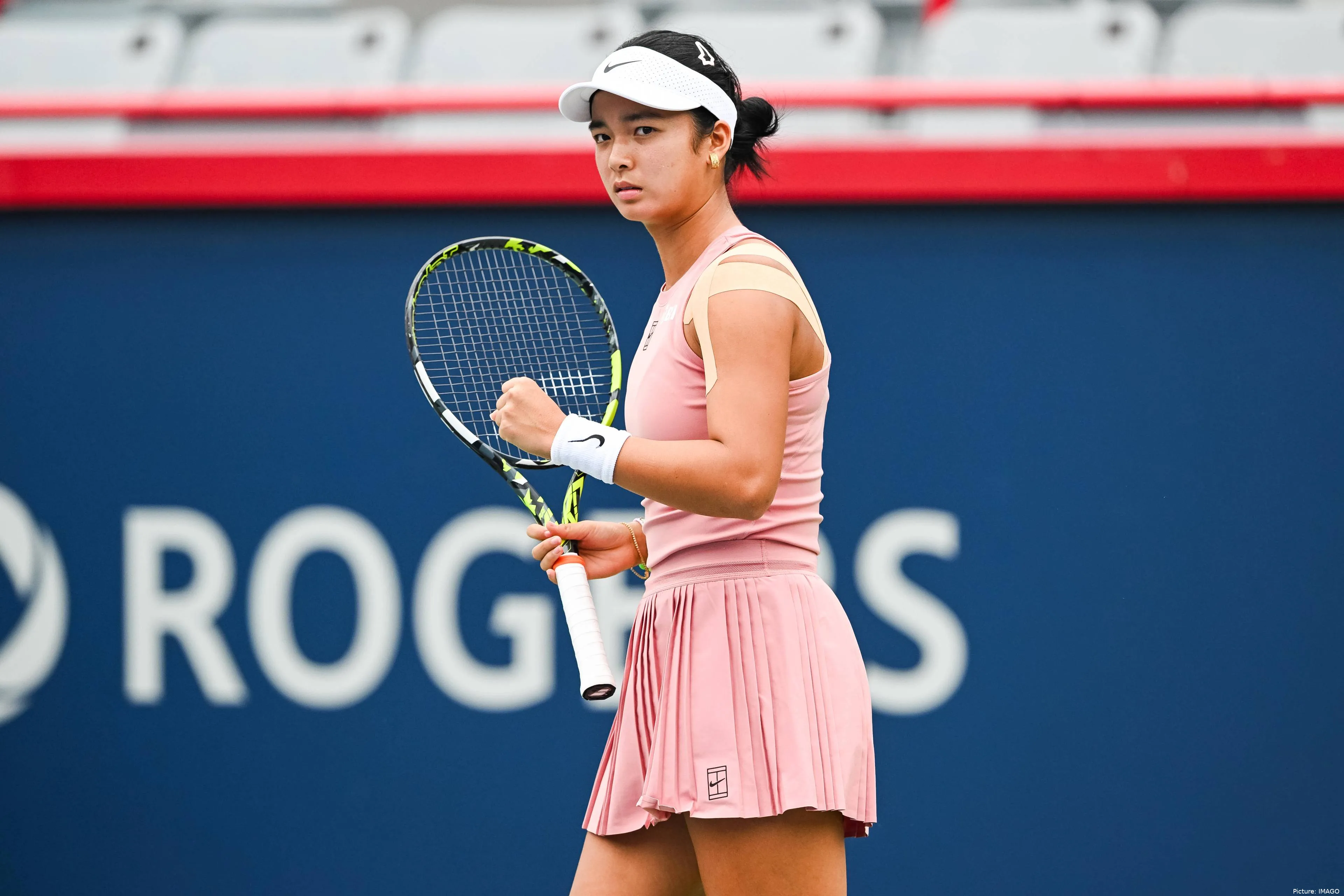
Alex Eala’s rise over the past year has been defined by a breakthrough that changed both her results and her visibility on tour. Speaking with Andy Roddick on the Served podcast, the Filipina reflected on how that shift unfolded following her run at the Miami Open, where she announced herself at WTA 1000 level.
“It’s hard to accept or really see yourself being someone with that much influence,” Eala said. “Nothing changed much in terms of who I am from 2025 to 2026. It’s just that my success kind of skyrocketed, which I’m very thankful for.”
That surge traces back to Miami 2025, where Eala entered ranked around No. 140 as a wildcard and produced a standout run, defeating three Grand Slam champions — two of them top-5 at the time — to reach the latter stages of the draw. It marked her first extended run at WTA 1000 level.
Her return to the tournament this season confirmed that shift in status. Eala reached the fourth round in Miami 2026, defeating Laura Siegemund 6-7, 6-3, 6-3 and Magda Linette 6-3, 7-6 before falling to Karolina Muchova 0-6, 2-6, adding another second-week appearance at WTA 1000 level to her record.
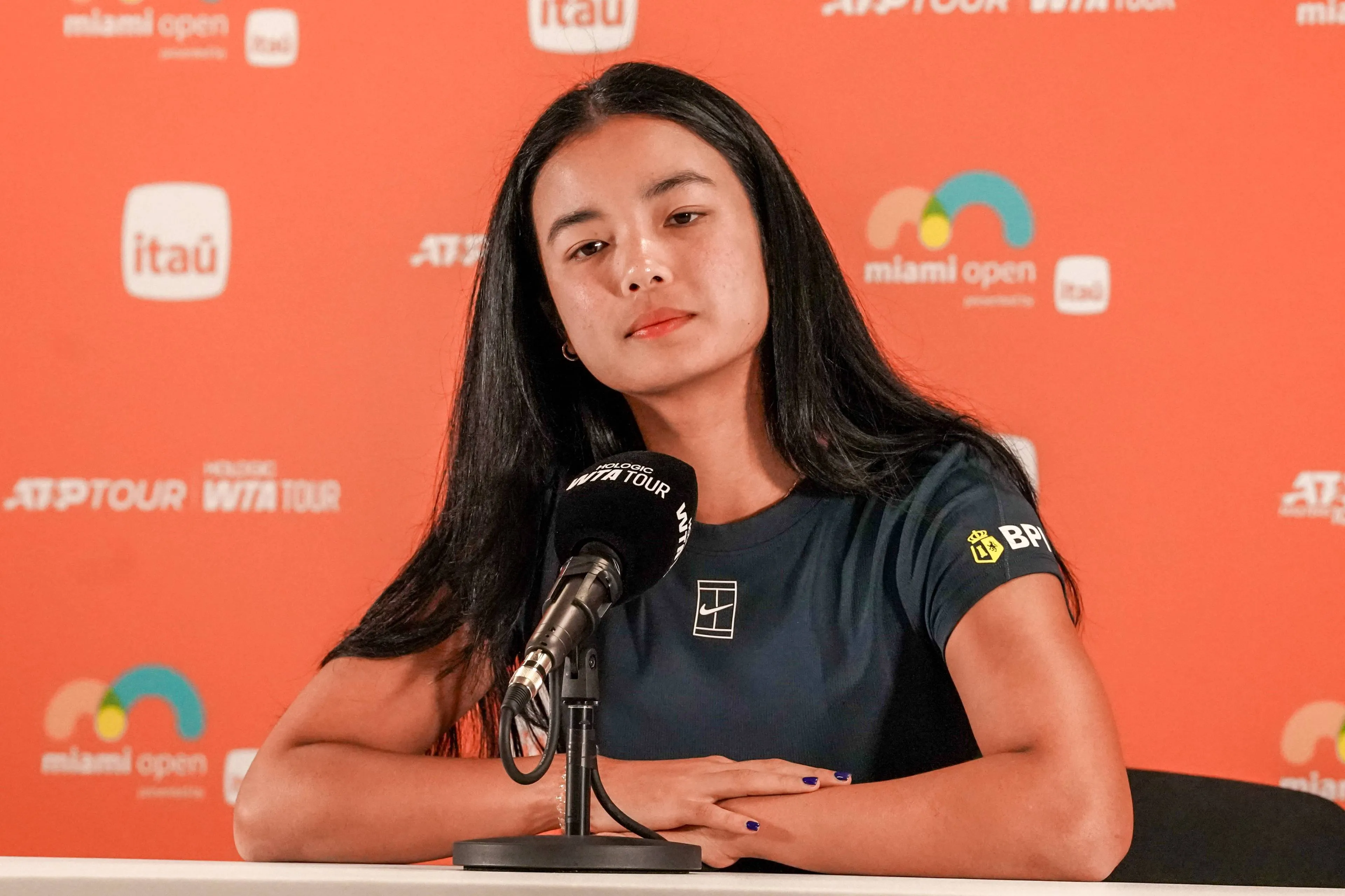
“Every week they just kept coming” – from ITF circuit to sustained support
Eala described her rise as a gradual build rather than a single breakthrough moment. Even before Miami, she had begun to attract attention relative to her ranking, particularly compared to other players competing in similar tiers.
“I would consider myself fortunate enough to have been exposed to a certain level of fame even when I was in the ITF circuit,” she said. “If I compared the fans I had to other players around my ranking, even at 150, it was a little bit more. Definitely nothing compared to now.”
The change became clearer during the early part of the 2026 season, where her presence began to draw larger crowds across multiple events, particularly in Melbourne and Manila. “I seriously noticed that it was coming. People were really coming. They were buying tickets. They were taking time out of their day,” she said. “I saw videos after my match… the lines and the people, and I was really surprised. I think I was a little in denial at first, but every week they just kept coming.”
That consistency in support marked a clear shift in her position on tour. “I was like, ‘OK, you have to accept this. Absorb it. You’re here. It’s a really good position.’”
“I know when I need to lock in” – results stabilising at WTA 1000 level
Eala’s performances in Miami offered a clear snapshot of her current level. Against Siegemund, she recovered from a set deficit, extending rallies and gradually shifting control of the match. Against Linette, she dictated play more consistently, holding serve under pressure and closing the match in a second-set tiebreak. “When I’m on court, I’m still really motivated. I know when I need to lock in,” she said. “I know when I’m slipping a little bit, and I think one of the keys to this past year’s success is that I have a really great team. We work so well together, and they guide me in the right direction.”
Her fourth-round match against Muchova exposed a different dynamic. The Czech player controlled the tempo early, shortening points and limiting Eala’s ability to settle into baseline exchanges, resulting in a one-sided scoreline.
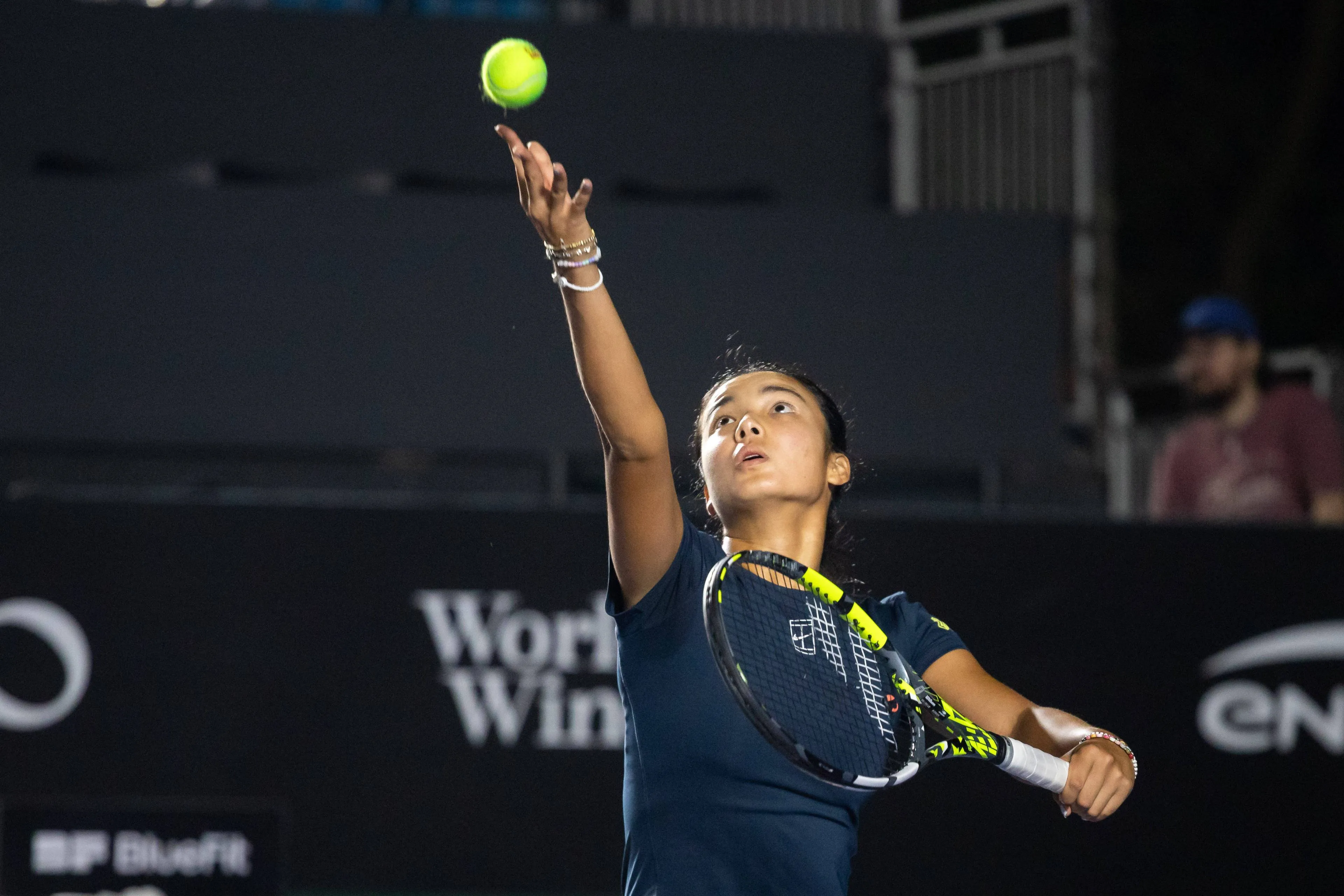
Even so, Eala’s positioning in draws has shifted. Matches against seeded players are no longer isolated occurrences, but part of her regular schedule across WTA 1000 events. “If I can master the times I need to be confident and the times I need to be humble and grateful, I think that’s an amazing recipe,” the world No. 29 added. “I’m able to compete and do my thing on the court, but I’m also aware of what I represent off it.”
“I’ve come a long way” – ranking rise and long-term outlook
Eala continues to frame her development through progression rather than expectation. Her early years were shaped by limited infrastructure, requiring constant travel and adaptation to compete internationally, long before regular appearances in WTA 1000 draws became part of her schedule. “For the first 10 years of my tennis career, I was training on a court that was half basketball,” she said. “And now I’ve played on Wimbledon Centre Court, which is like my ultimate dream aside from winning Wimbledon.”
Her position on tour now reflects that progression. Appearances in second weeks of major events and matchups against seeded players are no longer isolated results, but part of her competitive calendar across the season. “I could win the whole thing or lose the first match,” Eala mentioned. “If I don’t get the win here, I’ll get it somewhere else. I try to enjoy as much as I can while it’s happening because I don’t know how long this is going to last.”
Her fourth-round run in Miami fits within that pattern. Wins over Siegemund and Linette, followed by a loss to Muchova, place her within the same competitive bracket she has occupied across recent months, where consistency is measured across rounds rather than single results.
claps 0visitors 0
Just In



Popular News
Latest Comments
- So she actually CAN think clearly! If she wants to play tennis, make it a priority. Learn from Life choices (like having a kid with her rapper ex). Today's game is a grueling exercise in Humility if one is not fully dedicated; or does not have the time to do The Work. Raducanu is a shining example of someone with the talent but lacks the drive, attitude, and/or devotion it takes to maintain 100% capacity of everything the Tour demands.
- It's as if troubled 'Condescending Collins' is competing with The Williams' for the daily spotlight. Some just do not know when to quit. Go fix yourselves and stop informing the public of your personal problems. The general public has their own issues in Life.
- Coach Macci and Martina Navratilova are seemingly the only reasonable voices coming out of the tennis circuit in regards to Iga at the moment. People like Stubbs, Gilbert, and anti-Social Media dwellers have very little or nothing to offer. What they are indeed is... predictable. Why certain media think their input is of value is a mystery. Perhaps easy filler for their publications? Media, in general, could/should consider their poor choices and lazy habits of running to the Loudest Mouths for "expert advice". Certain Internet 'news sources' might do their own research and STOP COPYING & PASTING the first articles to hit the web with little-to-no editing or true journalism. As for Iga (and any athlete) they are not robots. They are Human Beings and Humans, as we all know, are not infallable. Leave the expert criticisms and "solutions" to these athletes and their teams. Disgruntled bettors and so-called "experts" are not a solution!
- Sab has more disappointments to come. She's more or less been 'skating' by many of her opponents. Perhaps less Social Media, TV commercials, and photo-ops... otherwise those distractions will gaurantee a slide in ranking. Take that hint from the downfall of some of her colleagues.
- No kidding. Obviously this did not cross an editor's cubicle. Other than the mediocre grammar... there are more comma's in this mess than in 'War and Peace' !!
- Sketchy chair ump in Eala's match. I lost count how many times Siegemund walked to her box and talked between serves!!
- WTF is wrong with you people at WTA?? The Williams Freebies have gone on far too long!! WTA is resembling a certain Orange President who feels he is free to do as he pleases; and does so despite the fact the entire world knows this game of 'untouchables' is not going to end well for any of these Losers.
- Why is this article so poorly written, and seeming not proofread?
- Lena ends any "rivalry" talk today
- It's embarrassing how tennis media (especially this rag) refuses to give Doubles their due respect. Considering Siniakova's 11 hours of tennis in 3 days -- then winning the Indian Wells Doubles Title -- one would think an alleged tennis news source would highlight it.


Loading