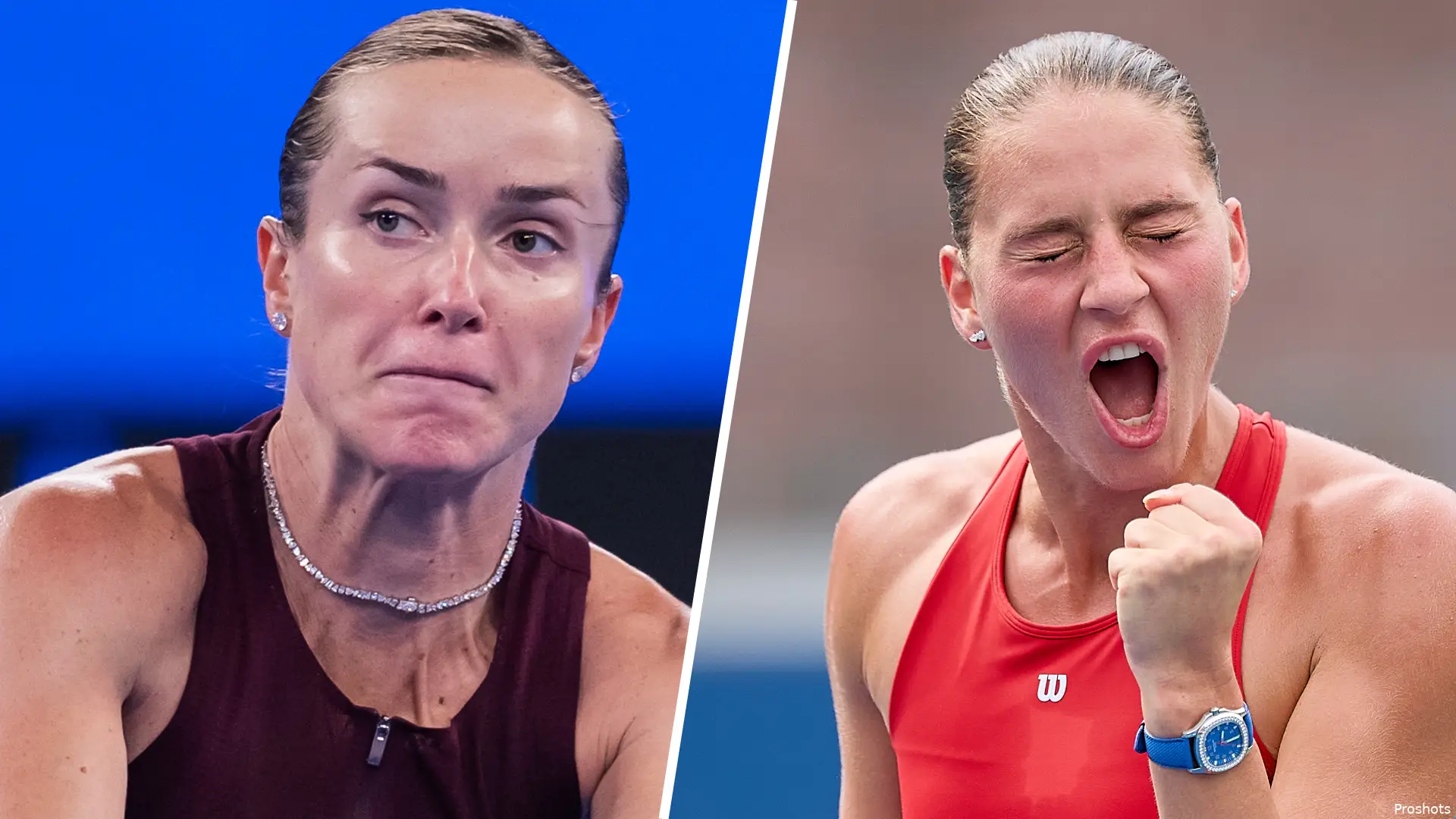
If you want to know where international tennis is heading on Russia, stop watching tennis for a moment and pay attention to hockey.
On Friday, the Court of Arbitration for Sport handed Russia an enormous victory, ordering the International Ice Hockey Federation to allow Russian national teams back into international competition. The IIHF had maintained its exclusion of Russia following the country’s full-scale invasion of Ukraine in February 2022, arguing that serious safety and security concerns made reinstatement inappropriate.
CAS disagreed. The court concluded that the federation hadn’t produced sufficient evidence to justify continuing the exclusion under its regulations. Just like that, Russian hockey teams were given a path back to world championships, potentially beginning this December.
I believe this decision makes Russia’s eventual full reinstatement in international tennis all but inevitable. Not tomorrow, necessarily, and perhaps not even next season. But the direction of travel has become awfully difficult to ignore.

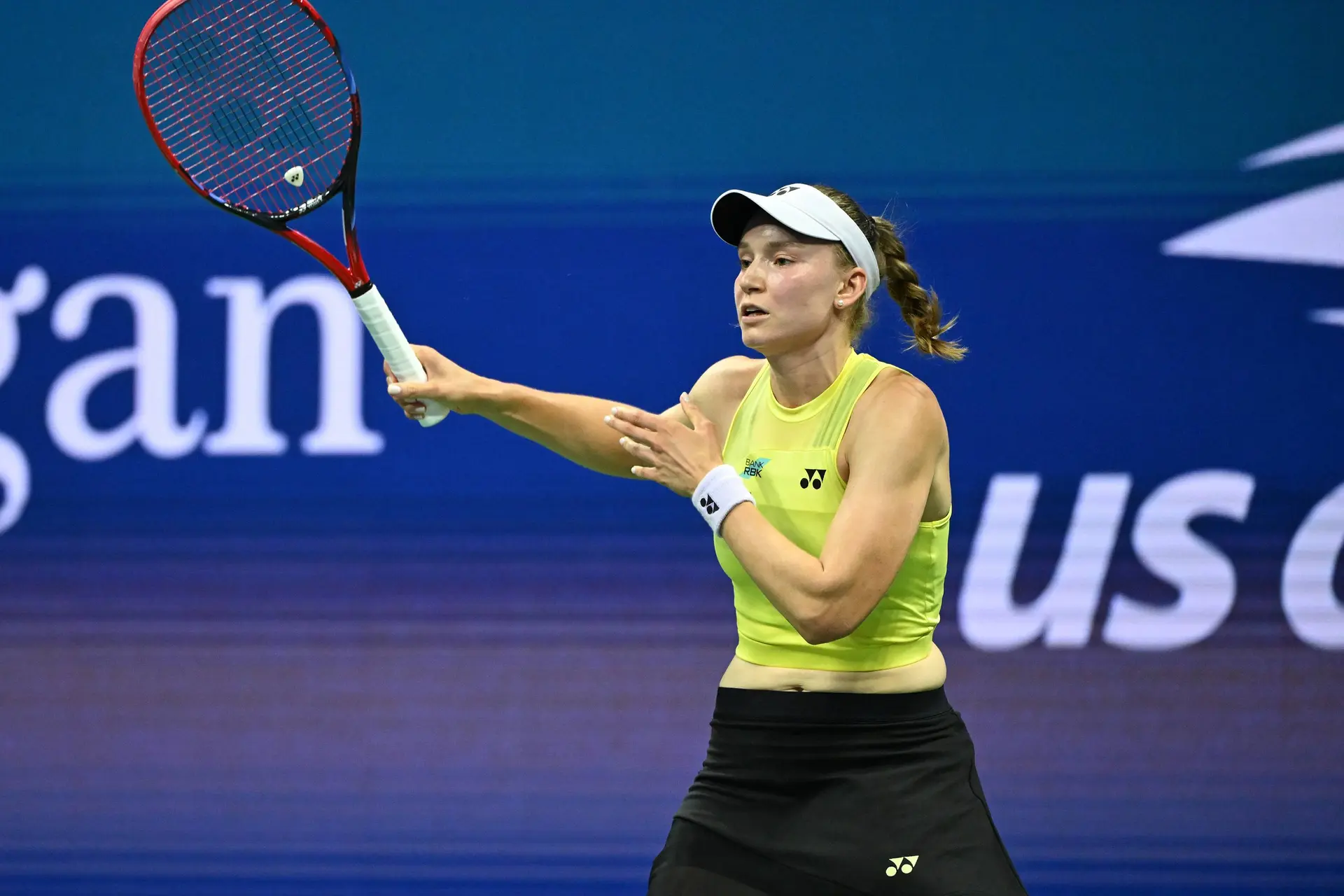
Andreeva at Roland Garros.
And what bothers me most isn’t even the prospect of Russian flags returning to tennis scoreboards or Russian teams competing again in the Davis Cup and Billie Jean King Cup.
It’s that almost nobody seems particularly interested in what any of this means for the Ukrainian women who have spent the past four and a half years trying to maintain professional tennis careers while their country is under attack.
We’ve heard plenty about the rights of Russian athletes. Far less about the lives of Ukrainian ones.
That imbalance deserves considerably more attention than it’s getting.
The sport has already moved on
Tennis never really excluded Russian and Belarusian players in the way other sports did. Apart from Wimbledon in 2022, where players from both countries were prohibited from competing, the professional tours have largely allowed them to continue their careers under neutral status.
Daniil Medvedev has continued competing. So has Andrey Rublev. Aryna Sabalenka has remained one of the biggest stars in women’s tennis. These players have collected prize money, competed for Grand Slam titles, signed sponsorship agreements and enjoyed the opportunities that come with being elite professional athletes.

Aryna Sabalenka has ascended the sport despite all the extra issues.
I’m not suggesting that individual Russian or Belarusian tennis players should automatically be held personally responsible for their governments’ actions. That’s a complicated argument, and reasonable people can disagree about it.
But let’s not pretend these players have been living in anything resembling sporting exile.
What they’ve lost, principally, is the formal recognition of their countries. No flags beside their names, no national teams in certain competitions, and no official restoration of the Russian and Belarusian tennis federations.
In May, the International Tennis Federation reaffirmed that its suspensions remained in place despite changing positions elsewhere in international sport. That was an important decision, but I suspect it’s becoming an increasingly lonely one.
The hockey ruling doesn’t legally require the ITF to reverse course. CAS considered specific regulations and evidence, and another panel recently upheld restrictions on Russian curling teams because of different practical concerns. The legal circumstances matter.
Still, sporting institutions don’t make these decisions in isolation. They watch one another. They respond to pressure. And once one major federation is compelled to reopen its doors, maintaining a different position becomes harder to explain and defend.
I would be surprised if tennis manages to resist that pressure indefinitely.
Meanwhile, imagine being Marta Kostyuk
There’s something almost grotesque about discussing this entirely as an administrative question when you consider what Ukrainian players have actually experienced.
In May, Marta Kostyuk spoke about a Russian missile strike near her family’s home in Kyiv. She was thousands of miles away, preparing to play professional tennis, while people she loved were potentially in danger.
Think about that for a moment. Most professional athletes worry about injuries, rankings, travel schedules, coaching changes and whether their forehand is going to hold up under pressure. Those are legitimate pressures, particularly in a sport as psychologically demanding as tennis.

Kostyuk has had her best year despite everything. A show of her strength.
Kostyuk has had to worry about whether her family will survive the night. And then she’s expected to walk onto a tennis court, compete at the highest level and somehow compartmentalize everything happening back home.
Elina Svitolina addressed precisely this problem during the French Open. Speaking about Kostyuk’s experience, she described how terrifying it can be to wake up to news of missile attacks and then have to play a match. She acknowledged that Ukrainian players have carried this burden for years, often without discussing it publicly. This isn’t a theoretical concern about whether somebody might feel uncomfortable seeing a Russian flag.
It’s a question of how much emotional strain a professional athlete can reasonably be expected to absorb before the sport acknowledges that her circumstances are fundamentally different from those of her competitors. Svitolina, Kostyuk, Dayana Yastremska and other Ukrainian players have continued showing up. They’ve traveled, trained and competed while maintaining connections to families and communities living through a war.
And what has tennis largely offered them? The opportunity to keep playing. Which is something, certainly. But it strikes me as a remarkably limited response to an extraordinary situation.
Neutrality has never been particularly neutral
One of the more convenient arguments in international sport is that competition should remain separate from politics.
I understand the appeal. I love tennis partly because, for a few hours, the outside world can disappear. Two players, a net, a ball and the extraordinary challenge of trying to outthink and outplay another human being.
But the idea that tennis exists outside politics has always been more aspiration than reality.
National identity is everywhere in the sport. We celebrate Davis Cup victories as national achievements. We wrap Olympic tennis in flags and anthems. We describe players as representatives of their countries whenever it suits the occasion.
Then, when those national associations become politically uncomfortable, we’re told that nationality shouldn’t matter.
For Ukrainian players, it matters quite a lot. Kostyuk and Svitolina have declined the customary post-match handshakes with Russian and Belarusian opponents. Their decisions have generated controversy, sometimes among spectators who appear more concerned about tennis etiquette than the circumstances that produced the refusals.
I don’t particularly care whether someone believes the handshake tradition should be preserved. What troubles me is the apparent expectation that Ukrainian women should behave as though nothing unusual is happening.
They’re supposed to compete against Russian and Belarusian players, answer the inevitable questions, manage the audience’s reaction and then politely move on.
Meanwhile, their families may be sheltering from air raids. At what point does the sport recognize that treating everyone identically doesn’t necessarily mean treating everyone fairly?
The Hockey Ruling Changes the Conversation
What makes Friday’s decision so significant is that it moves the debate beyond whether sporting federations want to readmit Russia.
The question is increasingly whether they can legally maintain restrictions, and on what grounds.
The IIHF argued that Russia’s participation created unacceptable safety and security concerns. CAS found that the evidence presented was insufficient under the applicable rules. Importantly, the panel did not decide whether Russian teams must compete with national symbols, leaving that question unresolved.
For tennis, that distinction matters. Full reinstatement would involve more than allowing individual athletes to play, something the sport has already been doing for years. It would potentially restore national representation, team competition and the institutional legitimacy that comes with federation membership.
There’s also a reasonable counterargument here. Sporting federations shouldn’t be allowed to exclude athletes indefinitely without an adequate legal basis. If restrictions are imposed, those restrictions should be justified, proportionate and consistent with the governing rules.
I agree with that principle. But I also believe sporting organizations have an obligation to consider the welfare of every athlete affected by their decisions, not merely the athletes seeking reinstatement.
And that brings us back to the Ukrainian women. Where is the serious discussion about what their working lives have become? Where are the meaningful accommodations, the sustained psychological support, and the willingness to consult them before decisions are made that could fundamentally change their competitive environment? I don’t mean a sympathetic statement posted on social media. Tennis is exceptionally good at those. I mean something tangible.
The people who will have to live with this
I suspect that when Russia is fully reinstated in tennis, the announcement will be presented as an administrative development. There will be statements about fairness, sporting unity, legal obligations and the importance of bringing athletes together.
Some players will welcome the decision. Others will avoid commenting. Tournament organizers will adjust their procedures, and within a few weeks the new arrangements will probably begin to feel normal.
That’s how professional sports operate. The calendar moves forward, and yesterday’s controversy becomes tomorrow’s routine. But for Ukrainian players, nothing about this is routine. Their country is still dealing with the consequences of Russia’s invasion. Their families are still exposed to dangers that most of their competitors cannot begin to imagine. And they’re being asked to perform in an environment where the rest of the sport increasingly seems ready to declare the problem settled.
Read also
I don’t believe Russia’s full return to tennis is far away. Friday’s hockey ruling makes that outcome look considerably closer, even if the ITF still has legal and institutional choices of its own.
What I find much harder to accept is how little attention is being paid to the women who will have to live with the consequences. We’ve spent years asking whether Russian athletes deserve the right to compete. Perhaps, before the flags return and the national teams are welcomed back, somebody in tennis should spend a little more time asking Ukrainian players what they’ve been through. And, for once, actually listen to the answers.

Aron SolomonGuest Author
A Pulitzer Prize-nominated journalist for his groundbreaking op-ed in The Independent exposing the NFL’s “race-norming” policies, Aron Solomon, JD, is a globally recognized thought leader in law, media, and strategy.
As Chief Strategy Officer for AMPLIFY, he leverages his deep expertise to shape the future of legal marketing. Aron has taught entrepreneurship at McGill University and the University of Pennsylvania and was honored as a Fastcase 50 recipient, recognizing him among the world’s top legal innovators. A prolific commentator on law, business, and culture, his insights regularly appear in Newsweek, The Hill, Crunchbase News, and Literary Hub.
He has also been featured in The New York Times, Fast Company, Fortune, Forbes, CBS News, CNBC, USA Today, ESPN, TechCrunch, BuzzFeed, Venture Beat and countless other leading global media outlets. We are proud to have Aron on board at TennisUpToDate, where his deep tennis expertise enriches the site with sharp, original columns that connect the sport to wider cultural debates.
claps 0visitors 0
Just In



Popular News
Latest Comments
- Osaka's mental state apparently does not allow her to reach any more Quarter Finals? I mean, she doesn't really have the time for tennis with all the pre-planning that must go into her 12 year-old "fashion" goals.
 mandoist29-10-2026
- With her money one would think she could afford a better team of Psychiatrists?mandoist29-10-2026
- Boss move, Sinner !Rapunzel27-10-2026
- Apparently still refusing to seek 'help' ...and still playing Dress-Up like a 10 year-old.mandoist27-10-2026
- Lena... Takin' care of businessmandoist25-10-2026
- Can you please stop publishing this nonsense? Stick to Tennis.mandoist25-10-2026
- Does Sinner need that 4.5 mil? I doubt it. He can make that with three modelling gigs!😅🤣Rapunzel21-10-2026
- Did "People Magazine" purchase this website? This nonstop storyline is bullshit.mandoist21-10-2026
- Listen... this is of no concern to anyone but these two. Deal with your own issues -- most of us have our own. Thanks, media, for these insignificant follow-ups which are meaningless.mandoist21-10-2026
- This is so very very sad, for all three of them. I truly thought they had an unbreakable bond, but life throws up so many differing challenges. Having your homeland suffering in such a terrible way, makes happiness lose out to guilt as well. Our thoughts are with them. X💔bjsexton20-10-2026

Loading