Sixteen years ago, Caroline Wozniacki became world No. 1 without a Slam - The ending took seven more years
WTA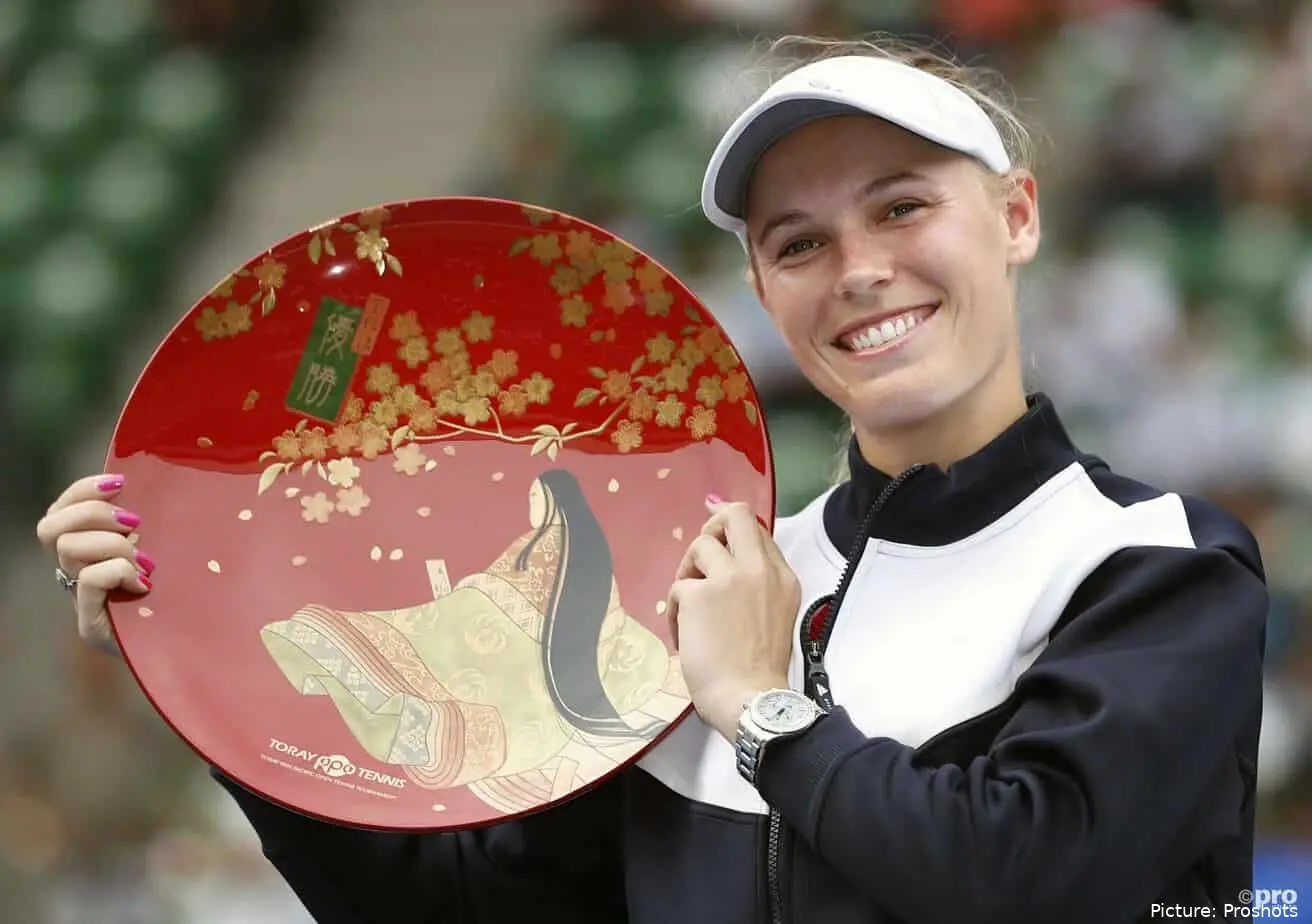
On October 11, 2010, a 20-year-old Caroline Wozniacki won the China Open in Beijing, beating Vera Zvonareva 6-3, 3-6, 6-3. A few days earlier, by beating Petra Kvitová in the third round, she had taken the top spot in the rankings from an injured Serena Williams, and the WTA made it official that Monday. Wozniacki became the first Danish player ever to reach No. 1, and the fifth woman in the WTA's computer-ranking era to get there without having won a Grand Slam title.
That last detail defined her for most of the next decade. She would finish 2010 and 2011 as the year-end No. 1, spend 71 weeks at the top, and win 30 titles, yet for seven years and three months the question never changed: where was the Slam? The answer arrived in Melbourne in January 2018, and it is the reason this anniversary is worth more than a footnote.
Today, with the race for the No. 1 spot being fought between three Grand Slam champions in Rybakina, Sabalenka and Andreeva, her story reads differently. Wozniacki's career is a reminder that the ranking measures consistency, and that the title everyone points to can take a long time to catch up.
The road to No. 1 in 2010
Wozniacki arrived in 2010 as the world No. 4 after her first Grand Slam final, at the 2009 US Open. She turned that momentum into the busiest and most productive season of her career: 22 tournaments, 62 wins against 17 losses (78%), eight finals and six titles, the most on the tour. Only two of those finals ended in defeat, to Jelena Janković at Indian Wells and to Kim Clijsters at the WTA Finals in Doha.
The titles came in clusters. She won on clay at Ponte Vedra Beach (the Amelia Island Championships) in April, then took Copenhagen, Montréal and New Haven in August before capping the year with the Asian swing. By winning both Tokyo and Beijing in October, she became the first player to take the Pan Pacific Open and the China Open in the same season. Her win over Zvonareva in the China Open final was also her first against a top-five player in 17 months.
Her schedule explains a lot of the criticism she faced. The ranking rewards consistent results over a full season, and Wozniacki delivered them week after week. At the majors, her results were solid but stopped short of finals: a fourth round in Australia, a quarterfinal at Roland Garros, a fourth round at Wimbledon and a semifinal at the US Open, where Zvonareva beat her 6-4, 6-3.
| Title (2010) | Month | Final opponent | Score |
| Amelia Island (Ponte Vedra Beach) | April | Olga Govortsova | 6-2, 7-5 |
| Danish Open (Copenhagen) | August | Klára Zakopalová | 6-2, 7-6(5) |
| Canadian Open (Montreal) | August | Vera Zvonareva | 6-3, 6-2 |
| Connecticut Open (New Haven) | August | Nadia Petrova | 6-3, 3-6, 6-3 |
| Pan Pacific Open (Tokyo) | October | Elena Dementieva | 1-6, 6-2, 6-3 |
| China Open (Beijing) | October | Vera Zvonareva | 6-3, 3-6, 6-3 |
The "No. 1 without a Slam" debate
The criticism was loud, and it was not new. Wozniacki was the fifth woman to reach the top without a major, after Kim Clijsters (2003), Amélie Mauresmo (2004), Jelena Janković (2008) and Dinara Safina (2009). Two of the four had eventually broken through, and two had not.
The debate became harsher because Wozniacki's rise coincided with the stronger results of Clijsters, who won the US Open, the year-end championships and the Australian Open in that stretch, and Serena Williams, who had won two majors that season.
It got more intense in 2011, when she was seeded No. 1 at all four Grand Slams and still failed to reach a final. She lost the Australian Open semifinal, went out in the third round in Paris, the fourth at Wimbledon and the semifinals in New York, yet she won six more titles, including Indian Wells and Dubai, and finished the year as No. 1 again. The ranking system had done what it is designed to do. The question was whether that should count as the same thing as winning a major.
Her case looks different next to the others on the list. Seven women in the Open era have reached No. 1 without a major, and three of them never won one. What separates Wozniacki is the length of the wait: seven years and three months between first reaching No. 1 and winning her first Slam, the longest of the four who eventually did.
| Player | First No. 1 | First Slam title | Wait |
| Kim Clijsters | Aug. 11, 2003 | US Open 2005 | About 2 years |
| Amélie Mauresmo | Sept. 13, 2004 | Australian Open 2006 | About 16 months |
| Jelena Janković | Aug. 11, 2008 | Never | — |
| Dinara Safina | April 20, 2009 | Never | — |
| Caroline Wozniacki | Oct. 11, 2010 | Australian Open 2018 | 7 years, 3 months |
| Karolína Plíšková | July 2017 | Never | — |
| Simona Halep | Oct. 9, 2017 | Roland Garros 2018 | About 8 months |
The finals that slipped away
Wozniacki did get close. In 2009, she became the first Danish player to reach a Grand Slam final, at the US Open, where Clijsters, in her first major since returning from retirement as a wildcard, beat her 7-5, 6-3. The following year she reached the WTA Finals final in Doha and lost to Clijsters again, 3-6, 7-5, 3-6.
The second chance came in 2014. Seeded 10th at the US Open, she beat Maria Sharapova in the fourth round, Sara Errani 6-0, 6-1 in the quarterfinals, and Peng Shuai in the semifinals, before running into Serena Williams, who won 6-3, 6-3 in the final. It was her second Grand Slam final and her second loss in five years.
After that, the results thinned. She finished 2015 at No. 17 and 2016 at No. 19, and she was ranked No. 74 heading into that year's US Open, where she still reached the semifinals as an unseeded player. Throughout those years she kept winning at least one title a season, a streak that eventually reached 11 consecutive years (2008 to 2018), a trait that looks more remarkable with hindsight.
2018: closing the circle
The Australian Open title was a long time coming and it nearly ended in the second round. Seeded second, Wozniacki saved two match points against Jana Fett before winning 3-6, 6-2, 7-5. From there she beat Kiki Bertens, Magdaléna Rybáriková, Carla Suárez Navarro and Elise Mertens to reach the final.
The final was against Simona Halep, then the world No. 1, who was chasing her own first major after two lost finals. Wozniacki won 7-6(2), 3-6, 6-4 and took the No. 1 ranking back in the same match. She became the first Danish player, man or woman, to win a Grand Slam singles title, and one of only four women, along with Navratilova, Ivanovic and Azarenka, to win her maiden major and reach No. 1 at the same time.
It also closed the debate. She held the top spot for four more weeks, which brought her career to 71. Most of them - a total of 67 - in her first run from 2010 to January 2012, and four after Melbourne. The "but" that had followed her since Beijing was gone.
Beyond the ranking: Singapore, rheumatoid arthritis and goodbye
The Slam was not her only peak. In October 2017 she won the WTA Finals in Singapore, beating Svitolina, Halep, Plíšková and finally Venus Williams 6-4, 6-4 in the final, the biggest title of her career before Melbourne. She added a second China Open in October 2018, beating Anastasija Sevastova 6-3, 6-3 for the 30th and final title of her career, eight years after the first one in the same city.

The decline that followed was partly medical. Wozniacki was diagnosed with rheumatoid arthritis in 2018, and her 2019 season produced no titles, a final in Charleston lost to Madison Keys and a year-end ranking of No. 37. In January 2020 she announced that the Australian Open would be her last tournament, and she retired after losing to Ons Jabeur in the third round.
By the numbers, the career was a strong one: 30 titles in 55 finals, including one Grand Slam, one WTA Finals and six Premier Mandatory or Premier 5 events, 655 wins and 280 losses, and a year-end finish in the top four five times, in 2009, 2010, 2011, 2017 and 2018.
| Year | Year-end ranking | Titles | Best Grand Slam result |
| 2009 | 4 | 3 | Final (US Open) |
| 2010 | 1 | 6 | Semifinal (US Open) |
| 2011 | 1 | 6 | Semifinal (Australian Open, US Open) |
| 2012 | 10 | 2 | Quarterfinal (Australian Open) |
| 2013 | 10 | 1 | Fourth round (Australian Open) |
| 2014 | 8 | 1 | Final (US Open) |
| 2015 | 17 | 1 | Fourth round (Wimbledon) |
| 2016 | 19 | 2 | Semifinal (US Open) |
| 2017 | 3 | 2 | Quarterfinal (Roland Garros) |
| 2018 | 3 | 3 | Champion (Australian Open) |
| 2019 | 37 | 0 | Third round |
The comeback of 2023 and 2024
She came back in August 2023, after three years away, two children and a career as a television commentator. Her return at the Canadian Open produced a first-round win over Kimberly Birrell and a second-round loss to Wimbledon champion Marketa Vondrousova, 6-2, 7-5. Two weeks later, at the US Open, she beat 11th seed Petra Kvitová 7-5, 7-6(5) and reached the fourth round, where eventual champion Coco Gauff stopped her.
The 2024 season was an uneven one. She reached the quarterfinals at Indian Wells and Bad Homburg but had to stop in both, with an injury in the first and a knee problem in the second, and she made the third round at Wimbledon. Her final tour-level appearance came at the US Open, where she reached the fourth round for the second year in a row before Beatriz Haddad Maia won their match. She ended the year ranked No. 70 and in November 2025 said she was likely finished with professional tennis.

Legacy: what sixteen years looks like
Sixteen years after Beijing, Wozniacki's numbers are hard to separate from her context. She spent 71 weeks at No. 1, finished 2010 and 2011 as the top-ranked player, won 30 titles and one major, and played in three Grand Slam finals. She was the first Danish player to reach a Grand Slam final and the first, man or woman, to win a Grand Slam singles title.
Read also
There is a thread to Holger Rune, the other Dane to reach the world's top five. He reached a career-high No. 4 in 2023, and he is now rebuilding from a torn Achilles and is projected to fall outside the top 1,000 once the rankings update after Shanghai. His situation is a reminder that careers move in long arcs, and that a ranking says little about what comes next.
The lesson of that October day in Beijing is that the ranking and the legacy do not always move at the same speed. Wozniacki reached No. 1 at 20 with six titles and no major. She left the sport with both, and the story, as it turned out, needed seven more years and three months to finish.

Cristhián AvilaTennis Journalist
Cristhián Ávila is a tennis journalist based in Santiago, Chile, and has been part of the TennisUpToDate team since early 2023. He covers the ATP and WTA Tours as well as all four Grand Slams, producing breaking news, match reports, analysis, and regular liveblogs from major tournaments.
His reporting combines statistical analysis with clear explanation, helping readers understand tactical developments, player form, and broader storylines across the tour. Working fluently in both Spanish and English, Cristhián collaborates with an international editorial team and contributes to comprehensive global coverage. As part of his work, he has conducted interviews and media interactions with leading figures in the sport, including Caroline Wozniacki and John McEnroe.
In his journalism, Cristhián places strong emphasis on careful sourcing, editorial accuracy, and updating articles promptly when new, verified information becomes available. His coverage is grounded in research, context, and direct engagement with professional tennis.
claps 0visitors 0
Just In

Popular News
Latest Comments
- A healthy Qinwen may be hard to stop next season. She was already scaring her opponents before her medical leave(s). Unfortunately, Zheng insisted on singing again. On the positive side -- Mirra did not sing!! ;~}
 mandoist11-10-2026
 - Where is it written that athletes, entertainers... People in general... are mandated to keep looking at -- or even using [anti]Social Media? Public & private figures consistently complain and reveal their concerns about negativity and violence thrown at them -- yet they insist on participating. Avoid it, don't use it, don't read it. It's okay to occasionally look up at the World instead beating your eyes & thumbs to death on The Inventions out there.mandoist11-10-2026
- great articlestennisseserver07-10-2026
- Medvedev was leading Djokovic 7-5, 3-5 when an attempted return..' NO you ignorants, Djokovic was leading .weiss05-10-2026
- No more bullshit "Wildcards" to these two. Qualify like everyone else -- there will be cameras there, too. Time to scream... WTF ????!!!!mandoist29-09-2026
- Let's not BS the general public -- Sabalenka started showing cracks in her game last season. Her losses and near-losses started at about the same time she began being distracted by Fame (constant Selfies, making TV commercials, magazine shoots, endless Social Media nonsense, etc., etc.) One would think even Saba could recognize the parallels with others who failed before her -- Raducanu, Giorgi, Bouchard to name a few.mandoist25-09-2026
- Gross!! Hey Raducanu, Giorgi, and Bouchard -- reserve a seat at your Social Media Selfie table for Saba + Naomi. They're heading in your direction soon enough.mandoist24-09-2026
- And then these same players will complain about how lengthy their season’s were and need more time-off. I’m all for more tennis but the amount of tennis we get now is actually kind of crazy! We all need a break, especially the players.DaveyWavey23-09-2026
- You should do a comparison article for "different kinds of justice" the courts decide for tennis players. I can think of at least three players who received very small bans of a few months, however Tara Moore has been fighting for her literal survival the past few years. It seems odd considering she is not a "name" player, unlike the other cases.DaveyWavey22-09-2026
- PRIZE MONEY & POINTS Winner - $185,500 Finalist - $114,500 Semi-Finalist - $66,003 Quarter-Finalist - $35,000 Round of 16 - $18,045 Round of 32 - $13,005 Winner - 500 Finalist - 325 Semi-Finalist - 195 Quarter-Finalist - 108 Round of 16 - 60 Round of 32 - 1DaveyWavey20-09-2026

Loading