
When winning the French Open in 2012, Maria Sharapova became the 10th woman to win a Career Grand Slam. This achievement installed her as an all-time great. The caveat to all of her success was a failed drugs test at the 2016 Australian Open for the banned substance meldonium. She received a two year ban from the sport, later reduced to 15 months on appeal.
Born on the 19th April 1987, in Nyagan, Russia, to parents Yuri and Yelena. At the age of three, they relocated to Sochi. Father Yuri became friends with Alexander Kafelnikov, father of two-time Grand Slam champion Yevgeny, who gave Sharapova her first racquet at just four years old.
In the mid 1990s, Sharapova and her father moved to Florida to join the legendary Nick Bollettieri Academy. Her mother, having sorted visa issues, joined them two years later. After a decent junior career, Sharapova played her maiden professional match in 2001. Her first WTA win came in 2002, and her Grand Slam singles draw debut at the 2003 Australian Open.
Grand Slam breakthrough at 17 turns Sharapova into an instant superstar
Two titles were accrued in the 2003 season, picking up trophies at the Japan Open and Tournoi de Quebec. A fourth round showing at Wimbledon, aged just 16, was a portent of what was soon to follow at SW19.
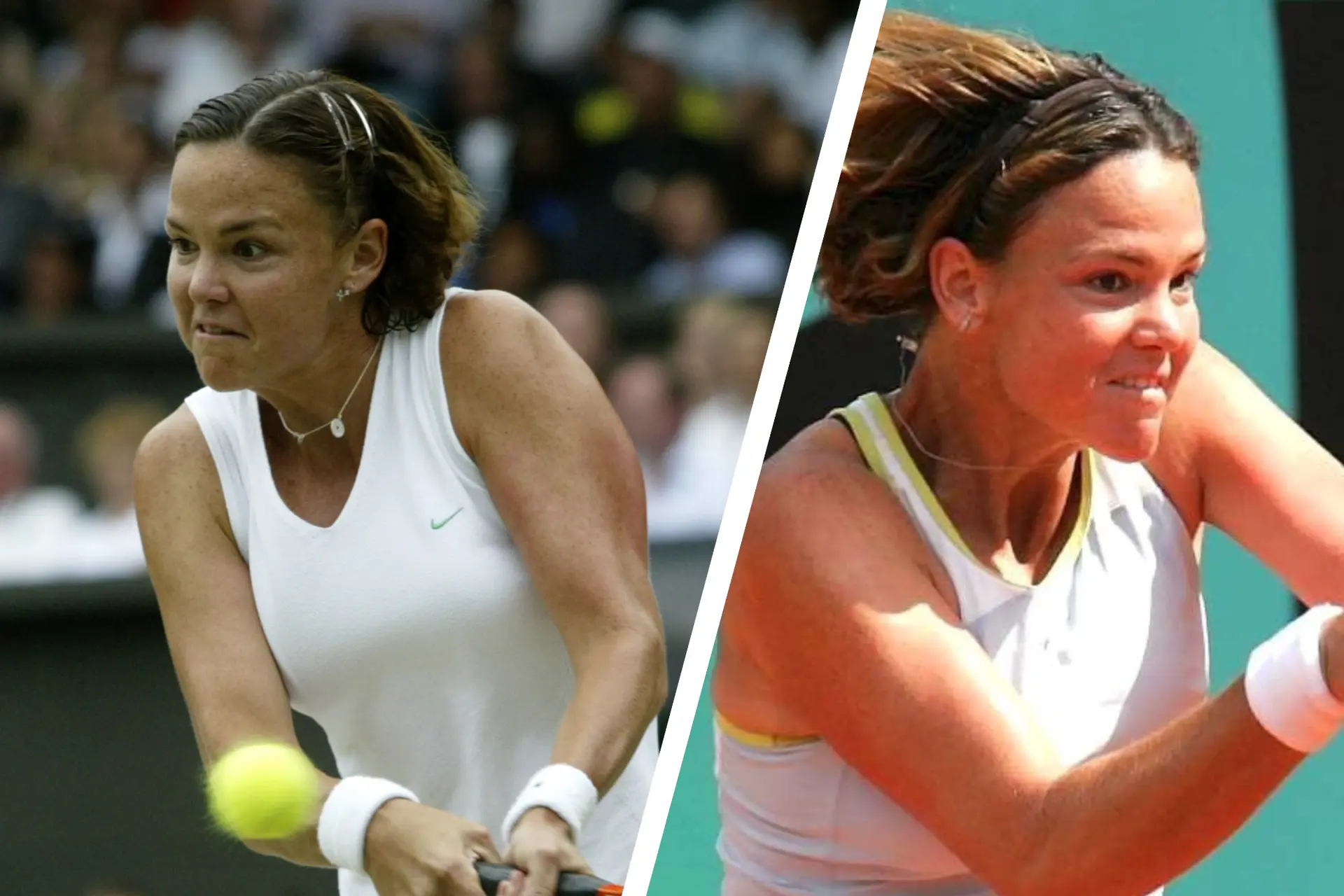
Sharapova warmed up for the Wimbledon Championships of 2004 by claiming glory at the grass-court predatory event the Birmingham Classic. Your writer saw her in person at the quarter-final stage of this event in the leafy environs of England's second city.
In an echo of Boris Becker’s Queens/Wimbledon double at the age of 17 in 1985. Sharapova followed up Birmingham success with a remarkable Wimbledon triumph just three weeks later. The victory was given added resonance as she destroyed the already great Serena Williams in the final. A 6-1,6-4 destruction of the two-time defending champion represented one of the great major final shocks.
The combination of winning the sport's biggest event and beating a sporting icon at such a tender age catapulted Sharapova into a different stratosphere of recognition. In her era, only Serena generated more column inches than the Russian.
She topped off a breakout year by defeating Serena again at the WTA Tour Finals. Sharapova also pocketed titles at the Korea Open and defended her Japan Open crown. Her season-end ranking was four.
2005-2007: Consolidated her top 5 position and wins a second major at US Open
The 2005 season witnessed Sharapova win three titles. This included a successful retention of her Birmingham Classic title. Then followed a semi-final loss, to Venus Williams, when defending her Wimbledon title. Sharapova experienced two short spells as world number one this term.
Sharapova's 2006 campaign was illuminated by her first 1000 success at the Indian Wells Open and a second Grand Slam triumph at the US Open.
The run to making the final in New York included a three set last four win over Frances's Amelie Mauresmo. In the showpiece match, Sharapova bested Justine Henin in straight sets.
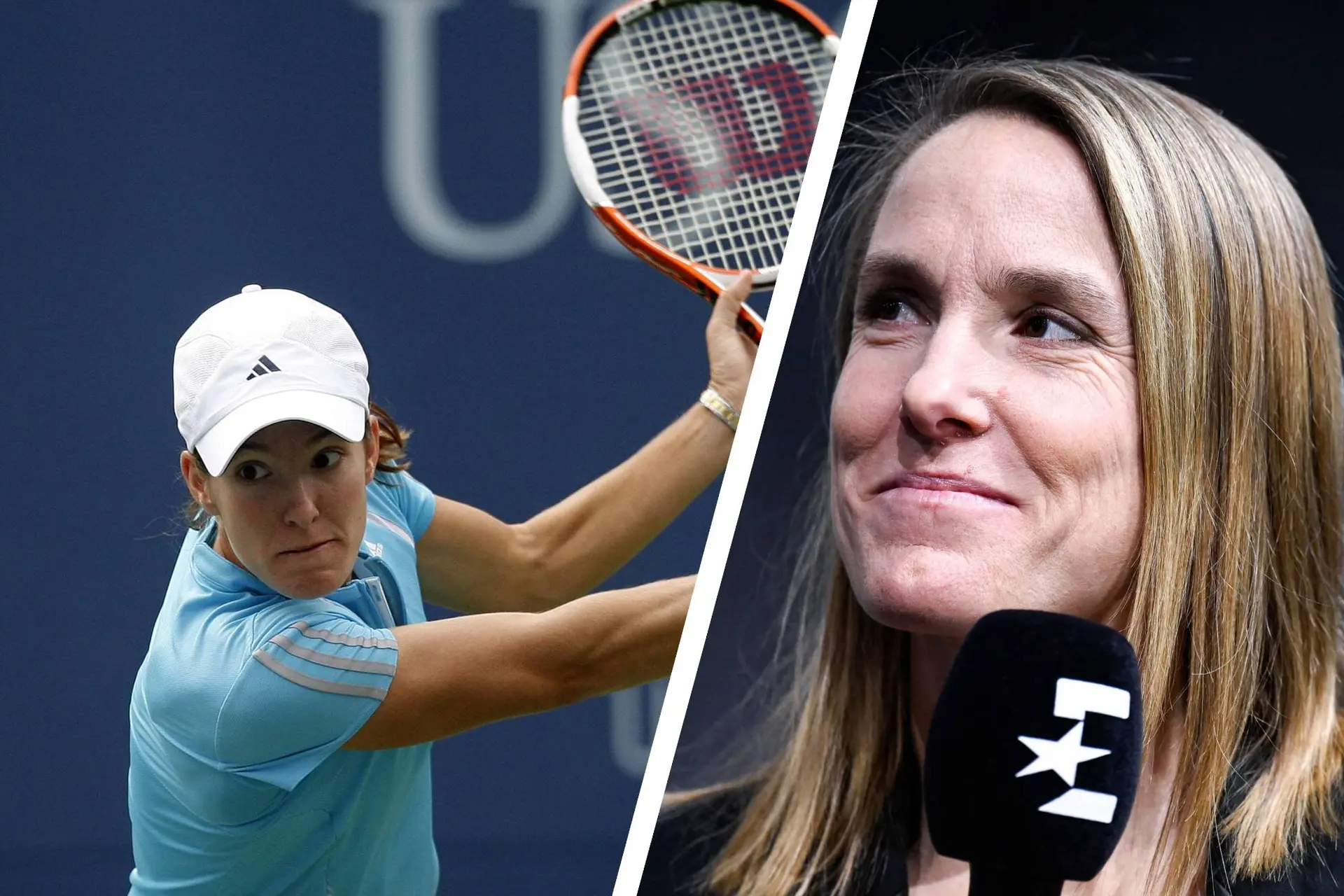
2006 was arguably the standout year for Sharapova. She enjoyed a career best 19 match winning streak at one stage. It was also one of three seasons where she finished second in the world rankings.
In the opening major of 2007, Sharapova was left rudderless when falling victim to a masterclass from Serena Williams. The 6-1,6-2 mauling began a one sided rivalry for the remainder of their careers. Their clashes laced with friction and Sharapova failing to try and better Serena at her own game. The Nyagan native failed to adapt and reverse the tide of a matchup that proved a little embarrassing for a player of Sharapova's stature.
One title at the Cincinnati 1000 was the only glory for Sharapova this year, who finished her campaign as runner-up at the WTA Finals.
Third Grand Slam title Down Under
In contrast to the previous year, Sharapova's year commenced with title glory at the 2008 Australian Open. A straight sets win over Serb Ana Ivanovic left Sharapova needing just the French Open for a Career Grand Slam.
Sharapova added to her CV in 2008 with trophy lifts in Doha and Amelia Island. After a shock loss to world number 154 Alla Kudryavtseva at Wimbledon, Sharapova eventually found out she had been playing with a rotator cuff tear since April. She didn't play again after Wimbledon this season.
Injuries continue to plague Sharapova
The 2009 season was a truncated affair for Sharapova. A solitary title materialised at the Pan Pacific Open in Japan. During the 2009 campaign, Sharapova embarked on shoulder surgery. This led to a remodelling of her service action. Her absence contributed to her falling out of the top 100.
In 2010, still adjusting to her new service motion, Sharapova picked up a couple of titles. Over these campaigns Sharapova managed only a single Grand Slam quarter-final.

Grand Slam final return at Wimbledon
Sharapova became a factor at the business end of Grand Slams again in 2011. A last four run at the French Open bucked the trend of early exits for her in the Paris major.
She then went one better the following month at Wimbledon. Sharapova reached her second SW19 final, but was soundly beaten by Czech Petra Kvitova.
Lifting the title at 1000 events in Rome and Cincinnati underlined Sharapova's return to the elite of women's tennis. The statuesque Russian finished the year at number four.
Career Grand Slam achieved at Roland Garros
In beating Sara Errani in straight sets at the 2012 French Open final, Sharapova became the 10th woman to complete a Career Grand Slam. Her 2012 season included a silver medal at the London Olympics. A heavy defeat to Serena Williams in the singles final had now become the norm when these two greats clashed.
Clay was now becoming her favoured surface. Sharapova's titles this season we're all on the dirt. A defence of her Rome crown and a triumph in Stuttgart supplemented her major triumph in the French capital.
Roland Garros final loss to Serena and Indian Wells glory and second title
The 2013 season peaked in March when Sharapova claimed a second Indian Wells Open title. The following month, she retained her title in Stuttgart. Then came a second successive French Open final.
Meeting her in the Roland Garros showpiece was old foe Serena Williams. The American prevailed yet again with a 6-4, 6-4 triumph. The pathway to a third consecutive French Open final was a tough one. Sharapova needed three sets in all matches from round four to claim glory. Victories over Sam Stosur, Garbine Muguruza and Eugenie Bouchard secured her berth in the final.
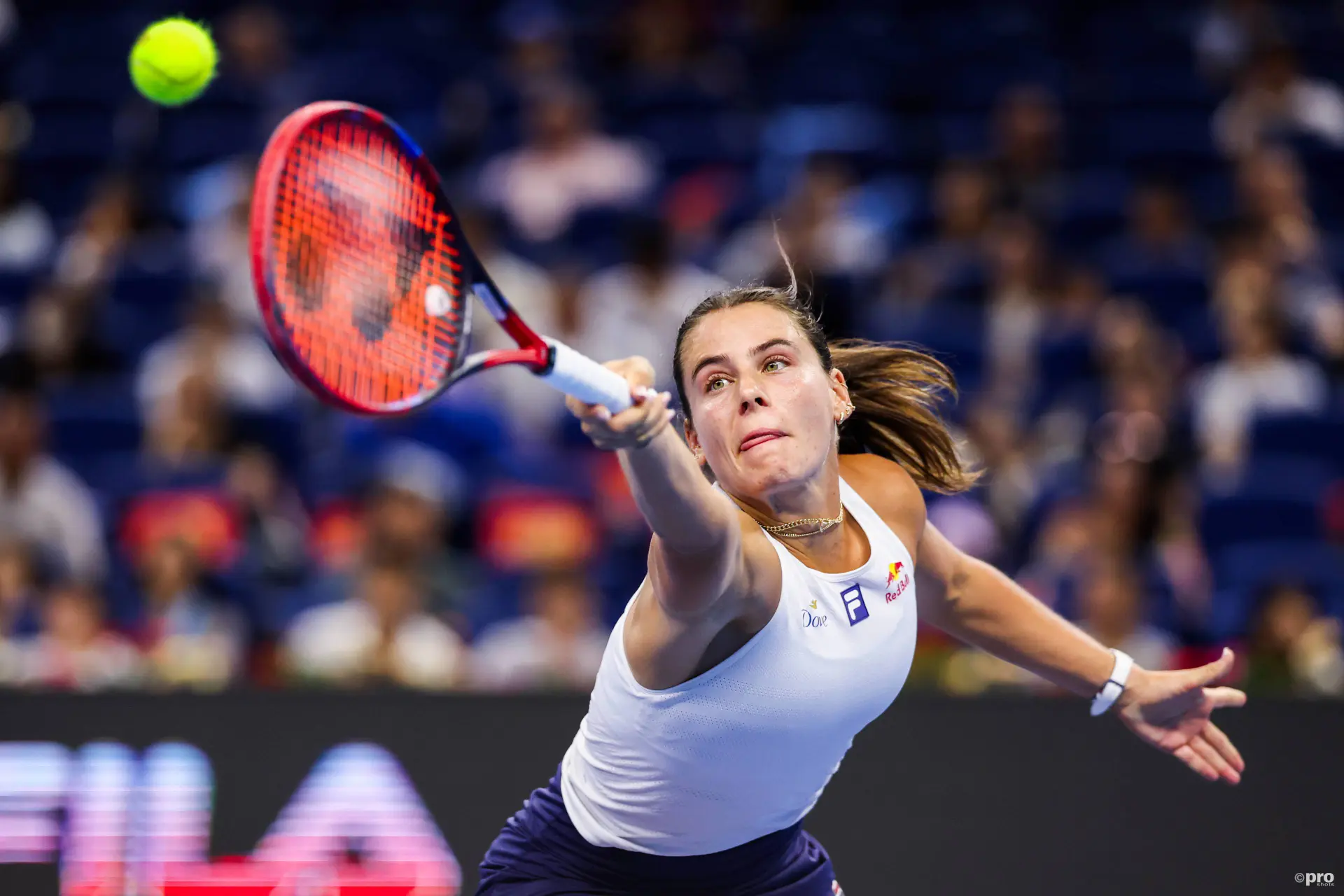
In the final, she faced Romanian counter-puncher Simona Halep. What followed was one of the high watermarks in the annals of classic Grand Slam singles finals. The match lasted just over three hours with Sharapova taking it 6-4 in the third set.
This major win represented one of four titles in the 2014 season. A first win at the Madrid Open 1000 was another notable success. And further glory came at Stuttgart and the China Open.
Last Grand Slam final and third title in Rome and failed drugs test casts a shadow
A run to the Australian Open final was a fine start to the 2015 season for Sharapova. Once again, Serena Williams proved too big a hurdle to overcome in the final.
Later in the season, Sharapova was victorious for a third time in Rome. The bulk of Sharapova's later career titles came on clay. She finished the season at world number two.
Not long after reaching the last eight of the Australian Open, the tennis world was rocked by the news that Sharapova had failed a drugs test for meldonium. The substance, which aids endurance, had only been added to the banned list on January 1st 2016.
After initially receiving a provisional ban, Sharapova was awarded a two-year ban on June 8th from competitive tennis. On appeal, this was reduced to 15 months. Her defence of not being aware of changes made to the banned list of substances carried no validity with the International Tennis Federation.
Her pathway back on to the circuit was partly facilitated by wildcards. Many players criticised these being given to a player banned for a breach of the doping violations.
Playing never recovers after the ban as injuries lead to 2020 retirement
Sharapova managed to win only one more additional title after her suspension. Victory at the 2017 Tianjin Open gave her a 36th career singles token from 59 finals. This included five Grand Slam wins in ten finals. She enjoyed 12 weeks as world number one.
Progress in the majors proved increasingly difficult. A 2018 last eight appearance at the French Open was the solitary occasion where Sharapova progressed further than the last 16 of a Slam after 2015.
Her final appearance in a major was at the 2020 Australian Open. Later in the year, Sharapova called time on her career.
Sharapova played a limited number of Fed Cup matches in her career, something which Svetlana Kuznetsova criticised at one stage. However, Sharapova played a key role in Russia's 2015 triumph, winning both of her singles rubbers against the Czech Republic.
Life outside tennis and legacy
Sharapova is one the most marketable athletes the world has ever known. It's arguable that within tennis the demand for her to endorse products is unsurpassed. In March 2006, Sharapova topped the Forbes List as the best remunerated female Athlete in the world.
Living in the USA since the age of seven, Sharapova has used her immense wealth to aid many charitable causes and has a foundation in her own name. A scholarship programme for those affected by the problems caused by the Chernobyl disaster in Belarus was instituted in 2004.

Maria Sharapova on the F1 grid.
Her first engagement to basketball player Sasha Vujacic was called off before the wedding. She then had a period dating fellow tennis star Grigor Dinitrov. They split in 2015. She met English businessman Alexander Gilkes in 2018 and they married in 2020. They had a son together in 2022.
Sharapova was inducted into the International Tennis Hall of Fame last year. Introducing her as an inductee was remarkably Serena Williams. It seems that after a one-sided rivalry, which occasionally turned fractious, a friendship had developed since both women retired.
The lack of dissent over her inclusion suggests the initial criticism over her doping violation suggests many are still able to acknowledge Sharapova as a bonafide great despite the benefits of a drug like meldonium. To be part of just ten to win a Career Grand Slam places Sharapova in esteemed company.

Samuel GillEditor-in-Chief
Samuel Gill is the Chief Content Officer (CCO) of TennisUpToDate.com, a role he has held since 2020. He is responsible for editorial governance across the platform, including setting content standards, overseeing accuracy and consistency, and guiding long-term editorial strategy. Since joining, he has contributed more than 10,000 articles and editorial pieces across the TennisUpToDate network, playing a central role in the daily operation and development of the site.
Based in Leicester, Samuel has a broad background in tennis media. In his current role, he works closely with editors and writers to ensure coverage meets clear journalistic standards, with particular attention to verification, consistency, and timely updates when new information becomes available.
claps 0visitors 0
Just In

Popular News
Latest Comments
- Does Sinner need that 4.5 mil? I doubt it. He can make that with three modelling gigs!😅🤣Rapunzel21-10-2026
- Did "People Magazine" purchase this website? This nonstop storyline is bullshit.
 mandoist21-10-2026
 - Listen... this is of no concern to anyone but these two. Deal with your own issues -- most of us have our own. Thanks, media, for these insignificant follow-ups which are meaningless.mandoist21-10-2026
- This is so very very sad, for all three of them. I truly thought they had an unbreakable bond, but life throws up so many differing challenges. Having your homeland suffering in such a terrible way, makes happiness lose out to guilt as well. Our thoughts are with them. X💔bjsexton20-10-2026
- I have lost all respect for Svitolina! Could she not have waited until he had played at the Paris Masters!!! She is selfish and don't give a damn about Gael. That is NOT how love is demonstrated Elina!!Rapunzel19-10-2026
- Perhaps convenient tennis tour sex is not a strong enough experience in which to base a marriage?mandoist19-10-2026
- Fight the Good Fight... Tennis (sports in general) need more Humans such as yourself.mandoist18-10-2026
- When is WTA going to mandate Genetic Testing (DNA) ???mandoist18-10-2026
- Hey, Dan... you just wake up from a coma? Regardless -- Thanks for the comedy this morning!mandoist18-10-2026
- Two Things: 1. Stop allowing these Spoiled Trust-Fund Elitists to behave badly. Your little hand-slaps do not deter them. 2. STOP the incessantly annoying "towel wiping" nonsense!!!!mandoist15-10-2026

Loading