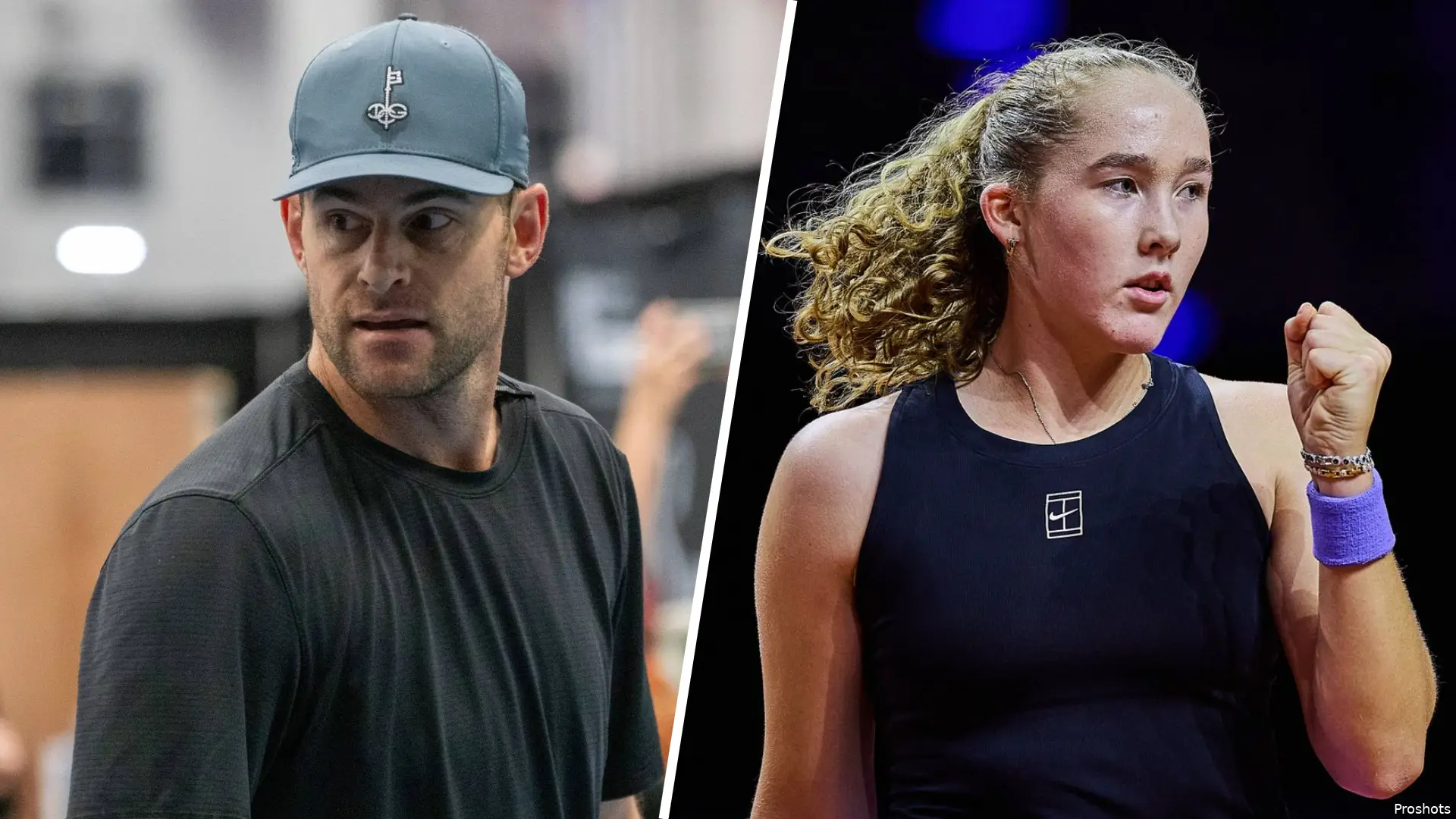
Andy Roddick has strongly defended Mirra Andreeva against criticism of her emotional reactions on court, arguing that her outbursts should not overshadow her achievements. The former world No. 1 believes the Russian teenager has the game and competitive mentality to reach the top of women’s tennis, despite the scrutiny surrounding her temperament.
Andreeva has enjoyed a breakthrough 2026 season, winning Roland Garros and adding titles in Adelaide and Linz. She has reached five finals this year, with her latest coming at the China Open, where she lost to Zheng Qinwen. Despite that defeat, she climbed to world No. 3 and secured qualification for the WTA Finals.
The Russian subsequently withdrew from the Wuhan Open, leaving the season-ending championships as her final tournament of 2026. While her immediate chances of reaching the top of the rankings have diminished, her achievements have established her as one of the most successful young players on tour. Roddick believes her results deserve more attention than the moments when she loses her temper.
Speaking on his Served podcast, the American questioned the narrative that Andreeva’s emotional reactions make her a less effective competitor. “I think people get lost in the weeds with, ‘She throws temper tantrums. Therefore, she’s not a great competitor.’ That’s horseshit," Roddick stated. "She shows up every week, travels to all ends of the earth and wins matches every week.”
Roddick believes Andreeva can become world No. 1
Roddick’s defence extends beyond her temperament. He believes Andreeva has the versatility to remain among the world’s best, particularly because she can find ways to win even when she is not playing at her highest level. That ability, in his view, is one of the clearest signs of her long-term potential.
“Even when the tournaments, when she’s not playing great, she finds a way to win matches and get to the quarter-semis-finals," Roddick claimed. "Like, she’s going to win tournaments in the future, not playing great, right?”

The former American player also highlighted the variety in Andreeva’s game, including her ability to change the spin on the ball and move forward. Those options allow her to adjust against different opponents rather than rely on a single pattern. At 19, she also has considerable time to develop the power and tactical consistency needed to challenge the biggest hitters on tour. Her French Open title has provided another reason for optimism.
“She has that ability to where she can play a bunch of different ways. She can take spin off the ball. She can try to come in," the former world No. 1 added. “Having won that major, whatever she does the rest of her career, she’s already proven she can win the big one. I think that’s really liberating for her.”
Roddick also does not expect Andreeva to struggle with the attention that comes with a Grand Slam breakthrough. He pointed to players who have found it difficult to maintain their level after winning a major, but believes the Russian is unlikely to follow that pattern. “I don’t think Andreeva operates that way. I think she just goes out and wins matches. I think she likes being on tour.”

His assessment of her potential is particularly striking. Roddick suggested that even a less successful period could leave Andreeva around eighth in the world, while her ceiling is the top ranking. It is a prediction rather than a guarantee, but it reflects his confidence in her ability to remain competitive over the long term.
“I think her off year is like eight in the world, you know, as it currently stands. And I think her upside is obviously number one in the world.”
Andreeva faces a difficult route to the top of the rankings
The immediate challenge is more complicated. Andreeva sits third in the Race to the WTA Finals, approximately 1,200 points behind Elena Rybakina. With the WTA Finals offering a maximum of 1,500 points to an undefeated champion, she remains mathematically in contention to finish the year at the top, but would need an exceptional run and favourable results elsewhere.
Read also
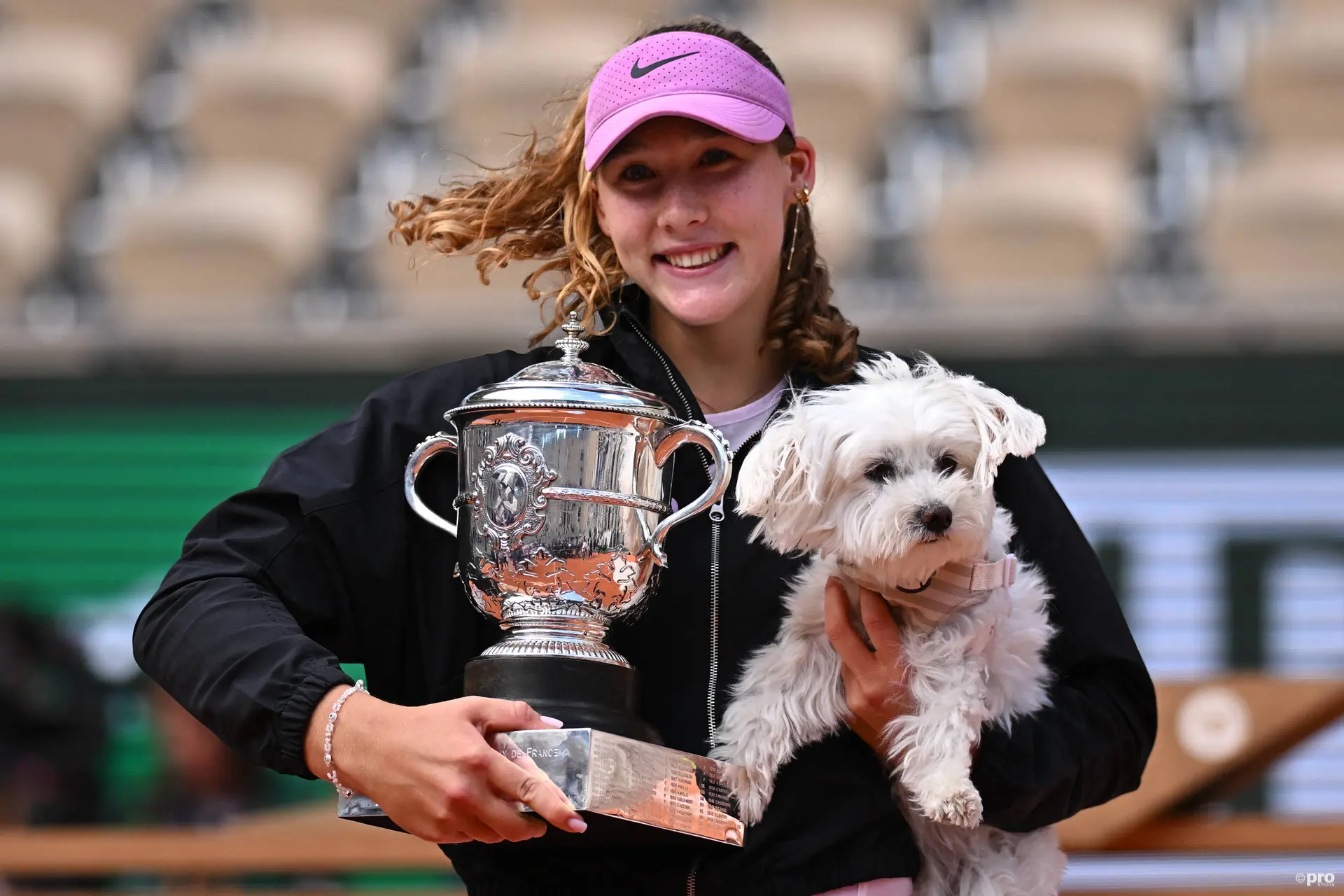
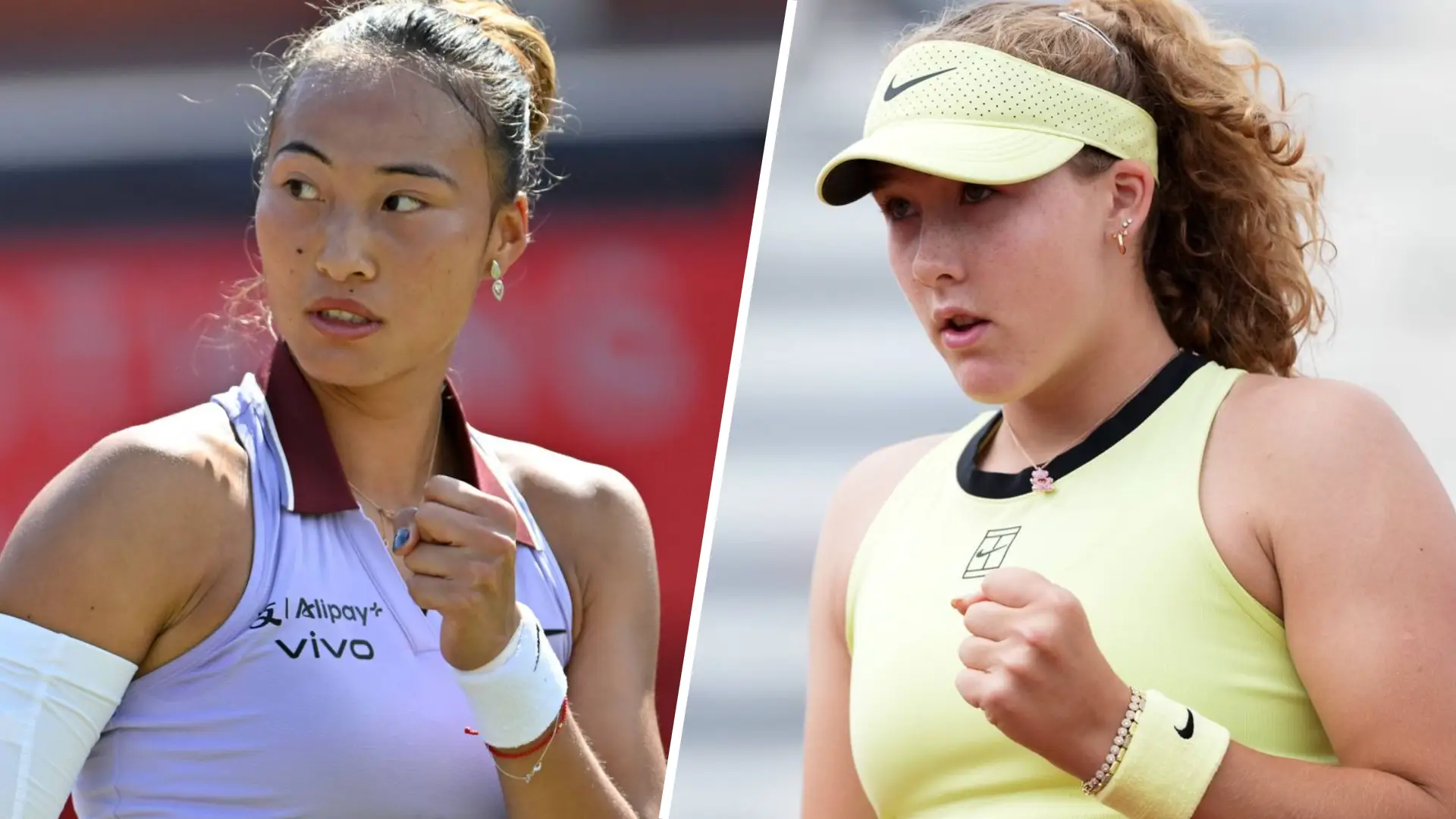
The Australian Open could offer a more significant opportunity in 2027. Rybakina will defend her title, while Aryna Sabalenka will protect the points she earned as runner-up. Andreeva, meanwhile, reached the fourth round in Melbourne in 2026, leaving her room to gain ground with a deeper run.
For now, Roddick’s argument is that Andreeva should be judged on her tennis rather than defined by her emotional reactions. Her results already place her among the leading players of her generation, and her first Grand Slam title has demonstrated that she can succeed under the greatest pressure. Whether she eventually becomes world No. 1 remains uncertain, but Roddick believes her potential makes that ambition realistic.

Cristhián AvilaTennis Journalist
Cristhián Ávila is a tennis journalist based in Santiago, Chile, and has been part of the TennisUpToDate team since early 2023. He covers the ATP and WTA Tours as well as all four Grand Slams, producing breaking news, match reports, analysis, and regular liveblogs from major tournaments.
His reporting combines statistical analysis with clear explanation, helping readers understand tactical developments, player form, and broader storylines across the tour. Working fluently in both Spanish and English, Cristhián collaborates with an international editorial team and contributes to comprehensive global coverage. As part of his work, he has conducted interviews and media interactions with leading figures in the sport, including Caroline Wozniacki and John McEnroe.
In his journalism, Cristhián places strong emphasis on careful sourcing, editorial accuracy, and updating articles promptly when new, verified information becomes available. His coverage is grounded in research, context, and direct engagement with professional tennis.
claps 0visitors 0
Just In

Popular News
Latest Comments
- Two Things: 1. Stop allowing these Spoiled Trust-Fund Elitists to behave badly. Your little hand-slaps do not deter them. 2. STOP the incessantly annoying "towel wiping" nonsense!!!!
 mandoist15-10-2026
 - A healthy Qinwen may be hard to stop next season. She was already scaring her opponents before her medical leave(s). Unfortunately, Zheng insisted on singing again. On the positive side -- Mirra did not sing!! ;~}mandoist11-10-2026
- Where is it written that athletes, entertainers... People in general... are mandated to keep looking at -- or even using [anti]Social Media? Public & private figures consistently complain and reveal their concerns about negativity and violence thrown at them -- yet they insist on participating. Avoid it, don't use it, don't read it. It's okay to occasionally look up at the World instead beating your eyes & thumbs to death on The Inventions out there.mandoist11-10-2026
- great articlestennisseserver07-10-2026
- Medvedev was leading Djokovic 7-5, 3-5 when an attempted return..' NO you ignorants, Djokovic was leading .weiss05-10-2026
- No more bullshit "Wildcards" to these two. Qualify like everyone else -- there will be cameras there, too. Time to scream... WTF ????!!!!mandoist29-09-2026
- Let's not BS the general public -- Sabalenka started showing cracks in her game last season. Her losses and near-losses started at about the same time she began being distracted by Fame (constant Selfies, making TV commercials, magazine shoots, endless Social Media nonsense, etc., etc.) One would think even Saba could recognize the parallels with others who failed before her -- Raducanu, Giorgi, Bouchard to name a few.mandoist25-09-2026
- Gross!! Hey Raducanu, Giorgi, and Bouchard -- reserve a seat at your Social Media Selfie table for Saba + Naomi. They're heading in your direction soon enough.mandoist24-09-2026
- And then these same players will complain about how lengthy their season’s were and need more time-off. I’m all for more tennis but the amount of tennis we get now is actually kind of crazy! We all need a break, especially the players.DaveyWavey23-09-2026
- You should do a comparison article for "different kinds of justice" the courts decide for tennis players. I can think of at least three players who received very small bans of a few months, however Tara Moore has been fighting for her literal survival the past few years. It seems odd considering she is not a "name" player, unlike the other cases.DaveyWavey22-09-2026

Loading