"The biomechanics and my anatomy is unique": Francesca Jones breaks tennis norms despite a rare genetic condition
WTA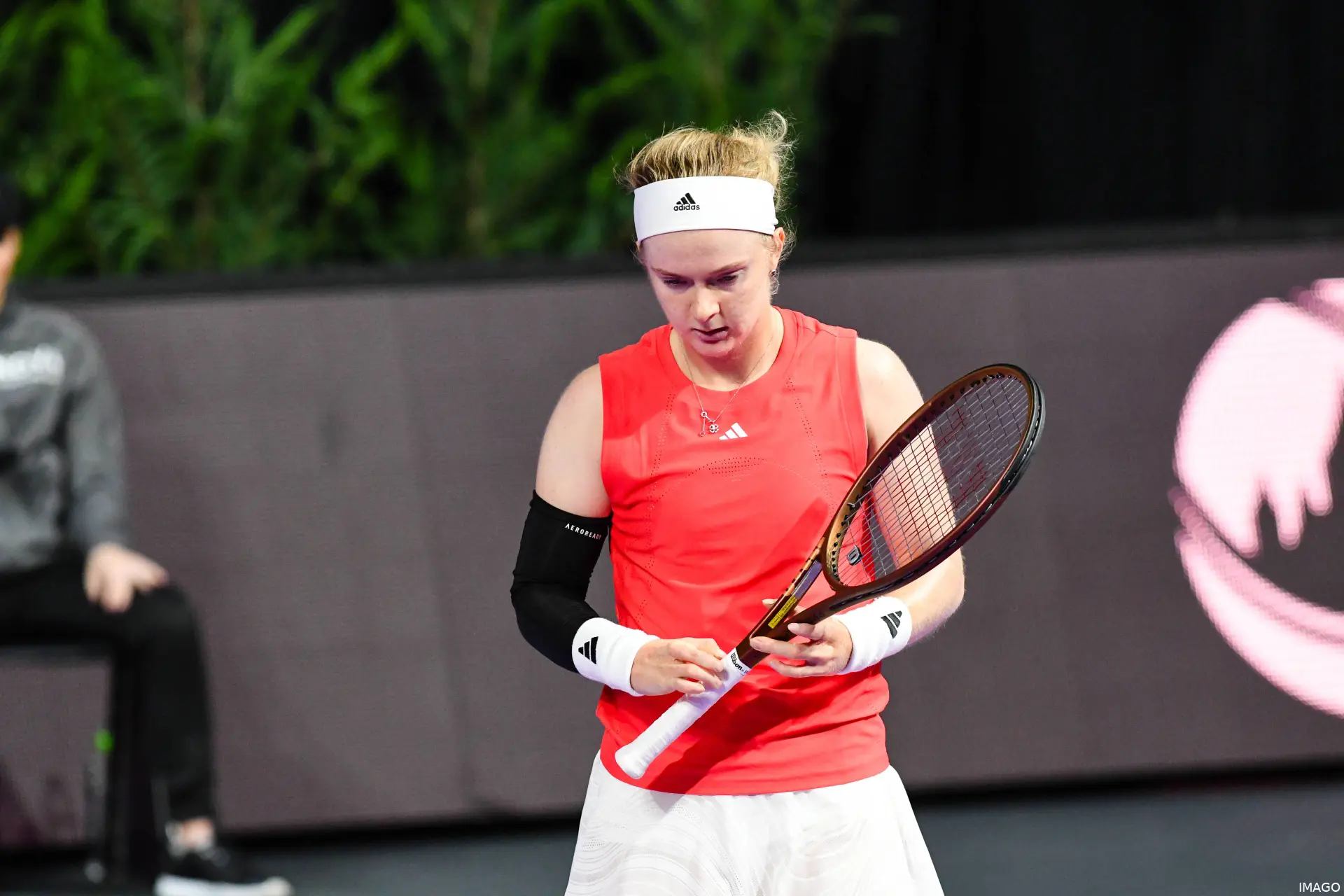
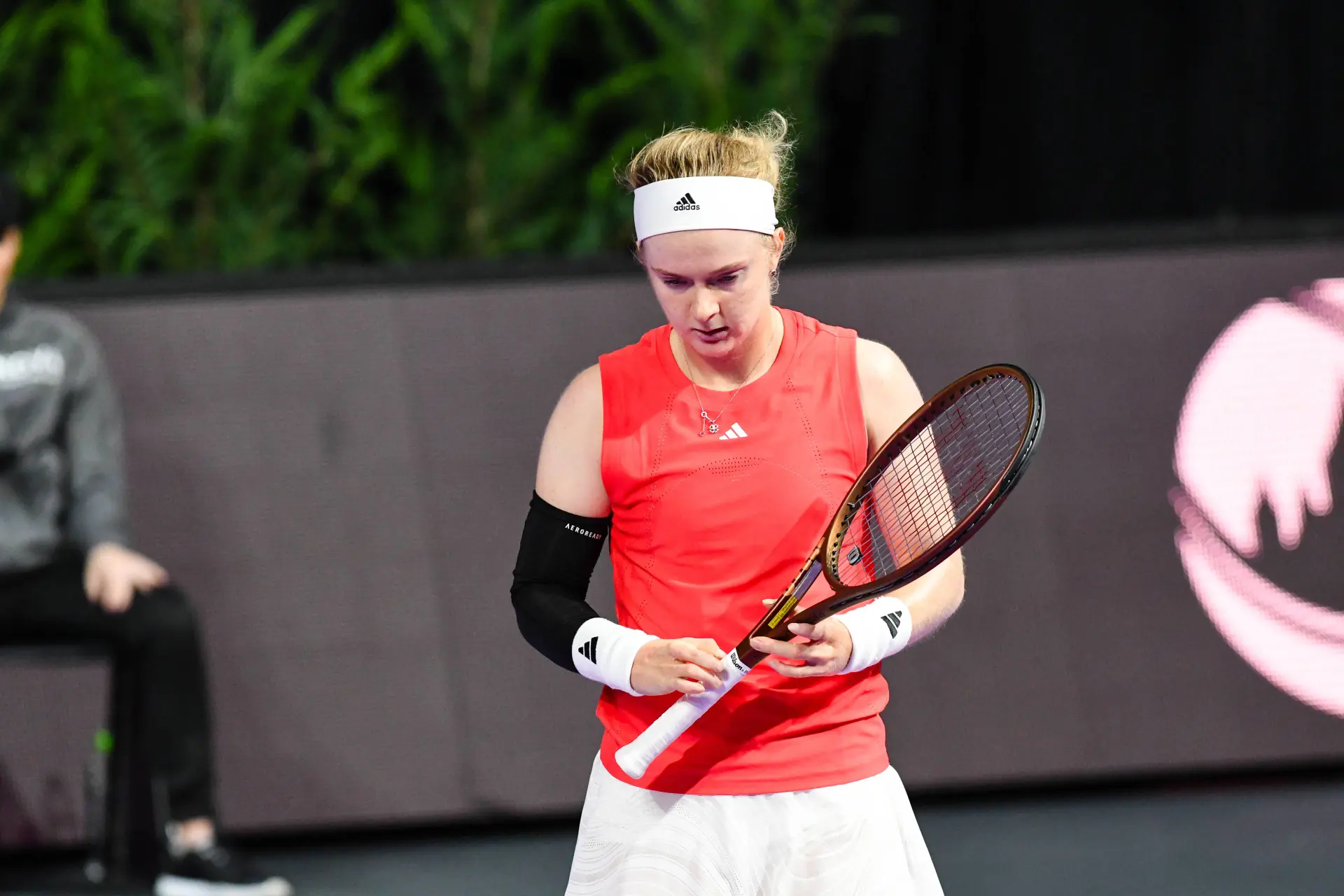
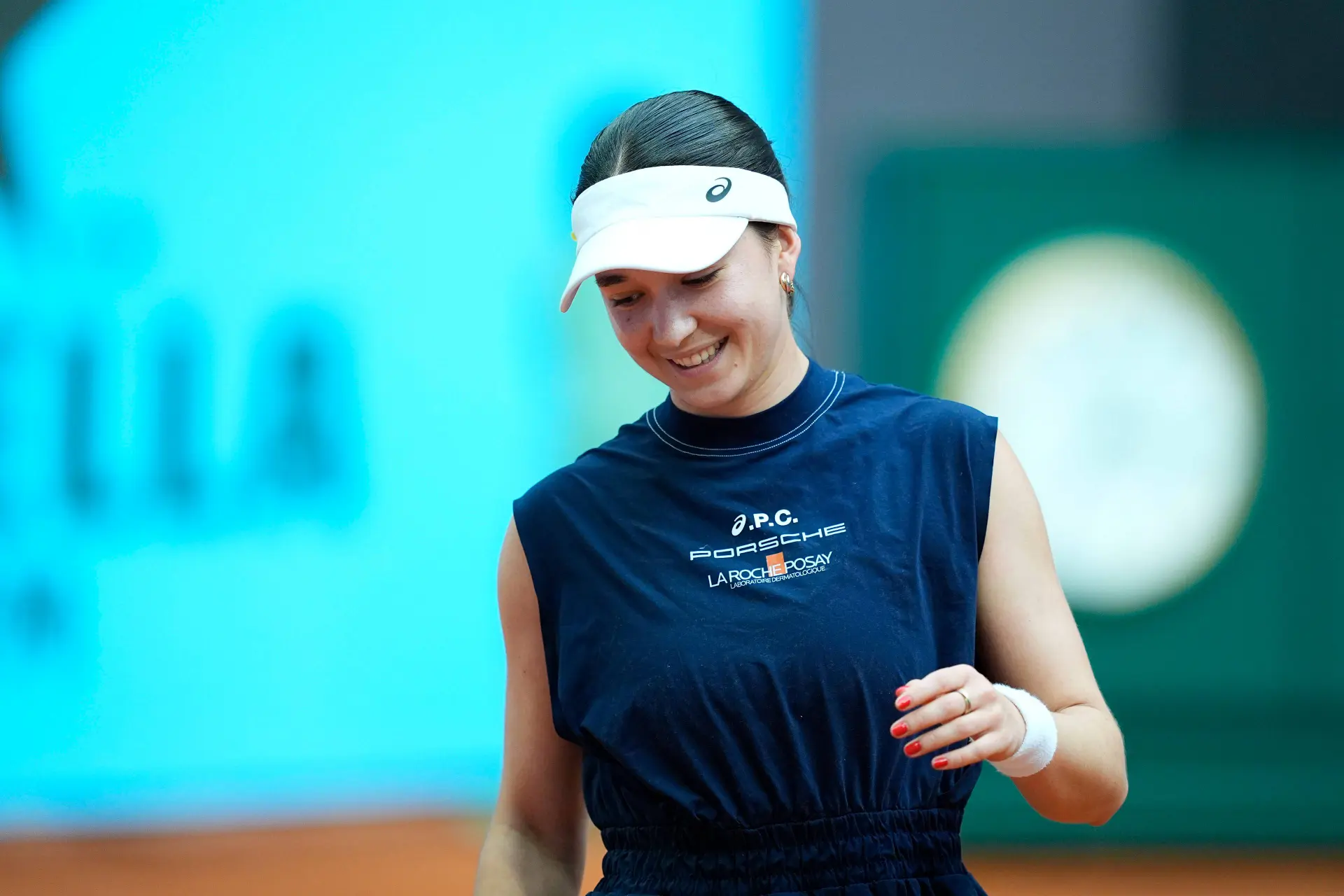
Francesca Jones recently gave a personal interview on Tennis Insider Club – Caroline Garcia’s podcast – openly discussing her rare genetic condition: Ectrodactyly Ectodermal Dysplasia. The Brit has spent her entire life answering questions about her limitations, but she is currently too busy breaking through them to notice. The 25-year-old player, currently sitting at a career-high World No. 73, has forged a path in professional tennis that medical science suggested was impossible.
Born with Ectrodactyly Ectodermal Dysplasia (EEC), Jones arrived in the world with a thumb and three fingers on each hand, and only seven toes in total. Despite doctors once predicting she would never play professional sports, she has firmly established herself as the British No. 3, trailing only Emma Raducanu and Sonay Kartal. It is a physical reality that demands constant management, as she bluntly admits that "the biomechanics and my anatomy is unique," forcing her to adapt in ways her competitors never have to consider.
Her rise to the top 100 has been marked by a medical history that includes numerous surgeries and a unique isolation. Unlike her peers, who can rely on centuries of established sports science, Jones has had to operate in the dark, confessing that "there is not a formula or a direct answer for what we went through." While she has enjoyed a stellar season—claiming titles at W75 events in Vacaria and Prague, and securing WTA 125 victories in Contrexéville and Palermo—the mental toll of navigating this biological puzzle without a textbook was often overwhelming.
The journey was defined by frustration because "no one could really, truly solve that for me." She described seeing over seven specialists—including top neurosurgeons—for a single nerve injury that no one could decipher. This lack of medical precedence forced Jones to become the CEO of her own body, questioning everything and trusting almost no one until they could prove their worth. Her approach has been defined by a refusal to accept standard answers for non-standard problems, often wondering, "Was science the problem?".
Read also
Navigating a career without a map
The psychological weight of navigating professional sports with EEC syndrome is difficult to overstate. Jones revealed that for years, her primary emotion was frustration, born from the realization that even the best doctors in the world were guessing when it came to her biomechanics.
She noted that even taking a few days off can cause her hand to cramp because her grip requires such specific, consistent maintenance. When Garcia asked about the physical difficulties, Jones provided a stark assessment of what it means to be a pioneer in a field that relies heavily on data and precedent.
"The difficulties have been... how can I describe it? The challenges we faced physically have probably not been seen before. And so there is not a formula or a direct answer for what we went through," Jones explained. "Physically, it was a huge thing... I had a nerve injury that not the best neurosurgeon, the best neurologist... I saw like seven people. I had probably over 10 MRIs for this one injury. No one could understand it... So trying to navigate the challenges was at times overwhelming. I questioned whether I was the problem. I questioned, 'Was science the problem?'".
Rejecting industry trends for raw strength
To survive on the WTA Tour, Jones had to reject the modern "fluff" of tennis training. She expressed deep skepticism regarding "Instagram-friendly" fitness trends, preferring to focus on raw strength and weightlifting to compensate for her physical differences. This skepticism extends to her hiring process; she is known for "interrogating" potential team members, demanding they explain why an exercise works rather than just following orders. Jones realized early on that to survive the increasing physicality and ball speed of the modern game, she couldn't afford to waste time on exercises that didn't offer a direct, brutal return on investment.
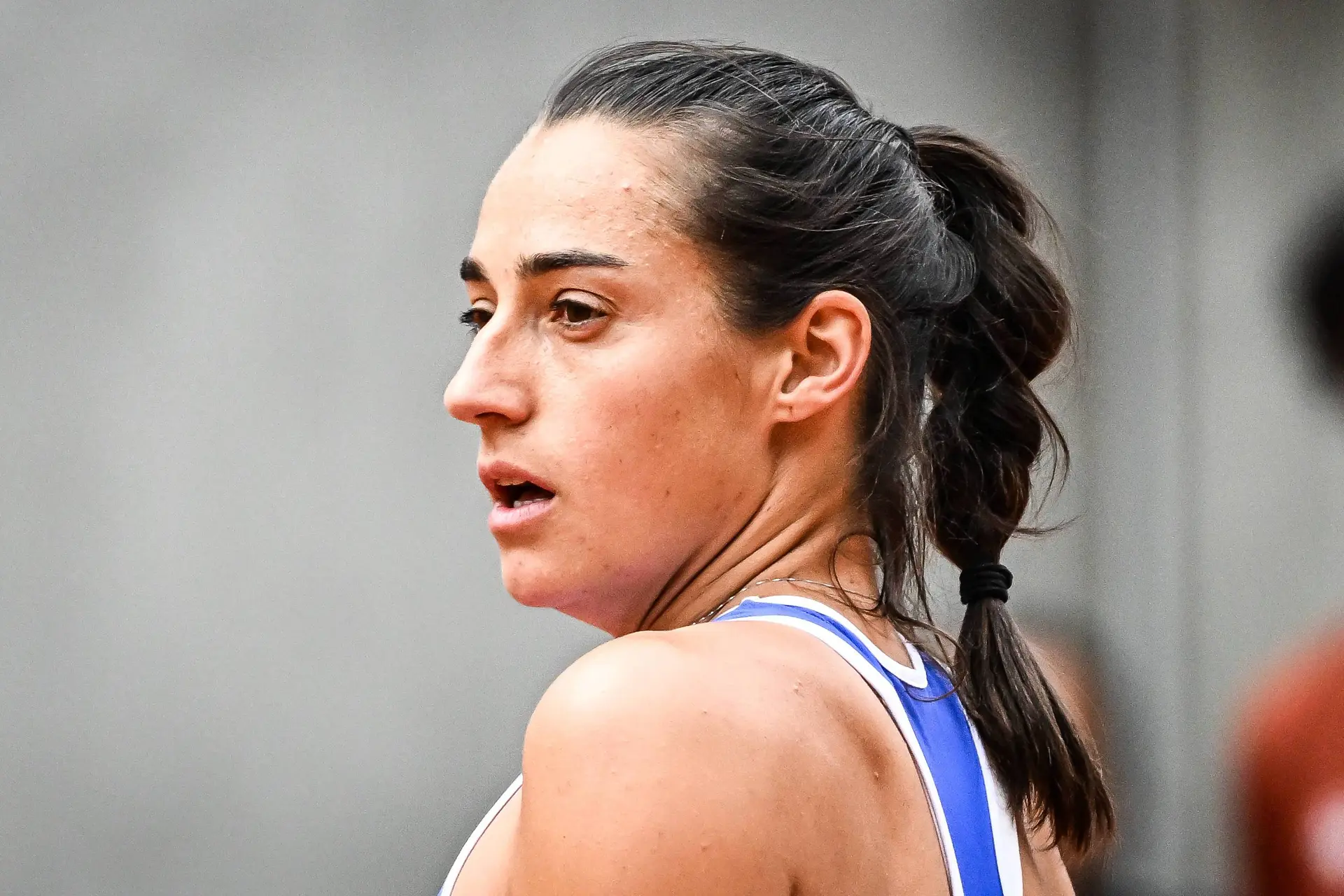
"There is so much bullshit on court. There are so many fitness coaches that do all of these funky exercises because it looks like tennis... But that's not making me a better athlete. What's making me a better athlete is lifting weights," she told Garcia. "I know that they're not going to try this funky stuff with me. And you can't get past me with that stuff anyway, because I'm a pain in the ass to work with. If you can't answer my questions, you're out".
Despite the hurdles, Jones’s "do or die" mentality has paid off. She admitted to Garcia that she was close to retiring at the end of last year, setting a strict ultimatum for herself to reach the top 100 or quit. That sheer willpower has propelled her forward. "I had zero tolerance. I couldn't tolerate the physical demands of the sport," she said. "I was winning matches because of pure mentality and because I'm so stubborn. Whatever is being thrown at me, I'm going to find a way. And if I die on the court, I'll die on the court".

Cristhián AvilaTennis Journalist
Cristhián Ávila is a tennis journalist based in Santiago, Chile, and has been part of the TennisUpToDate team since early 2023. He covers the ATP and WTA Tours as well as all four Grand Slams, producing breaking news, match reports, analysis, and regular liveblogs from major tournaments.
His reporting combines statistical analysis with clear explanation, helping readers understand tactical developments, player form, and broader storylines across the tour. Working fluently in both Spanish and English, Cristhián collaborates with an international editorial team and contributes to comprehensive global coverage. As part of his work, he has conducted interviews and media interactions with leading figures in the sport, including Caroline Wozniacki and John McEnroe.
In his journalism, Cristhián places strong emphasis on careful sourcing, editorial accuracy, and updating articles promptly when new, verified information becomes available. His coverage is grounded in research, context, and direct engagement with professional tennis.
claps 2visitors 1
Just In


Popular News


Latest Comments
- Does Sinner need that 4.5 mil? I doubt it. He can make that with three modelling gigs!😅🤣Rapunzel21-10-2026
- Did "People Magazine" purchase this website? This nonstop storyline is bullshit.
 mandoist21-10-2026
 - Listen... this is of no concern to anyone but these two. Deal with your own issues -- most of us have our own. Thanks, media, for these insignificant follow-ups which are meaningless.mandoist21-10-2026
- This is so very very sad, for all three of them. I truly thought they had an unbreakable bond, but life throws up so many differing challenges. Having your homeland suffering in such a terrible way, makes happiness lose out to guilt as well. Our thoughts are with them. X💔bjsexton20-10-2026
- I have lost all respect for Svitolina! Could she not have waited until he had played at the Paris Masters!!! She is selfish and don't give a damn about Gael. That is NOT how love is demonstrated Elina!!Rapunzel19-10-2026
- Perhaps convenient tennis tour sex is not a strong enough experience in which to base a marriage?mandoist19-10-2026
- Fight the Good Fight... Tennis (sports in general) need more Humans such as yourself.mandoist18-10-2026
- When is WTA going to mandate Genetic Testing (DNA) ???mandoist18-10-2026
- Hey, Dan... you just wake up from a coma? Regardless -- Thanks for the comedy this morning!mandoist18-10-2026
- Two Things: 1. Stop allowing these Spoiled Trust-Fund Elitists to behave badly. Your little hand-slaps do not deter them. 2. STOP the incessantly annoying "towel wiping" nonsense!!!!mandoist15-10-2026

Loading