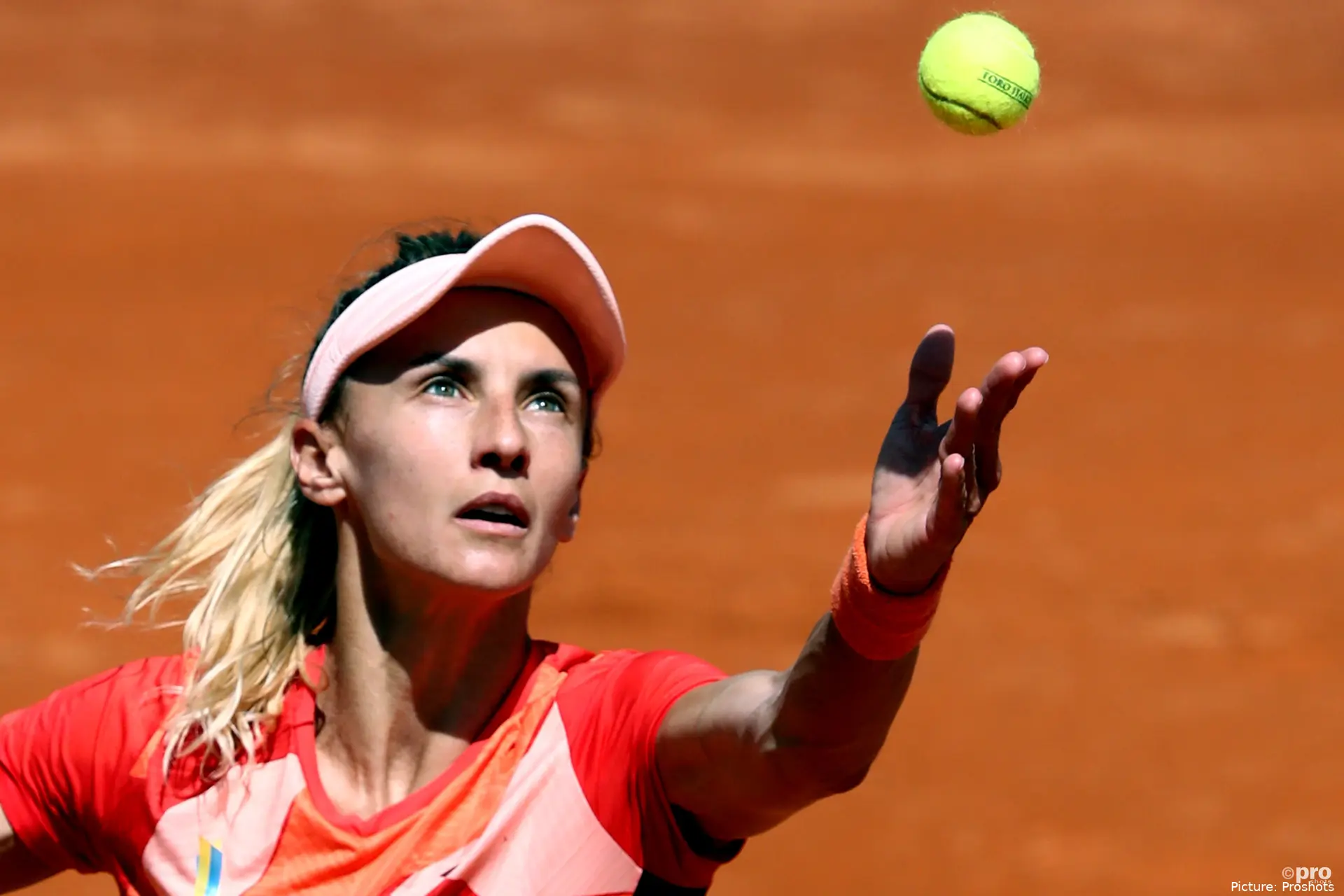
The fallout from Lesia Tsurenko’s dismissed lawsuit against the WTA has taken a sharper turn, with her coach Nikita Vlasov publicly outlining a series of allegations regarding the organisation’s handling of the Russia-Ukraine conflict. Speaking to L'Équipe, Vlasov framed the issue not as an isolated dispute, but as an ongoing structural failure to protect Ukrainian players competing on tour.
Tsurenko, a former world No.23 and four-time WTA title winner, filed legal action citing “moral abuse” following a panic attack ahead of her scheduled match against Aryna Sabalenka at Indian Wells in 2023. The Ukrainian, who reached a career-high ranking in 2019 and made a US Open quarter-final in 2018, argued that her condition stemmed from a conversation with then-WTA CEO Steve Simon.
The case was dismissed by a US federal judge, who ruled that the WTA was not legally obligated to ban Russian and Belarusian players from competition. While the decision closes the legal pathway, it leaves unresolved the broader tensions surrounding the tour’s neutrality policy introduced after Russia’s invasion of Ukraine.
Tsurenko has not competed regularly on Tour since the 2024 Billie Jean King Cup Finals, where she represented Ukraine. Now outside the top 100 following extended inactivity, her situation remains emblematic of the wider strain experienced by Ukrainian players navigating the professional circuit under ongoing geopolitical pressure.
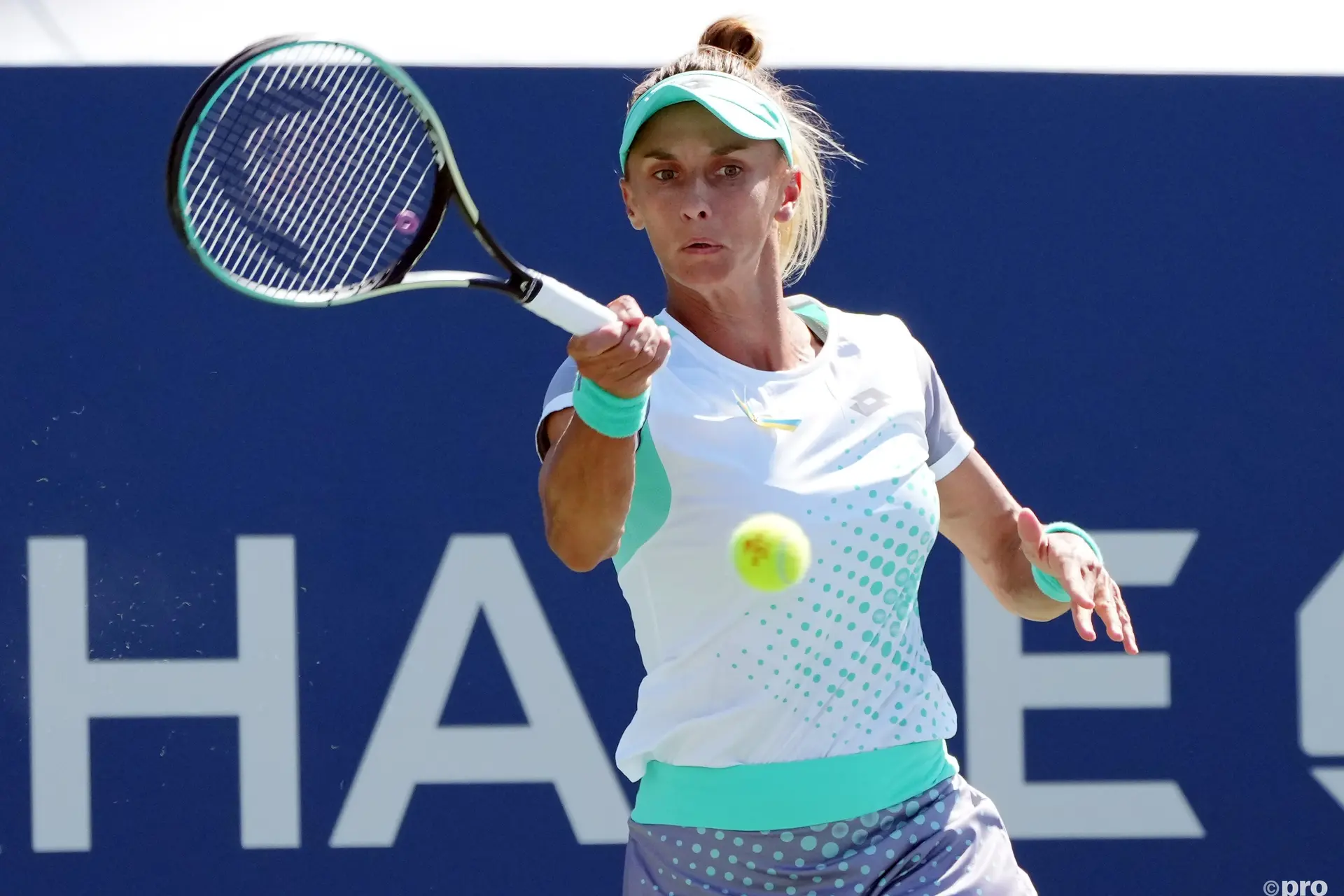
“The WTA does nothing”: coach outlines internal tensions
Vlasov’s intervention centres on what he describes as a disconnect between the WTA’s public stance and its internal response. He claims that leadership has long been aware of specific concerns raised by Ukrainian players but has not acted upon them in a meaningful way.
“WTA chief Steve Simon knows the names of Russian and Belarusian tennis players who support the invasion in my country, and they do nothing," Vlasov said to L'Equipe. "They just repeat: ‘The war in your country, it’s really horrible’.”
His remarks suggest frustration with what he perceives as symbolic acknowledgment rather than concrete action. The criticism targets the WTA’s broader framework, which has prioritised non-discrimination principles while allowing Russian and Belarusian athletes to continue competing under neutral status. “But that’s not enough. Those people want us dead! They want my mother, my father, my brothers and my children to die!”
Since early 2022, tennis has operated under this neutrality-based model, a position consistently defended by governing bodies. However, players from Ukraine, including Tsurenko, have repeatedly questioned whether that approach adequately reflects the realities they face, both professionally and personally.
Locker room dynamics and player safety concerns
A central element of Vlasov’s comments relates to day-to-day conditions on tour, particularly the shared environment within locker rooms. He frames this not as a political disagreement, but as an issue affecting player wellbeing and psychological safety.v“We share locker rooms with people who want our families dead and our people exterminated. And the WTA does nothing about it.”
These concerns echo Tsurenko’s own account of her experience in 2023, when she described the tour environment as a “terrifying and alien place” following her exchange with Simon. That episode led directly to her withdrawal from Indian Wells, where Sabalenka advanced via walkover.
The WTA has maintained that it has taken “numerous steps” to support Ukrainian players while upholding its founding principles of equality and non-discrimination. In statements to The Associated Press, the organisation reiterated that tournament entry remains based solely on merit, without nationality-based exclusion.
However, Vlasov’s account indicates that, within the Ukrainian camp, those measures are viewed as insufficient in addressing concerns related to communication, accountability, and player protection.
Legal closure, unresolved tensions
The court’s decision clarified that no enforceable obligation existed for the WTA to exclude players based on nationality, even if expectations had been created through prior discussions. While legally definitive, the ruling does little to resolve the broader dispute between institutional policy and individual experience.
Tsurenko has previously stated that no WTA official responded to her private complaint at the time, interpreting the silence as a failure to engage with her situation during a period of acute distress. “Even in my worst nightmares, I couldn’t imagine that the professional tour, which I considered my home, would become a terrifying and alien place, where the [former] CEO consciously committed an act of moral abuse against me.”

“This indicates that the WTA simply tried to hide this incident, which reflects a clear lack of ethics from our CEO. Such disregard for the situation I found myself in did confuse me and, in a way, terrified me. I was hoping that some member would initiate an official investigation, because the fact that the visible head of such a company would allow himself to mentally mistreat a person who is suffering from a war is unprecedented.”

Cristhián AvilaTennis Journalist
Cristhián Ávila is a tennis journalist based in Santiago, Chile, and has been part of the TennisUpToDate team since early 2023. He covers the ATP and WTA Tours as well as all four Grand Slams, producing breaking news, match reports, analysis, and regular liveblogs from major tournaments.
His reporting combines statistical analysis with clear explanation, helping readers understand tactical developments, player form, and broader storylines across the tour. Working fluently in both Spanish and English, Cristhián collaborates with an international editorial team and contributes to comprehensive global coverage. As part of his work, he has conducted interviews and media interactions with leading figures in the sport, including Caroline Wozniacki and John McEnroe.
In his journalism, Cristhián places strong emphasis on careful sourcing, editorial accuracy, and updating articles promptly when new, verified information becomes available. His coverage is grounded in research, context, and direct engagement with professional tennis.
claps 1visitors 1
Just In

Popular News

Latest Comments
- Does Sinner need that 4.5 mil? I doubt it. He can make that with three modelling gigs!😅🤣Rapunzel21-10-2026
- Did "People Magazine" purchase this website? This nonstop storyline is bullshit.
 mandoist21-10-2026
 - Listen... this is of no concern to anyone but these two. Deal with your own issues -- most of us have our own. Thanks, media, for these insignificant follow-ups which are meaningless.mandoist21-10-2026
- This is so very very sad, for all three of them. I truly thought they had an unbreakable bond, but life throws up so many differing challenges. Having your homeland suffering in such a terrible way, makes happiness lose out to guilt as well. Our thoughts are with them. X💔bjsexton20-10-2026
- I have lost all respect for Svitolina! Could she not have waited until he had played at the Paris Masters!!! She is selfish and don't give a damn about Gael. That is NOT how love is demonstrated Elina!!Rapunzel19-10-2026
- Perhaps convenient tennis tour sex is not a strong enough experience in which to base a marriage?mandoist19-10-2026
- Fight the Good Fight... Tennis (sports in general) need more Humans such as yourself.mandoist18-10-2026
- When is WTA going to mandate Genetic Testing (DNA) ???mandoist18-10-2026
- Hey, Dan... you just wake up from a coma? Regardless -- Thanks for the comedy this morning!mandoist18-10-2026
- Two Things: 1. Stop allowing these Spoiled Trust-Fund Elitists to behave badly. Your little hand-slaps do not deter them. 2. STOP the incessantly annoying "towel wiping" nonsense!!!!mandoist15-10-2026

Loading