"Female players are selling out stadiums more than some of the guys getting paid way more": Coco Gauff calls out gender pay gap hypocrisy
WTA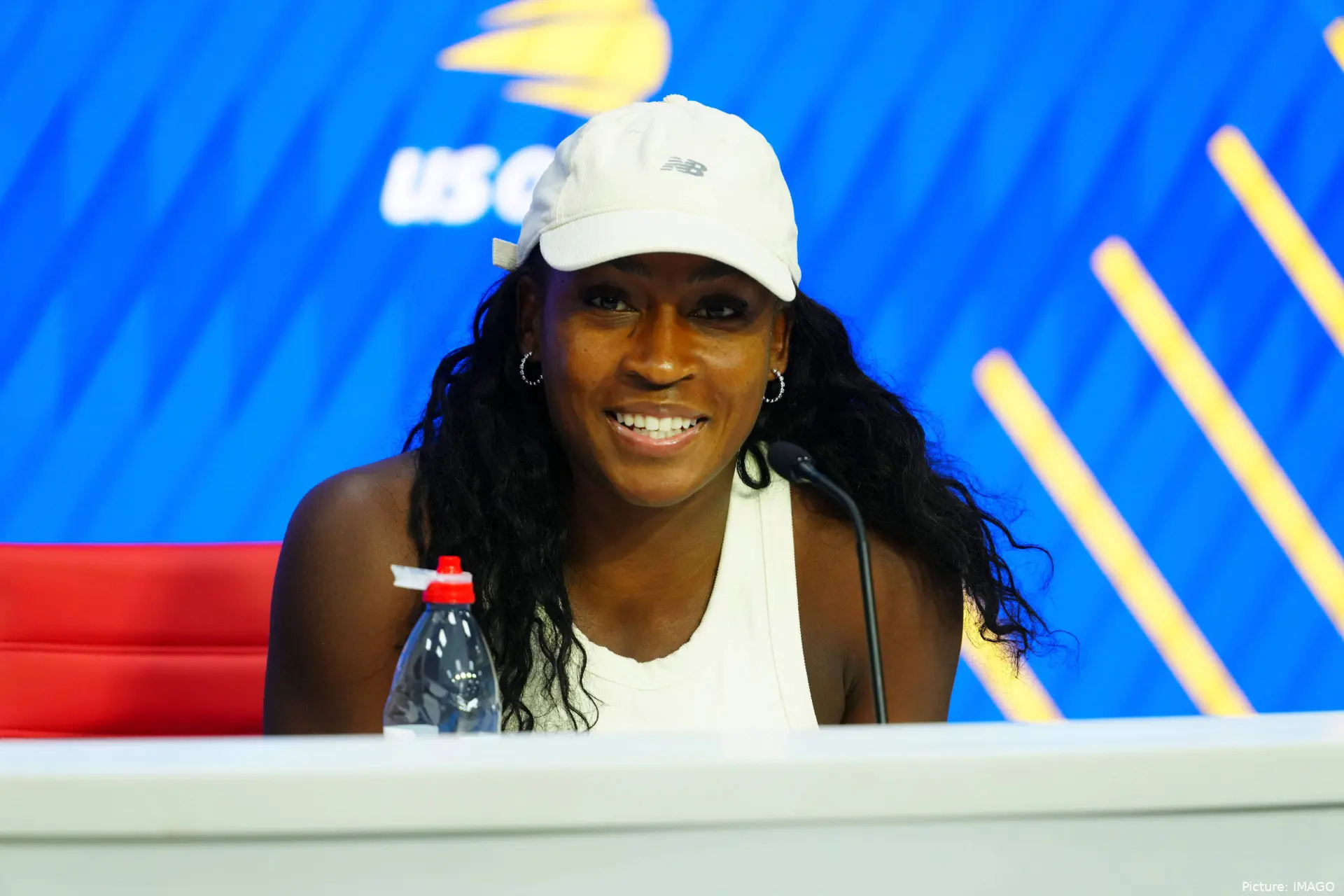
Coco Gauff addressed the pay gap between men and women on the ATP and WTA Tour and called for combined tournaments with equal pay. The American recently appeared in the prestigious Forbes 30 Under 30 ranking as a benchmark in sport and fashion, in addition to standing out for positioning herself as the world’s highest paid female athlete.
The 2-time Grand Slam champion is already catapulted as No. 11 among players with the most prize money won in history with nearly 30 million dollars, and with a long career ahead, it would not be a surprise to see her soon within the top spots.
However, her earnings are even higher off the court. In 2025 alone she took home a total close to 25 million off the court, and she has become an investor in different projects – the most talked about probably being her investment in the women's basketball league Unrivaled.
Fresh off her second Grand Slam title—this time in Roland-Garros—the 21-year-old reflects on how far she has come and how far she still believes she can go. Her confidence is grounded in experience rather than expectation, as she explains, “
On court, I feel so far away from my potential,” she said. “If you asked me that before, I used to think, 'Oh, it's happening now, I got to capitalize on the moment.' But then I look at the tour and I see girls having their best results at 25 or 26. So, in four years, I feel like I would be where I would like to be.”
"There’s no reason we’re playing at the same venue and paid less”
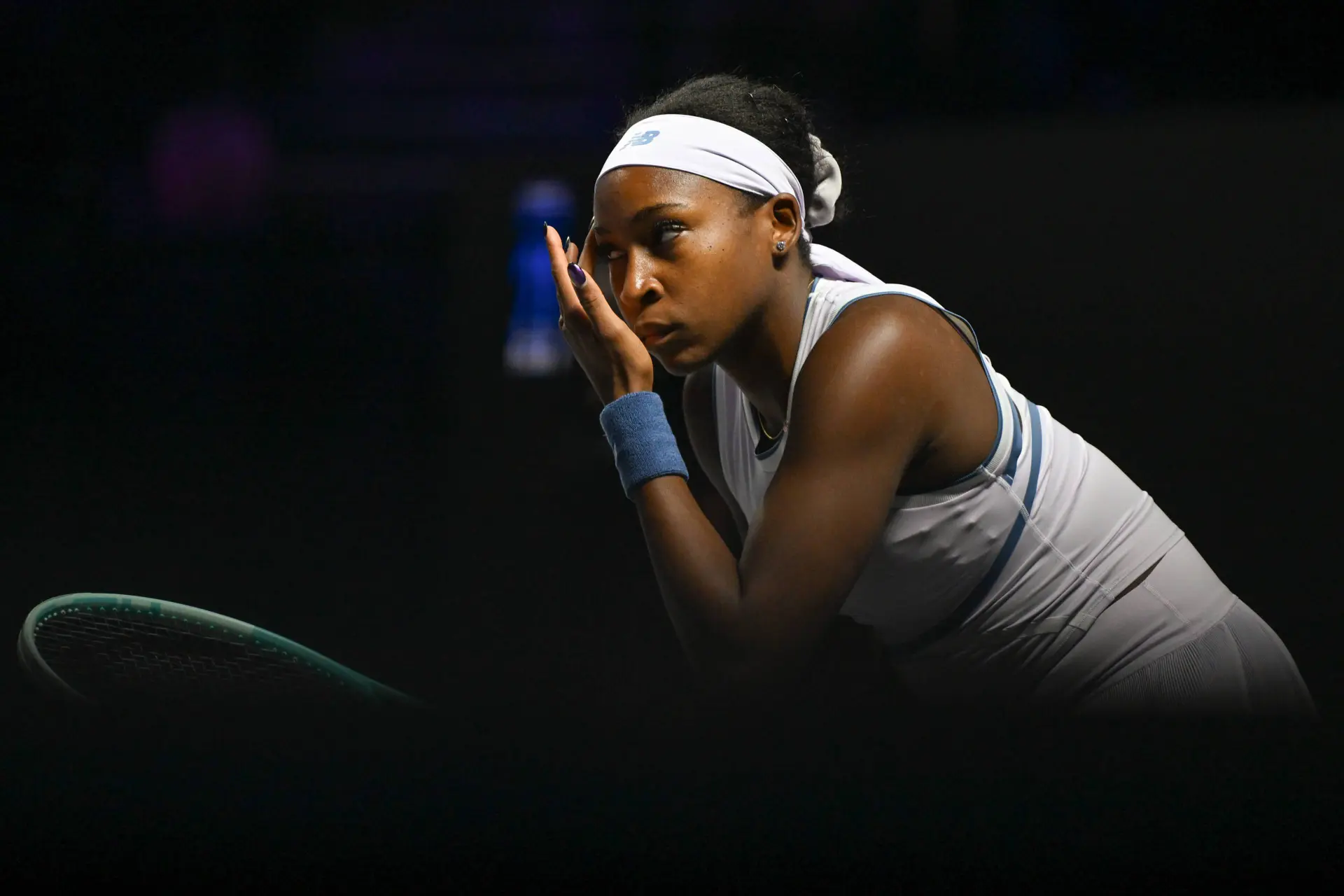
A major part of Gauff’s voice now extends beyond what she does on the court. She has emerged as a powerful advocate for equal pay, speaking openly about the pay gap that persists between the ATP and WTA at combined events. “There’s no reason we're playing at the same venue, same two-out-of-three sets, and yet the pay gap is that large… sometimes female players like me, Aryna, Iga, or Jess are selling out stadiums more than some of the guys getting paid way more”
And the fact is that while Grand Slam tournaments already offer the same prize money, the majority of tournaments—even those that are combined—usually have higher prizes for men.
Gauff doesn’t argue for special treatment—she argues for fairness rooted in performance, popularity, and parity of effort. Her willingness to speak out highlights why she is becoming one of the most influential voices in modern tennis. She reaffirms her stance clearly: “The start is targeting the combined ATP and WTA events”
Gauff also credits her family history for shaping her courage to speak on systemic issues. Her grandmother, who played a role in integrating her local high school, serves as a personal reminder of what true sacrifice looks like. That legacy influences Gauff’s activism and authenticity. She acknowledges this directly: “Compared to the sacrifice she went through, me making a post or talking in an interview is nothing”

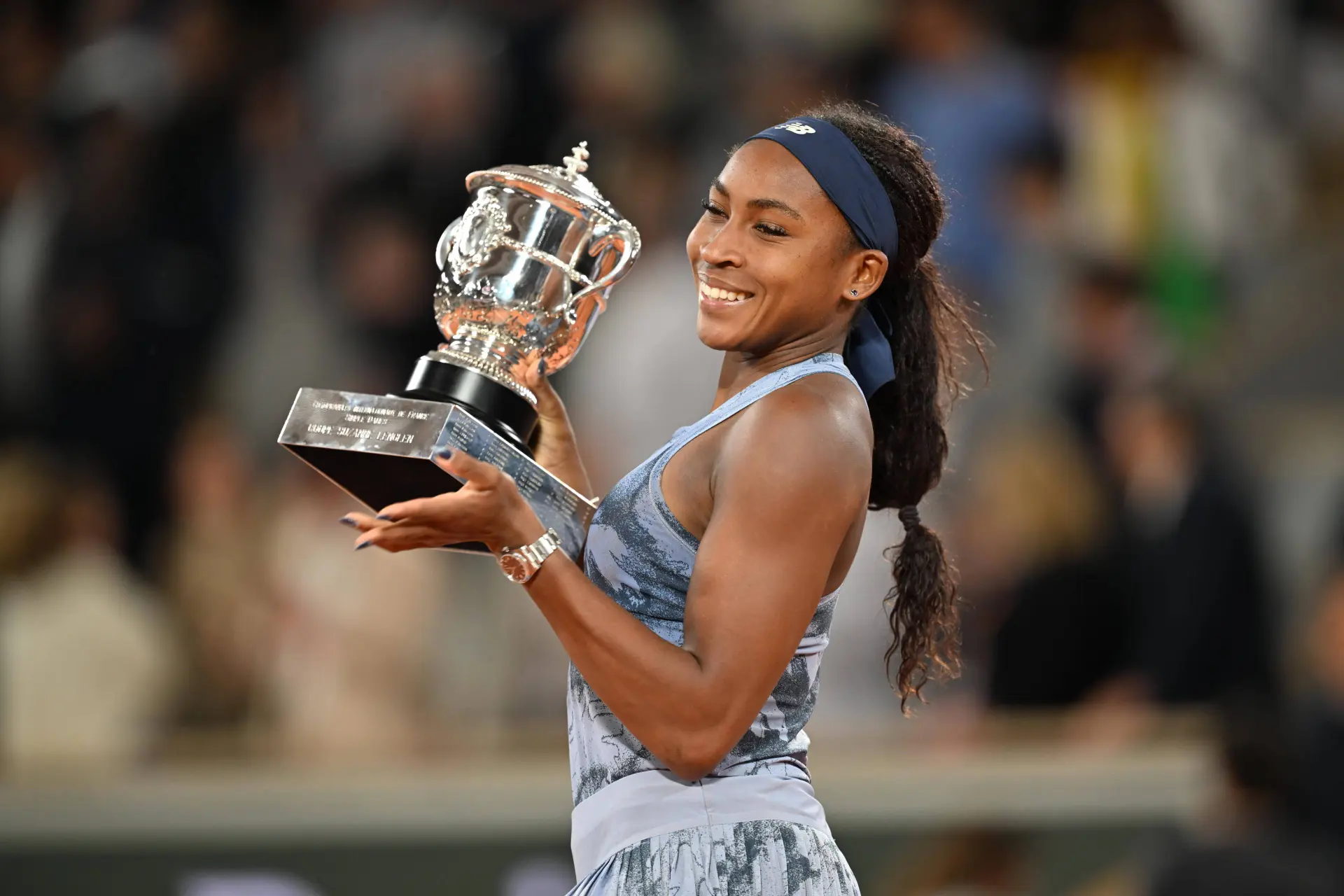
Coco Gauff at 2025 Roland Garros Final
Whether on the court, where she continues to develop her game, or off it, where she challenges inequality and advocates for social change, Gauff is building a legacy grounded in strength, authenticity, and purpose. For her, success is not only measured by trophies but by impact. As she puts it, “On court, I want to be known as mentally strong. Off court, I want to be remembered as a good human who impacted people’s lives”
Serena’s Influence
Serena Williams remains the defining figure in Coco Gauff’s evolution both as a player and as a person. Gauff grew up watching Serena dominate the sport and credits her for shaping what she believed was possible in tennis. “Seeing someone that looked like me thriving in a sport like tennis… that representation meant a lot to me”
Beyond inspiration, Serena also offered Gauff direct mentorship that continues to influence her mindset today. Their conversations often revolve around pressure, expectations, and the emotional demands of elite tennis. “She told me there are ups and downs in this journey… focus on my path and my expectations of myself, not the expectations placed by others”

Cristhián AvilaTennis Journalist
Cristhián Ávila is a tennis journalist based in Santiago, Chile, and has been part of the TennisUpToDate team since early 2023. He covers the ATP and WTA Tours as well as all four Grand Slams, producing breaking news, match reports, analysis, and regular liveblogs from major tournaments.
His reporting combines statistical analysis with clear explanation, helping readers understand tactical developments, player form, and broader storylines across the tour. Working fluently in both Spanish and English, Cristhián collaborates with an international editorial team and contributes to comprehensive global coverage. As part of his work, he has conducted interviews and media interactions with leading figures in the sport, including Caroline Wozniacki and John McEnroe.
In his journalism, Cristhián places strong emphasis on careful sourcing, editorial accuracy, and updating articles promptly when new, verified information becomes available. His coverage is grounded in research, context, and direct engagement with professional tennis.
claps 0visitors 0
Just In

Popular News


Latest Comments
- Does Sinner need that 4.5 mil? I doubt it. He can make that with three modelling gigs!😅🤣Rapunzel21-10-2026
- Did "People Magazine" purchase this website? This nonstop storyline is bullshit.
 mandoist21-10-2026
 - Listen... this is of no concern to anyone but these two. Deal with your own issues -- most of us have our own. Thanks, media, for these insignificant follow-ups which are meaningless.mandoist21-10-2026
- This is so very very sad, for all three of them. I truly thought they had an unbreakable bond, but life throws up so many differing challenges. Having your homeland suffering in such a terrible way, makes happiness lose out to guilt as well. Our thoughts are with them. X💔bjsexton20-10-2026
- I have lost all respect for Svitolina! Could she not have waited until he had played at the Paris Masters!!! She is selfish and don't give a damn about Gael. That is NOT how love is demonstrated Elina!!Rapunzel19-10-2026
- Perhaps convenient tennis tour sex is not a strong enough experience in which to base a marriage?mandoist19-10-2026
- Fight the Good Fight... Tennis (sports in general) need more Humans such as yourself.mandoist18-10-2026
- When is WTA going to mandate Genetic Testing (DNA) ???mandoist18-10-2026
- Hey, Dan... you just wake up from a coma? Regardless -- Thanks for the comedy this morning!mandoist18-10-2026
- Two Things: 1. Stop allowing these Spoiled Trust-Fund Elitists to behave badly. Your little hand-slaps do not deter them. 2. STOP the incessantly annoying "towel wiping" nonsense!!!!mandoist15-10-2026

Loading