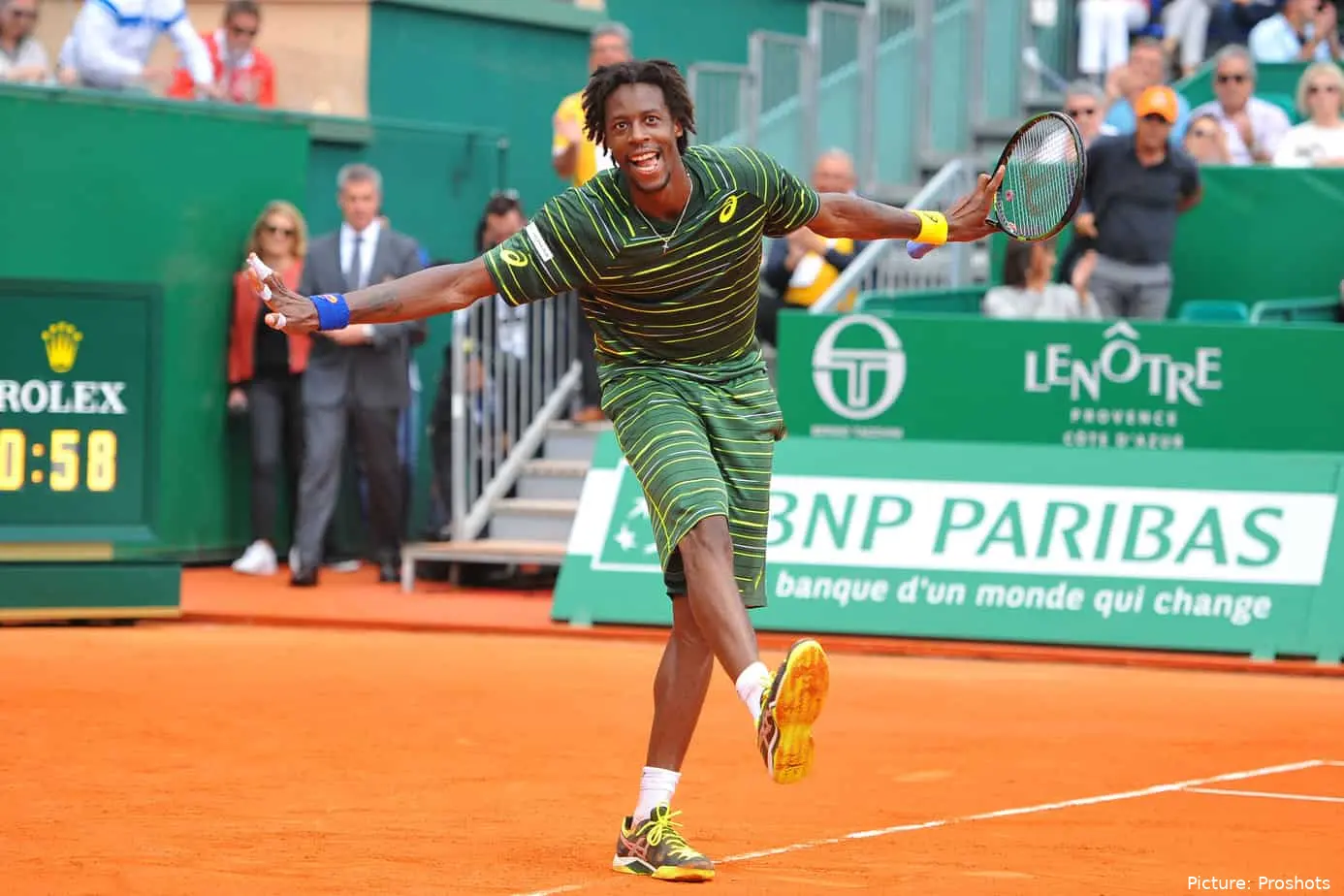
Gaël Monfils returns to the Monte Carlo Masters with a clear sense of closure. At 39 years old and currently ranked No. 203, the Frenchman is set to make his final appearance at the ATP Masters 1000 event where he produced one of the defining runs of his career. His opening match against Tallon Griekspoor marks not just another tournament, but part of a structured farewell season.
The former world No. 6, who has won 12 ATP titles and reached multiple Masters 1000 finals, confirmed that 2026 will be his last year on tour. Unlike abrupt retirements, Monfils has approached this phase methodically, framing each tournament as a final visit to venues that shaped his career. Monte Carlo, in that sense, carries particular historical weight.
His first appearance in the Principality came in 2005, when he faced a young Rafael Nadal—already emerging as the dominant force on clay. More than two decades later, Monfils returns to the same courts with a markedly different perspective, aware that the competitive stakes are secondary to the broader narrative of closure.
Physically, the uncertainty remains. Monfils has had limited match rhythm after recent interruptions, and he arrives without clear expectations. “It’s a bit strange, but the truth is I’m preparing for it," the former world No. 6 said. "Since the start of the year, I’ve been preparing each week to play for the last time in places where I’ve always loved playing. My first time here was in 2005 against Rafa, so it’s funny to think that 21 years later I’m coming back again.”
Monte Carlo as peak reference point in Monfils’ career
Monfils’ relationship with Monte Carlo is anchored in his 2016 campaign, where he reached the final—his only Masters 1000 final on clay. That run included wins over Jo-Wilfried Tsonga and a dominant performance against Grigor Dimitrov, before pushing Rafael Nadal in a competitive three-set final.
“I think it was my best match in terms of tennis in two sets,” Monfils said to L'Equipe, reflecting on the 2016 final (7-5, 5-7, 6-0), a scoreline that partially obscures the level he maintained across the opening phases of the match against a player who would go on to win 11 Monte Carlo titles.
That performance remains one of the clearest indicators of Monfils’ ceiling on clay. While he never converted a Masters 1000 title, he consistently threatened deep runs, reaching semifinals in multiple editions and building a record defined by wins over elite opponents.
“There are so many. I played Verdasco once and really enjoyed it because it was one of the first times I beat him. I also played Karlovic and didn’t concede a single ace, which was quite something. I beat Roger here, I played a great match against Jo, one of my best against Grigor… there are many matches I really enjoyed, even one I lost but felt great, against Olivier Rochus.”
The reference points underline a broader pattern: Monfils at his peak was capable of matching top-tier players across surfaces, with Monte Carlo often providing the most consistent platform for that level.
Monfils – Masters 1000 Finals
| Tournament | Year | Surface | Opponent | Result | Score |
| Paris Masters | 2009 | Indoor hard | Novak Djokovic | Runner-up | 2-6, 7-5, 6-7(3) |
| Paris Masters | 2010 | Indoor hard | Robin Söderling | Runner-up | 1-6, 6-7(1) |
| Monte Carlo Masters | 2016 | Clay | Rafael Nadal | Runner-up | 5-7, 7-5, 0-6 |
Final season alongside Wawrinka and controlled expectations
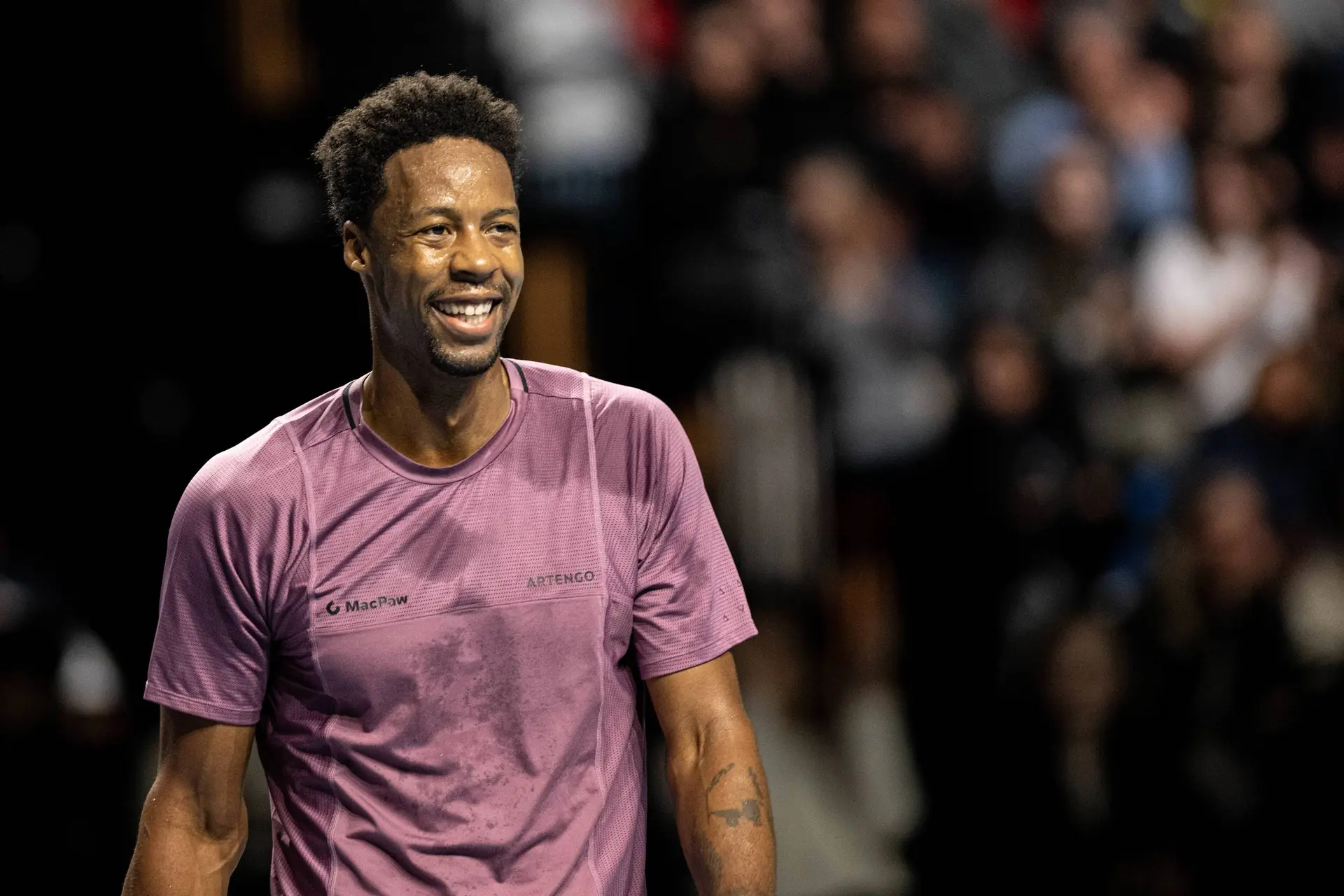
Monfils’ final season has also unfolded in parallel with Stan Wawrinka, another veteran approaching the end of his career. Their rivalry and shared timeline add context to this phase, particularly given their head-to-head history, where Monfils holds a narrow edge across their meetings, including several encounters on clay and at Masters level.
Their relationship has shifted from direct competition to shared experience, with both players continuing to train together despite reduced schedules and physical limitations. “Ending together is great—two different paths, two different stories, two different sensitivities, but in the end it’s the same pleasure, the same desire. For me, it’s incredible to still be able to train together.”
In competitive terms, Monfils remains cautious. After stepping away briefly, he resumed training without a clear benchmark of form, reinforcing a pragmatic approach heading into Monte Carlo.
“I needed a break and I recently started playing again. Honestly, I can’t say for sure how I feel because I’ll see during the match. I’ll go out there and give my best. As long as I can give my best, that’s what I want to do.”

Cristhián AvilaTennis Journalist
Cristhián Ávila is a tennis journalist based in Santiago, Chile, and has been part of the TennisUpToDate team since early 2023. He covers the ATP and WTA Tours as well as all four Grand Slams, producing breaking news, match reports, analysis, and regular liveblogs from major tournaments.
His reporting combines statistical analysis with clear explanation, helping readers understand tactical developments, player form, and broader storylines across the tour. Working fluently in both Spanish and English, Cristhián collaborates with an international editorial team and contributes to comprehensive global coverage. As part of his work, he has conducted interviews and media interactions with leading figures in the sport, including Caroline Wozniacki and John McEnroe.
In his journalism, Cristhián places strong emphasis on careful sourcing, editorial accuracy, and updating articles promptly when new, verified information becomes available. His coverage is grounded in research, context, and direct engagement with professional tennis.
claps 1visitors 1
Just In

Popular News
Latest Comments
- A healthy Qinwen may be hard to stop next season. She was already scaring her opponents before her medical leave(s). Unfortunately, Zheng insisted on singing again. On the positive side -- Mirra did not sing!! ;~}
 mandoist11-10-2026
 - Where is it written that athletes, entertainers... People in general... are mandated to keep looking at -- or even using [anti]Social Media? Public & private figures consistently complain and reveal their concerns about negativity and violence thrown at them -- yet they insist on participating. Avoid it, don't use it, don't read it. It's okay to occasionally look up at the World instead beating your eyes & thumbs to death on The Inventions out there.mandoist11-10-2026
- great articlestennisseserver07-10-2026
- Medvedev was leading Djokovic 7-5, 3-5 when an attempted return..' NO you ignorants, Djokovic was leading .weiss05-10-2026
- No more bullshit "Wildcards" to these two. Qualify like everyone else -- there will be cameras there, too. Time to scream... WTF ????!!!!mandoist29-09-2026
- Let's not BS the general public -- Sabalenka started showing cracks in her game last season. Her losses and near-losses started at about the same time she began being distracted by Fame (constant Selfies, making TV commercials, magazine shoots, endless Social Media nonsense, etc., etc.) One would think even Saba could recognize the parallels with others who failed before her -- Raducanu, Giorgi, Bouchard to name a few.mandoist25-09-2026
- Gross!! Hey Raducanu, Giorgi, and Bouchard -- reserve a seat at your Social Media Selfie table for Saba + Naomi. They're heading in your direction soon enough.mandoist24-09-2026
- And then these same players will complain about how lengthy their season’s were and need more time-off. I’m all for more tennis but the amount of tennis we get now is actually kind of crazy! We all need a break, especially the players.DaveyWavey23-09-2026
- You should do a comparison article for "different kinds of justice" the courts decide for tennis players. I can think of at least three players who received very small bans of a few months, however Tara Moore has been fighting for her literal survival the past few years. It seems odd considering she is not a "name" player, unlike the other cases.DaveyWavey22-09-2026
- PRIZE MONEY & POINTS Winner - $185,500 Finalist - $114,500 Semi-Finalist - $66,003 Quarter-Finalist - $35,000 Round of 16 - $18,045 Round of 32 - $13,005 Winner - 500 Finalist - 325 Semi-Finalist - 195 Quarter-Finalist - 108 Round of 16 - 60 Round of 32 - 1DaveyWavey20-09-2026

Loading