"A public meltdown": Daniil Medvedev's US Open antics heavily criticised including by Boris Becker
ATP
Daniil
Medvedev was down match point to Benjamin Bonzi, grinding through one of those
sticky New York nights that never seem to go smoothly. Then, prematurely a
photographer casually strolled onto the court hoping to get a shot of the match
winning point. It was something unseen and confusing, leaving the umpire, Greg
Allensworth, to pause the point and give Bonzi a replayed first serve. That
tiny, technical decision detonated something inside Medvedev.
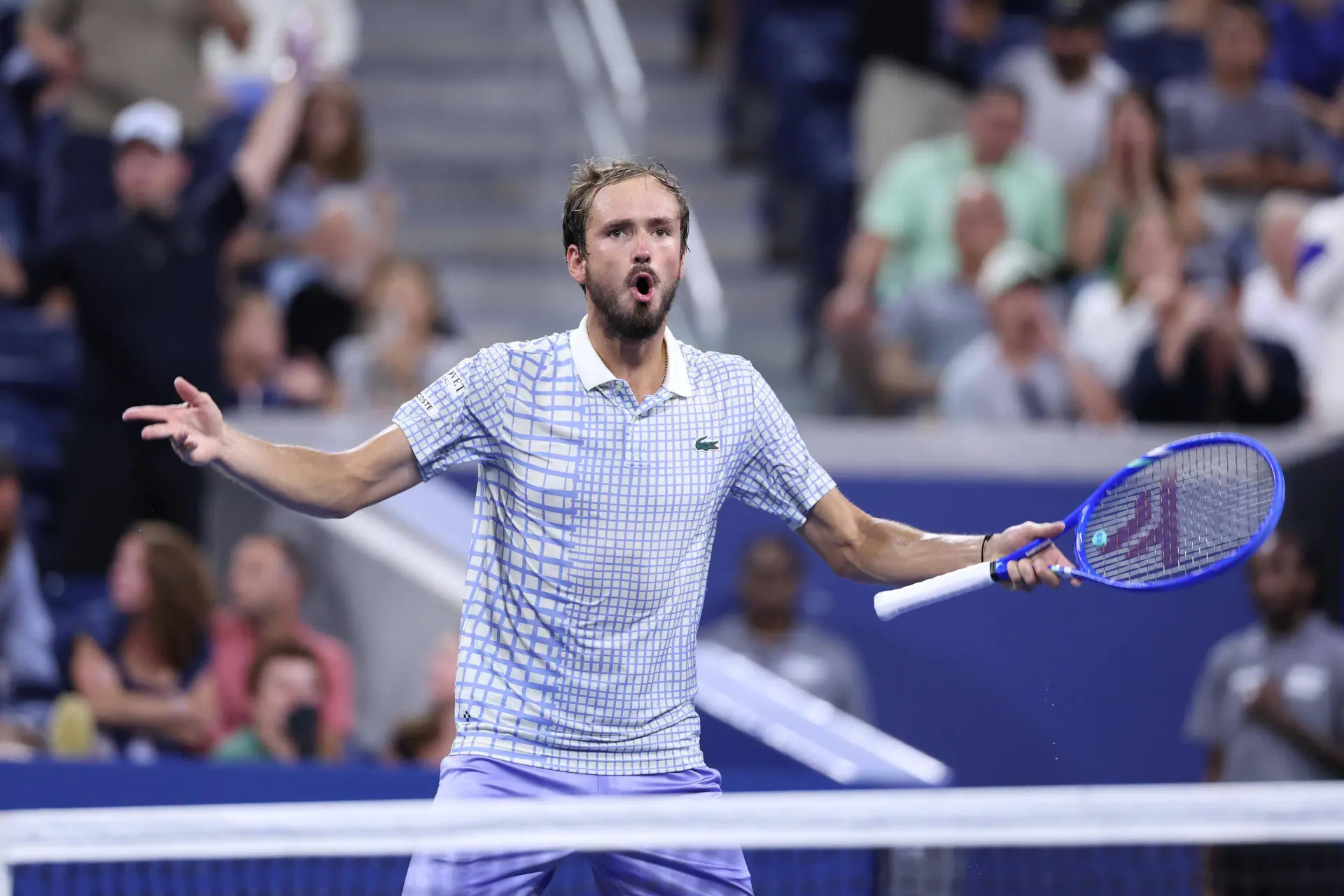
The Russian’s
eyes went wide, his arms flailed, and suddenly he was shouting, gesturing,
ranting. For nearly six minutes the match froze in chaos as Medvedev barked at
the chair, the fans jeered, and the tension in the US Open stadium turned electric.
This wasn’t just frustration; it was a full-blown eruption.
And yet, in the strangest twist of all, he channelled that fury
into something almost heroic. Down and nearly gone, Medvedev stormed back,
stealing the third set in a tiebreak before blitzing Bonzi 6–0 in the fourth.
For a moment, the meltdown looked like it might become one of those legendary
US Open stories: the villain turned survivor, the man who screamed his way back
into contention.
But reality doesn’t always script fairy tales. By the fifth set,
the emotional fuel was spent. Bonzi steadied himself, Medvedev’s energy
drained, and the Frenchman closed it out with three sets to two win. As the
final ball sailed out, Medvedev smashed his racket repeatedly, the noise
echoing around the arena.
Becker, Gilbert, Kyrgios react
Afterward, he tried to explain. The outburst, he insisted, wasn’t
about the photographer, it was about the umpire’s ruling. “I was not upset with
the photographer,” he said, voice ,“I was upset with the decision.” Maybe
that’s true, but watching him combust on court, it looked like more than a
single call. It looked like months of pressure, disappointment, and expectation
boiling over in public view.
And the tennis world noticed. Boris Becker, never shy with an
opinion, called it exactly what it looked like: “a public meltdown.” On social
media he didn’t just criticize, he went further, suggesting Medvedev “needs
professional help.” Coming from Becker, a man who knows both the glory and the
pitfalls of life in the spotlight, the words landed hard.
Brad Gilbert, too, pointed to a pattern. Washington, Paris, now
New York, Medvedev’s collapses weren’t isolated anymore, but part of a worrying
trend. Patrick McEnroe weighed in from the ESPN desk, saying maybe the Russian
should step away from the tour altogether, take the rest of the year off, and
reset. That kind of advice doesn’t get thrown around lightly in tennis.

Not everyone joined the pile-on. Nick Kyrgios, who knows something
about on-court blowups himself, fired back on social media with a simple defence:
“Medvedev is the best.” For Kyrgios, the chaos was almost a badge of
authenticity. He’s lived that space between genius and implosion, and maybe he
sees a kindred spirit in Medvedev.
The photographer, meanwhile, became collateral damage. His
credentials were revoked by the U.S. Tennis Association, the governing body
insisting he had been warned not to step onto the court. The man later
described feeling like he’d been “lynched” by the backlash, another bizarre
subplot in a night already filled with theatre.
Strip away the noise, though, and the picture of Medvedev is
complicated. He’s a former US Open champion, a man who once stood toe-to-toe
with Novak Djokovic on this very stage and denied him a calendar Slam. But this
year he’s looked adrift. Slam losses piling up, confidence fraying, emotions
spilling out at the worst times. Watching him smash that racket, scream at the
chair, soak up the boos, you wondered whether this was just one bad night or
the symptom of something deeper.
That’s what Becker was hinting at when he talked about
“professional help.” Not just a sports psychologist for a sharper focus, but
perhaps someone who could untangle the bigger knots, expectations, pressure,
frustration with himself. Tennis is lonely at the best of times; when the
spotlight turns hostile, it can feel suffocating.
And yet, Medvedev is still compelling. Even in meltdown, he drew
every eye, made every fan feel the pulse of the night. There are players who
fade quietly into defeat; he does not. He burns, loudly, unapologetically, and
in that fire, both brilliance and disaster live side by side.
For Bonzi, the victory was career-defining, a night he’ll never
forget. But for Medvedev, the loss will linger differently. It wasn’t just
about the score line, it was about the sight of a top player unravelling in real
time, about the storm that follows when the human side of sport breaks through
the polished surface.
When he left the court, his head hung low, racket ruined, the New
York crowd still buzzing from the spectacle. Some cheered, some jeered, but
everyone had witnessed something raw, unfiltered, unforgettable.
Daniil Medvedev has always played tennis like a man on a
tightrope, swaying between genius and self-destruction. In New York, he fell,
and he fell hard. The question now is whether this was just a stumble or a sign
that the rope itself is fraying.
INSANE scenes in the Medvedev & Bonzi match at US Open
— The Tennis Letter (@TheTennisLetter) August 25, 2025
A cameraman was trying to leave after Bonzi missed his 1st serve.
The umpire gave Bonzi a 1st serve.
Daniil: “Are you a man? Are you a man? why are you shaking? What’s wrong huh? Guys he wants to leave. He gets paid by… pic.twitter.com/nzlqgoWxre

claps 0visitors 0
Just In


Popular News
Latest Comments
- Two Things: 1. Stop allowing these Spoiled Trust-Fund Elitists to behave badly. Your little hand-slaps do not deter them. 2. STOP the incessantly annoying "towel wiping" nonsense!!!!
 mandoist15-10-2026
 - A healthy Qinwen may be hard to stop next season. She was already scaring her opponents before her medical leave(s). Unfortunately, Zheng insisted on singing again. On the positive side -- Mirra did not sing!! ;~}mandoist11-10-2026
- Where is it written that athletes, entertainers... People in general... are mandated to keep looking at -- or even using [anti]Social Media? Public & private figures consistently complain and reveal their concerns about negativity and violence thrown at them -- yet they insist on participating. Avoid it, don't use it, don't read it. It's okay to occasionally look up at the World instead beating your eyes & thumbs to death on The Inventions out there.mandoist11-10-2026
- great articlestennisseserver07-10-2026
- Medvedev was leading Djokovic 7-5, 3-5 when an attempted return..' NO you ignorants, Djokovic was leading .weiss05-10-2026
- No more bullshit "Wildcards" to these two. Qualify like everyone else -- there will be cameras there, too. Time to scream... WTF ????!!!!mandoist29-09-2026
- Let's not BS the general public -- Sabalenka started showing cracks in her game last season. Her losses and near-losses started at about the same time she began being distracted by Fame (constant Selfies, making TV commercials, magazine shoots, endless Social Media nonsense, etc., etc.) One would think even Saba could recognize the parallels with others who failed before her -- Raducanu, Giorgi, Bouchard to name a few.mandoist25-09-2026
- Gross!! Hey Raducanu, Giorgi, and Bouchard -- reserve a seat at your Social Media Selfie table for Saba + Naomi. They're heading in your direction soon enough.mandoist24-09-2026
- And then these same players will complain about how lengthy their season’s were and need more time-off. I’m all for more tennis but the amount of tennis we get now is actually kind of crazy! We all need a break, especially the players.DaveyWavey23-09-2026
- You should do a comparison article for "different kinds of justice" the courts decide for tennis players. I can think of at least three players who received very small bans of a few months, however Tara Moore has been fighting for her literal survival the past few years. It seems odd considering she is not a "name" player, unlike the other cases.DaveyWavey22-09-2026

Loading