ATP Madrid Open Day Three Round-Up | Jannik Sinner comeback anchors day of upsets with Shelton and De Minaur out
ATP
The Madrid Open second round introduced early instability among seeds, with Jannik Sinner forced into a three-set recovery while both Ben Shelton and Alex de Minaur exited before reaching the third round. Lorenzo Musetti progressed through a controlled but pressured match against Hubert Hurkacz, while multiple sections of the draw shifted due to upsets and a late withdrawal.
These results reshape the tournament’s middle phase. Sinner advances into a manageable matchup against qualifier Elmer Møller, while Rafael Jódar’s win over De Minaur opens a previously protected section. João Fonseca also moves forward without court time following Marin Čilić’s withdrawal, adding further asymmetry to the third-round landscape in Madrid.
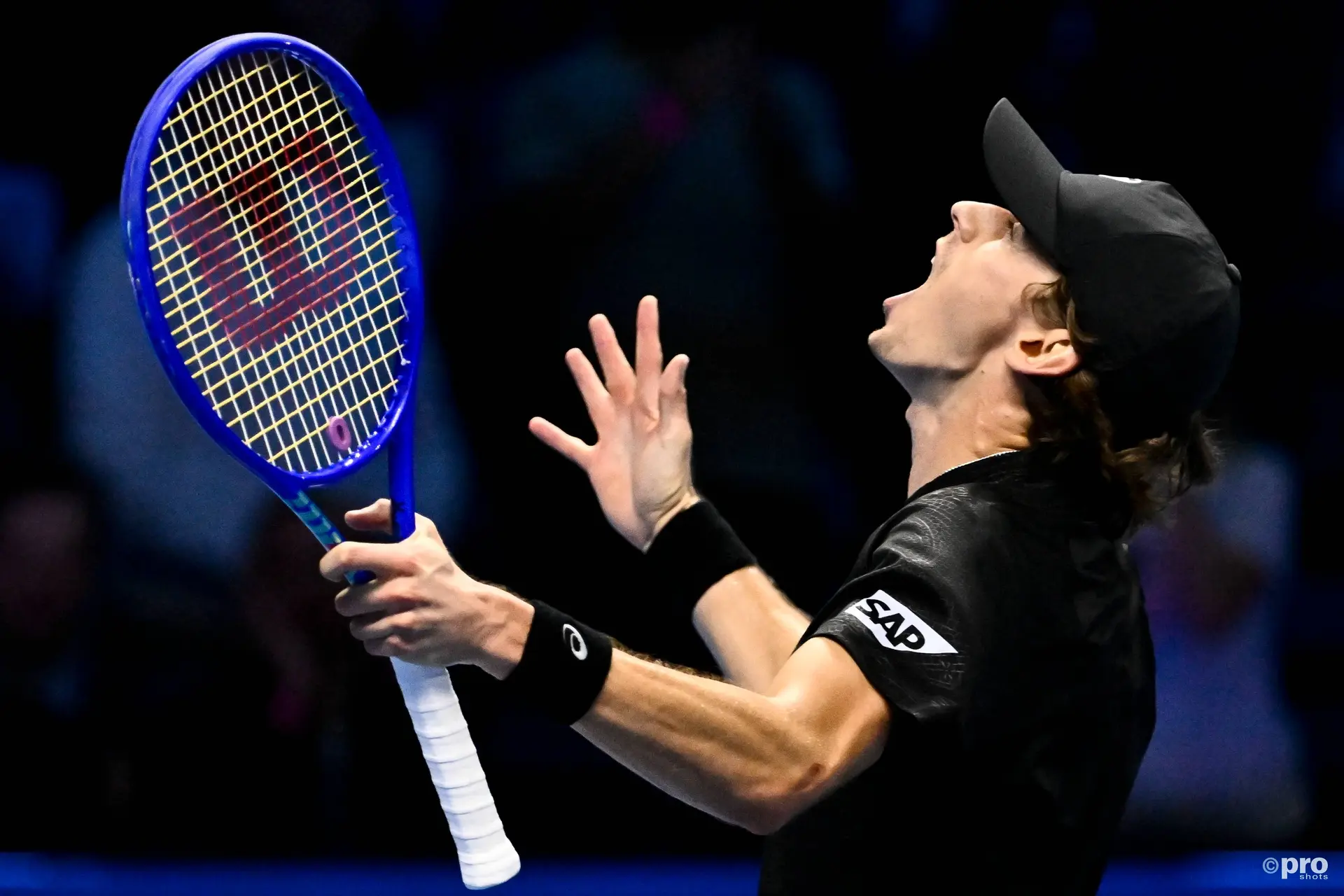
Sinner adjusts return depth to overturn Bonzi resistance
Jannik Sinner def. Benjamin Bonzi 6-7, 6-1, 6-4
Sinner progressed to the third round after a match defined by delayed conversion rather than immediate control. The opening set followed a serve-dominant structure, with Sinner creating five break opportunities but failing to convert, allowing Bonzi to extend into a tiebreak where he held marginally firmer under pressure.
The shift came through return positioning and tempo management. Sinner began taking the ball earlier in the second set, flattening his backhand exchanges and forcing Bonzi into shorter service patterns. This reduced Bonzi’s ability to dictate first-strike points and exposed his second serve more consistently.
Statistically, the drop in Bonzi’s first-serve effectiveness—from 79% points won in set one to 46% in set two—explains the reversal. Sinner’s service stability (just five points conceded on serve in the second set) allowed him to build scoreboard pressure and convert the decisive break at 3-2 in the third. He now faces Elmer Møller with a clearer path into the second week.
Jódar compresses rallies to dismantle De Minaur
Rafael Jódar def. Alex de Minaur 6-3, 6-1
Rafael Jódar produced a structurally clean upset by denying Alex de Minaur the extended rally patterns that typically anchor his game. After an early exchange of breaks, Jódar moved ahead 3-1 and consistently shortened points through early ball striking and aggressive court positioning.
The tactical difference centred on depth and court positioning. Jódar stepped inside the baseline on neutral balls, redirecting pace and preventing De Minaur from resetting rallies. This forced the Australian into reactive movement rather than counter-punching sequences.
Jódar’s 71% first-serve points won in the opening set underpinned his scoreboard control, while De Minaur struggled to generate return pressure. The second set followed the same pattern but with reduced resistance, as Jódar extended his lead quickly and closed without facing sustained pressure.
Prižmić withstands Shelton’s serve patterns in deciding tiebreak
Dino Prižmić def. Ben Shelton 6-4, 6-7, 7-6
Dino Prižmić advanced after neutralising Ben Shelton’s serve-based patterns over three sets. Shelton’s usual advantage—short points behind first serve—was partially offset by Prižmić’s ability to absorb pace and extend rallies beyond the initial strike.
Shelton recovered the second set through a tiebreak, but the underlying pattern remained unstable. Prižmić consistently redirected returns deep through the middle, limiting Shelton’s angles and forcing him to construct points rather than finish them early.
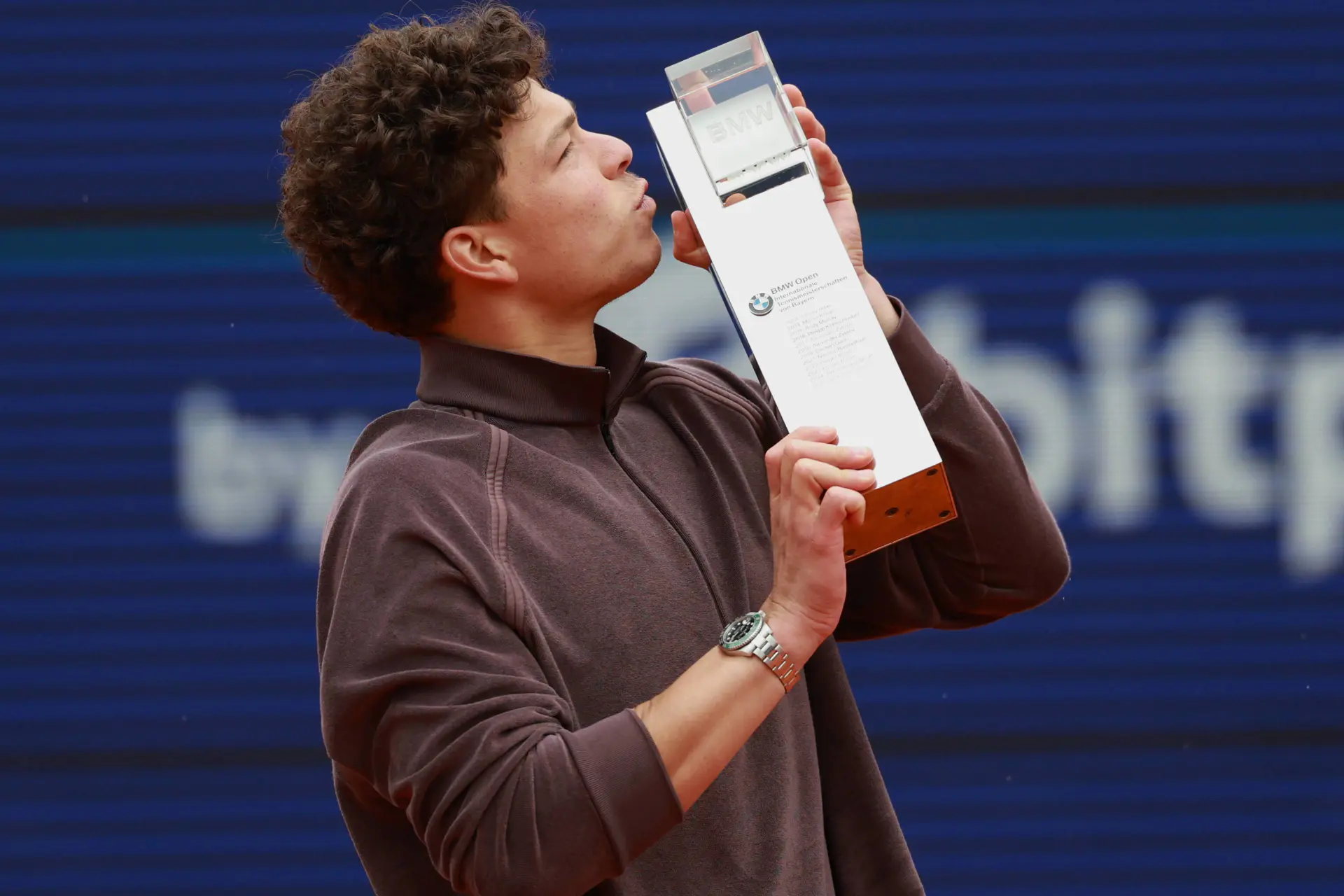
The match turned on marginal phases: Prižmić missed opportunities in the second set but maintained structural consistency into the decider. In the final tiebreak, his rally tolerance and shot selection held, while Shelton’s first-serve dependence offered less separation. The result removes a top seed and introduces volatility into that section of the draw.
Musetti absorbs late pressure to close in two sets
Lorenzo Musetti def. Hubert Hurkacz 6-4, 7-6
Lorenzo Musetti advanced through a match defined by early initiative and late resistance. He secured an immediate break and built a 4-1 lead in the first set, using variation in spin and trajectory to disrupt Hurkacz’s rhythm on serve and from the baseline.
The second set inverted the dynamic. Hurkacz increased first-serve accuracy and reduced unforced errors, creating a sequence where he lost only one point across four service games and generated multiple break and set-point opportunities.
Musetti’s response was based on defensive structure rather than aggression. He extended rallies, raised net clearance, and avoided low-percentage finishing attempts under pressure. Saving two break points and two set points in that phase was decisive. By forcing a tiebreak, he regained scoreboard neutrality and closed efficiently. He remains positioned for another deep run in Madrid.
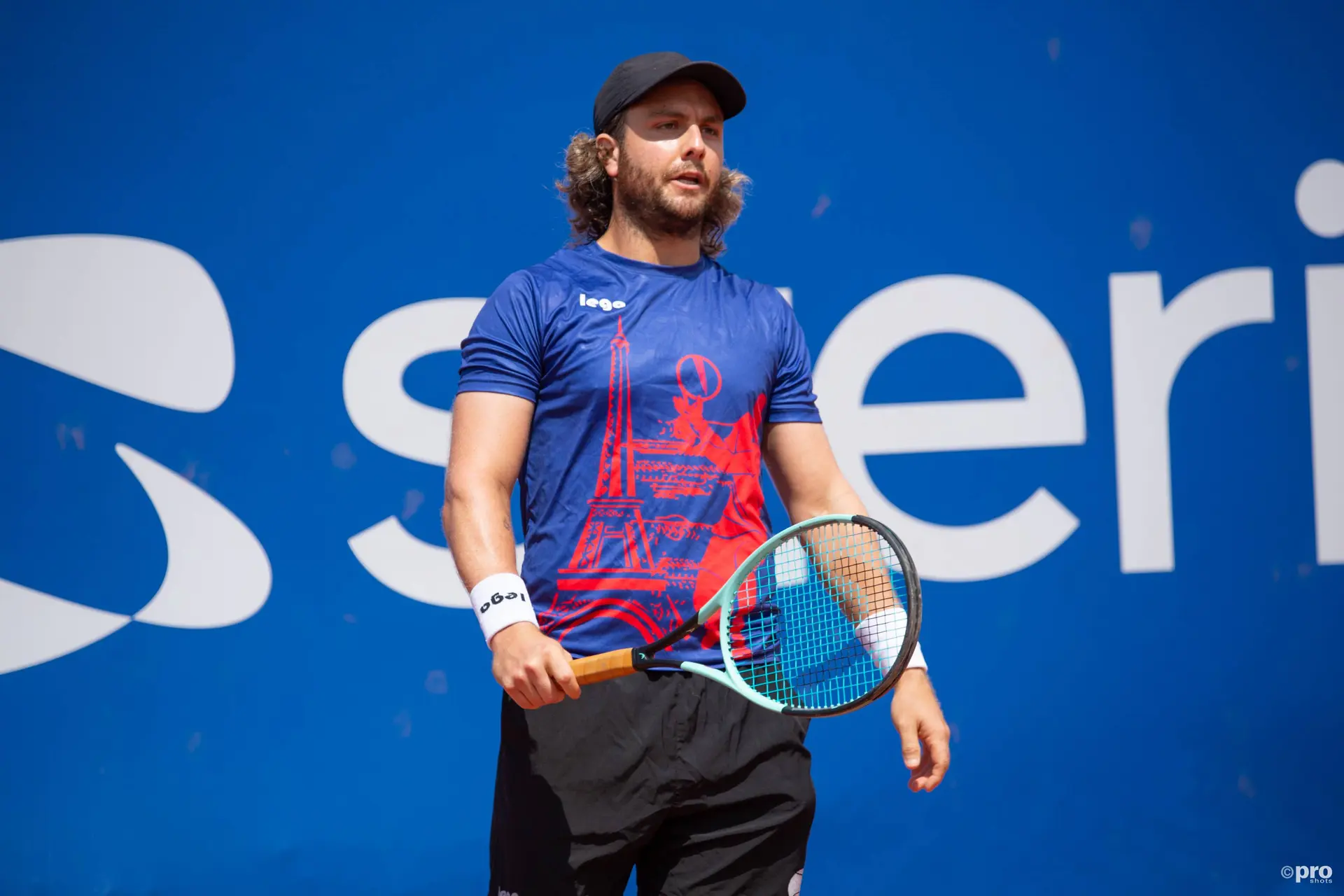
Nava capitalises on Vacherot’s missed closing phase
Emilio Nava def. Valentin Vacherot 6-7, 7-6, 6-3
Emilio Nava advanced after a match that turned on one failed service game. Valentin Vacherot held the structural advantage for much of the contest, taking the first set in a tiebreak and maintaining scoreboard pressure into the second.
The key moment came when Vacherot failed to convert three match points. From that point, the match shifted psychologically and tactically. Nava increased return aggression, stepping closer to the baseline and forcing Vacherot into more second-serve exposure.
The second-set tiebreak—won by Nava while conceding only one point—reset the match entirely. In the third, Nava’s improved first-strike balance allowed him to dictate more points. The missed opportunities from Vacherot directly correlate with the outcome, turning a controlled match into a loss and opening the section further.
Norrie exploits late lapse to overturn Macháč
Cameron Norrie def. Tomáš Macháč 6-2, 6-7, 7-6
Cameron Norrie advanced through a match that shifted at the closing stage of the decider. He established early control with a break-led first set, but Macháč adjusted by increasing first-serve effectiveness and pushing the match into a second-set tiebreak, which he converted.
The third set followed a stable serve pattern until 5-4, when Macháč broke and moved to serve for the match. Norrie’s response was immediate, breaking back with deeper return positioning and reducing Macháč’s time on contact.
The final tiebreak reflected that adjustment. Norrie won six of the last eight points by extending rallies and forcing errors rather than seeking winners. The ability to reset under scoreboard pressure explains the outcome and keeps him in contention heading into the next round.
Fonseca advances without playing after Čilić withdrawal
João Fonseca progressed directly into the third round following Marin Čilić’s withdrawal due to illness. The Croatian cited food poisoning and an inability to compete after attempting overnight recovery.
From a competitive standpoint, the walkover alters Fonseca’s tournament rhythm. He advances without physical expenditure but also without match reinforcement, which can influence timing in the following round.
Within the broader Madrid Open context, this adds to a growing pattern of disruption. With seeded exits and one withdrawal already affecting the bracket, the third round presents a less predictable structure than initially projected.

Lucas MichaelTennis Journalist
Lucas Michael is a tennis journalist based in Cambridge, UK, specializing in comprehensive coverage of the ATP and WTA tours. For the past 1.5 years, he has been a core contributor to TennisUpToDate, where he has authored more than 3,000 data-driven match reports, deep-dive analysis pieces, and engaging liveblogs.
Lucas pairs real-time statistical analysis with on-the-ground reporting, frequently traveling to tournaments to cover the action firsthand from the press box and player press conferences. This blend of advanced metrics and direct access allows him to provide sharp context regarding player form, tactical trends, and breaking tour developments.
He holds a BA (Hons) in Sports Journalism. Grounded in core journalistic ethics, Lucas places a strict emphasis on meticulous sourcing, editorial accuracy, and a commitment to updating live content swiftly as verified information emerges.
claps 0visitors 0
Just In



Popular News
Latest Comments
- Lena... Takin' care of business
 mandoist25-10-2026
 - Can you please stop publishing this nonsense? Stick to Tennis.mandoist25-10-2026
- Does Sinner need that 4.5 mil? I doubt it. He can make that with three modelling gigs!😅🤣Rapunzel21-10-2026
- Did "People Magazine" purchase this website? This nonstop storyline is bullshit.mandoist21-10-2026
- Listen... this is of no concern to anyone but these two. Deal with your own issues -- most of us have our own. Thanks, media, for these insignificant follow-ups which are meaningless.mandoist21-10-2026
- This is so very very sad, for all three of them. I truly thought they had an unbreakable bond, but life throws up so many differing challenges. Having your homeland suffering in such a terrible way, makes happiness lose out to guilt as well. Our thoughts are with them. X💔bjsexton20-10-2026
- I have lost all respect for Svitolina! Could she not have waited until he had played at the Paris Masters!!! She is selfish and don't give a damn about Gael. That is NOT how love is demonstrated Elina!!Rapunzel19-10-2026
- Perhaps convenient tennis tour sex is not a strong enough experience in which to base a marriage?mandoist19-10-2026
- Fight the Good Fight... Tennis (sports in general) need more Humans such as yourself.mandoist18-10-2026
- When is WTA going to mandate Genetic Testing (DNA) ???mandoist18-10-2026

Loading