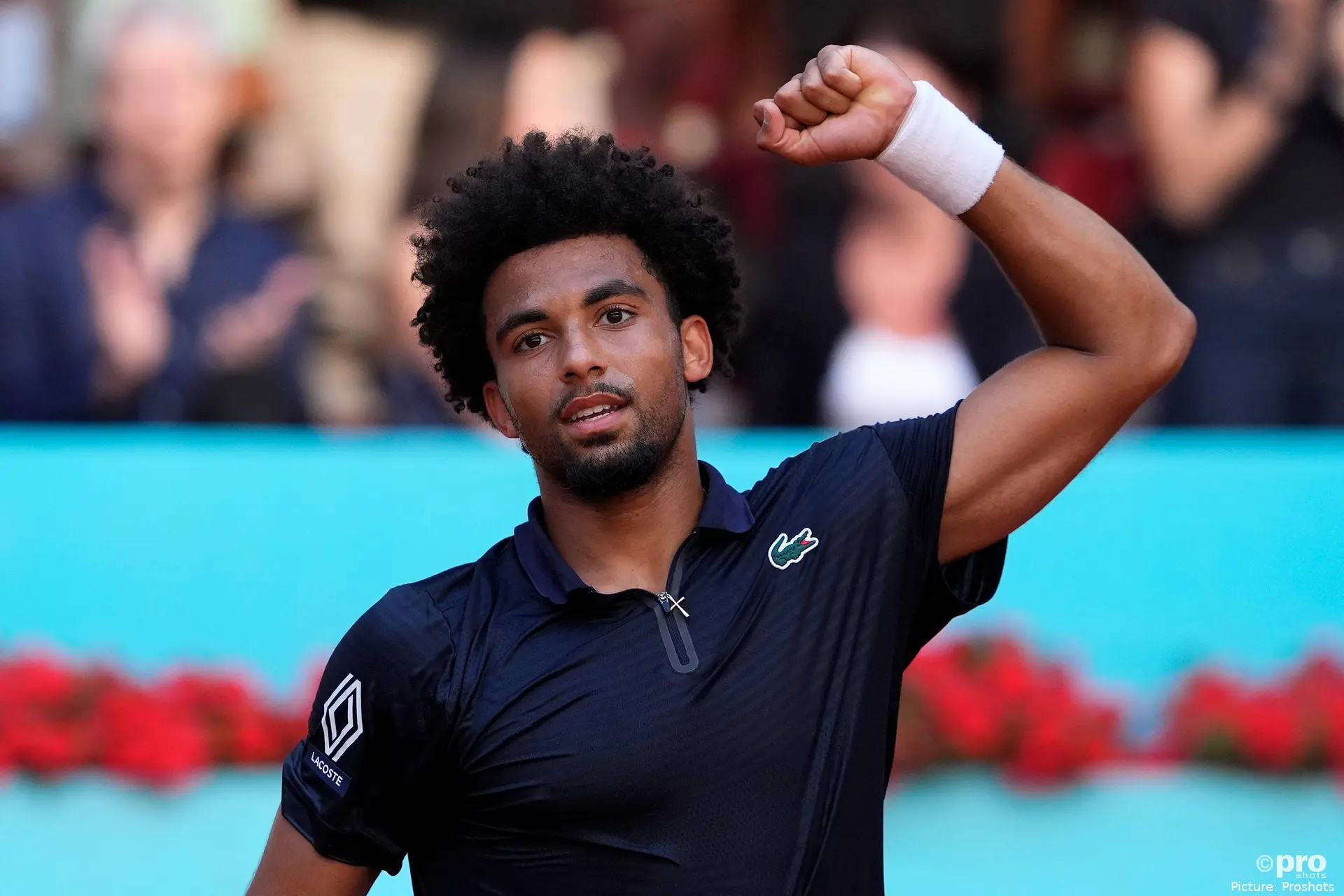
On the official tournament site, two good seats for today’s ATP Masters 1000 session in Montréal cost $1,000. For that price, fans are treated to Nuno Borges against Luciano Darderi, Arthur Rinderknech against Brandon Nakashima, Arthur Fils against Cameron Norrie, and (the admittedly decent matchup) Jiří Lehečka against Rafael Jódar.
There is absolutely nothing wrong with any of those players. They’re outstanding professionals. Every one of them is capable of producing brilliant tennis. Lehečka, in particular, has developed into one of the most entertaining players on tour, and Fils remains one of the game’s brightest young stars.
But let’s be honest about something. If you’re asking sports fans to spend four figures for a day at a Masters 1000 event, the lineup has to sell itself.
Today’s falls embarrassingly short. Neither, if we’re being equally candid, have many of the daytime sessions throughout this tournament. That isn’t an attack on the players. It’s an observation about what this event has quietly become.
For years, Tennis Canada has argued that the future lies in expansion. A larger tournament. A dramatically rebuilt stadium. A major redevelopment of Parc Jarry. More courts. More seats. More days. More everything.
Yet as I have watched this year’s Montréal event unfold, I have found myself reaching the opposite conclusion. Every day has strengthened the argument against that vision. The problem facing the Canadian Open isn’t infrastructure.
It isn’t that IGA Stadium is too small. It isn’t that Montréal lacks a modern enough venue. The problem is far more fundamental. Professional tennis simply doesn’t possess enough star power to stretch a Masters 1000 event across nearly two weeks while maintaining premium value every single day.
The ATP calendar has changed dramatically. Larger draws have become fashionable. More matches are played over more days. Tournament owners like the added inventory. Broadcasters appreciate additional programming. Sponsors receive more exposure.
Read also
The issue is not quality, the issue is demand
Everyone benefits—except, perhaps, the people buying tickets. Because expanding a draw doesn’t create more Carlos Alcarazes. It doesn’t produce another Jannik Sinner. It doesn’t convince Novak Djokovic to play more events. It doesn’t magically transform perfectly respectable professionals ranked outside the world’s top twenty into household names capable of filling a stadium at premium prices.
Instead, the stars become diluted across a longer schedule. The event grows. The experience doesn’t necessarily improve. That is exactly what Montréal has illustrated this week. Day after day, sessions have relied upon matches that dedicated tennis fans may appreciate but that struggle to justify the prices being charged to the broader sporting public.
The issue is not quality. The issue is demand. Those are two very different things. I could thoroughly enjoy watching Borges and Darderi. Tennis purists probably will. But if your business model requires convincing a family—or even two adults—to spend close to $1,000 before paying for parking, transportation, food, truly absurd traffic as the stadium is in a residential neighborhood, and everything else that accompanies a day at the tennis, then you are no longer selling tennis.
You are selling an experience. And experiences are judged by value. That becomes particularly important when the proposed solution is to spend hundreds of millions of dollars reshaping one of Montréal’s most cherished public parks.

Rafael Jodar is in action today.
Supporters of the Parc Jarry redevelopment continue to frame the debate as though opponents simply don’t understand progress. I think they understand it perfectly. What many of them question is whether the underlying assumptions still make sense. A larger stadium cannot solve a calendar problem. A larger stadium cannot manufacture compelling matchups. A larger stadium cannot guarantee that the sport’s biggest stars will appear more frequently.
Most importantly, a larger stadium cannot guarantee that enough people will consistently pay premium prices to fill those additional seats. That’s what makes this year’s tournament so fascinating. Without intending to, Tennis Canada has presented the strongest evidence yet against its own long-term vision. Every lightly attended afternoon session. Every premium-priced ticket attached to a modest schedule. Every conversation among fans wondering whether today’s lineup is worth the cost. Each one raises the same uncomfortable question. If this is the product today, why does it require an even larger home tomorrow? None of this is an argument against the Canadian Open. Far from it.
The tournament remains one of the oldest and most important events in world tennis. It has introduced generations of Canadians to the sport and helped inspire the country’s remarkable rise over the past decade. Nor is this a criticism of the players competing this week. The depth of men’s tennis has arguably never been greater. Someone ranked 50th in the world today would have troubled almost anyone a generation ago.
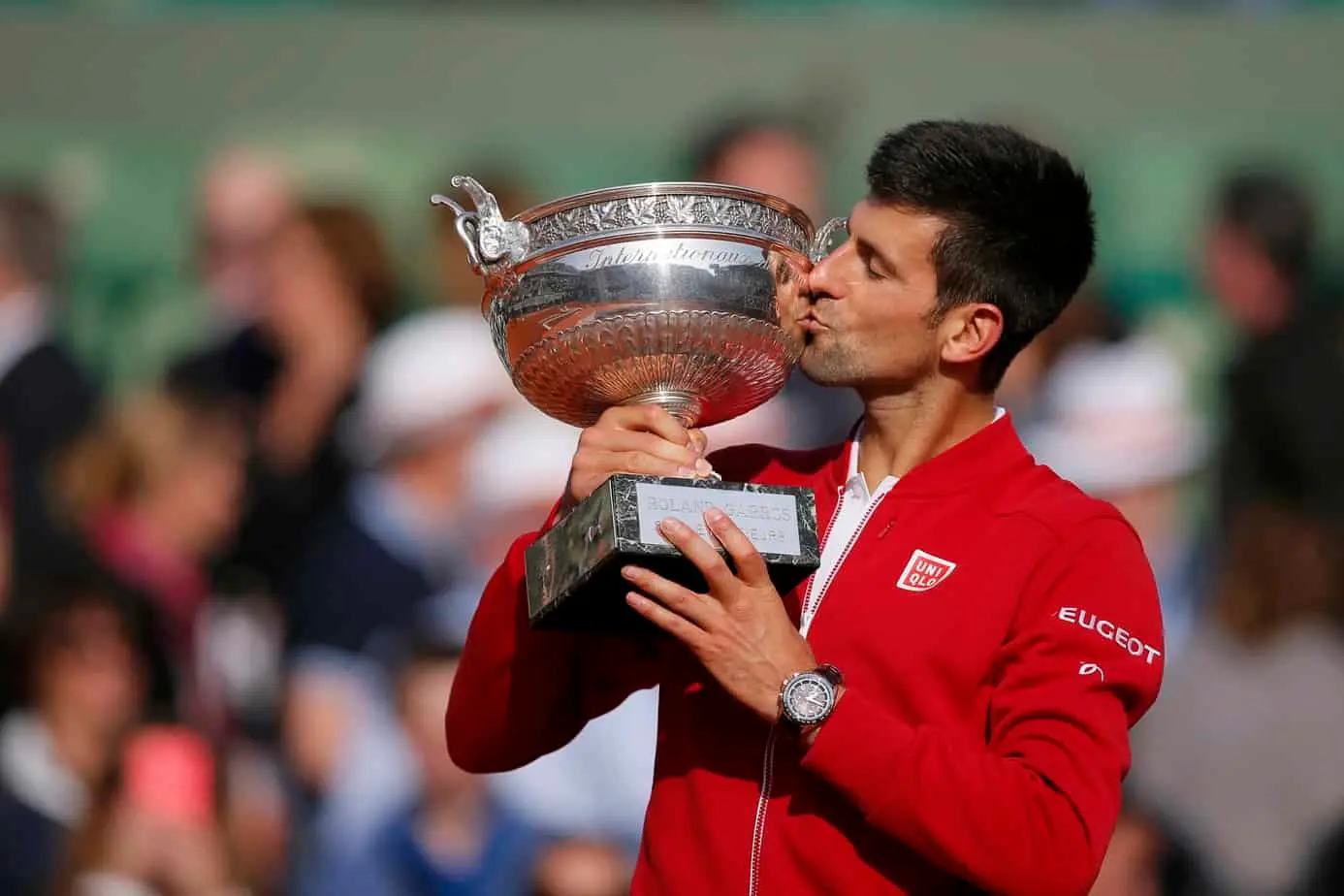
But depth is not the same as marketability. The public doesn’t buy tickets based on ranking depth. They buy tickets to watch stars. That reality may be uncomfortable, but ignoring it will not make it disappear. Perhaps the greatest irony is that the loudest protests surrounding the proposed redevelopment have focused on preserving Parc Jarry. Increasingly, those protesters may find themselves joined by people who care less about trees than economics.
Because the more this tournament demonstrates the limits of an expanded Masters 1000 format, the harder it becomes to argue that an even larger facility is the obvious answer. Sometimes expansion is progress. Sometimes it is simply expansion.
Watching Montréal this week, I have become convinced that Tennis Canada—and every government prepared to support this project with public dollars—should pause before assuming bigger automatically means better. This tournament has spent the past ten days making exactly the opposite case.

Aron SolomonGuest Author
A Pulitzer Prize-nominated journalist for his groundbreaking op-ed in The Independent exposing the NFL’s “race-norming” policies, Aron Solomon, JD, is a globally recognized thought leader in law, media, and strategy.
As Chief Strategy Officer for AMPLIFY, he leverages his deep expertise to shape the future of legal marketing. Aron has taught entrepreneurship at McGill University and the University of Pennsylvania and was honored as a Fastcase 50 recipient, recognizing him among the world’s top legal innovators. A prolific commentator on law, business, and culture, his insights regularly appear in Newsweek, The Hill, Crunchbase News, and Literary Hub.
He has also been featured in The New York Times, Fast Company, Fortune, Forbes, CBS News, CNBC, USA Today, ESPN, TechCrunch, BuzzFeed, Venture Beat and countless other leading global media outlets. We are proud to have Aron on board at TennisUpToDate, where his deep tennis expertise enriches the site with sharp, original columns that connect the sport to wider cultural debates.
claps 1visitors 1
Just In

Popular News
Latest Comments
- A healthy Qinwen may be hard to stop next season. She was already scaring her opponents before her medical leave(s). Unfortunately, Zheng insisted on singing again. On the positive side -- Mirra did not sing!! ;~}
 mandoist11-10-2026
 - Where is it written that athletes, entertainers... People in general... are mandated to keep looking at -- or even using [anti]Social Media? Public & private figures consistently complain and reveal their concerns about negativity and violence thrown at them -- yet they insist on participating. Avoid it, don't use it, don't read it. It's okay to occasionally look up at the World instead beating your eyes & thumbs to death on The Inventions out there.mandoist11-10-2026
- great articlestennisseserver07-10-2026
- Medvedev was leading Djokovic 7-5, 3-5 when an attempted return..' NO you ignorants, Djokovic was leading .weiss05-10-2026
- No more bullshit "Wildcards" to these two. Qualify like everyone else -- there will be cameras there, too. Time to scream... WTF ????!!!!mandoist29-09-2026
- Let's not BS the general public -- Sabalenka started showing cracks in her game last season. Her losses and near-losses started at about the same time she began being distracted by Fame (constant Selfies, making TV commercials, magazine shoots, endless Social Media nonsense, etc., etc.) One would think even Saba could recognize the parallels with others who failed before her -- Raducanu, Giorgi, Bouchard to name a few.mandoist25-09-2026
- Gross!! Hey Raducanu, Giorgi, and Bouchard -- reserve a seat at your Social Media Selfie table for Saba + Naomi. They're heading in your direction soon enough.mandoist24-09-2026
- And then these same players will complain about how lengthy their season’s were and need more time-off. I’m all for more tennis but the amount of tennis we get now is actually kind of crazy! We all need a break, especially the players.DaveyWavey23-09-2026
- You should do a comparison article for "different kinds of justice" the courts decide for tennis players. I can think of at least three players who received very small bans of a few months, however Tara Moore has been fighting for her literal survival the past few years. It seems odd considering she is not a "name" player, unlike the other cases.DaveyWavey22-09-2026
- PRIZE MONEY & POINTS Winner - $185,500 Finalist - $114,500 Semi-Finalist - $66,003 Quarter-Finalist - $35,000 Round of 16 - $18,045 Round of 32 - $13,005 Winner - 500 Finalist - 325 Semi-Finalist - 195 Quarter-Finalist - 108 Round of 16 - 60 Round of 32 - 1DaveyWavey20-09-2026

Loading