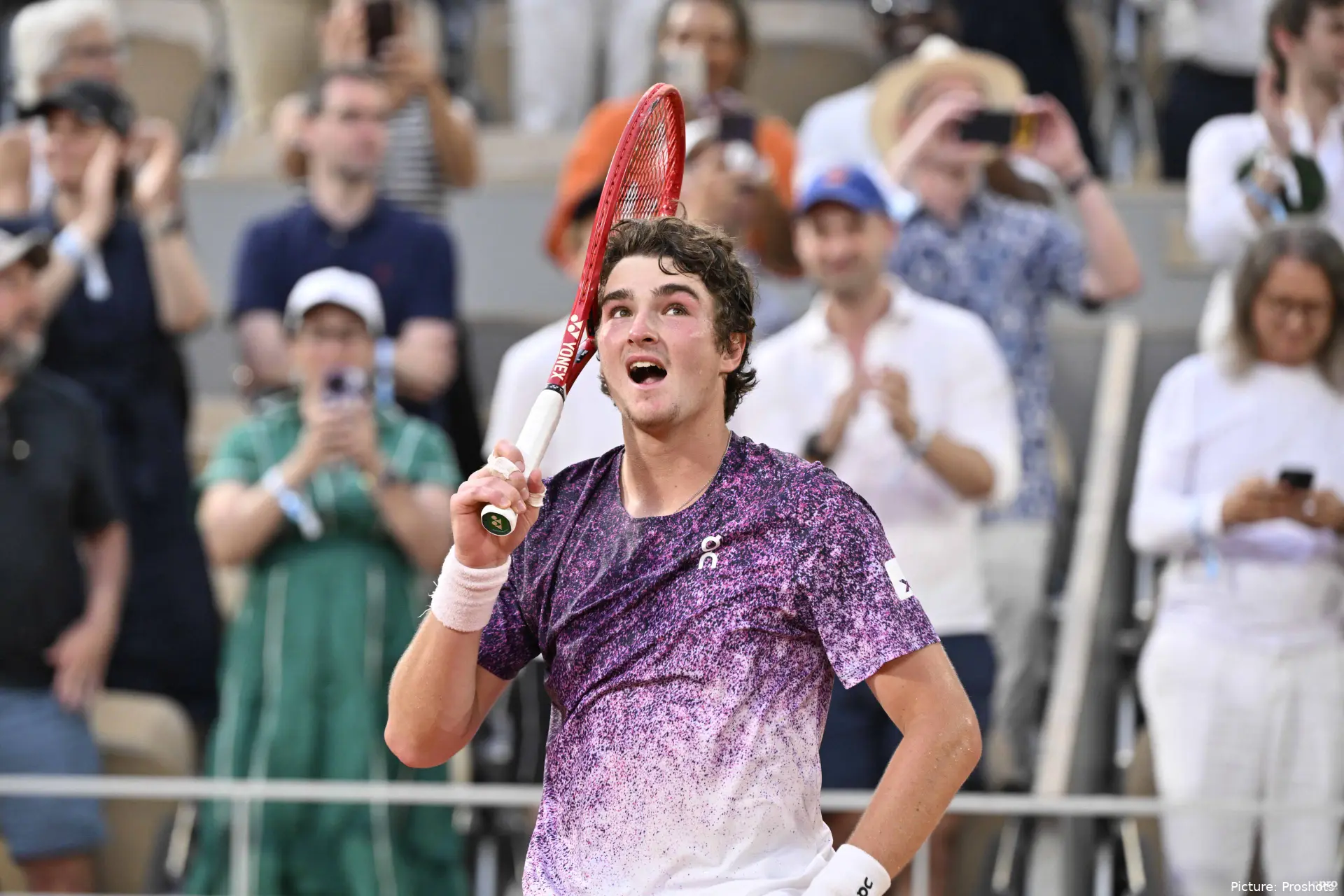
Joao Fonseca has revisited the most significant result of his young career, his five-set victory over Novak Djokovic at Roland Garros, describing it as a turning point in a season that began without confidence.
The 19-year-old Brazilian came from two sets down to defeat the three-time French Open champion in a match lasting 4 hours and 57 minutes on Court Philippe-Chatrier. The result secured his place in the quarter-finals and marked his deepest run in a Grand Slam to date.
Fonseca entered Paris with limited momentum, but said his level improved gradually through the early rounds, including a near-defeat that helped stabilise his performance before facing top-tier opposition.
His transition to grass, however, has not followed the same trajectory, with an immediate first-round exit at the Halle Open exposing the difficulty of adapting his game to faster conditions.

“Super tight match” in Paris: the Djokovic breakthrough
Fonseca described the Djokovic match as a contest defined by pressure moments and physical attrition rather than sustained dominance. He pointed to the difficulty of starting the tournament without confidence, before gradually finding rhythm through successive rounds.
The Brazilian emphasised that his early matches in Paris were unstable, but that surviving those situations helped him build belief before facing higher-level opposition. “Yeah, it was a super tight match,” he said from Halle. “I was arriving at Roland Garros with actually no confidence, just trying to improve day by day and focusing on what I could do to get better results. “

Joao Fonseca after defeating Djokovic to reach the quarter-finals of Roland Garros 2026
The victory over Djokovic, he said, emerged from staying competitive in key moments rather than controlling long stretches of play. “The first round was tough, the second round I almost lost it and got through in three sets,” the Brazilian added. “I think that motivated me, and of course against Novak it was a super tight match, Casper and all of them were very good matches, so it was a positive week and gave me a lot of confidence coming into the start of the grass season.”
Statistically, Fonseca converted six breaks from 15 opportunities while Djokovic struggled physically in the closing stages of a match that extended close to five hours. The Brazilian also saved 11 of 16 break points, a key factor in sustaining momentum across shifting phases of the contest.
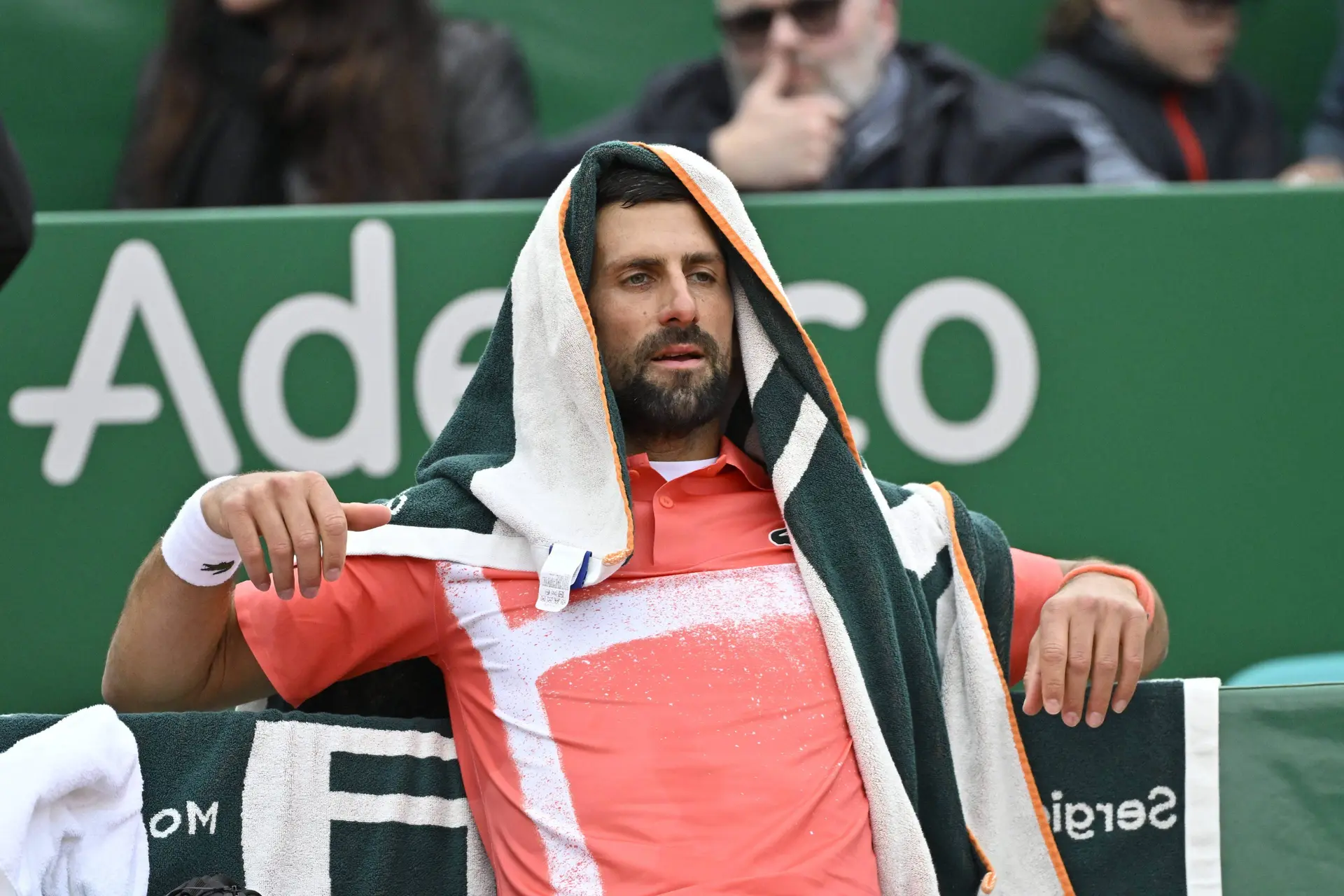
Grass transition and early exit in Halle
Fonseca acknowledged that grass requires a fundamentally different approach to clay, particularly in timing, positioning and point construction. He highlighted the reduced reaction time and the need for immediate execution, where points are often decided within a few shots.
Unlike Roland Garros, his grass campaign did not extend beyond the opening round, with a straight-sets defeat at the Halle Open. He noted that his preparation was limited to only a few days on the surface, which restricted his ability to fully adapt. “The surface has changed a lot, but on clay you wait more for the ball, it’s slower, so you have more time to produce power.”
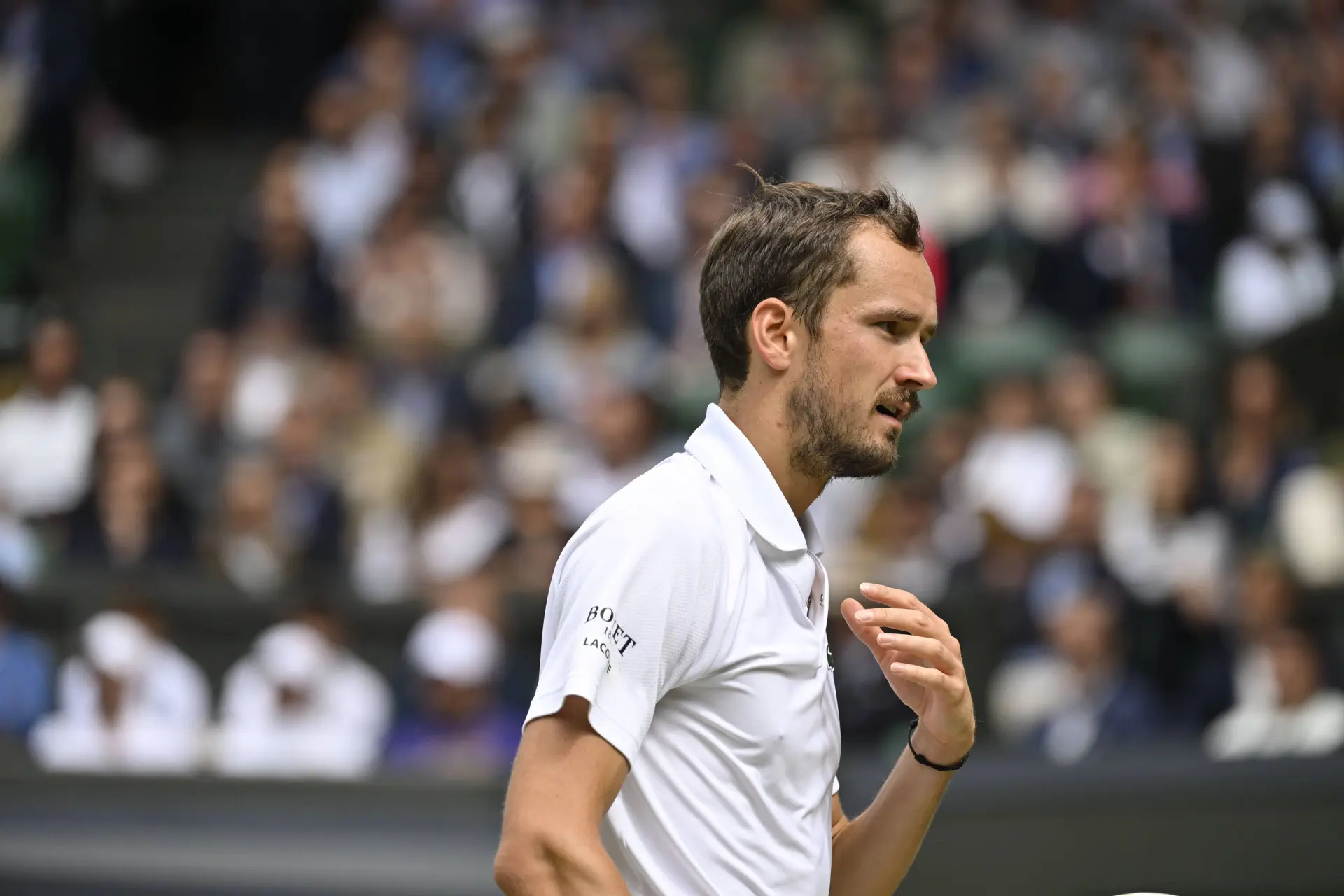
“Here it’s very quick. Even at love-40 on your serve, you can still win points. Every little opportunity is important. Sometimes the opponent produces two returns and then you can’t see the ball. It’s very fast, and approaching the net is really important.”
Fonseca is scheduled to continue his grass preparation in Eastbourne ahead of Wimbledon, where he will again attempt to translate his Roland Garros breakthrough into competitive consistency on faster surfaces.

Cristhián AvilaTennis Journalist
Cristhián Ávila is a tennis journalist based in Santiago, Chile, and has been part of the TennisUpToDate team since early 2023. He covers the ATP and WTA Tours as well as all four Grand Slams, producing breaking news, match reports, analysis, and regular liveblogs from major tournaments.
His reporting combines statistical analysis with clear explanation, helping readers understand tactical developments, player form, and broader storylines across the tour. Working fluently in both Spanish and English, Cristhián collaborates with an international editorial team and contributes to comprehensive global coverage. As part of his work, he has conducted interviews and media interactions with leading figures in the sport, including Caroline Wozniacki and John McEnroe.
In his journalism, Cristhián places strong emphasis on careful sourcing, editorial accuracy, and updating articles promptly when new, verified information becomes available. His coverage is grounded in research, context, and direct engagement with professional tennis.
claps 0visitors 0
Just In

Popular News
Latest Comments
- Two Things: 1. Stop allowing these Spoiled Trust-Fund Elitists to behave badly. Your little hand-slaps do not deter them. 2. STOP the incessantly annoying "towel wiping" nonsense!!!!
 mandoist15-10-2026
 - A healthy Qinwen may be hard to stop next season. She was already scaring her opponents before her medical leave(s). Unfortunately, Zheng insisted on singing again. On the positive side -- Mirra did not sing!! ;~}mandoist11-10-2026
- Where is it written that athletes, entertainers... People in general... are mandated to keep looking at -- or even using [anti]Social Media? Public & private figures consistently complain and reveal their concerns about negativity and violence thrown at them -- yet they insist on participating. Avoid it, don't use it, don't read it. It's okay to occasionally look up at the World instead beating your eyes & thumbs to death on The Inventions out there.mandoist11-10-2026
- great articlestennisseserver07-10-2026
- Medvedev was leading Djokovic 7-5, 3-5 when an attempted return..' NO you ignorants, Djokovic was leading .weiss05-10-2026
- No more bullshit "Wildcards" to these two. Qualify like everyone else -- there will be cameras there, too. Time to scream... WTF ????!!!!mandoist29-09-2026
- Let's not BS the general public -- Sabalenka started showing cracks in her game last season. Her losses and near-losses started at about the same time she began being distracted by Fame (constant Selfies, making TV commercials, magazine shoots, endless Social Media nonsense, etc., etc.) One would think even Saba could recognize the parallels with others who failed before her -- Raducanu, Giorgi, Bouchard to name a few.mandoist25-09-2026
- Gross!! Hey Raducanu, Giorgi, and Bouchard -- reserve a seat at your Social Media Selfie table for Saba + Naomi. They're heading in your direction soon enough.mandoist24-09-2026
- And then these same players will complain about how lengthy their season’s were and need more time-off. I’m all for more tennis but the amount of tennis we get now is actually kind of crazy! We all need a break, especially the players.DaveyWavey23-09-2026
- You should do a comparison article for "different kinds of justice" the courts decide for tennis players. I can think of at least three players who received very small bans of a few months, however Tara Moore has been fighting for her literal survival the past few years. It seems odd considering she is not a "name" player, unlike the other cases.DaveyWavey22-09-2026

Loading