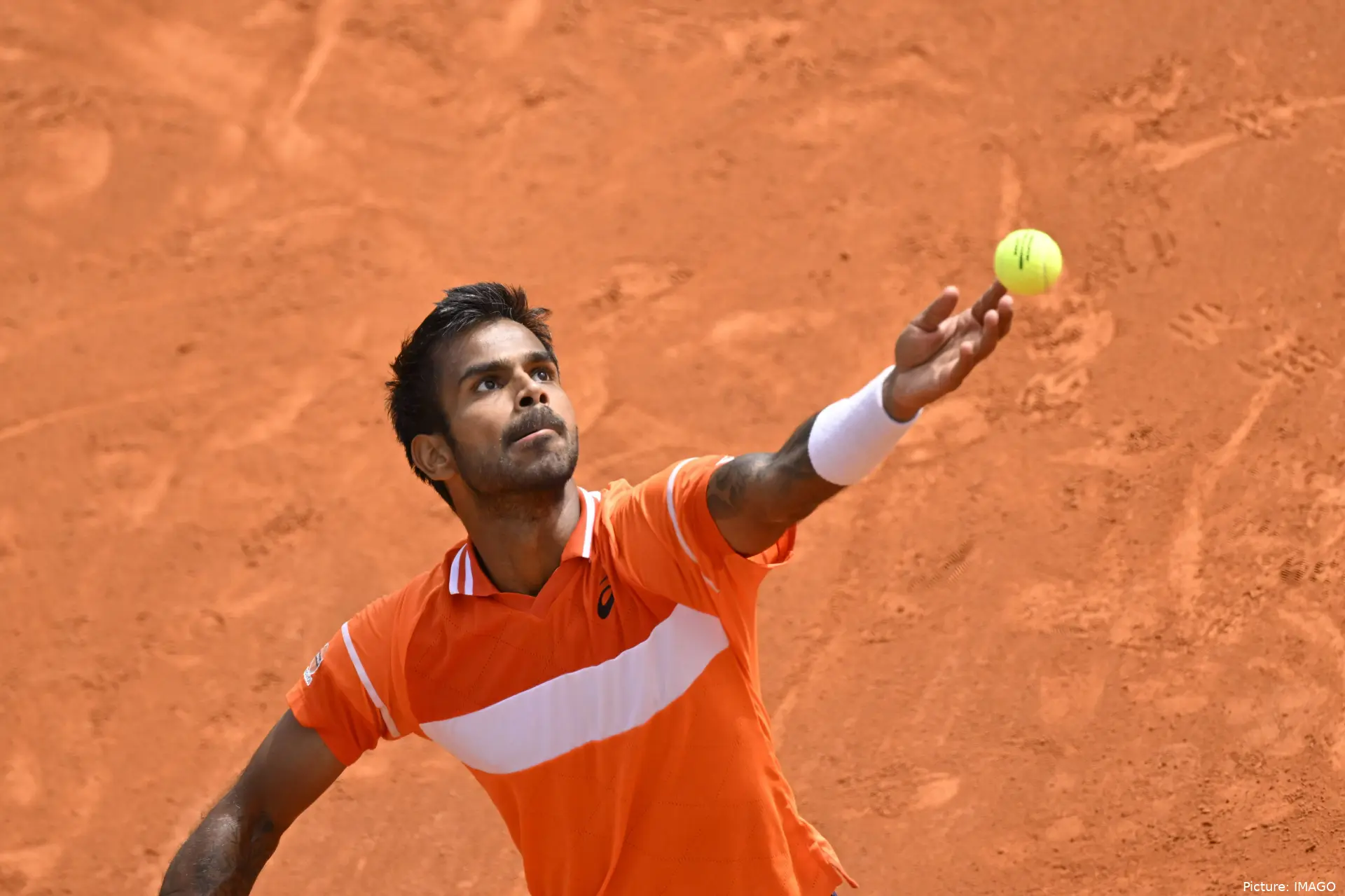
Sumit Nagal has publicly criticised tennis officiating after being disqualified during his first-round match at the ATP Challenger event in Poznań. The former world No. 68 took to social media shortly after the incident, arguing that a disputed call and the handling of his appeal exposed what he described as a wider problem within the sport.
The Indian player was facing Petr Brunclik when the controversy occurred. According to Nagal, a ball that landed clearly out was not called by either the line judge or the chair umpire. He maintains that he immediately appealed the decision, but the umpire neither acknowledged the appeal nor inspected the mark on the clay court.
The incident escalated into a confrontation that ultimately led to Nagal's disqualification. However, rather than focusing solely on the punishment, the 28-year-old used the episode to question officiating procedures, player protections and the lack of technological support at Challenger-level events.
Nagal's statement quickly shifted from the specific point in Poznań to broader concerns about accountability in professional tennis. In particular, he questioned why players are regularly fined for mistakes or misconduct while, in his view, officials face little scrutiny when controversial decisions affect matches.
Read also
“Massive flaw in our sport” – Nagal details the disputed point
Nagal began his statement by describing the Poznań incident as evidence of a wider issue within professional tennis and structured his explanation around what he viewed as three separate problems with the handling of the point.
“Dear all, I am speaking on something that happened yesterday in Poznan, which highlights a massive flaw in our sport," the former top-70 player wrote. "There are three distinct points I want to raise regarding this incident:”
The Indian then outlined his version of the rally, insisting that the ball was clearly out and that his attempt to challenge the call was immediate and visible.
“1) I was playing a point, where I ran towards the ball, which was clearly out - as you can see in the picture. There was a linesman and a chair umpire refereeing the match. The call never came from either of them. So I raised my hand immediately (as you can clearly see in the video) but the umpire claims she didn’t see it, which can happen, but then she refused to come down and even check the mark.”
Nagal also argued that ATP regulations permitted him to challenge the decision even after making contact with the ball, provided his actions did not influence the outcome of the point.
“2) The ATP rule says I am allowed to hit one ball after it bounces, it doesn’t matter where it goes, I can still challenge the call if it didn’t affect the play. Which is exactly what I did by raising my hand.”
Accountability and technology at Challenger level
The strongest section of Nagal's statement focused on accountability, with the former top-70 player questioning why players can be fined for mistakes while officials face little visible consequence when errors occur during matches.
“3) Players get penalized for mistakes that happen knowingly or unknowingly. Mistakes can happen; we are humans and I understand. But why do we players get penalized with money when we make mistakes, and not chair umpires? Players have the added pressure of needing to win to make money.
"Umpires have comparatively less pressure because they don’t need to win to get paid. Why should they face no pressure? For players, one wrong call can decide a match or even a tournament. You get penalized in life if you make a mistake knowingly or unknowingly. There are plenty of scenarios.”
Nagal also described the emotional impact the incident had on him after the disputed point, arguing that the combination of the missed call, the refusal to inspect the mark, and the failure to recognise his appeal left him without any meaningful way to challenge the decision.
“Today I felt so hopeless and broken-hearted because I couldn’t even defend myself. It was emotionally tough for me to get past that point afterwards. I got 3 wrong calls in a single point - where no call came, referee refused to come down to check and referee doesn’t see me appeal to it.”
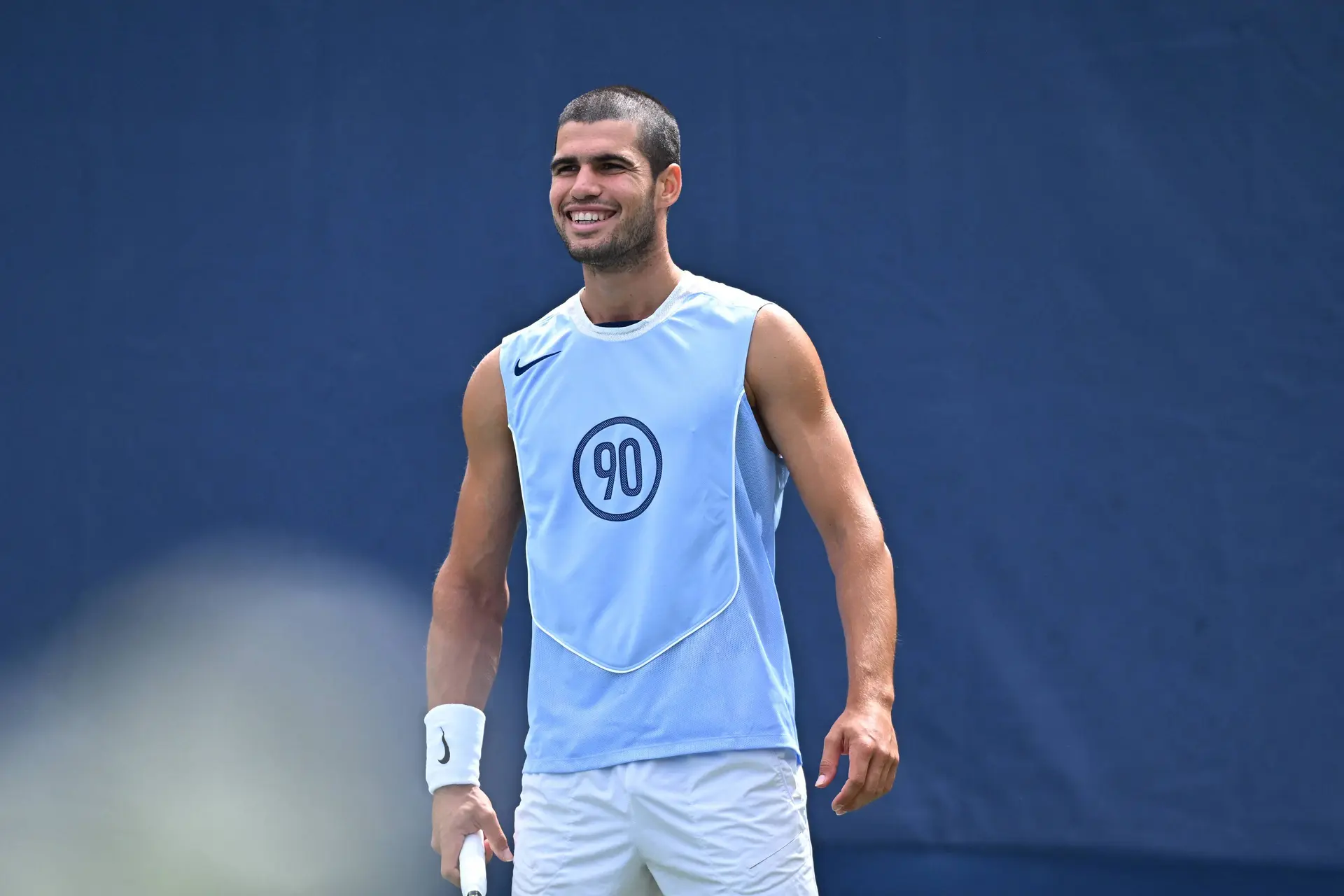
The Indian concluded by calling on the ATP and ITF to introduce stronger technological safeguards throughout professional tennis, particularly outside the sport's biggest events, where electronic officiating remains less widespread.
“I humbly request ATP/ITF to make a change that would enable us players to defend ourselves as well. I believe matches should not be dependent on merely referees in 2026 when you can leverage technology. I am sorry if I let my fans/supporters down. Thank you and see you.”

Cristhián AvilaTennis Journalist
Cristhián Ávila is a tennis journalist based in Santiago, Chile, and has been part of the TennisUpToDate team since early 2023. He covers the ATP and WTA Tours as well as all four Grand Slams, producing breaking news, match reports, analysis, and regular liveblogs from major tournaments.
His reporting combines statistical analysis with clear explanation, helping readers understand tactical developments, player form, and broader storylines across the tour. Working fluently in both Spanish and English, Cristhián collaborates with an international editorial team and contributes to comprehensive global coverage. As part of his work, he has conducted interviews and media interactions with leading figures in the sport, including Caroline Wozniacki and John McEnroe.
In his journalism, Cristhián places strong emphasis on careful sourcing, editorial accuracy, and updating articles promptly when new, verified information becomes available. His coverage is grounded in research, context, and direct engagement with professional tennis.
claps 0visitors 0
Just In



Popular News
Latest Comments
- Two Things: 1. Stop allowing these Spoiled Trust-Fund Elitists to behave badly. Your little hand-slaps do not deter them. 2. STOP the incessantly annoying "towel wiping" nonsense!!!!
 mandoist15-10-2026
 - A healthy Qinwen may be hard to stop next season. She was already scaring her opponents before her medical leave(s). Unfortunately, Zheng insisted on singing again. On the positive side -- Mirra did not sing!! ;~}mandoist11-10-2026
- Where is it written that athletes, entertainers... People in general... are mandated to keep looking at -- or even using [anti]Social Media? Public & private figures consistently complain and reveal their concerns about negativity and violence thrown at them -- yet they insist on participating. Avoid it, don't use it, don't read it. It's okay to occasionally look up at the World instead beating your eyes & thumbs to death on The Inventions out there.mandoist11-10-2026
- great articlestennisseserver07-10-2026
- Medvedev was leading Djokovic 7-5, 3-5 when an attempted return..' NO you ignorants, Djokovic was leading .weiss05-10-2026
- No more bullshit "Wildcards" to these two. Qualify like everyone else -- there will be cameras there, too. Time to scream... WTF ????!!!!mandoist29-09-2026
- Let's not BS the general public -- Sabalenka started showing cracks in her game last season. Her losses and near-losses started at about the same time she began being distracted by Fame (constant Selfies, making TV commercials, magazine shoots, endless Social Media nonsense, etc., etc.) One would think even Saba could recognize the parallels with others who failed before her -- Raducanu, Giorgi, Bouchard to name a few.mandoist25-09-2026
- Gross!! Hey Raducanu, Giorgi, and Bouchard -- reserve a seat at your Social Media Selfie table for Saba + Naomi. They're heading in your direction soon enough.mandoist24-09-2026
- And then these same players will complain about how lengthy their season’s were and need more time-off. I’m all for more tennis but the amount of tennis we get now is actually kind of crazy! We all need a break, especially the players.DaveyWavey23-09-2026
- You should do a comparison article for "different kinds of justice" the courts decide for tennis players. I can think of at least three players who received very small bans of a few months, however Tara Moore has been fighting for her literal survival the past few years. It seems odd considering she is not a "name" player, unlike the other cases.DaveyWavey22-09-2026

Loading