“I guarantee you—he knows this is a shot”: Andy Roddick sees Wimbledon as Novak Djokovic’s real chance at Grand Slam No. 25
ATP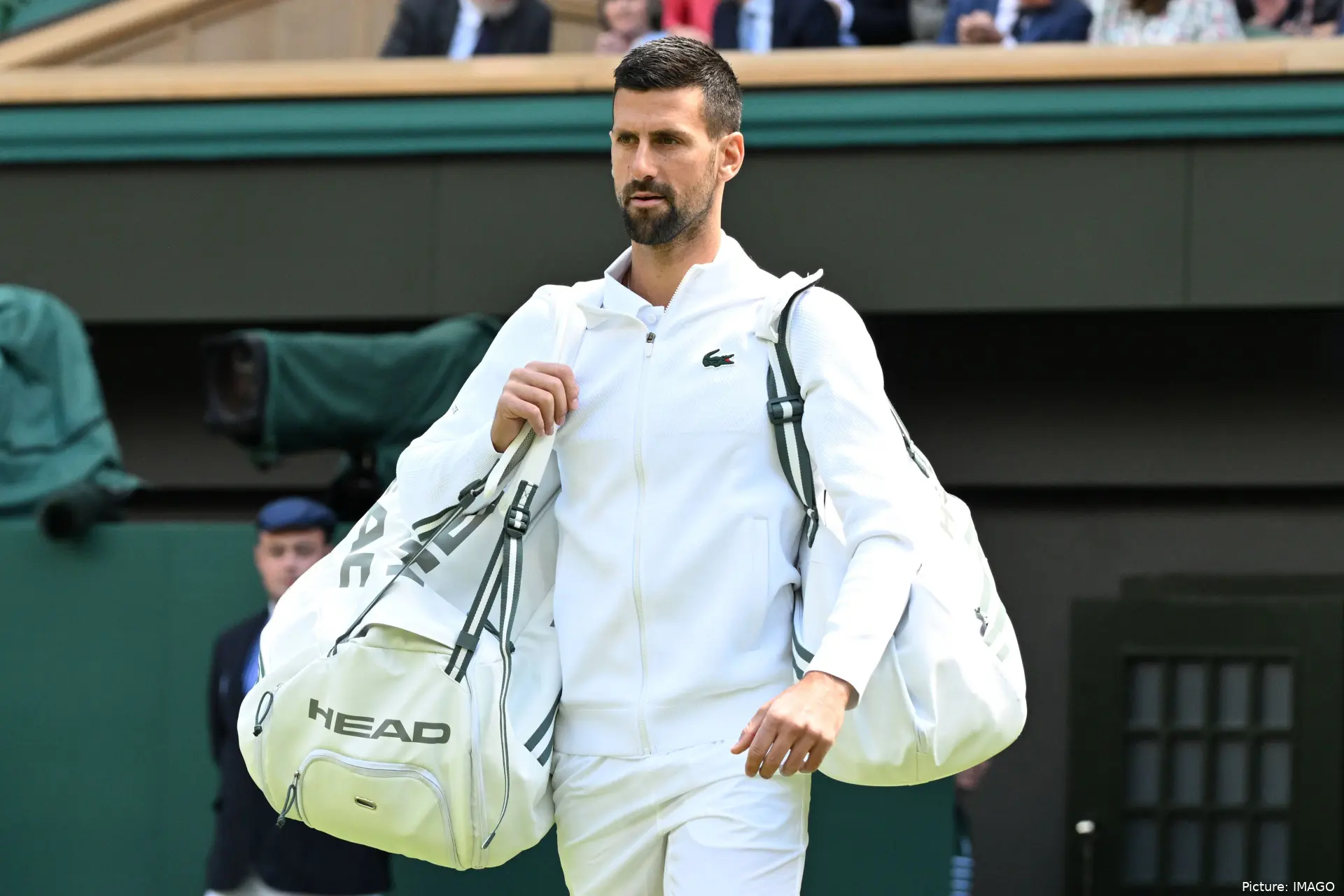
Andy Roddick used his Served podcast to assess Novak Djokovic’s chances of winning a 25th Grand Slam title, placing Wimbledon at the centre of his analysis of modern grass-court tennis. His breakdown focused on tactical structure, return quality, and the diminishing relevance of traditional serve-dominant narratives.
Roddick questioned long-standing assumptions about success on grass, particularly the idea that serve alone can define outcomes at the highest level. He repeatedly returned to the importance of return efficiency and early-ball control as primary separators.
A significant portion of his comments centred on Djokovic’s continued relevance at Wimbledon. Roddick linked the Serbian’s success to structural advantages in movement, return positioning, and neutralisation of pace on low-bounce surfaces.
His broader argument was that grass courts reward a narrower, more immediate form of tennis than clay or hard courts, where extended construction is more viable.

Djokovic and the structural advantage on grass
Roddick positioned Djokovic as the central reference point for understanding Wimbledon’s tactical reality, particularly due to the Serbian’s efficiency in return games and rally initiation.
“Novak was at an F1 race this weekend. They were asking him how excited he is for Wimbledon and how he feels about it. And he’s like: ‘I’m looking forward to it because I don’t have to run as much as you do on clay.’”
This, according to Roddick, contributes to the Serbian’s sustained competitiveness at Wimbledon despite generational pressure. “I think it’s interesting—you were just talking about that. You can hit yourself out of trouble more than on any other surface.”
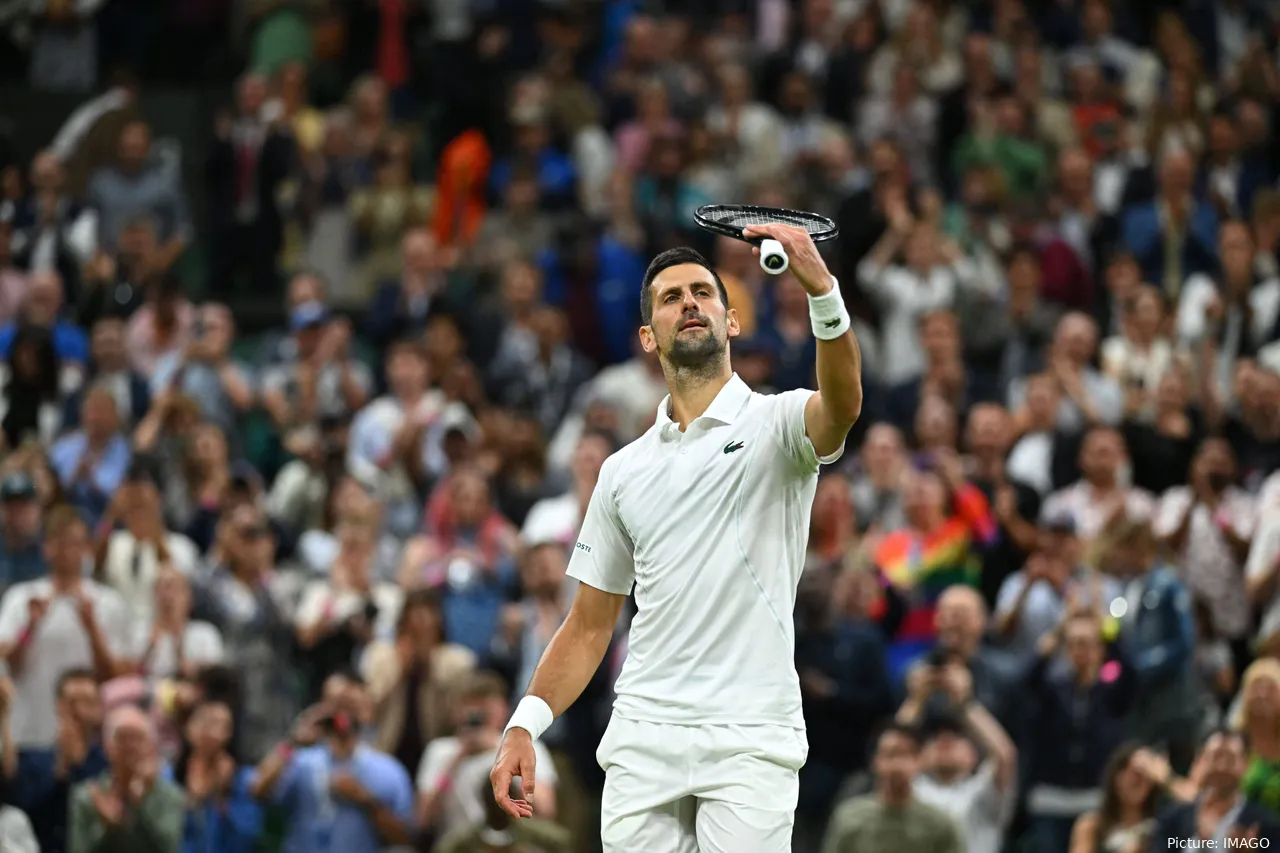
Roddick suggested that grass magnifies Djokovic’s ability to control space early in points. “I don’t know that we’ll find an analyst that doesn’t think Wimbledon is his best shot, especially without Carlos.”
The American also acknowledged lingering questions around Jannik Sinner, particularly considering his surprising second-round loss at Roland Garros, which for the first time this year made him look more vulnerable.
However, Roddick did not lose sight of the fact that Sinner remains the main favourite. “There are question marks about Jannik. I know you’ve been on the ‘let’s see, 25’ train for a while there. You were willing it in Roland Garros,” the 2003 US Open champion said, although he believes that for Djokovic this could be his best chance.
“This is a real shot. I don’t hate that he didn’t make the semis of Roland Garros. This is a—I guarantee you—he knows this is a shot. He’s taken a picture of the landscape of tennis.
“Obviously Sinner is still going to be Sinner, but he’s going: ‘Listen, I could be the best grass court player in this tournament. Now, am I in my prime? Probably not. Am I good enough? I don’t know if I’m in team Novak. I can convince myself of that reality pretty easily.’”
“That’s not a real thing anymore”: Serve myths and return reality
Roddick directly challenged the conventional framing of grass-court tennis as serve-dominated, rejecting what he called a “lazy narrative” about its impact on match outcomes. He argued that modern Wimbledon success cannot be built on serve alone.
“The lazy narrative is: big serve, gonna go far on grass,” the former world No. 1 said. “If you can’t return, point out how many guys that can’t return win Wimbledon. Not since like the 70s. That’s not a real thing anymore.”
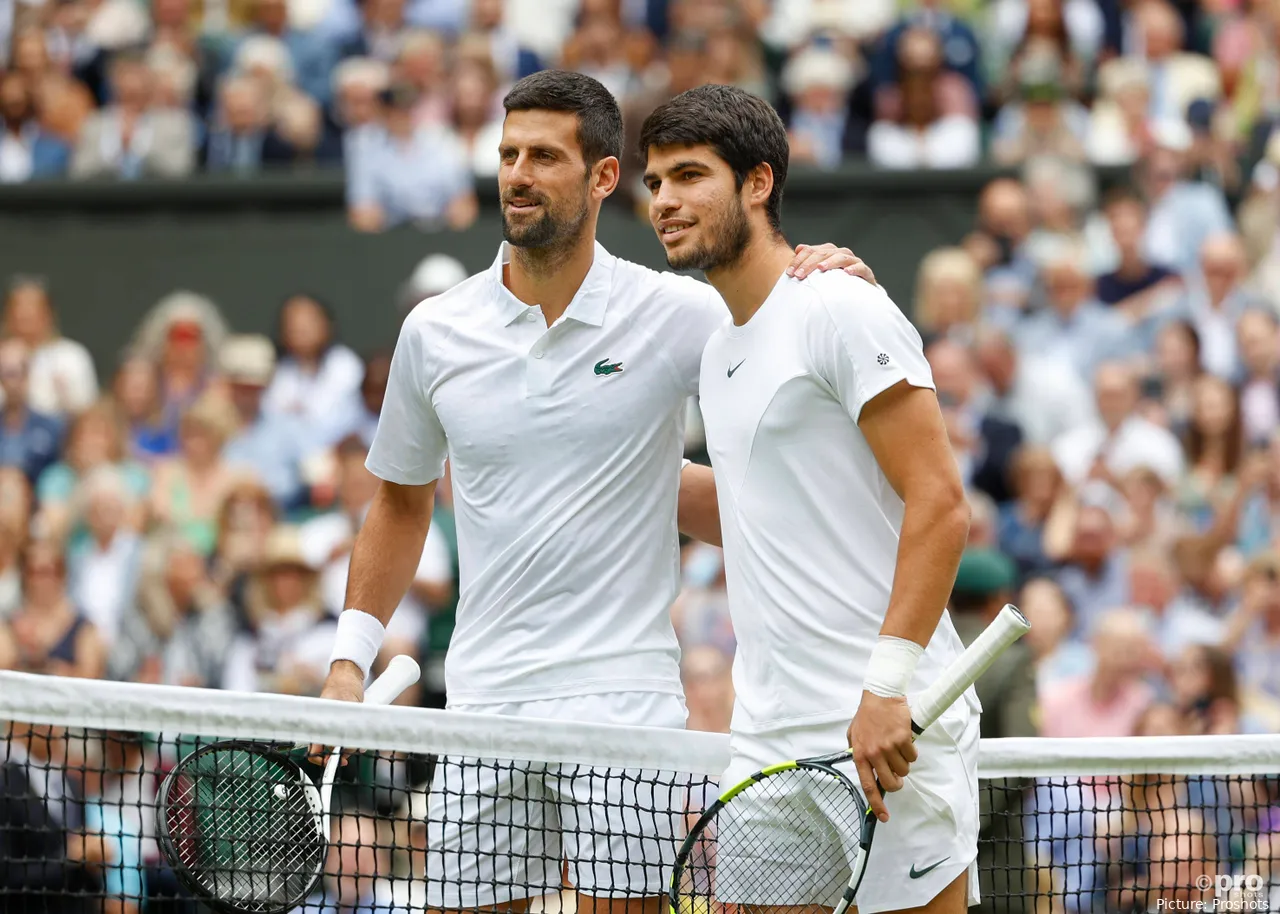
Carlos Alcaraz and Novak Djokovic at Wimbledon
He expanded this point by referencing historical contrasts, suggesting that the modern game has structurally reduced the advantage of pure serving profiles. Return quality, in his view, has become non-negotiable at Wimbledon’s elite level.
“People don’t come in, you have to… you look at Lleyton Hewitt. He was a nightmare on grass. Didn’t serve huge, but he got… did he hold, I don’t know what the numbers are, 10% more because grass was helping him?”
Roddick framed Hewitt as an example of efficiency over power, where marginal gains in hold percentage and return pressure outweighed raw serve speed. “Depth is more rewarded on grass than any other surface. The movement matters… A lot of times at Wimbledon, your best play is running through the shot by half a step or a full step, right?”

Cristhián AvilaTennis Journalist
Cristhián Ávila is a tennis journalist based in Santiago, Chile, and has been part of the TennisUpToDate team since early 2023. He covers the ATP and WTA Tours as well as all four Grand Slams, producing breaking news, match reports, analysis, and regular liveblogs from major tournaments.
His reporting combines statistical analysis with clear explanation, helping readers understand tactical developments, player form, and broader storylines across the tour. Working fluently in both Spanish and English, Cristhián collaborates with an international editorial team and contributes to comprehensive global coverage. As part of his work, he has conducted interviews and media interactions with leading figures in the sport, including Caroline Wozniacki and John McEnroe.
In his journalism, Cristhián places strong emphasis on careful sourcing, editorial accuracy, and updating articles promptly when new, verified information becomes available. His coverage is grounded in research, context, and direct engagement with professional tennis.
claps 0visitors 0
Just In

Popular News


Latest Comments
- Does Sinner need that 4.5 mil? I doubt it. He can make that with three modelling gigs!😅🤣Rapunzel21-10-2026
- Did "People Magazine" purchase this website? This nonstop storyline is bullshit.
 mandoist21-10-2026
 - Listen... this is of no concern to anyone but these two. Deal with your own issues -- most of us have our own. Thanks, media, for these insignificant follow-ups which are meaningless.mandoist21-10-2026
- This is so very very sad, for all three of them. I truly thought they had an unbreakable bond, but life throws up so many differing challenges. Having your homeland suffering in such a terrible way, makes happiness lose out to guilt as well. Our thoughts are with them. X💔bjsexton20-10-2026
- I have lost all respect for Svitolina! Could she not have waited until he had played at the Paris Masters!!! She is selfish and don't give a damn about Gael. That is NOT how love is demonstrated Elina!!Rapunzel19-10-2026
- Perhaps convenient tennis tour sex is not a strong enough experience in which to base a marriage?mandoist19-10-2026
- Fight the Good Fight... Tennis (sports in general) need more Humans such as yourself.mandoist18-10-2026
- When is WTA going to mandate Genetic Testing (DNA) ???mandoist18-10-2026
- Hey, Dan... you just wake up from a coma? Regardless -- Thanks for the comedy this morning!mandoist18-10-2026
- Two Things: 1. Stop allowing these Spoiled Trust-Fund Elitists to behave badly. Your little hand-slaps do not deter them. 2. STOP the incessantly annoying "towel wiping" nonsense!!!!mandoist15-10-2026

Loading