“It doesn’t matter the score—they play their best”: Andrey Rublev explains gap to Alcaraz and Sinner
ATP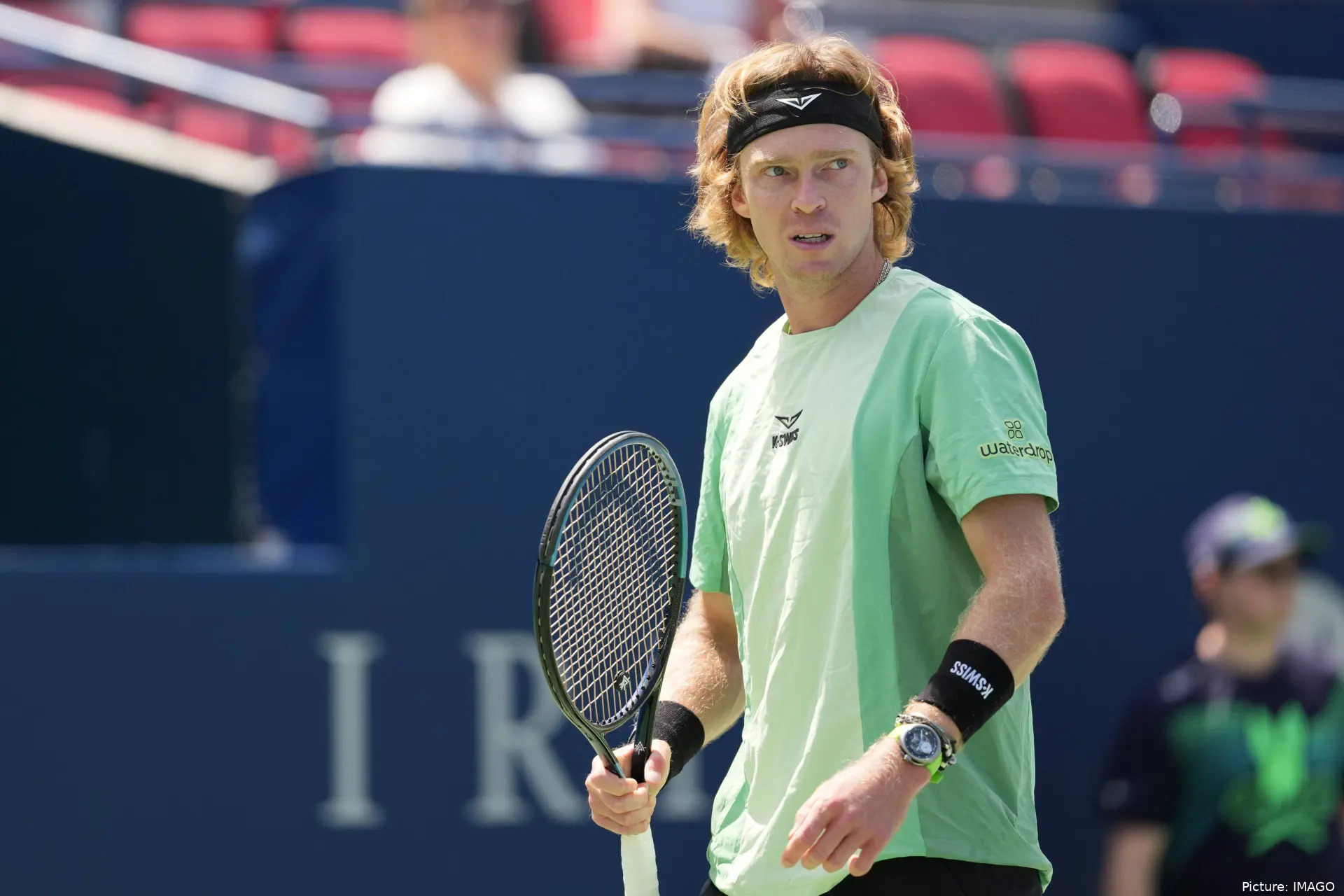
Andrey Rublev has been pushed into the background over the past two seasons amid the sustained dominance of Carlos Alcaraz and Jannik Sinner. For years, the Russian was part of the tour’s elite tier, firmly established inside the Top 5 during the final phase of the Novak Djokovic–Rafael Nadal era. However, with the consolidation of a new leading duo, Rublev has gradually lost ground in the race for the biggest titles.
While Alcaraz and Sinner have established themselves as the clear top two—currently occupying the No. 1 and No. 2 rankings and regularly alternating in the latter stages of Grand Slams and Masters 1000 events—Rublev has seen his presence fade at that level. He has dropped out of the Top 10 and is no longer a consistent contender in the decisive rounds of major tournaments.
Still, the former World No. 5 has experienced this transition from close range. Rublev has faced both players multiple times, recording wins against each—three against Sinner and one against Alcaraz—adding to a broader record that also includes victories over members of the Big Three. That proximity has given him a clear reference point for evaluating the current hierarchy.
The 27-year-old offered a candid assessment of that gap in an interview with Il Corriere dello Sport, identifying not just a difference in results, but in approach. For Rublev, the separation lies in how Alcaraz and Sinner sustain their level regardless of context, a structural advantage that continues to define the top of the ATP Tour.

“They just play tennis”: Rublev identifies structural gap
Rublev’s analysis centres on competitive identity. In his view, the defining trait of both Alcaraz and Sinner is their ability to maintain the same aggressive, proactive tennis regardless of scoreboard pressure or match situation—something he admits fluctuates in his own game.
“The difference between them and us is that they play tennis. It doesn’t matter the score, the round or anything else—they play their best tennis. Sometimes I play tennis, sometimes I just hope to serve or return well so I don’t have to deal with rallies, sometimes I hope for a double fault, and sometimes I just hope I don’t miss.”
This distinction reflects a broader pattern at the top of the ATP Tour. Both players impose baseline pressure consistently, sustain high rally tolerance, and dictate play even in defensive positions. Their shot selection remains stable under pressure, which translates into higher efficiency in key moments—particularly on return games and extended exchanges.
By contrast, Rublev’s own description points to variability. His game—built around forehand dominance and early ball-striking—can be highly effective when he controls tempo. However, against opponents who maintain structural clarity across all phases of a match, those fluctuations become more exposed.
From elite contender to chasing the benchmark
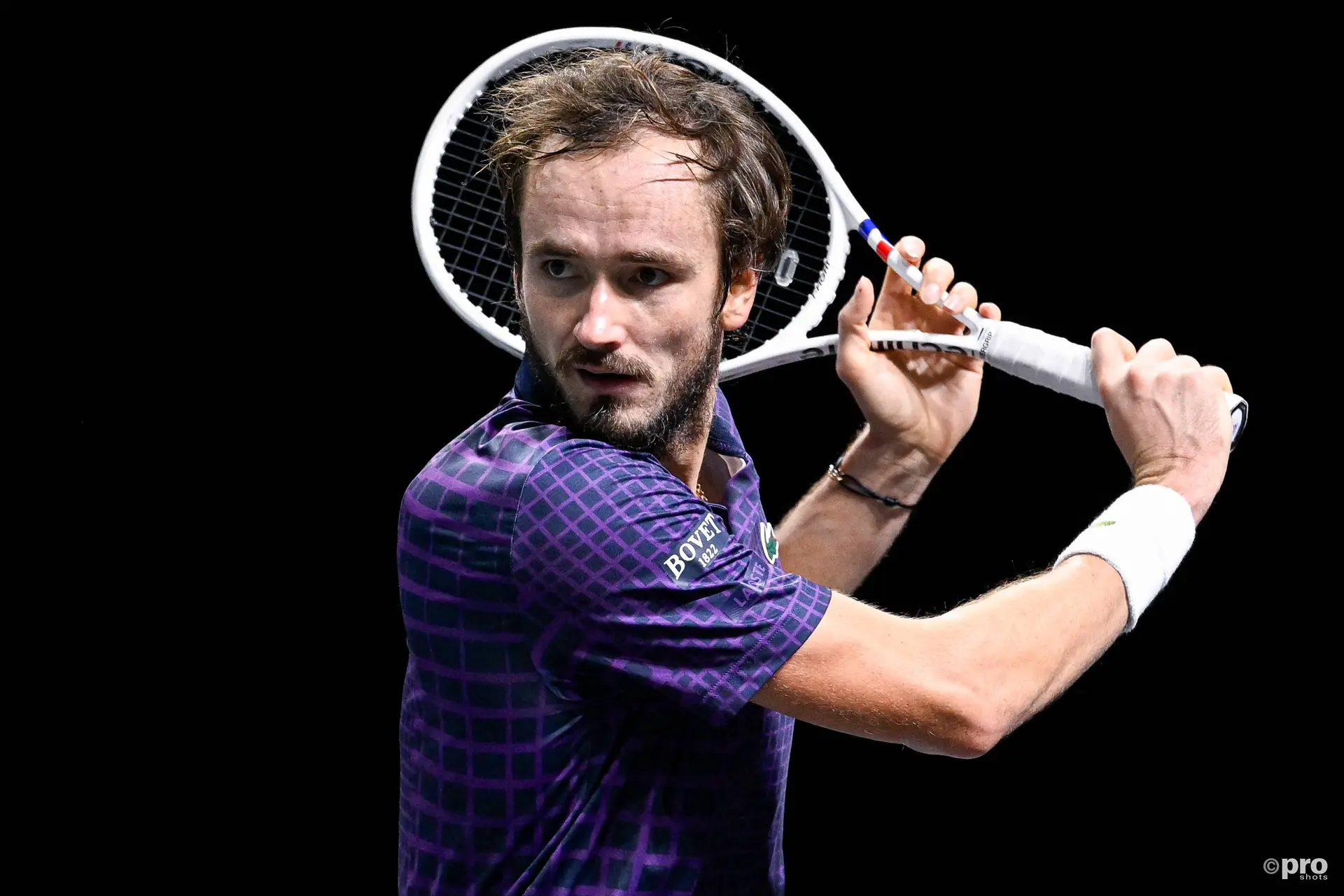
Rublev does not frame the gap as purely negative. Instead, he views the trajectory of Alcaraz and Sinner as a model for accelerated progression, reinforcing the idea that structural improvements can still translate into results, even within a compressed competitive window.
“I’ve played them many times and, in a way, their rise gave me hope," claimed Andrey Rublev. "Because it took them one or two years to reach the top. That made me think that, with the right approach, you can succeed in a reasonable time, even if those two are ahead of everyone right now.”
Alcaraz and Sinner have both won multiple Grand Slam titles, reached World No. 1 and collected Masters 1000 trophies, establishing themselves as the two leading players on tour. They have consistently occupied the top two positions and dominated the biggest events in recent seasons. “Sinner and Alcaraz obviously have their concerns, but they are able to overcome them," concluded the current world No. 16.

Cristhián AvilaTennis Journalist
Cristhián Ávila is a tennis journalist based in Santiago, Chile, and has been part of the TennisUpToDate team since early 2023. He covers the ATP and WTA Tours as well as all four Grand Slams, producing breaking news, match reports, analysis, and regular liveblogs from major tournaments.
His reporting combines statistical analysis with clear explanation, helping readers understand tactical developments, player form, and broader storylines across the tour. Working fluently in both Spanish and English, Cristhián collaborates with an international editorial team and contributes to comprehensive global coverage. As part of his work, he has conducted interviews and media interactions with leading figures in the sport, including Caroline Wozniacki and John McEnroe.
In his journalism, Cristhián places strong emphasis on careful sourcing, editorial accuracy, and updating articles promptly when new, verified information becomes available. His coverage is grounded in research, context, and direct engagement with professional tennis.
claps 0visitors 0
Just In


Popular News

Latest Comments
- Lena... Takin' care of business
 mandoist25-10-2026
 - Can you please stop publishing this nonsense? Stick to Tennis.mandoist25-10-2026
- Does Sinner need that 4.5 mil? I doubt it. He can make that with three modelling gigs!😅🤣Rapunzel21-10-2026
- Did "People Magazine" purchase this website? This nonstop storyline is bullshit.mandoist21-10-2026
- Listen... this is of no concern to anyone but these two. Deal with your own issues -- most of us have our own. Thanks, media, for these insignificant follow-ups which are meaningless.mandoist21-10-2026
- This is so very very sad, for all three of them. I truly thought they had an unbreakable bond, but life throws up so many differing challenges. Having your homeland suffering in such a terrible way, makes happiness lose out to guilt as well. Our thoughts are with them. X💔bjsexton20-10-2026
- I have lost all respect for Svitolina! Could she not have waited until he had played at the Paris Masters!!! She is selfish and don't give a damn about Gael. That is NOT how love is demonstrated Elina!!Rapunzel19-10-2026
- Perhaps convenient tennis tour sex is not a strong enough experience in which to base a marriage?mandoist19-10-2026
- Fight the Good Fight... Tennis (sports in general) need more Humans such as yourself.mandoist18-10-2026
- When is WTA going to mandate Genetic Testing (DNA) ???mandoist18-10-2026

Loading