“There’s no better place to play tennis”: Jannik Sinner shifts focus to Monte Carlo after Sunshine Double
ATP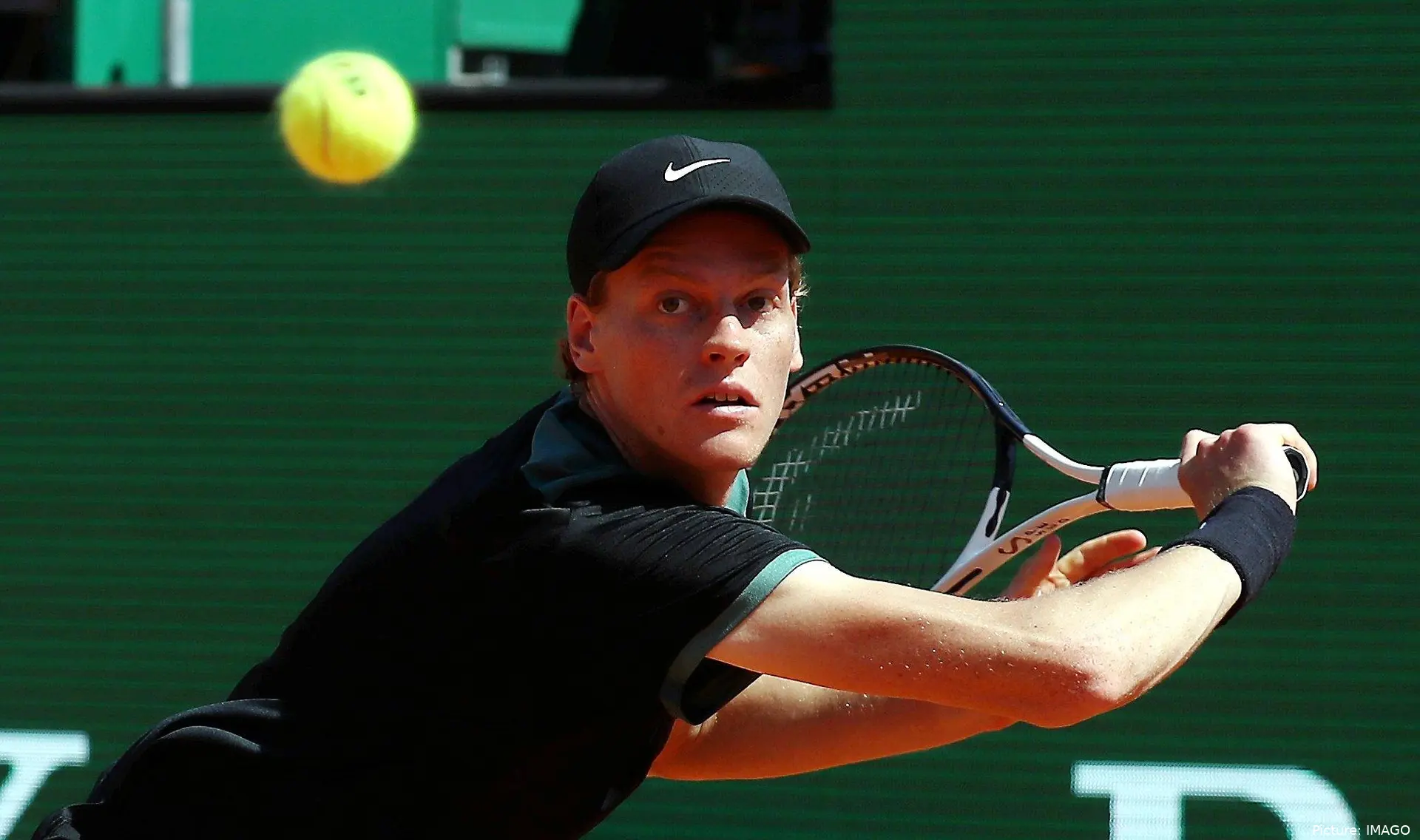
Jannik Sinner arrives at the Monte-Carlo Masters one week after completing the Sunshine Double, having won back-to-back titles at Indian Wells and the Miami Open. The Italian opens his clay-court campaign after a sustained run on hard courts, transitioning to a surface that presents different tactical and physical demands.
The 24-year-old has built his recent results on consistency across varying conditions, navigating two distinct tournaments in the United States. Indian Wells and Miami traditionally reward different playing styles, and Sinner’s ability to win both events underlined his adaptability over the past fortnight.
Monte Carlo marks the first Masters 1000 event of the European clay season and introduces a different competitive context. Points are typically constructed over longer rallies, with reduced emphasis on serve dominance compared to hard courts, placing greater importance on movement and endurance.
The world No. 2 acknowledged both the turnaround and the change in surface, describing the period as positive while recognising the adjustment required ahead of the clay swing.
Read also

Managing transition and preparation
Sinner outlined a structured approach to the days following his Miami title, beginning with light sessions before gradually increasing intensity. His preparation focused on reacclimatising to clay conditions, particularly movement patterns and physical readiness.
He indicated that initial practices were deliberately controlled, prioritising feel and timing over intensity. Access to the main court early in the week also formed part of the preparation, allowing him to adjust to conditions that differ from standard practice environments.
“I do believe still that sometimes the simple stuff are the best ones,” he said in an interview during Media Day in Monte-Carlo. “We started again on Thursday morning with a couple of practice sessions. The first one very slow, just with the coach. The second one we hit on the center court to feel how it is, because usually you don’t have a lot of time to practice there. Yesterday again a couple of practice sessions, and from now on only one because I also need to recover physically and mentally.”
He also suggested that Monte Carlo fits within a broader sequence of clay events, with an emphasis on building form across the swing rather than focusing exclusively on a single tournament. “I also know in my mind that this might be just a preparation tournament for the next one coming up, and after this tournament I have some rest, so I try to push as much as I can.”
Technical adjustments on clay
A central theme in Sinner’s development has been the evolution of his serve, which contributed significantly to his results on hard courts. On clay, however, he emphasised that the role of the serve changes, requiring greater emphasis on rally construction.
Rather than relying on outright winners, Sinner highlighted the need to structure points through early exchanges, adapting to variations in spin and pace that are characteristic of clay-court tennis.
“I believe that it’s all a process and the process is not done yet because I’m 24 years old. It doesn’t mean anything if I serve well in two tournaments. The pace is different, the spin is different when you play on clay. You don’t aim always for the ace, you try to structure your point with early shots.”
His record on clay reflects that progression. While he has secured one ATP title on the surface earlier in his career, he has yet to win a Masters 1000 or Grand Slam event on clay, making this phase of the season an ongoing area of development.
“I also know mentally that I can play good on clay. It doesn’t mean that I win. I also know that I can lose. I never won anything big on this surface. I’m looking forward to it, trying to put myself in the position hopefully, and then we’ll see. I cannot predict the future.”
Context and outlook in Monte Carlo
Sinner enters Monte Carlo following one of the most successful stretches of his season, but the shift in surface introduces a different set of variables. The tournament has not historically been among his strongest results, and the transition from hard courts to clay remains a key test early in the European swing.
Within the current ATP landscape, clay-court performance continues to differentiate results across the leading group of players. Monte Carlo, as the opening Masters event on the surface, provides an early reference point for form ahead of the rest of the clay season.
Sinner maintained a measured assessment of his position, balancing confidence from recent results with the uncertainties that come with a surface change. “It’s very special for me personally because two completely different tournaments, different situations and conditions on court, so I’m very happy."
"I’m very happy to see the progress on the serve in the last couple of tournaments. Coming here and knowing already you have to compete in a couple of days again is not easy, but I’m very happy. There’s no better place to play tennis. No wind, beautiful sunshine.”

Cristhián AvilaTennis Journalist
Cristhián Ávila is a tennis journalist based in Santiago, Chile, and has been part of the TennisUpToDate team since early 2023. He covers the ATP and WTA Tours as well as all four Grand Slams, producing breaking news, match reports, analysis, and regular liveblogs from major tournaments.
His reporting combines statistical analysis with clear explanation, helping readers understand tactical developments, player form, and broader storylines across the tour. Working fluently in both Spanish and English, Cristhián collaborates with an international editorial team and contributes to comprehensive global coverage. As part of his work, he has conducted interviews and media interactions with leading figures in the sport, including Caroline Wozniacki and John McEnroe.
In his journalism, Cristhián places strong emphasis on careful sourcing, editorial accuracy, and updating articles promptly when new, verified information becomes available. His coverage is grounded in research, context, and direct engagement with professional tennis.
claps 0visitors 0
Just In


Popular News

Latest Comments
- Lena... Takin' care of business
 mandoist25-10-2026
 - Can you please stop publishing this nonsense? Stick to Tennis.mandoist25-10-2026
- Does Sinner need that 4.5 mil? I doubt it. He can make that with three modelling gigs!😅🤣Rapunzel21-10-2026
- Did "People Magazine" purchase this website? This nonstop storyline is bullshit.mandoist21-10-2026
- Listen... this is of no concern to anyone but these two. Deal with your own issues -- most of us have our own. Thanks, media, for these insignificant follow-ups which are meaningless.mandoist21-10-2026
- This is so very very sad, for all three of them. I truly thought they had an unbreakable bond, but life throws up so many differing challenges. Having your homeland suffering in such a terrible way, makes happiness lose out to guilt as well. Our thoughts are with them. X💔bjsexton20-10-2026
- I have lost all respect for Svitolina! Could she not have waited until he had played at the Paris Masters!!! She is selfish and don't give a damn about Gael. That is NOT how love is demonstrated Elina!!Rapunzel19-10-2026
- Perhaps convenient tennis tour sex is not a strong enough experience in which to base a marriage?mandoist19-10-2026
- Fight the Good Fight... Tennis (sports in general) need more Humans such as yourself.mandoist18-10-2026
- When is WTA going to mandate Genetic Testing (DNA) ???mandoist18-10-2026

Loading