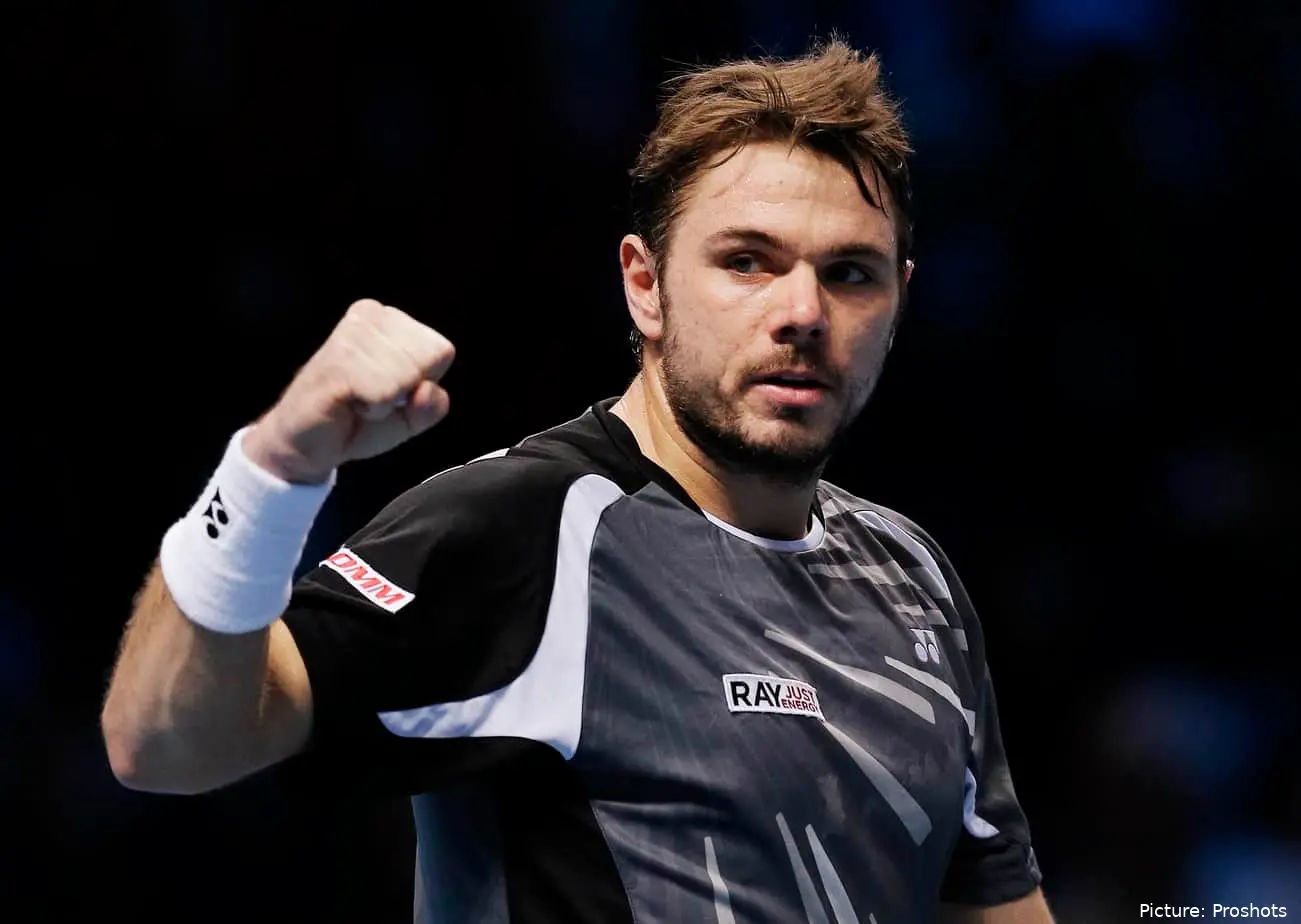
Stan Wawrinka enters the Monte-Carlo Masters with a defined objective and a clear physical ceiling. At 41, the Swiss is navigating the final months of his professional career, balancing competitive intent with the limitations he has openly acknowledged. Monte-Carlo, where he lifted his only Masters 1000 title in 2014, now becomes a symbolic stop in what he has already confirmed as his last season on tour.
The immediate focus is his opening-round match against Sebastián Báez. A win would carry broader significance beyond progression, potentially setting up a second-round meeting with world No. 1 Carlos Alcaraz — a match-up that has never taken place. It is a scenario Wawrinka has referenced repeatedly in recent weeks, framing it as one of the few remaining experiences he would still like to have before retiring.
His season has been measured rather than consistent. Wawrinka arrives with a 6–9 record in 2026 and recently lost in the opening round of the Naples Challenger to Matteo Martineau. Earlier in the year, he reached the third round of the Australian Open and was part of Switzerland’s run to the United Cup final, with Belinda Bencic leading the team’s strongest results.
The ranking context reflects his current position. Wawrinka is ranked world No. 98 and is projected to fall slightly outside the top 100 in the next update. Maintaining that threshold remains a stated target, particularly within the framework of a farewell season that prioritises selective appearances over long-term accumulation.
Physical limits and competitive standards
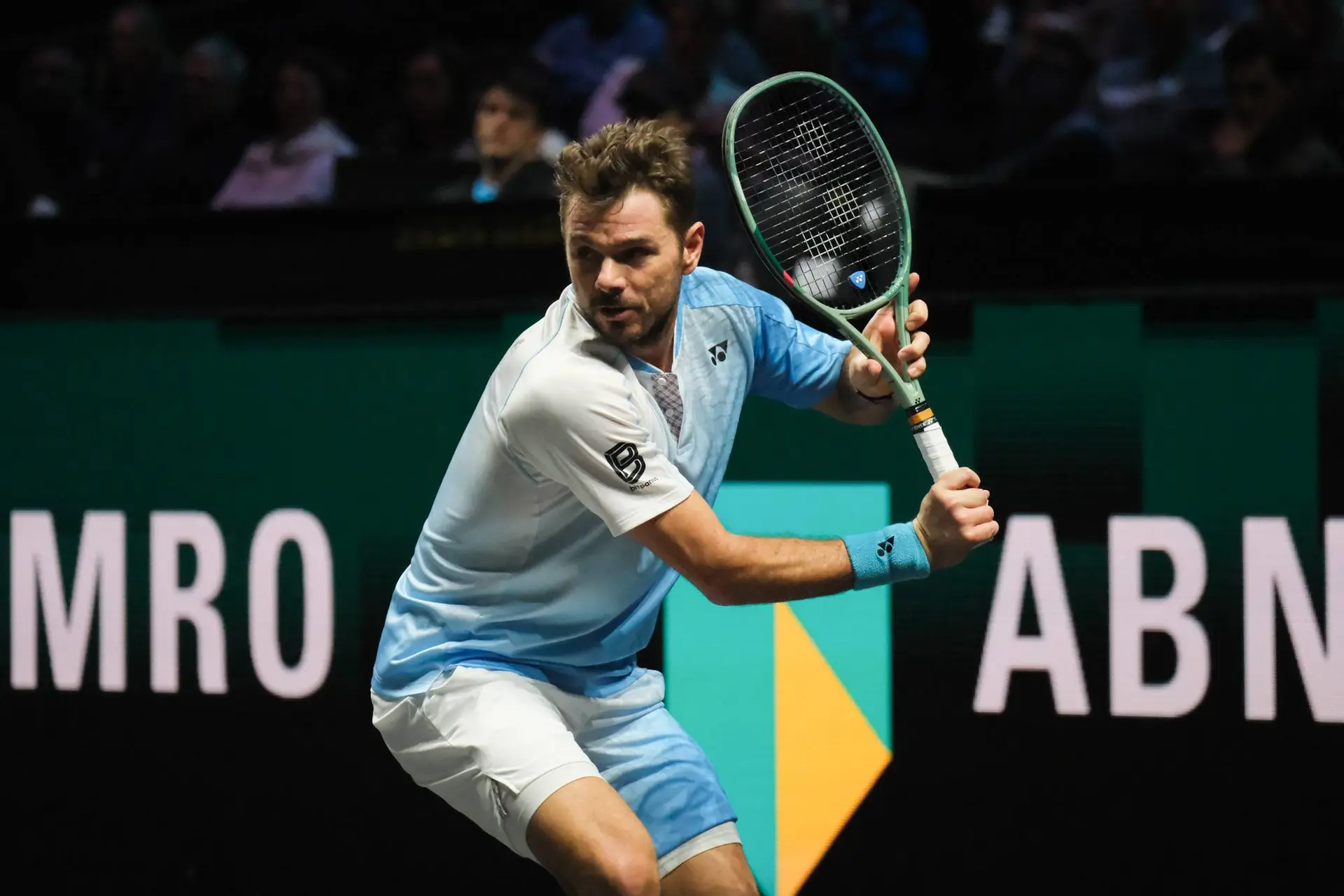
Wawrinka has been explicit in describing the physical reality behind his final season. His comments point to a player still capable of competing at a reasonable level in isolated matches, but no longer able to sustain the demands of the tour across extended periods.
He described his condition in mechanical terms, noting that while there is still “enough for the year,” the broader capacity required to maintain consistency at a high level is no longer present. The emphasis has shifted towards managing energy and choosing moments carefully rather than pursuing rankings or deep runs as primary objectives.
“There’s still enough for the year, but it’s true that, in the engine, there isn’t what’s needed to keep doing everything I’ve been doing — especially if we want to stay at a decent level.”
Despite that, his internal standards remain unchanged. Wawrinka continues to frame participation around performance quality, indicating that he would rather withdraw than compete below his expectations — a principle that has defined much of his career.
“Of course, the pleasure is always there. Otherwise, I simply wouldn’t be here. First of all, out of respect for myself, I’ve always given my best. But when I don’t feel like it or feel I’m not performing at my maximum, I prefer to retire or simply not play tournaments.”
One last objective in Monte-Carlo
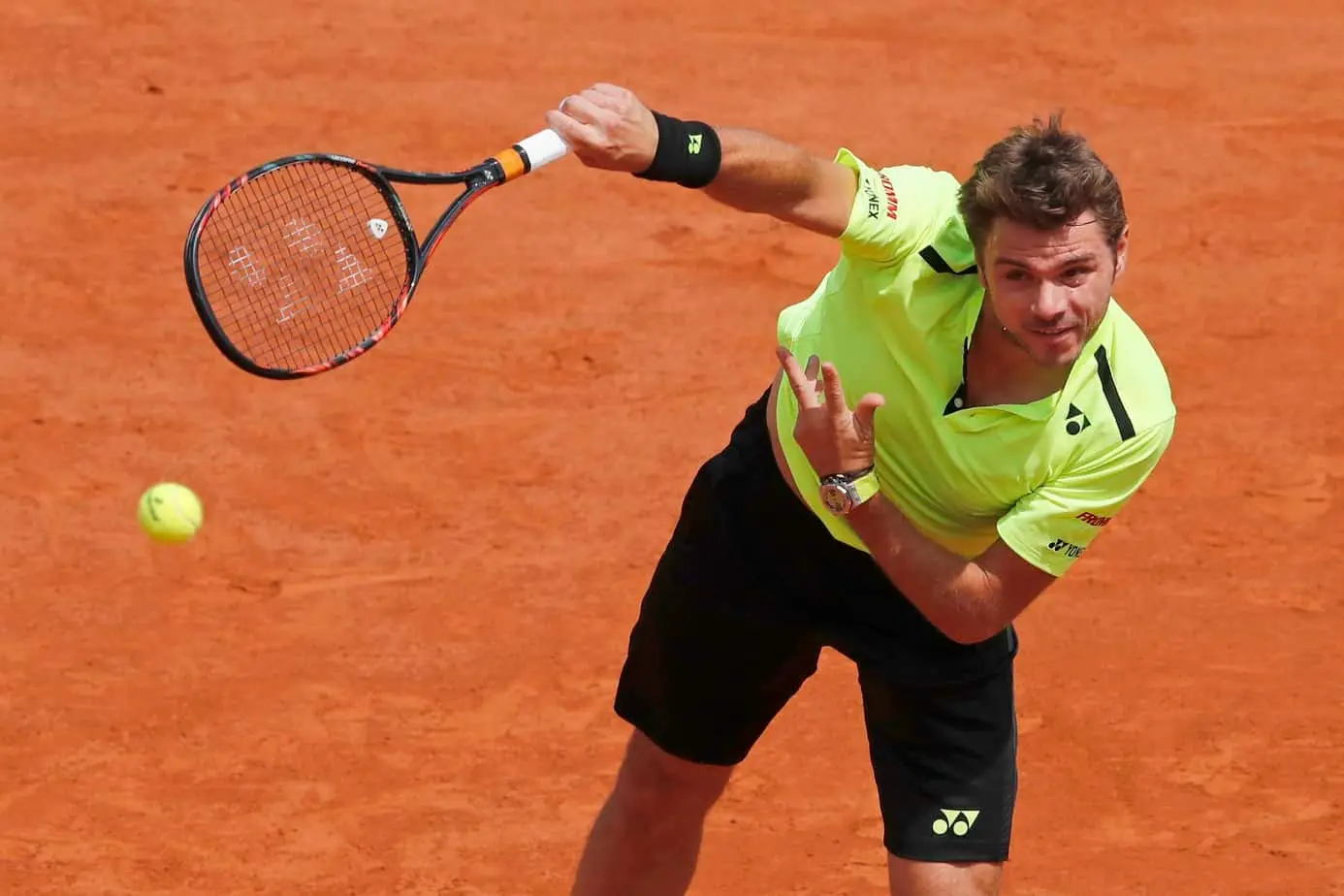
Within that context, the potential meeting with Alcaraz stands out as a specific and realistic objective. Unlike abstract legacy discussions, this is a concrete scenario shaped directly by the draw — one match away, contingent on his opening performance against Báez.
Wawrinka has followed Alcaraz’s rise closely and positions him as a benchmark for the current level of the sport. The absence of a previous meeting between the two adds weight to the possibility, particularly given the overlap between the final phase of one career and the peak of another.
“I’ve been saying it for years: I dream of playing against him. If it could be here, it would be magical. He’s one of the few I’ve never played. What he does on court seems exceptional to me. He takes tennis to another level. As an athlete, being able to face him in an official match would be an incredible opportunity.”
At the same time, Wawrinka has deliberately avoided structuring his post-career plans. While he acknowledges having considered life after tennis for years, he has chosen to postpone any decisions until his final season concludes, keeping his focus limited to the present.
“I’ve been thinking for ten years about what to do next. There are so many things I want to do, so many opportunities — I’ve opened many doors for that. But since I decided this would be my last year, I’ve put everything aside, closed everything. I want to finish the year without planning anything. First, we’ll relax. We’ll go back to Switzerland, and then we’ll see.”
Monte-Carlo, then, is not framed as a final push for results, but as a controlled step within a defined ending. The possibility of facing Alcaraz does not alter that trajectory, but it offers a clear, immediate objective — one that aligns with the competitive standards Wawrinka has maintained throughout his career.

Cristhián AvilaTennis Journalist
Cristhián Ávila is a tennis journalist based in Santiago, Chile, and has been part of the TennisUpToDate team since early 2023. He covers the ATP and WTA Tours as well as all four Grand Slams, producing breaking news, match reports, analysis, and regular liveblogs from major tournaments.
His reporting combines statistical analysis with clear explanation, helping readers understand tactical developments, player form, and broader storylines across the tour. Working fluently in both Spanish and English, Cristhián collaborates with an international editorial team and contributes to comprehensive global coverage. As part of his work, he has conducted interviews and media interactions with leading figures in the sport, including Caroline Wozniacki and John McEnroe.
In his journalism, Cristhián places strong emphasis on careful sourcing, editorial accuracy, and updating articles promptly when new, verified information becomes available. His coverage is grounded in research, context, and direct engagement with professional tennis.
claps 0visitors 0
Just In


Popular News

Latest Comments
- Lena... Takin' care of business
 mandoist25-10-2026
 - Can you please stop publishing this nonsense? Stick to Tennis.mandoist25-10-2026
- Does Sinner need that 4.5 mil? I doubt it. He can make that with three modelling gigs!😅🤣Rapunzel21-10-2026
- Did "People Magazine" purchase this website? This nonstop storyline is bullshit.mandoist21-10-2026
- Listen... this is of no concern to anyone but these two. Deal with your own issues -- most of us have our own. Thanks, media, for these insignificant follow-ups which are meaningless.mandoist21-10-2026
- This is so very very sad, for all three of them. I truly thought they had an unbreakable bond, but life throws up so many differing challenges. Having your homeland suffering in such a terrible way, makes happiness lose out to guilt as well. Our thoughts are with them. X💔bjsexton20-10-2026
- I have lost all respect for Svitolina! Could she not have waited until he had played at the Paris Masters!!! She is selfish and don't give a damn about Gael. That is NOT how love is demonstrated Elina!!Rapunzel19-10-2026
- Perhaps convenient tennis tour sex is not a strong enough experience in which to base a marriage?mandoist19-10-2026
- Fight the Good Fight... Tennis (sports in general) need more Humans such as yourself.mandoist18-10-2026
- When is WTA going to mandate Genetic Testing (DNA) ???mandoist18-10-2026

Loading