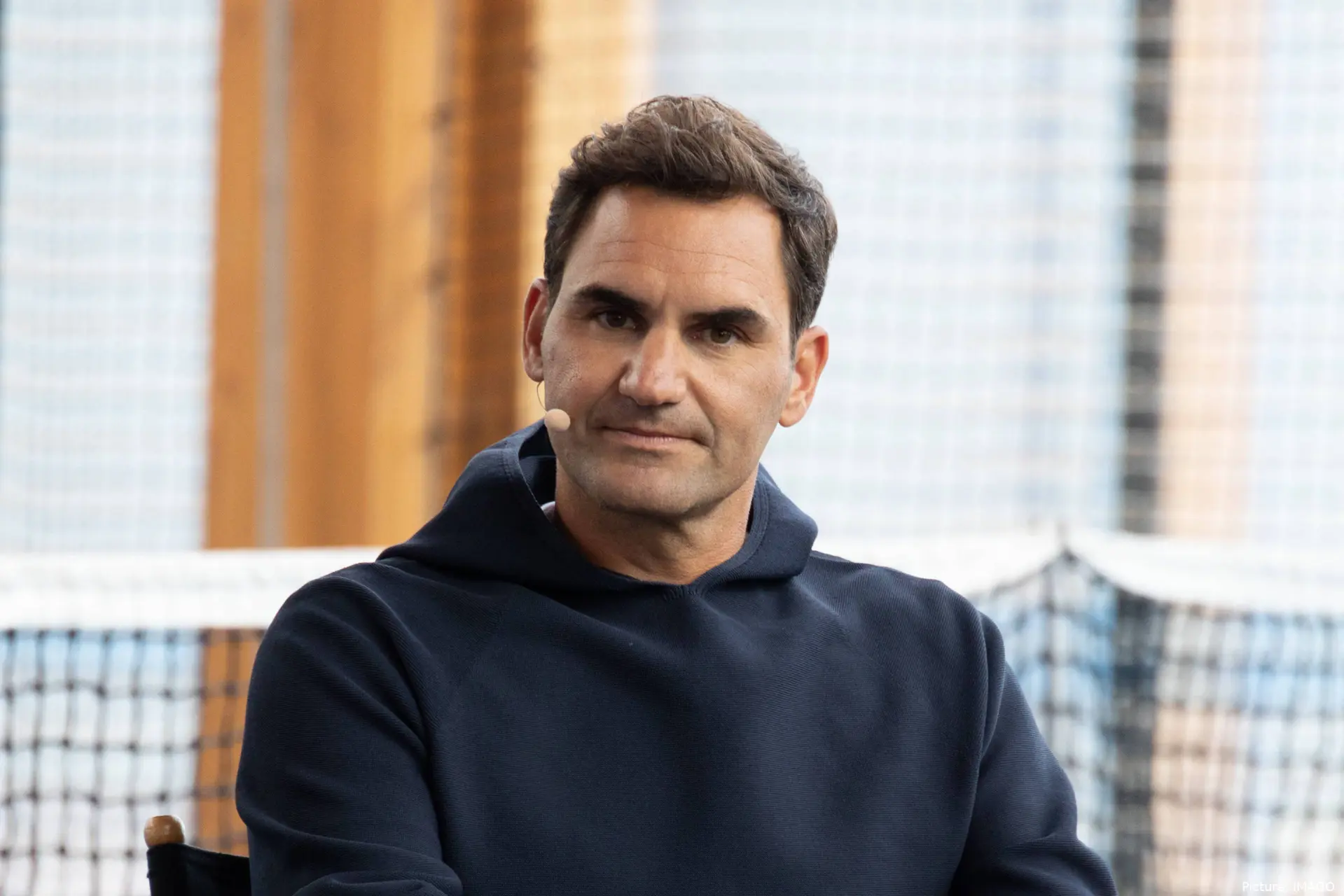
Roger Federer may have retired from professional tennis in 2022, but his influence on the sport remains undeniable. Now, the 20-time Grand Slam champion is opening up about something very different from forehands and trophies — the pressures of social media and how it shaped one of the most important announcements of his life.
Federer’s retirement post, published in September 2022, was one of the most emotional moments in recent tennis history. Millions of fans around the world watched as he said goodbye to the ATP Tour. But behind the carefully chosen words and polished video, Federer admits there was a hidden tension: the anxiety of releasing something so personal into an environment that can turn critical in seconds.
“I find it difficult, to be honest, because there’s so much,” Federer said of social media. While he acknowledged that he has always been good at handling criticism, the endless cycle of content posting has left him uneasy. “If I read ten comments and nine are positive, one negative won’t make me question my backhand. But the problem is the constant need to post. Sometimes I’d rather post less because I want to go through my day thinking about other things.”
This candid reflection paints a very human picture of a global icon. For two decades, Federer was admired not only for his artistry on court but also for his calm, composed image off it. Yet even someone of his stature has struggled with the relentless pace of the online world. It’s a reminder that today’s athletes live in a very different spotlight compared to when Federer first rose to fame.
“Nowadays you drop something, it goes out to everybody”
Federer contrasted today’s online culture with the slower, more filtered communication of the early 2000s. Back then, his official website served as the main platform for news and fan updates. “Nowadays you drop something and it goes out to everybody, like on my retirement,” Federer explained. The speed and reach of modern platforms like Instagram and Twitter (now X) left him feeling both grateful and overwhelmed.
That “love-hate” relationship is familiar to many athletes who balance connecting with fans against protecting their mental health. For Federer, the challenge isn’t about validation but about time and focus. “I get quite… I don’t know how to deal with that. Sometimes I’d rather not think about posting at all.”
Read also
Life after retirement
Interestingly, Federer says he doesn’t feel pressure to maintain a constant public presence now that he is no longer competing. His focus has shifted toward family, travel, and mentoring his four children in their own sports. Still, he remains aware of the expectations that come with his global status. Fans want to see him, brands want to highlight him, and the tennis world still views him as a voice of authority.
Yet Federer’s honesty shows that stepping back from the tour hasn’t fully relieved the weight of visibility. If anything, it has highlighted how the modern athlete’s life is shaped as much by digital attention as by on-court achievements. His reflections on social media underscore a larger truth about professional sport in 2025: performance doesn’t end when the match is over — it continues online.

Cristhián AvilaTennis Journalist
Cristhián Ávila is a tennis journalist based in Santiago, Chile, and has been part of the TennisUpToDate team since early 2023. He covers the ATP and WTA Tours as well as all four Grand Slams, producing breaking news, match reports, analysis, and regular liveblogs from major tournaments.
His reporting combines statistical analysis with clear explanation, helping readers understand tactical developments, player form, and broader storylines across the tour. Working fluently in both Spanish and English, Cristhián collaborates with an international editorial team and contributes to comprehensive global coverage. As part of his work, he has conducted interviews and media interactions with leading figures in the sport, including Caroline Wozniacki and John McEnroe.
In his journalism, Cristhián places strong emphasis on careful sourcing, editorial accuracy, and updating articles promptly when new, verified information becomes available. His coverage is grounded in research, context, and direct engagement with professional tennis.
claps 0visitors 0
Just In

Popular News
Latest Comments
- A healthy Qinwen may be hard to stop next season. She was already scaring her opponents before her medical leave(s). Unfortunately, Zheng insisted on singing again. On the positive side -- Mirra did not sing!! ;~}
 mandoist11-10-2026
 - Where is it written that athletes, entertainers... People in general... are mandated to keep looking at -- or even using [anti]Social Media? Public & private figures consistently complain and reveal their concerns about negativity and violence thrown at them -- yet they insist on participating. Avoid it, don't use it, don't read it. It's okay to occasionally look up at the World instead beating your eyes & thumbs to death on The Inventions out there.mandoist11-10-2026
- great articlestennisseserver07-10-2026
- Medvedev was leading Djokovic 7-5, 3-5 when an attempted return..' NO you ignorants, Djokovic was leading .weiss05-10-2026
- No more bullshit "Wildcards" to these two. Qualify like everyone else -- there will be cameras there, too. Time to scream... WTF ????!!!!mandoist29-09-2026
- Let's not BS the general public -- Sabalenka started showing cracks in her game last season. Her losses and near-losses started at about the same time she began being distracted by Fame (constant Selfies, making TV commercials, magazine shoots, endless Social Media nonsense, etc., etc.) One would think even Saba could recognize the parallels with others who failed before her -- Raducanu, Giorgi, Bouchard to name a few.mandoist25-09-2026
- Gross!! Hey Raducanu, Giorgi, and Bouchard -- reserve a seat at your Social Media Selfie table for Saba + Naomi. They're heading in your direction soon enough.mandoist24-09-2026
- And then these same players will complain about how lengthy their season’s were and need more time-off. I’m all for more tennis but the amount of tennis we get now is actually kind of crazy! We all need a break, especially the players.DaveyWavey23-09-2026
- You should do a comparison article for "different kinds of justice" the courts decide for tennis players. I can think of at least three players who received very small bans of a few months, however Tara Moore has been fighting for her literal survival the past few years. It seems odd considering she is not a "name" player, unlike the other cases.DaveyWavey22-09-2026
- PRIZE MONEY & POINTS Winner - $185,500 Finalist - $114,500 Semi-Finalist - $66,003 Quarter-Finalist - $35,000 Round of 16 - $18,045 Round of 32 - $13,005 Winner - 500 Finalist - 325 Semi-Finalist - 195 Quarter-Finalist - 108 Round of 16 - 60 Round of 32 - 1DaveyWavey20-09-2026

Loading