"I’ve never understood his scheduling, it doesn't make sense": Becker and Petkovic baffled by scheduling complaints with Fritz, Rune and Ruud examples
ATP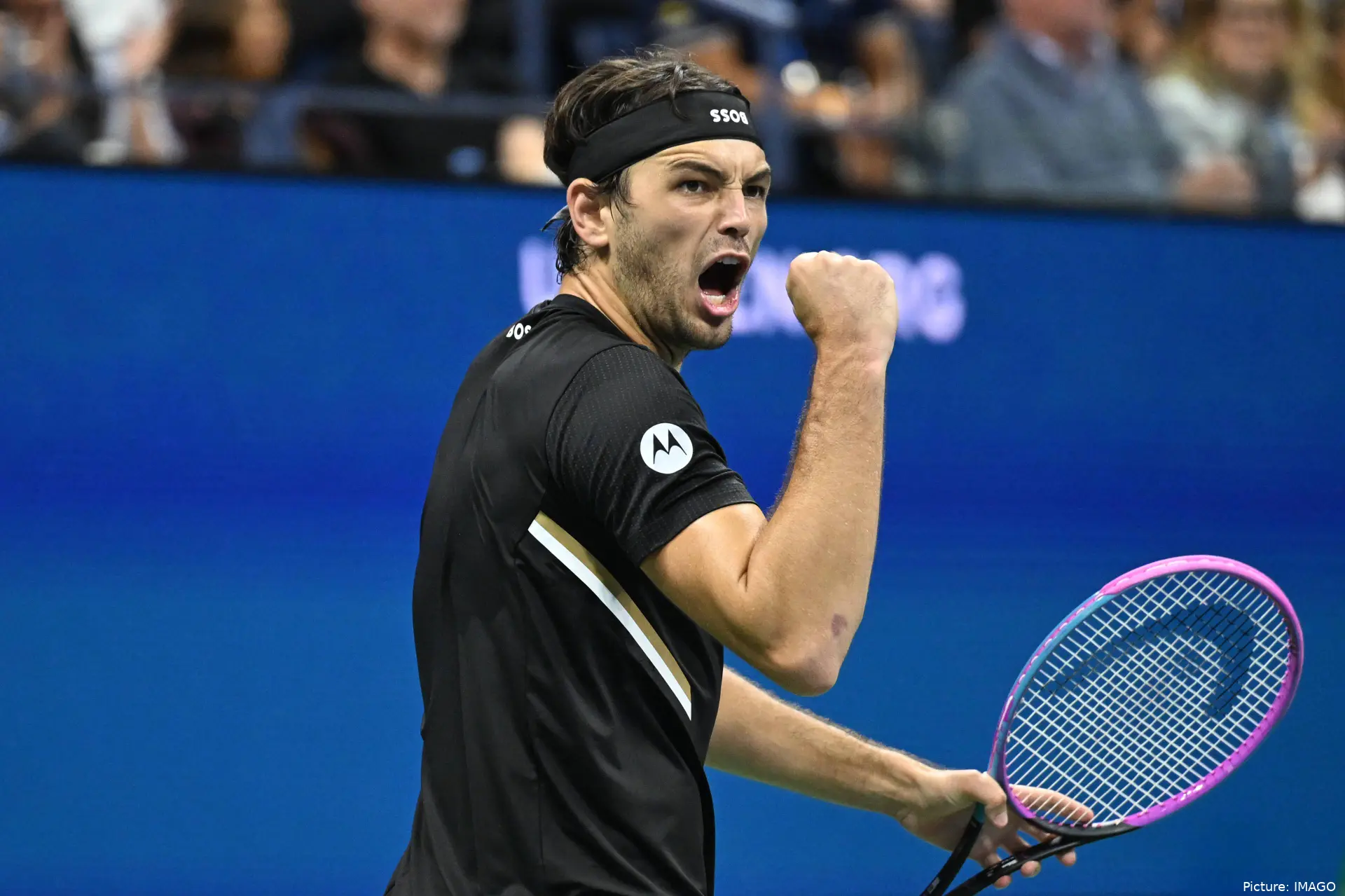
Tennis legends Boris Becker and Andrea Petkovic have raised serious concerns about the sport’s relentless scheduling and the physical toll it’s taking on players, following a gruelling Asian swing marked by extreme conditions and an unusual wave of withdrawals.
Speaking on their podcast, Petkovic opened the discussion with Shanghai, where temperatures and humidity reached punishing levels even by the city’s standards. “It’s autumn in China, but they probably had a heat wave,” Petkovic said on their podcast.. “Apart from the fact that the Shanghai champions — Alcaraz, Draper and Tsitsipas — didn’t even arrive, there were withdrawals during the tournament I’ve never seen before. Sinner, Moutet, Ruud, Goffin, Wu, Medvedev and Atmane all cancelled during the tournament. Even Zverev complained at the beginning. Taylor Fritz was at the limit — he was dead, at the limit of his strength.”
Becker agreed that the physical demands of the current calendar are pushing even the top athletes to breaking point. “We’re now in mid-October, talking about so many tournaments and obligations that players simply have to perform,” he said. “Many are at the end of their limit — or even beyond it.”
With the Asian swing finally over, attention turns to the European leg of the season — but there’s little time for recovery. “Now the European Swing starts,” Petkovic continued. “Vienna, Basel, then the Masters in Paris. In addition, the Six Kings Slam next week in Riyadh, where the six best players in the world play again. And then the ATP Finals in Turin in mid-November. So the year is not over for the top athletes yet. And for the women, it’s just as long. I’m a little worried that players are physically at their limit — or above it — and just can’t play anymore.”
Read also
The conversation turned to the business side of the game, as Petkovic asked how tournaments cope when big names drop out early. “If you’re in the organisation of a tournament and the top players lose,” she said, “then you get ten nervous breakdowns behind the scenes. Because when the stars are there, the TV ratings are higher, the money is higher, the advertising flows. As great as it was that Vacherot and Rinderknech reached the final — how much did the ATP actually enjoy it, or not enjoy it?”
Becker responded candidly. “Of course the ATP isn’t happy,” he admitted. “All the top ten players who pulled out will now get a smaller bonus at the end of the year. For sponsors and fans, it’s not ideal when the big names are missing. Maybe Medvedev and Djokovic in the semifinals saved it, but Rinderknech against Vacherot in the final — I don’t think that was a final with the best ratings.”
However, Becker praised the ATP’s effort to spin the result positively. “It’s up to the ATP media team to sell that story as the tennis story of the year,” he said. “Still, Masters tournaments expect the top ten players not only to sign up but also to play — at least reach the quarterfinals. That’s not always realistic, but that’s the business.”
While Becker acknowledged that fans often prefer seeing the likes of Sinner and Alcaraz in finals, he also embraced the unpredictability of this year’s event. “I don’t want to see Sinner and Alcaraz every week. I want surprises. That’s why I’m happy as a tennis fan about this final — but I don’t know if all fans feel the same.”
Petkovic added that while tennis thrives on underdog stories, the financial gap between players often skews perception. “Often there are players ranked number six in the world — and when they play against Sinner or Alcaraz, they’re called the underdog, even though they’ve earned €35 million a year,” she said. “How much of an underdog are you really with €35 million a year? But now we really had an underdog — someone who doubled his career prize money by reaching the final. And he’s not 15, he’s been on tour for years. These are great stories.”
Still, she noted that behind the scenes, tournaments rely on star power to fill VIP seats and secure sponsorships. “The stadium was full, the atmosphere was great, and the final was exciting,” she said. “But the VIP seats under Roger Federer were two rows completely empty. I don’t think that would happen if Djokovic or Alcaraz were in the final.”
Djokovic’s point: “It’s up to every player”
Becker then referenced Novak Djokovic’s comments on player scheduling, agreeing that individuals must take responsibility for their workload. “Djokovic made a very good point,” Becker said. “It’s up to every individual player to make their tournament plan. If you don’t want to play a Masters and then get a smaller bonus in Turin, you can play exhibitions in December to make the money back. Complaining that the calendar is too full is factually wrong — every player decides where and how often they play. No one is forced.”
He praised Jannik Sinner and Carlos Alcaraz as examples of players who manage their schedules intelligently. “Sinner and Alcaraz don’t play every week,” he said. “Yes, their bonus might be smaller, but their endorsement contracts make up for that. It’s up to each player and their agent to decide — do I play 15 tournaments, 20 or 30? That’s their own decision.”
The Fritz and Ruud examples
Petkovic pointed to Taylor Fritz as a player whose packed schedule has backfired. “I always find with him that he plays too much,” she said. “He’s 27 — still young, of course — but he always says he wants to win the US Open. Then he plays Houston, Washington, Montreal, Toronto, Cincinnati — and if he loses early, he goes to freaking Winston-Salem for another 250. Bro, if you play eight tournaments in a row under the hottest conditions of the year and then expect to win the US Open, make it make sense. It won’t work.”
Despite her criticism, Petkovic spoke warmly of Fritz. “I love Taylor Fritz,” she said. “Once you’ve experienced his competitive spirit up close, you can’t help but support him. But I’ve never understood his scheduling. You can’t play eight tournaments in a row and then expect to win two weeks in New York against Sinner, Alcaraz and Djokovic.”
Becker agreed, adding that Fritz isn’t the only one overplaying. “You can say the same about Casper Ruud and Holger Rune,” he said. “They play every week, even though they’re good enough to reach the later rounds at big events. At some point, they’re physically and mentally exhausted. You can’t be surprised that you’re tired and worn out when you’ve played too much. It doesn’t make sense.”
For Becker and Petkovic, the takeaway is clear: tennis’ marathon calendar isn’t easing up — and unless players take control of their schedules, burnout is inevitable. “Many are at their limit,” Becker warned. “Some even beyond it.”

Samuel GillEditor-in-Chief
Samuel Gill is the Chief Content Officer (CCO) of TennisUpToDate.com, a role he has held since 2020. He is responsible for editorial governance across the platform, including setting content standards, overseeing accuracy and consistency, and guiding long-term editorial strategy. Since joining, he has contributed more than 10,000 articles and editorial pieces across the TennisUpToDate network, playing a central role in the daily operation and development of the site.
Based in Leicester, Samuel has a broad background in tennis media. In his current role, he works closely with editors and writers to ensure coverage meets clear journalistic standards, with particular attention to verification, consistency, and timely updates when new information becomes available.
claps 0visitors 0
Just In

Popular News
Latest Comments
- A healthy Qinwen may be hard to stop next season. She was already scaring her opponents before her medical leave(s). Unfortunately, Zheng insisted on singing again. On the positive side -- Mirra did not sing!! ;~}
 mandoist11-10-2026
 - Where is it written that athletes, entertainers... People in general... are mandated to keep looking at -- or even using [anti]Social Media? Public & private figures consistently complain and reveal their concerns about negativity and violence thrown at them -- yet they insist on participating. Avoid it, don't use it, don't read it. It's okay to occasionally look up at the World instead beating your eyes & thumbs to death on The Inventions out there.mandoist11-10-2026
- great articlestennisseserver07-10-2026
- Medvedev was leading Djokovic 7-5, 3-5 when an attempted return..' NO you ignorants, Djokovic was leading .weiss05-10-2026
- No more bullshit "Wildcards" to these two. Qualify like everyone else -- there will be cameras there, too. Time to scream... WTF ????!!!!mandoist29-09-2026
- Let's not BS the general public -- Sabalenka started showing cracks in her game last season. Her losses and near-losses started at about the same time she began being distracted by Fame (constant Selfies, making TV commercials, magazine shoots, endless Social Media nonsense, etc., etc.) One would think even Saba could recognize the parallels with others who failed before her -- Raducanu, Giorgi, Bouchard to name a few.mandoist25-09-2026
- Gross!! Hey Raducanu, Giorgi, and Bouchard -- reserve a seat at your Social Media Selfie table for Saba + Naomi. They're heading in your direction soon enough.mandoist24-09-2026
- And then these same players will complain about how lengthy their season’s were and need more time-off. I’m all for more tennis but the amount of tennis we get now is actually kind of crazy! We all need a break, especially the players.DaveyWavey23-09-2026
- You should do a comparison article for "different kinds of justice" the courts decide for tennis players. I can think of at least three players who received very small bans of a few months, however Tara Moore has been fighting for her literal survival the past few years. It seems odd considering she is not a "name" player, unlike the other cases.DaveyWavey22-09-2026
- PRIZE MONEY & POINTS Winner - $185,500 Finalist - $114,500 Semi-Finalist - $66,003 Quarter-Finalist - $35,000 Round of 16 - $18,045 Round of 32 - $13,005 Winner - 500 Finalist - 325 Semi-Finalist - 195 Quarter-Finalist - 108 Round of 16 - 60 Round of 32 - 1DaveyWavey20-09-2026

Loading