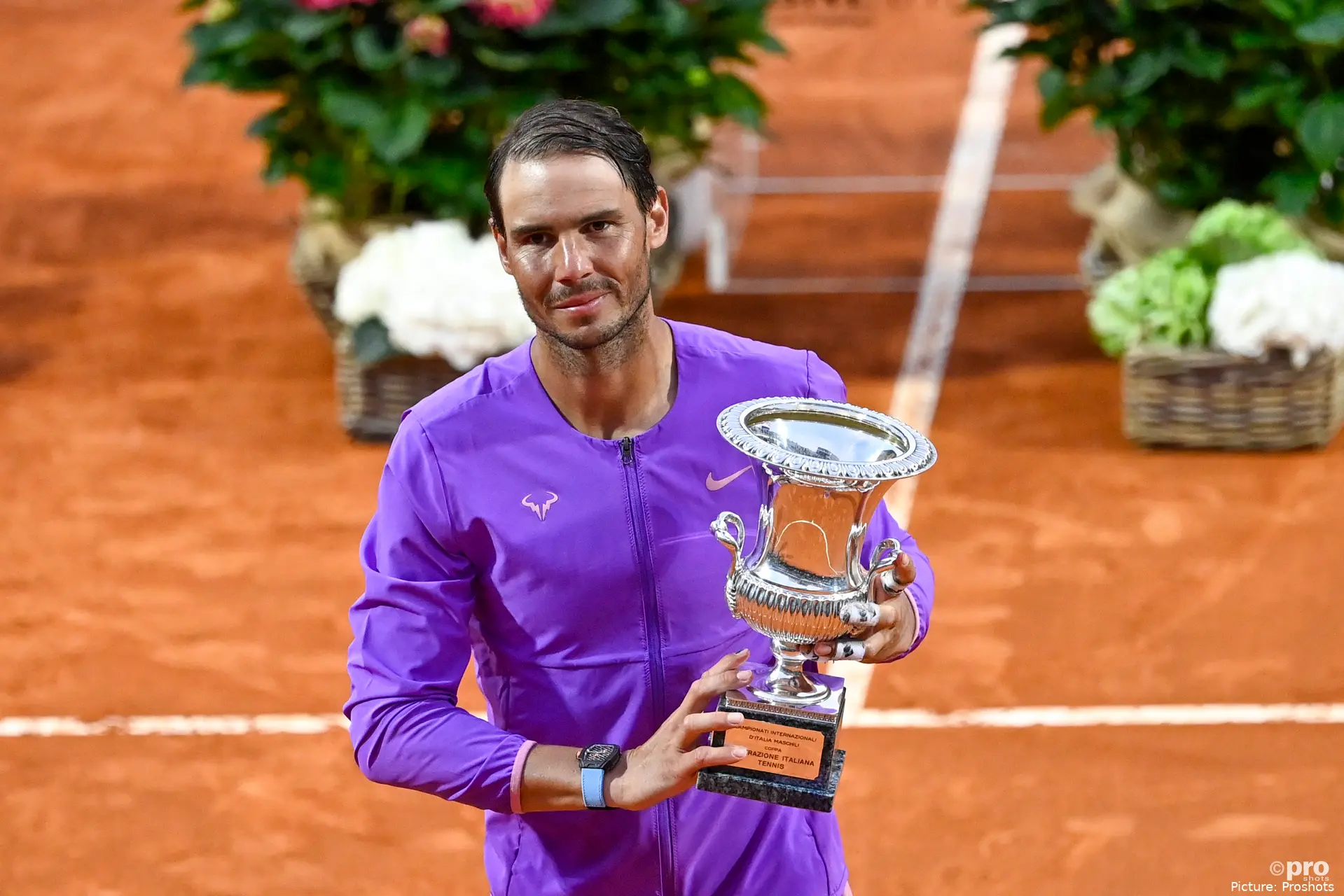
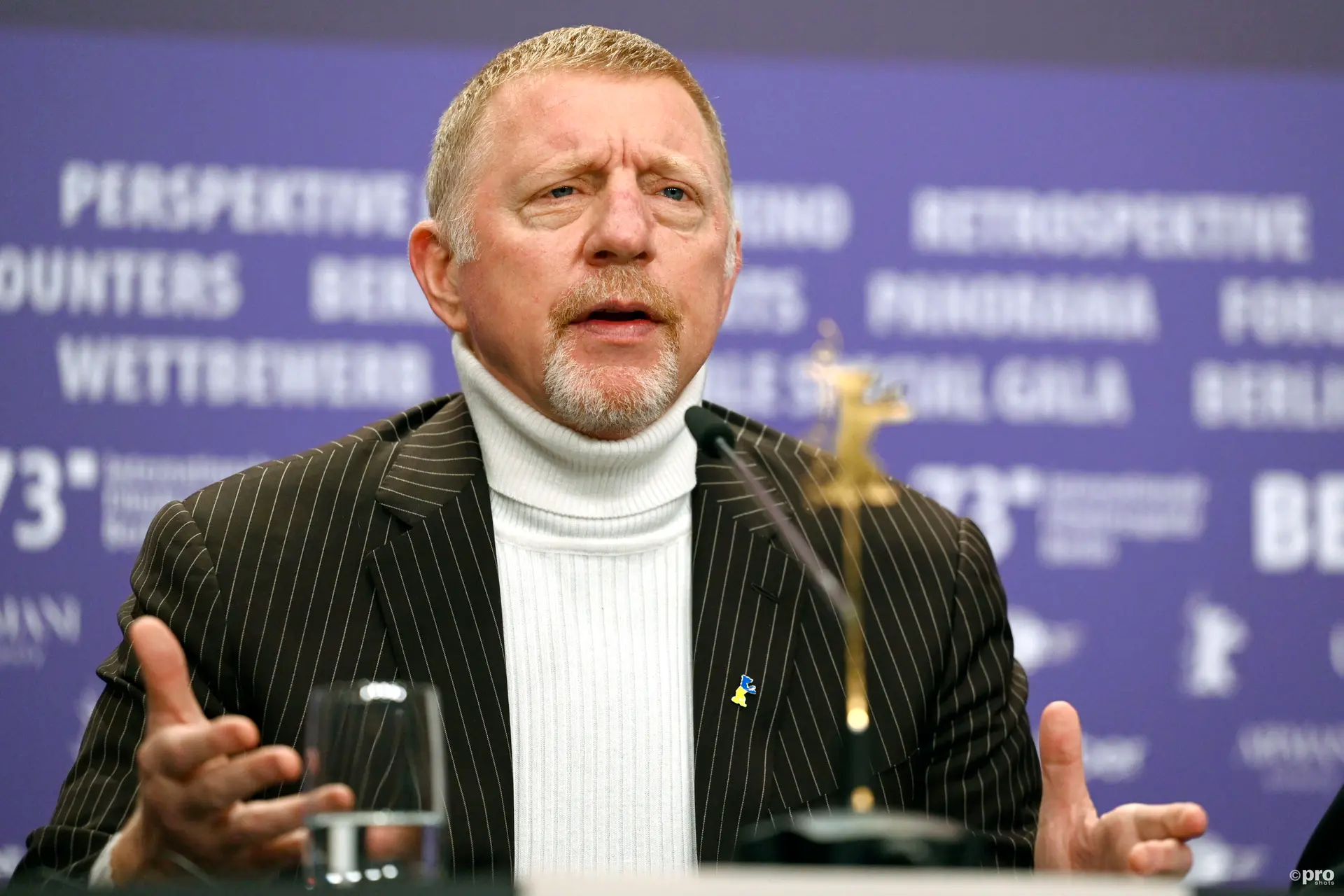
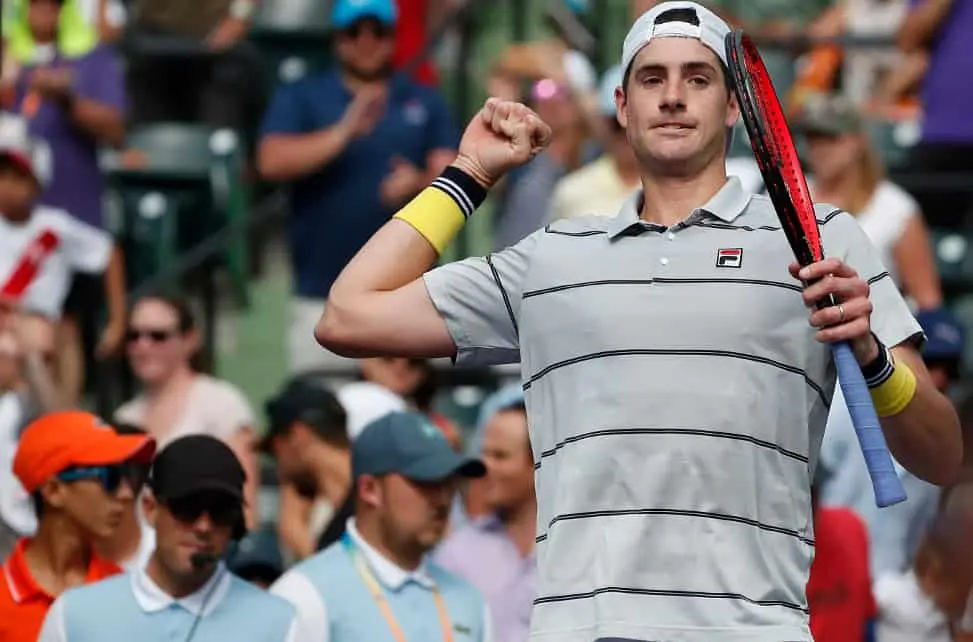
Former ATP players Sam Querrey, John Isner, Jack Sock and Steve Johnson set out to define Rafael Nadal’s dominance on clay with a single statistic during a recent discussion in Nothing Major podcast. The premise was simple, but the outcome was not: instead of converging on analysis, the conversation repeatedly shifted toward disbelief, with each number reinforcing the sense that Nadal’s record resists conventional interpretation.
Querrey framed the exercise around identifying one standout statistic, but the tone quickly moved beyond comparison. Johnson and the rest of the panel engaged in a back-and-forth that underlined the scale of Nadal’s achievements, with reactions such as “that’s insane” and “that’s ridiculous” reflecting not exaggeration, but the difficulty of contextualising the numbers within normal ATP standards.
That reaction is anchored in a record that remains unmatched. Nadal finished his career with 63 clay-court titles, a win rate above 90% on the surface, and 14 Roland Garros trophies. He also claimed 11 Monte Carlo titles, 10 in Rome and 12 in Barcelona, building sustained dominance across the full clay calendar rather than concentrating success in a single tournament.
Within that framework, the discussion becomes less about identifying the most impressive statistic and more about understanding why the numbers themselves feel disconnected from standard expectations. Even among players familiar with the demands of the tour, Nadal’s clay résumé produces reactions that lean toward acknowledgement rather than explanation.
“More titles than losses”: when numbers collapse into reaction
The most striking moment came as Querrey attempted to summarise Nadal’s dominance across multiple tournaments, initially focusing on his consistency at key events before arriving at a broader conclusion. “He has 10 titles in four different clay court tournaments," claimed the former world No. 11. "Monte-Carlo, Rome, Barcelona and Roland Garros. He has 10-plus titles in all four. It’s insane.”
The discussion did not pause there. As Johnson and the others reacted, Querrey extended the point into a statistical imbalance that effectively removes context from the comparison. “It’s just mind-blowing to me that he has 12 more titles on clay courts than he does losses in his career. He’s got 63 clay court titles and 51 losses on clay courts throughout his entire career. He has more titles than losses. That’s ridiculous.”
Johnson’s immediate response — “that’s pretty cool… that’s ridiculous” — reinforced the tone of the exchange, where even straightforward numbers triggered reactions rather than deeper breakdown. The imbalance itself is structurally unique: across more than a decade, Nadal reduced the variability of clay-court competition to the point where titles became the most common outcome.
Streaks and finals: dominance sustained over time
As the conversation progressed, Isner and Sock shifted the focus toward consistency metrics, where Nadal’s dominance becomes even more difficult to frame within standard performance models. “We got 81 consecutive matches on clay, which is insane. I mean, that’s just one to throw out there.”
That streak, achieved between 2005 and 2007, remains the longest single-surface winning run in the Open Era, spanning multiple tournaments and seasons. It reflects sustained control rather than isolated peak performance, reinforcing Nadal’s ability to maintain elite output over time.
Sock added another layer by highlighting Nadal’s efficiency in finals, where margins are typically narrow and outcomes less predictable. “He played 71 clay court finals and won 63 of them. 63 and nine in finals is insane. Most of those finals too are like Masters and 500s and Grand Slams. They’re not 250s.”
Johnson again echoed the sentiment during the exchange, reacting to the figures with a simple “that’s a good one,” underscoring how even among peers, Nadal’s numbers tend to be processed in terms of reaction rather than analysis.
Clay season as a structural advantage
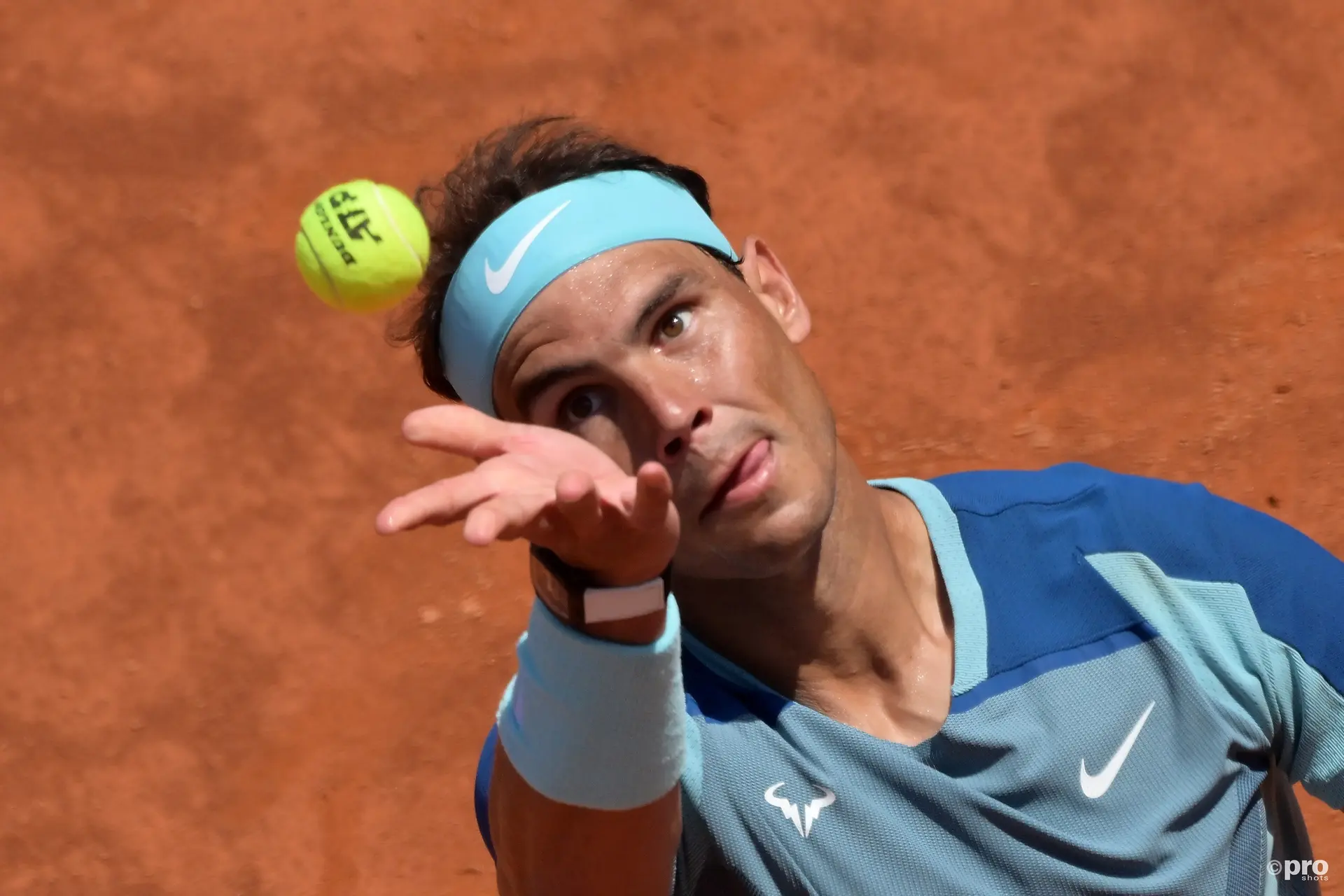
The final part of the discussion moved beyond individual records and into the broader impact of Nadal’s dominance on the ATP ranking system. Querrey framed this through a scenario that highlights the scale of his consistency across a limited segment of the calendar.
“If you just added his clay court points, he would be two in the world. And he only played five tournaments on clay.”
This observation reflects how Nadal effectively transformed the clay swing into a self-contained competitive cycle. By consistently winning Monte Carlo, Rome and Roland Garros, he accumulated ranking points at a rate that secured elite positioning independently of his results on other surfaces.

Cristhián AvilaTennis Journalist
Cristhián Ávila is a tennis journalist based in Santiago, Chile, and has been part of the TennisUpToDate team since early 2023. He covers the ATP and WTA Tours as well as all four Grand Slams, producing breaking news, match reports, analysis, and regular liveblogs from major tournaments.
His reporting combines statistical analysis with clear explanation, helping readers understand tactical developments, player form, and broader storylines across the tour. Working fluently in both Spanish and English, Cristhián collaborates with an international editorial team and contributes to comprehensive global coverage. As part of his work, he has conducted interviews and media interactions with leading figures in the sport, including Caroline Wozniacki and John McEnroe.
In his journalism, Cristhián places strong emphasis on careful sourcing, editorial accuracy, and updating articles promptly when new, verified information becomes available. His coverage is grounded in research, context, and direct engagement with professional tennis.
claps 0visitors 0
Just In

Popular News
Latest Comments
- Does Sinner need that 4.5 mil? I doubt it. He can make that with three modelling gigs!😅🤣Rapunzel21-10-2026
- Did "People Magazine" purchase this website? This nonstop storyline is bullshit.
 mandoist21-10-2026
 - Listen... this is of no concern to anyone but these two. Deal with your own issues -- most of us have our own. Thanks, media, for these insignificant follow-ups which are meaningless.mandoist21-10-2026
- This is so very very sad, for all three of them. I truly thought they had an unbreakable bond, but life throws up so many differing challenges. Having your homeland suffering in such a terrible way, makes happiness lose out to guilt as well. Our thoughts are with them. X💔bjsexton20-10-2026
- I have lost all respect for Svitolina! Could she not have waited until he had played at the Paris Masters!!! She is selfish and don't give a damn about Gael. That is NOT how love is demonstrated Elina!!Rapunzel19-10-2026
- Perhaps convenient tennis tour sex is not a strong enough experience in which to base a marriage?mandoist19-10-2026
- Fight the Good Fight... Tennis (sports in general) need more Humans such as yourself.mandoist18-10-2026
- When is WTA going to mandate Genetic Testing (DNA) ???mandoist18-10-2026
- Hey, Dan... you just wake up from a coma? Regardless -- Thanks for the comedy this morning!mandoist18-10-2026
- Two Things: 1. Stop allowing these Spoiled Trust-Fund Elitists to behave badly. Your little hand-slaps do not deter them. 2. STOP the incessantly annoying "towel wiping" nonsense!!!!mandoist15-10-2026

Loading