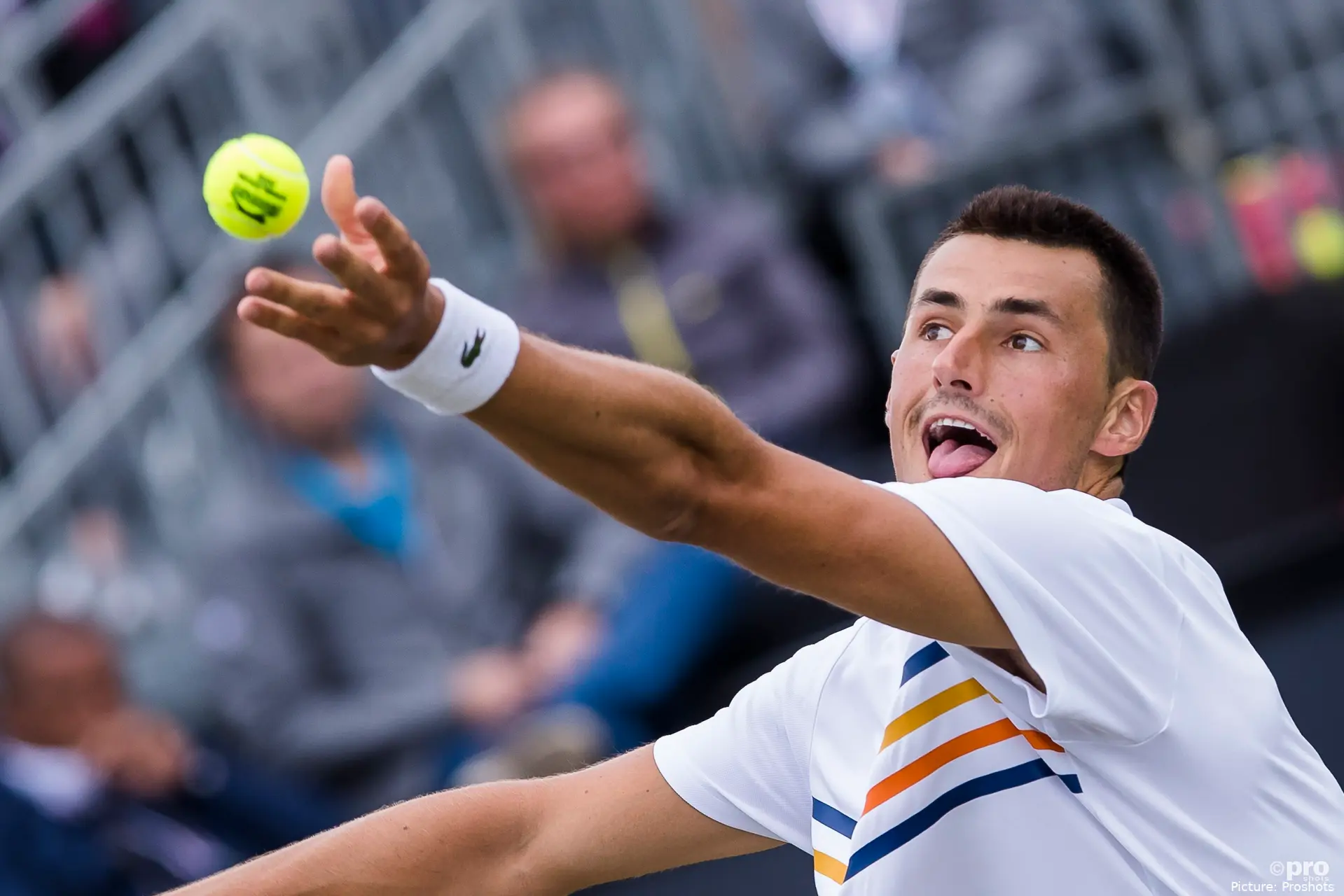
Bernard Tomic walked onto Wimbledon's outer courts as a qualifier ranked outside the top 150 and walked out of the tournament as its youngest quarterfinalist since Boris Becker in 1986. He did it without a booming serve or a crushing forehand — he did it by refusing to play like everybody else. For a moment, Australian tennis had found its next star: a teenager whose game was so strange, so contrary to the power-baseline era around him, that it seemed to promise something no one else on tour could offer.
Fifteen years later, Tomic is still playing professional tennis — grinding through Challenger qualifying draws in his 30s, a long way from the world No. 17 ranking he reached in January 2016. His story isn't really one of injury wiping out a career, the way it was for Dominic Thiem or Bianca Andreescu. It's a stranger, more uncomfortable question: what happens when a player has all the craft to trouble the very best, but never develops the hunger to actually beat them?
Bernard Tomic - Then v now
| Then | |
| Ranking | No. 17 |
| Grand Slam best | Wimbledon quarterfinal, 2011 |
| Career titles | 4 |
| Career high | No. 17 (11 January 2016) |
| Age at breakthrough | 18 |
| 2025/26 status | Active, rebuilding as world No. 179 |
The rise: a teenager who played like nobody else
Tomic's junior résumé was extraordinary before he'd even turned professional. He won the 2008 Australian Open boys' title at 15 — still the youngest champion in the event's history — and added the 2009 US Open boys' title a year later. He announced himself on the senior tour at 16, beating Potito Starace as a wildcard at the 2009 Australian Open to become the youngest male player ever to win a main-draw match there.
What made Tomic different wasn't power. In an era defined by baseline hitters like Nadal, Djokovic and a young Milos Raonic, Tomic built his game around slice, disguise and change of pace — a backhand slice he could drag to either corner, a drop shot he disguised inside the same swing as his topspin, and a willingness to loft the ball absurdly high when under pressure rather than take the low-percentage option.
Read also
Why it worked: frustrating the best players in the world
That style was unusually effective against elite opposition precisely because it denied rhythm to players who relied on pace and repetition. His run to the 2011 Wimbledon quarterfinal, where he beat Xavier Malisse before finally losing to Novak Djokovic in four sets, showed how disorienting his game could be for even the very best.
A near four-hour, five-set classic against fellow stylist Alexandr Dolgopolov at the 2012 Australian Open — full of slice, disguised drop shots and cat-and-mouse baiting — became one of the most talked-about matches of that tournament.
Bernard Tomic's 2011 Wimbledon run
| Round | Opponent | Opponent ranking | Result |
| Q1 | Sebastian Rieschick | 207 | W 6-4, 5-7, 6-4 |
| Q2 | Robert Farah | 168 | W 6-1, 6-4 |
| Q3 | Jean-Rene Lisnard | 691 | W 6-1, 6-4, 6-1 |
| R128 | Nikolay Davydenko | 27 | W 7-5, 6-3, 7-5 |
| R64 | Igor Andreev | 79 | W 4-6, 5-7, 6-3, 6-4, 6-1 |
| R32 | Robin Söderling | 5 | W 6-1, 6-4, 7-5 |
| R16 | Xavier Malisse | 42 | W 6-1, 7-5, 6-4 |
| QF | Novak Djokovic | 2 | L 6-2, 3-6, 6-3, 7-5 |
By 2015 and 2016, that same unorthodox approach had carried him to a career-high ranking of No. 17, four ATP titles, and fourth-round finishes at the Australian Open on three occasions. He even beat a then-world No. 1 Djokovic 6-4, 6-4 at the 2013 Hopman Cup — an exhibition team event rather than a ranked tour match, but a result that fed the idea that Tomic's craft alone could unsettle the sport's very best on the right day.
Why it stopped scaling
The trouble was that slice and disguise alone couldn't close the gap once opponents adjusted, and Tomic never developed the physicality or foot speed to add another gear when his variety was neutralised.
Across his career he has a losing record against the game's elite: roughly 9 wins from 40 matches against top-10 opponents and just 2 wins from 21 against the top five, according to career stats compiled by MatchStat. He later admitted he "could never take a set" off Andy Murray in any of their meetings, all of which came while Murray was ranked world No. 1.

Against the rest of the tour, the same unorthodox game that once seemed like a weapon became easier to play around as scouting caught up, and without an aggressive backup plan, Tomic increasingly found himself defending for long stretches rather than dictating. A style built to frustrate through disguise needs to keep surprising opponents to keep working — and by his mid-20s, most of the tour had seen it before.
A chaotic team behind him
Tomic's father and long-time coach, John, was central to both his rise and his unravelling. In May 2013, John Tomic headbutted his son's hitting partner, Thomas Drouet, outside a hotel in Madrid, breaking Drouet's nose. Drouet later alleged he had witnessed John punch Bernard hard enough to draw blood during a practice session in Monte Carlo days earlier.
The ATP suspended John's tour credentials, and a Spanish court convicted him of assault, handing down an eight-month sentence he did not serve under Spanish sentencing rules. Bernard initially defended his father publicly, telling reporters at Roland Garros weeks later, "he's still my dad, he's still my coach."
The pressure, the money, and a fading appetite for the fight
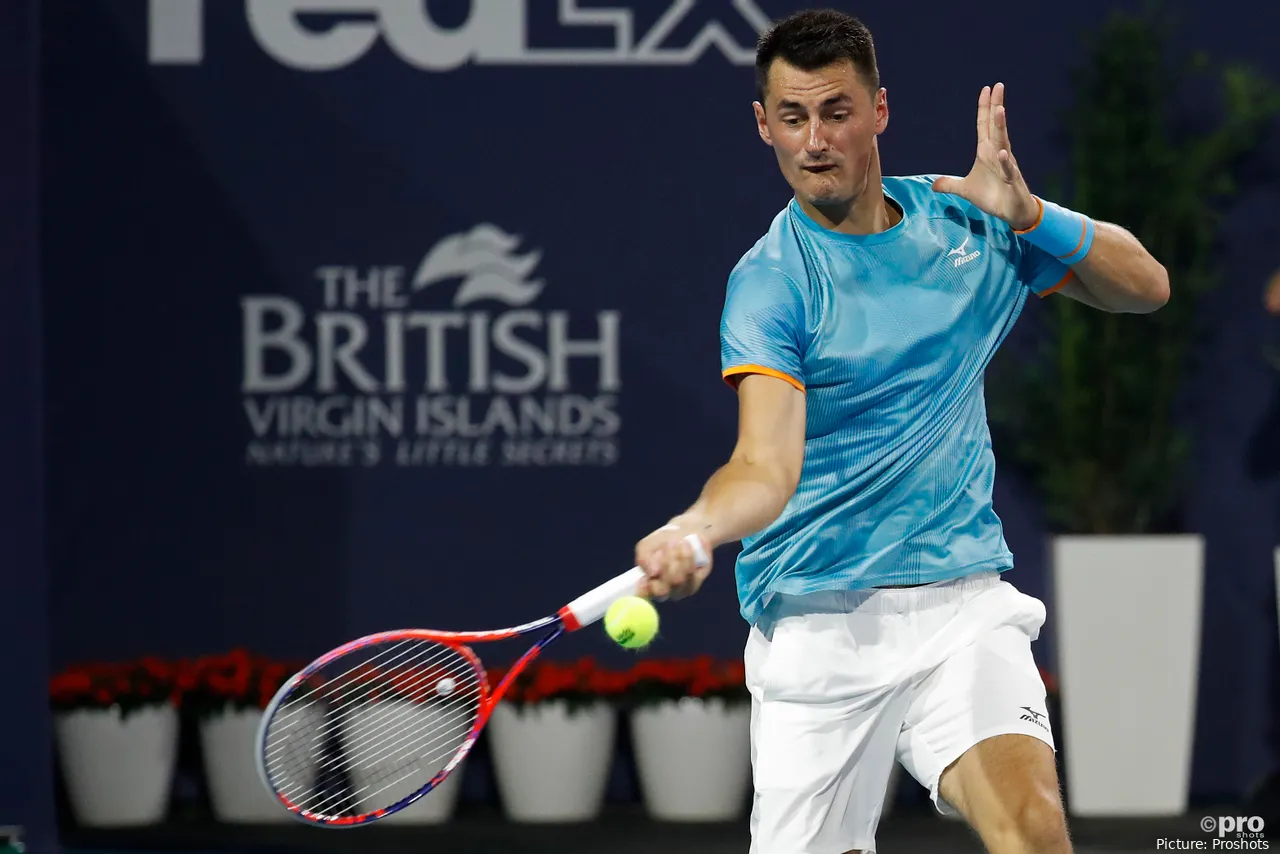
Tomic's relationship with competitiveness became the defining story of his mid-to-late 20s. After a first-round exit at the 2017 Wimbledon Championships, he told reporters he had felt "bored" on court and that "holding a trophy or doing well doesn't satisfy me anymore" — comments that drew a $15,000 fine and public criticism from Martina Navratilova, who suggested he "find another job." Six months later, after failing to qualify for the Australian Open, he responded to a question about his plans by saying, "I just count my millions."
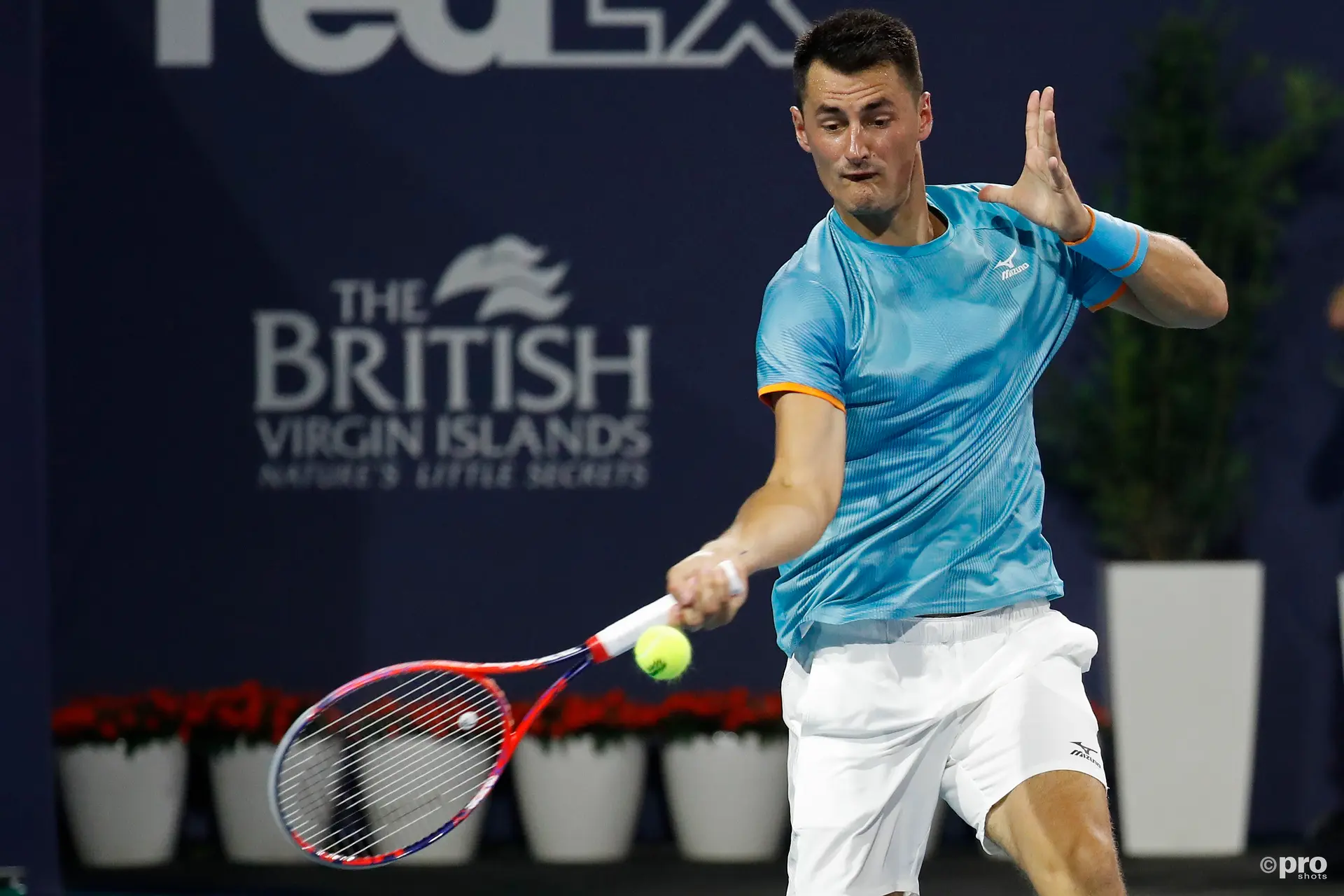
The lowest point came at Wimbledon in 2019, when Tomic lost his first-round match to Jo-Wilfried Tsonga 6-2, 6-1, 6-4 in just 58 minutes — the shortest men's match at the tournament that year. The All England Club stripped him of his entire £45,000 prize money for an apparent lack of effort, a punishment even Djokovic publicly called "unfair" given the work it takes simply to reach a Grand Slam main draw.
Years later, in 2025, reports emerged that Australian police and the International Tennis Integrity Agency had investigated two of Tomic's matches — a 2022 Australian Open qualifying loss and a 2021 Challenger defeat in Turkey — over suspicious betting patterns; no charges were ever filed and Tomic has not been accused of wrongdoing.
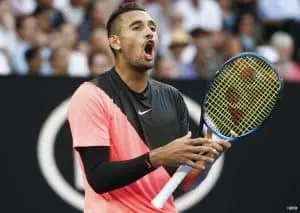
Where he is now
Tomic's ranking collapsed alongside those controversies, sliding outside the world's top 800 by 2022 amid hip, abdominal and wrist injuries and what he has since admitted was a lack of conditioning.
What's followed since has been a slow, grinding rebuild almost entirely on the Challenger and ITF circuits rather than the tour level he once called home: back-to-back Challenger finals in Lexington and Barranquilla in 2025, a Shanghai semifinal, and a return to the world's top 200 by early 2026 after years spent largely outside it.

Tomic remains an unusual case in the Tennis Career Graveyard series precisely because nothing physically catastrophic ended his run at the top. His slice, his disguise and his shot-making are still there when he wants them — visible in flashes during his comeback matches. What was never quite there, by his own admission and by the pattern of his results against the sport's best, was the competitive hunger to match the craft.
Tomic had a game good enough to unsettle Grand Slam champions on his day. He simply never seemed to want it enough to make that his every day.

Cristhián AvilaTennis Journalist
Cristhián Ávila is a tennis journalist based in Santiago, Chile, and has been part of the TennisUpToDate team since early 2023. He covers the ATP and WTA Tours as well as all four Grand Slams, producing breaking news, match reports, analysis, and regular liveblogs from major tournaments.
His reporting combines statistical analysis with clear explanation, helping readers understand tactical developments, player form, and broader storylines across the tour. Working fluently in both Spanish and English, Cristhián collaborates with an international editorial team and contributes to comprehensive global coverage. As part of his work, he has conducted interviews and media interactions with leading figures in the sport, including Caroline Wozniacki and John McEnroe.
In his journalism, Cristhián places strong emphasis on careful sourcing, editorial accuracy, and updating articles promptly when new, verified information becomes available. His coverage is grounded in research, context, and direct engagement with professional tennis.
claps 0visitors 0
Just In


Popular News
Latest Comments
- great articlestennisseserver07-10-2026
- Medvedev was leading Djokovic 7-5, 3-5 when an attempted return..' NO you ignorants, Djokovic was leading .weiss05-10-2026
- No more bullshit "Wildcards" to these two. Qualify like everyone else -- there will be cameras there, too. Time to scream... WTF ????!!!!
 mandoist29-09-2026
 - Let's not BS the general public -- Sabalenka started showing cracks in her game last season. Her losses and near-losses started at about the same time she began being distracted by Fame (constant Selfies, making TV commercials, magazine shoots, endless Social Media nonsense, etc., etc.) One would think even Saba could recognize the parallels with others who failed before her -- Raducanu, Giorgi, Bouchard to name a few.mandoist25-09-2026
- Gross!! Hey Raducanu, Giorgi, and Bouchard -- reserve a seat at your Social Media Selfie table for Saba + Naomi. They're heading in your direction soon enough.mandoist24-09-2026
- And then these same players will complain about how lengthy their season’s were and need more time-off. I’m all for more tennis but the amount of tennis we get now is actually kind of crazy! We all need a break, especially the players.DaveyWavey23-09-2026
- You should do a comparison article for "different kinds of justice" the courts decide for tennis players. I can think of at least three players who received very small bans of a few months, however Tara Moore has been fighting for her literal survival the past few years. It seems odd considering she is not a "name" player, unlike the other cases.DaveyWavey22-09-2026
- PRIZE MONEY & POINTS Winner - $185,500 Finalist - $114,500 Semi-Finalist - $66,003 Quarter-Finalist - $35,000 Round of 16 - $18,045 Round of 32 - $13,005 Winner - 500 Finalist - 325 Semi-Finalist - 195 Quarter-Finalist - 108 Round of 16 - 60 Round of 32 - 1DaveyWavey20-09-2026
- Pegula withdrew from this Singapore event
 tennishappens19-09-2026
 - Serena Williams chose her tournaments. It's not such a bad idea.MuswellHillbilly17-09-2026

Loading