"We are like dinosaurs heading for extinction" - Stefanos Tsitsipas admits his sadness for specific shot becoming seldom seen
ATP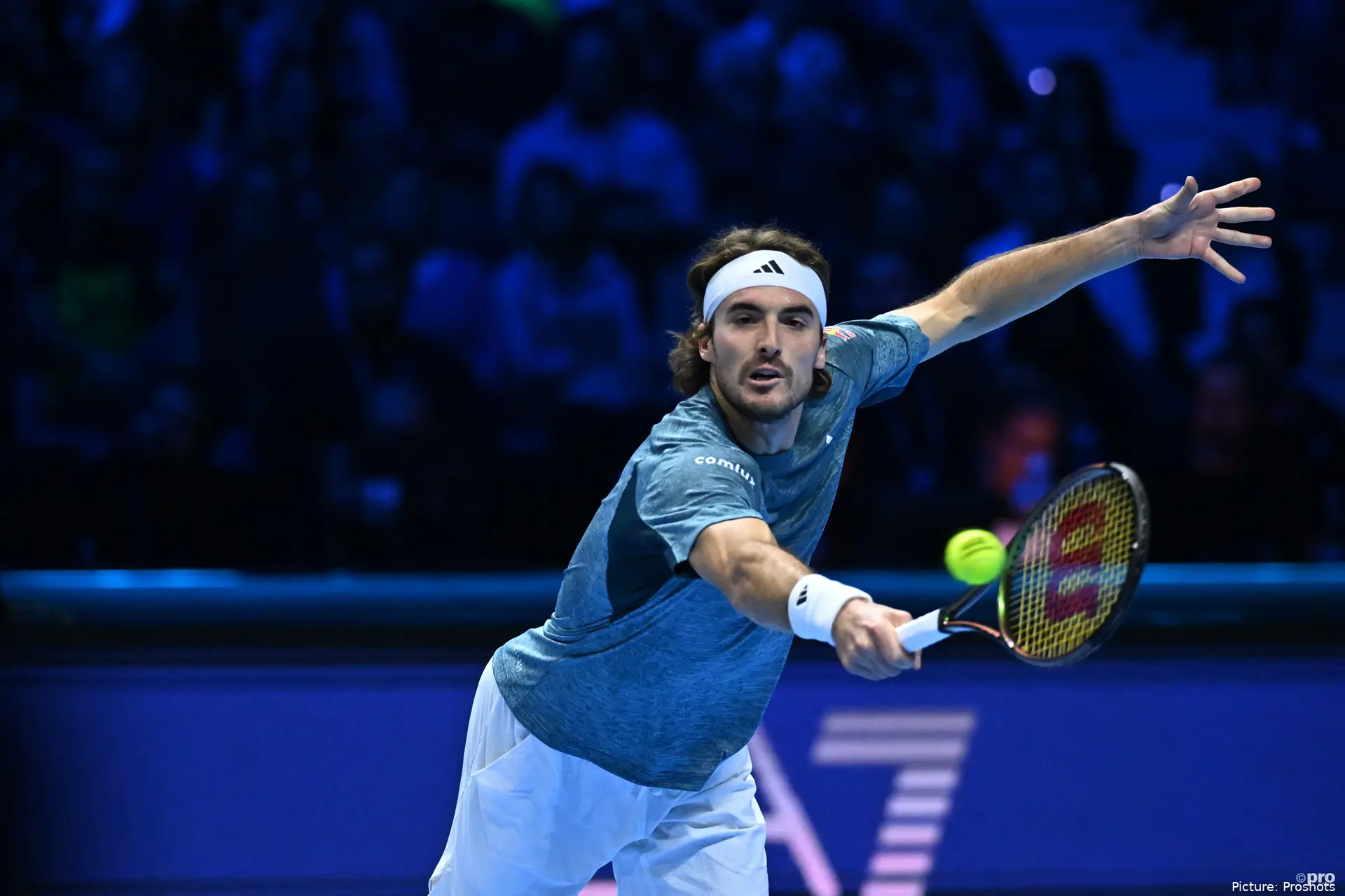
A resurgent tournament for Stefanos Tsitsipas has put him back in the limelight as his quest to rise the rankings back to the elite took another positive turn as he reaches the third round of the US Open. All while doing so with the seldom seen one-handed backhand as he called himself a 'dinosaur' with that specific shot spiralling in the same direction as those pre-historic creatures.
The Greek produced a huge upset in the first round as Cincinnati Open champion and one of the title favourites Arthur Fils was defeated in four sets. It was a stunning victory as the two-time Grand Slam finalist rolled back the years.
He backed it up with yet another comeback win, this time against South African Lloyd Harris to reach the US Open third round for the second time, and the first since 2021.
The event at Flushing Meadows has not been a strong one for the 28-year-old over the years. It is a tournament that has been dominated by early exits with him never making it past the last-32 despite the level he once reached.
He can break this duct against Jiri Lehecka who is looking to defend a quarter-final run from last year. It is a tough test but Tsitsipas is currently flowing with a confidence that has not been with him for some time.

There have been a few positive moments over the last couple of years including title runs in Dubai and Switzerland while a fourth round run at the Madrid Open saw him miss match points against the reigning champion Casper Ruud. He has not been able to kick on following any of these, but this is a new chance to step on the gas.
Grand Slam title ambitions still there as performances come first
While the results are a huge boost for Tsitsipas and a trend that is going in the right direction, he has dismissed these to an extent with the performance very much on the forefront of his mind as he tries to reach his prior level in his pomp.
"I define success by improvement," he said in his press conference following the second round win in New York. "It has nothing to do with a specific result. If I see that in my next match I have raised my level and worked on certain aspects of my game, that alone makes me happy."

Stefanos Tsitsipas is in the third round of the US Open for the third time
With his team, he is motivated to put in the work and improve his game. "The result is secondary for now. I focus more, with my team, on how we can truly improve, even with only the one day of practice we have tomorrow. I want to get back on track and have that mentality in practice: I want to improve. What can I do? What can I improve?"
Despite the recent woes and lows, there is a sense of optimism that he can win a first ever major title. "When I was young, watching tennis, watching the highest level of the sport and the Grand Slams, I couldn't imagine wanting to stop at the third round of a Grand Slam. As a kid, I always imagined the big matches: the semifinals, the finals."
One-handed backhand on a doomed pathway to extension
The Tsitsipas backhand has been under scrutiny for some time now. He has been put under the cosh on it a number of times with poor technique that compromises his game.
This is not totally down to the now unorthodox one-handed approach that less and less players are taking these days as they lean towards the more reliable two-handed backhand.
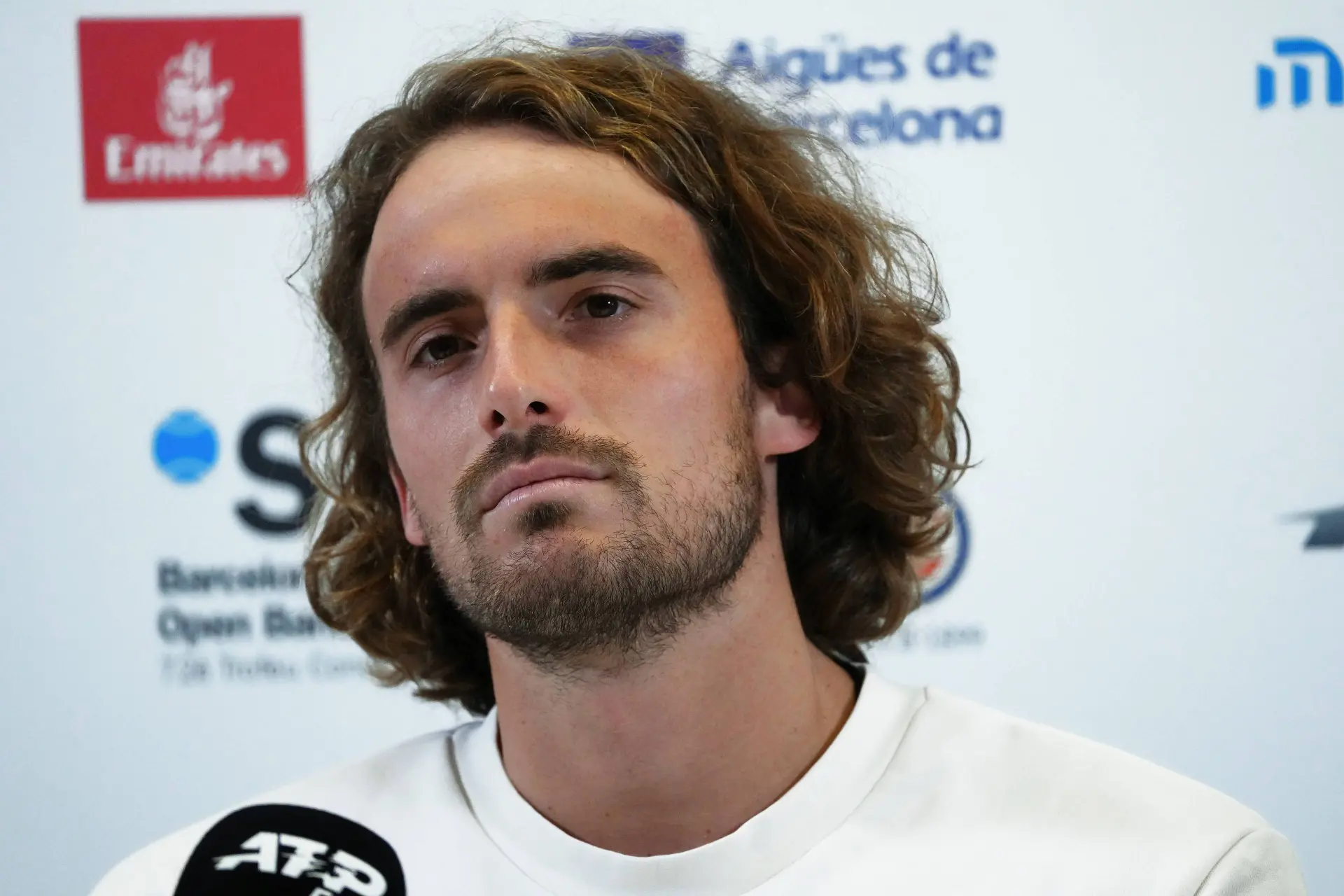
It is a hard shot to produce, but effective when you get it right as Tsitsipas explained. "The one-handed backhand requires exceptional footwork and very good technique," he commented. "With a one-handed backhand, you have zero margin. If you are late, you are late."
As the years go on, less players are using this iconic shot with Tsitsipas part of a dying breed, something that makes him slightly glum. "It is sad that this shot is disappearing. You watch decade after decade and there are fewer and fewer of us left. We are like dinosaurs heading for extinction."
He will hope that it is at an effective level to fend off Lehecka in the third round of the US Open. If he defeats the eighth seed, he could be on course to possibly meet Ben Shelton and even Carlos Alcaraz later on in the event.
Lucas MichaelTennis Journalist
Lucas Michael is a tennis journalist based in Cambridge, UK, specializing in comprehensive coverage of the ATP and WTA tours. For the past 1.5 years, he has been a core contributor to TennisUpToDate, where he has authored more than 3,000 data-driven match reports, deep-dive analysis pieces, and engaging liveblogs.
Lucas pairs real-time statistical analysis with on-the-ground reporting, frequently traveling to tournaments to cover the action firsthand from the press box and player press conferences. This blend of advanced metrics and direct access allows him to provide sharp context regarding player form, tactical trends, and breaking tour developments.
He holds a BA (Hons) in Sports Journalism. Grounded in core journalistic ethics, Lucas places a strict emphasis on meticulous sourcing, editorial accuracy, and a commitment to updating live content swiftly as verified information emerges.
claps 0visitors 0
Just In

Popular News
Latest Comments
- A healthy Qinwen may be hard to stop next season. She was already scaring her opponents before her medical leave(s). Unfortunately, Zheng insisted on singing again. On the positive side -- Mirra did not sing!! ;~}
 mandoist11-10-2026
 - Where is it written that athletes, entertainers... People in general... are mandated to keep looking at -- or even using [anti]Social Media? Public & private figures consistently complain and reveal their concerns about negativity and violence thrown at them -- yet they insist on participating. Avoid it, don't use it, don't read it. It's okay to occasionally look up at the World instead beating your eyes & thumbs to death on The Inventions out there.mandoist11-10-2026
- great articlestennisseserver07-10-2026
- Medvedev was leading Djokovic 7-5, 3-5 when an attempted return..' NO you ignorants, Djokovic was leading .weiss05-10-2026
- No more bullshit "Wildcards" to these two. Qualify like everyone else -- there will be cameras there, too. Time to scream... WTF ????!!!!mandoist29-09-2026
- Let's not BS the general public -- Sabalenka started showing cracks in her game last season. Her losses and near-losses started at about the same time she began being distracted by Fame (constant Selfies, making TV commercials, magazine shoots, endless Social Media nonsense, etc., etc.) One would think even Saba could recognize the parallels with others who failed before her -- Raducanu, Giorgi, Bouchard to name a few.mandoist25-09-2026
- Gross!! Hey Raducanu, Giorgi, and Bouchard -- reserve a seat at your Social Media Selfie table for Saba + Naomi. They're heading in your direction soon enough.mandoist24-09-2026
- And then these same players will complain about how lengthy their season’s were and need more time-off. I’m all for more tennis but the amount of tennis we get now is actually kind of crazy! We all need a break, especially the players.DaveyWavey23-09-2026
- You should do a comparison article for "different kinds of justice" the courts decide for tennis players. I can think of at least three players who received very small bans of a few months, however Tara Moore has been fighting for her literal survival the past few years. It seems odd considering she is not a "name" player, unlike the other cases.DaveyWavey22-09-2026
- PRIZE MONEY & POINTS Winner - $185,500 Finalist - $114,500 Semi-Finalist - $66,003 Quarter-Finalist - $35,000 Round of 16 - $18,045 Round of 32 - $13,005 Winner - 500 Finalist - 325 Semi-Finalist - 195 Quarter-Finalist - 108 Round of 16 - 60 Round of 32 - 1DaveyWavey20-09-2026

Loading